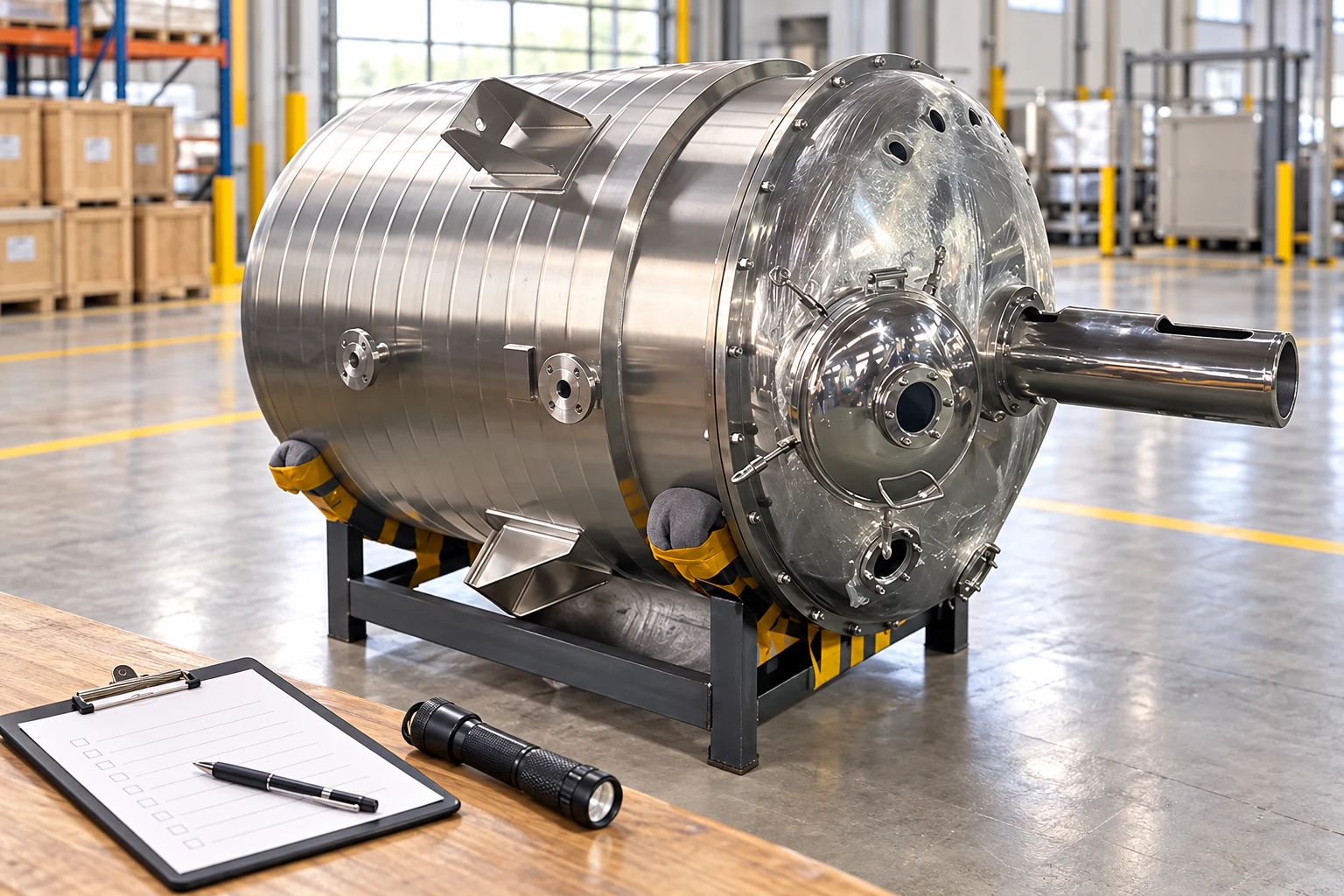
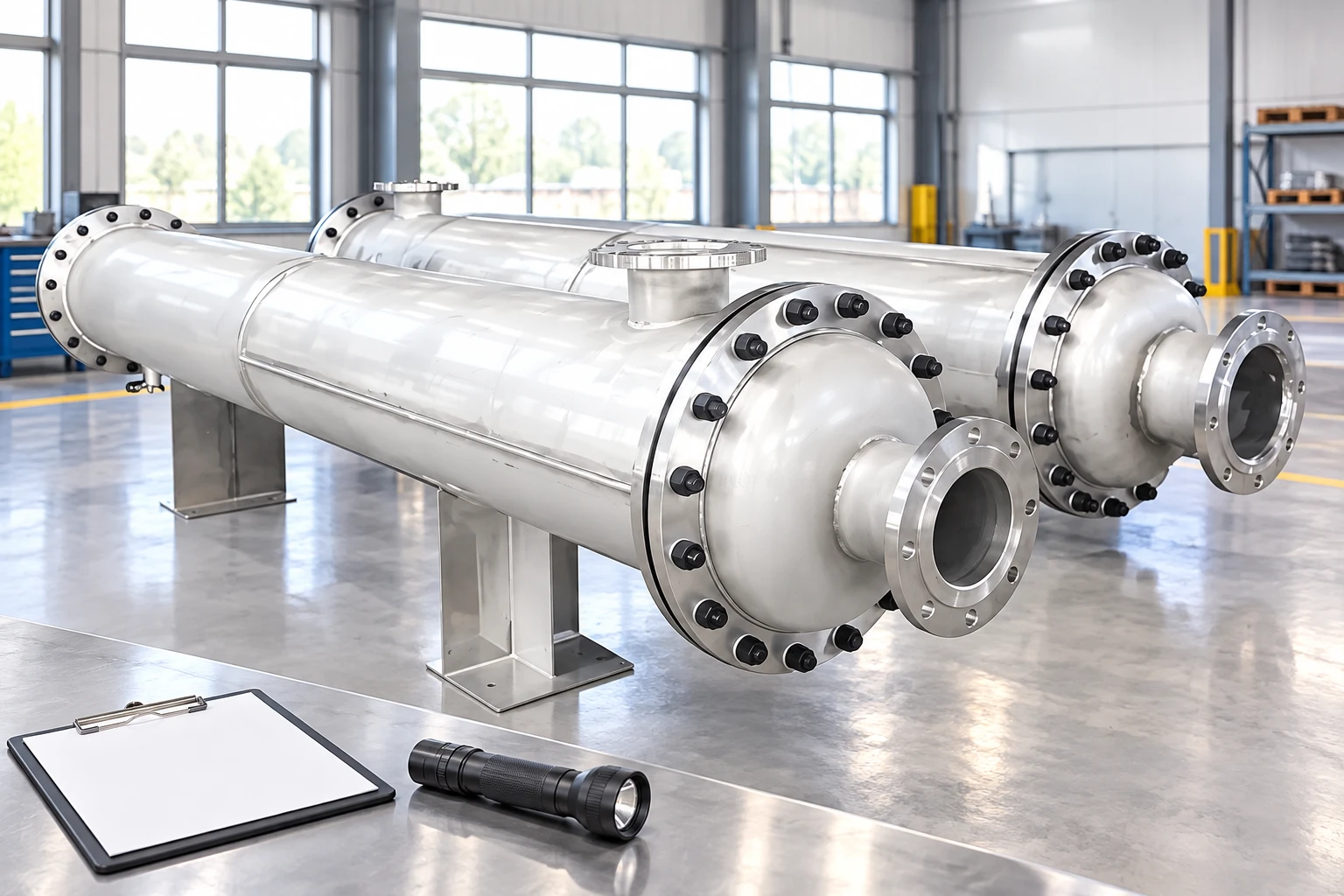
A milk storage tank protects a perishable product between steps: after receiving, before thermal processing, or ahead of filling. The vessel itself is simple; the duty is not, because milk rewards prompt cooling, gentle handling, and cleaning that leaves no film behind.
Buyers who state the duty clearly get comparable offers. Raw-milk holding, pasteurized-product storage, and intermediate buffering carry different hygiene, documentation, and instrumentation expectations, and the plant’s own dairy rules set the temperature limits that the equipment must serve.
Part 1. Classify the Milk Duty
Name the product stage first. Raw milk straight from receiving, pasteurized milk awaiting filling, and intermediate streams such as standardized or skimmed fractions each set different expectations for hygiene, monitoring, and records. Context on the processing chain is summarized in Wikipedia: Pasteurization.
Describe the flow pattern around the vessel. Note how milk arrives (tanker, pipeline, process step), how it leaves, and how long it may wait. Residence time drives both quality risk and the cooling question.
State the regulatory frame without copying it into steel. Dairy authorities and buyers’ own quality systems define temperatures and times; general orientation is available from the FAO dairy production and products portal. The RFQ should reference the plant’s applicable limits rather than invent numbers.
| Duty input | What to record | Why it matters |
|---|---|---|
| Product stage | raw, pasteurized, intermediate | Sets hygiene and documentation |
| Arrival pattern | tanker, pipeline, batch times | Drives cooling and capacity |
| Residence time | typical and worst case | Frames quality risk |
| Temperature limits | per the plant’s dairy rules | Defines the control task |
| Dispatch | filling, processing, transport | Fixes outlet interfaces |
Part 2. Plan Cooling and Cold Holding
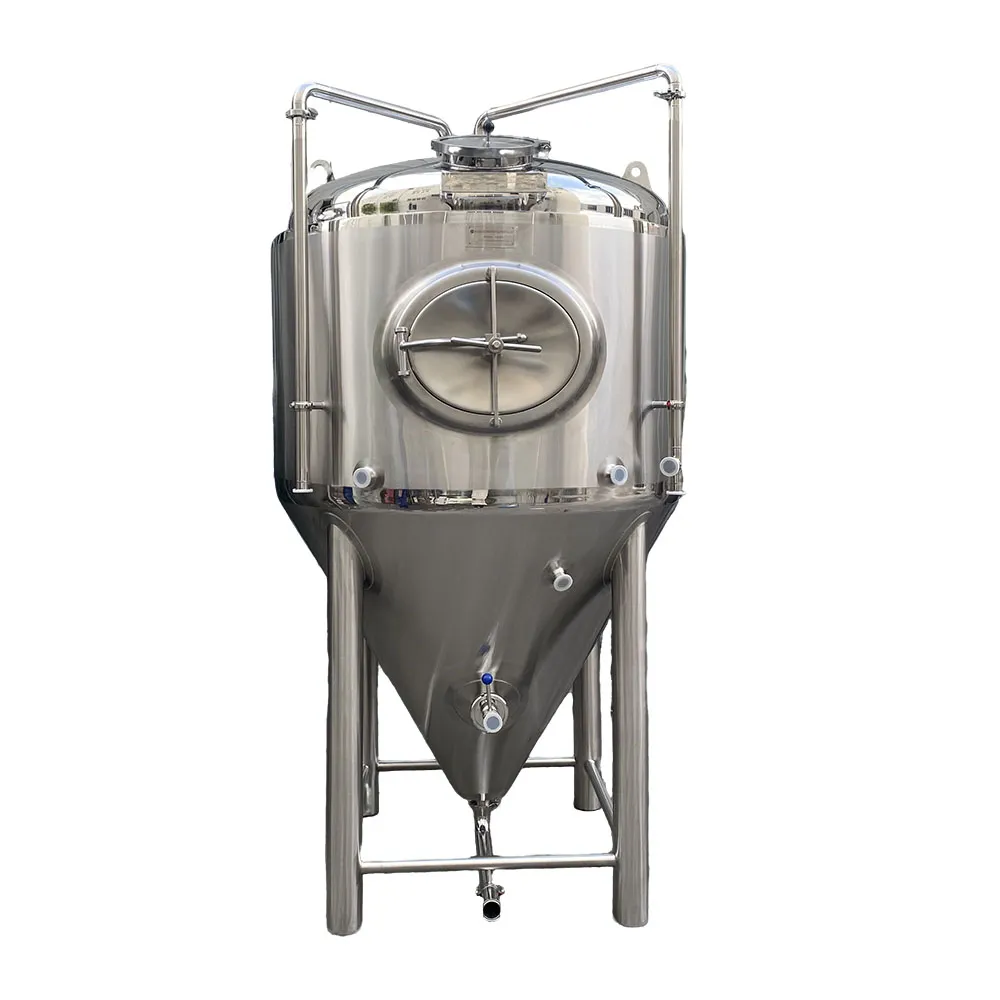
Decide where cooling happens. Some plants chill milk in-line before the tank and use the vessel only for insulated cold holding; others expect the tank itself to remove heat through a cooling jacket or dimple surface. The two duties size very differently.
State the cooling load honestly. Incoming temperature, batch size, arrival schedule, and the target holding temperature together define the duty; a tank asked to cool warm milk quickly needs far more capacity than one holding pre-chilled product.
Insulation supports whichever path is chosen. Cold holding benefits from insulated walls, sealed cladding, and covered openings, and the refrigeration interface (media, temperatures, control valve scope) belongs in the RFQ so bidders quote against the same utility.
Part 3. Specify Sanitary Construction and Finish
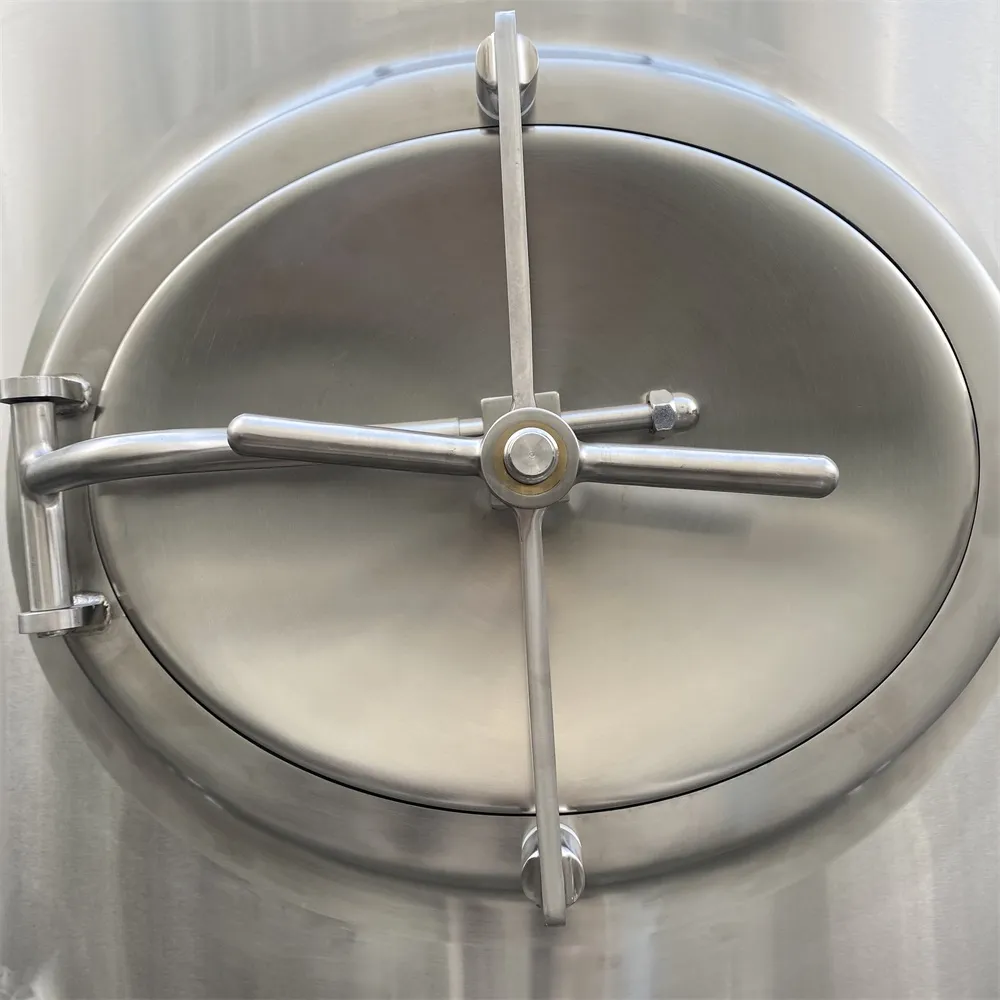
Sanitary design means no places for residue to hide. Ask for crevice-free product-contact construction: smooth welds, radiused corners, self-draining surfaces, and hygienic connection types instead of threaded fittings in the product zone.
Surface finish is a stated number, not an adjective. Specify the internal finish expectation for product-contact surfaces and the weld treatment, and ask the fabricator to document what will be achieved and how it is verified.
Gaskets and seals complete the product zone. Elastomers must suit milk fat, cleaning chemicals, and temperatures, so request stated materials for every product-contact seal. The same reasoning appears in the dairy products mixing tank guide for agitated vessels.
Part 4. Verify CIP Coverage and Drainability
Clean-in-place is the default for closed dairy vessels. The concept — circulating cleaning solutions through fixed equipment without disassembly — is described in Wikipedia: Clean-in-place; the RFQ must turn it into checkable equipment features.
Ask for coverage, not promises. Spray devices must reach the full wetted surface including the underside of covers, agitator shafts, and nozzles; shadowed areas become cleaning failures. Request the spray layout and the basis for claiming full coverage.
Drainability closes the cleaning loop. A milk tank should empty itself: sloped bottom toward the outlet, no pockets at nozzles, and a drain point that leaves no standing liquid. State that the vessel must be self-draining and ask how it is achieved.
| CIP requirement | Checkable equipment feature | Bidder evidence |
|---|---|---|
| Full coverage | spray device layout | coverage basis or test |
| Shadow-free interior | agitator and nozzle design | drawings of wetted parts |
| Drainability | bottom slope and outlet position | self-draining statement |
| Chemical tolerance | seal and gasket materials | stated elastomer families |
Part 5. Add Gentle Agitation and Instrumentation
Milk usually wants gentle motion, not shear. Slow agitation keeps cream distributed and supports uniform temperature without damaging the product, so describe the goal and let the supplier propose speed and impeller style for the geometry.
Instrumentation makes cold holding verifiable. A representative temperature sensor, a level indication, and the alarms the quality system expects are the baseline; state where readings go (local display or plant system) and what records the plant keeps.
Think about sampling and access. Dairies often need hygienic sampling points and a manhole sized for inspection, and both belong in the connection schedule rather than as afterthoughts. Related food-equipment context appears in the function of a food mixing tank.
Part 6. Size Capacity, Connections, and Installation
Base capacity on the real schedule. Largest single receipt, number of receipts per day, dispatch pattern, and the buffer the plant wants between them produce a defensible volume; note whether the tank must receive while dispatching.
List the connection schedule: inlet, outlet, CIP supply and return, vent with protection against contamination, temperature and level ports, sampling, manhole, and spares. Hygienic connection standards should be named by the plant.
Describe the installation: indoor placement is typical, but floor drainage, washdown exposure, clearance for the manhole and agitator service, and access for the refrigeration interface all affect fabrication and support design.
Part 7. Compare Sanitary Vessels and Prepare the RFQ
Published sanitary equipment gives the discussion a concrete start. The sanitary round manhole tank shows a hygienic vessel class with sanitary access, and the configurable sanitary tank range covers further sizes. Product pages provide configuration context; they do not certify dairy-rule compliance for your plant.
Send each bidder the same package: duty class, receiving and dispatch schedule, cooling path and load, temperature limits per the plant’s rules, finish and hygienic construction expectations, CIP method and chemistry, agitation goal, instrumentation, connection schedule, and installation constraints.
Ask bidders to document finish, spray coverage, drainability, and seal materials, and to list assumptions and exclusions. When the package is ready, send your milk-handling duty for a configuration discussion and compare the documented answers.
FAQs
What is a milk storage tank?
It is a sanitary vessel that holds raw milk, pasteurized milk, or intermediate dairy streams between receiving, processing, and filling, usually insulated and often cooled.
What temperature should a milk storage tank hold?
The limits come from the plant’s applicable dairy rules and quality system, not from the tank supplier. State the required holding temperature and band in the RFQ and design the cooling to serve it.
How are milk storage tanks cleaned?
Closed dairy vessels are normally cleaned in place by circulating cleaning solutions through spray devices. Coverage of every wetted surface and full drainability are the checkable requirements.
Do milk tanks need agitation?
Most holding duties use gentle agitation to keep cream distributed and temperature uniform. The goal is slow, low-shear motion suited to the vessel geometry.
What finish does a sanitary milk tank need?
Product-contact surfaces need a stated smooth finish, treated welds, radiused corners, and crevice-free construction. Ask for the finish specification and its verification method in writing.
How do I size a milk storage tank?
Work from the largest receipt, the daily schedule, and the buffer between receiving and dispatch. Record the assumptions next to the requested volume so bids stay comparable.
What should a milk storage tank RFQ include?
Include the duty class, schedule, cooling path and load, temperature limits, hygienic construction and finish, CIP method, agitation goal, instrumentation, connections, and installation constraints.