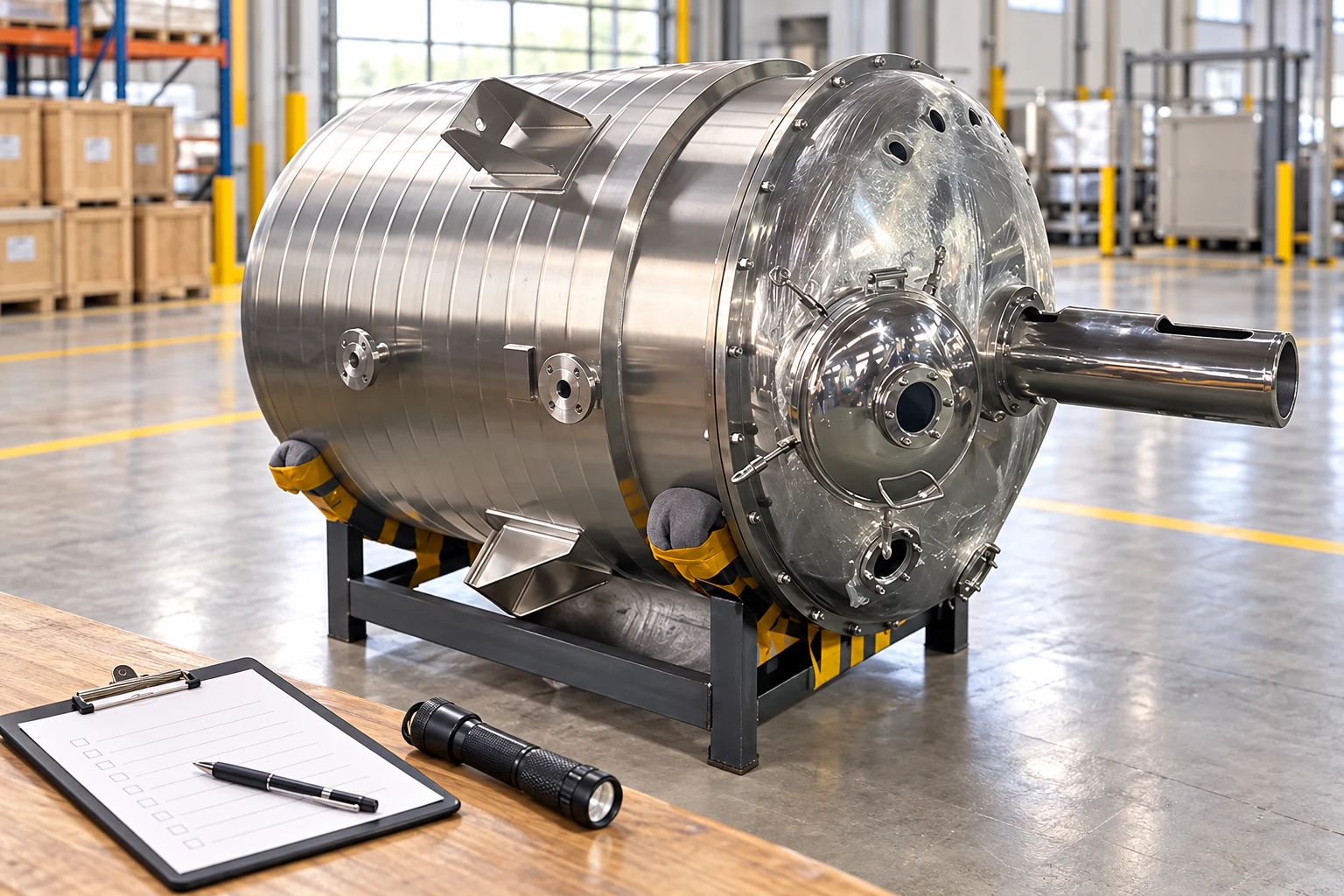
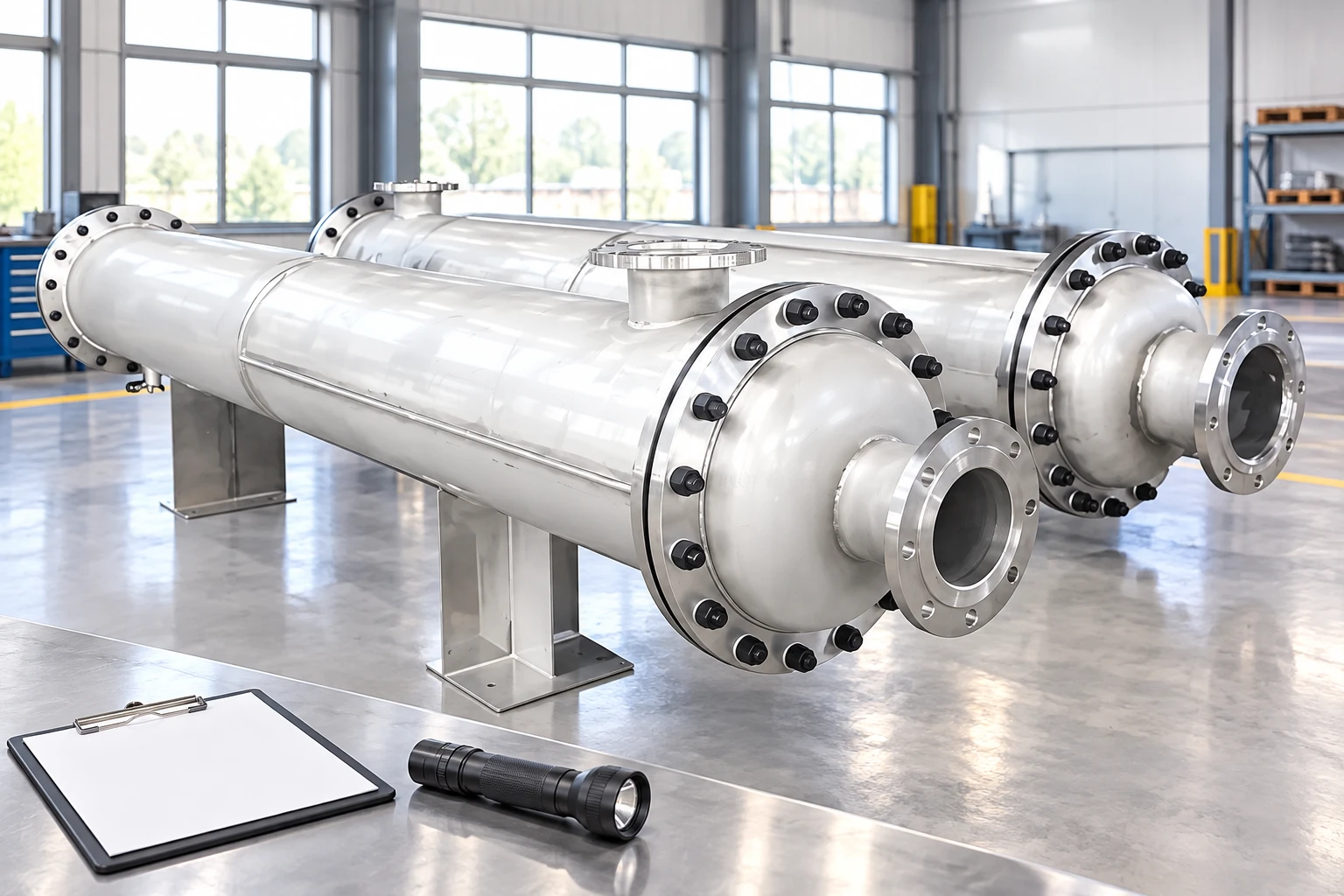
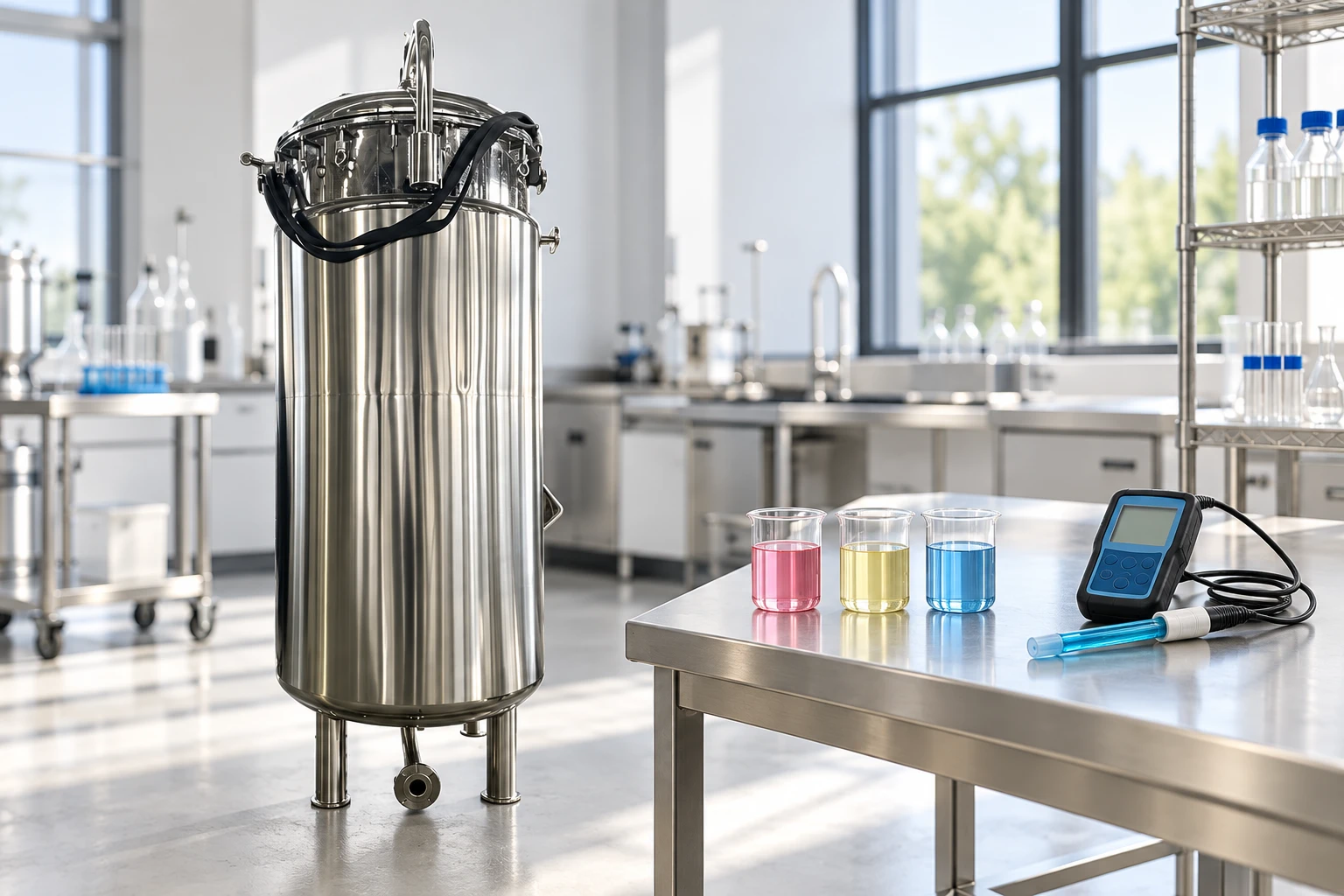
An ethanol storage tank appears in distilleries, breweries, pharmaceutical utilities, cosmetic plants, and chemical facilities, yet the same vessel name hides very different duties. Beverage spirit, high-purity industrial ethanol, denatured blends, and recovered solvent each carry their own material, hygiene, and safety questions.
Specify the stream before the steel. When the RFQ states the concentration range, temperature, duty class, and turnover, a fabricator can propose a vessel with a defensible material basis, and the site’s reviewers can handle the flammability decisions that no product page should claim for them.
Part 1. Classify the Ethanol Duty
Name the duty class first. A beverage-spirit vessel, an industrial ethanol day tank, and a recovered-alcohol holding tank may share geometry, but they differ in hygiene expectations, acceptable materials of contact, documentation, and cleaning routines.
Describe the stream honestly. Denaturants, process impurities, water content, and dissolved solids all matter for material review and product quality. Recovered streams deserve extra description, since their composition varies batch to batch.
State the tank’s position in the flow. Receiving from tanker or still, buffering before blending, holding finished product, and collecting recovered solvent each set different turnover, sampling, and instrumentation needs. One paragraph of service description prevents most quoting misunderstandings.
| Duty class | Typical concern | RFQ emphasis |
|---|---|---|
| Beverage spirit | product contact and flavor | hygiene, finish, documentation |
| Industrial high-purity | quality and moisture pickup | venting choice, cleanliness |
| Denatured or blended | additive compatibility | gasket and seal review |
| Recovered alcohol | variable impurities | robust access and cleaning |
Part 2. Use Concentration and Temperature Data
Ethanol is flammable and fully miscible with water, and its mixture behavior shifts with concentration. The general chemistry is documented in Wikipedia: Ethanol; what the RFQ needs is your actual concentration range and how it can change during the year of operation.
Mixture data belongs in the design conversation. Density, freezing behavior, and related properties of ethanol-water blends vary with strength, as reference tables such as the Engineering ToolBox ethanol-water data show. Level instruments calibrated by density are affected when strength changes.
Temperature completes the property picture. Record the normal range, summer peaks, and any nearby heat sources, because vapor generation and the site’s flammability review both follow the real storage temperature, not a nominal figure.
Part 3. Confirm Materials, Gaskets, and Hygiene

Stainless steel is the common baseline for ethanol service across beverage and industrial plants. That baseline still deserves a stream-specific check: ask each bidder to state the proposed grade, weld treatment, and the basis against your concentration, temperature, and impurity data.
Non-metallic parts carry most of the risk. Gaskets, sight glass seals, valve seats, and hose linings must tolerate the ethanol strength and any denaturants, so list every wetted elastomer and ask for stated families rather than a general assurance.
| Compatibility item | RFQ input | Bidder response to expect |
|---|---|---|
| Shell material | concentration range, temperature | proposed grade and basis |
| Welds and finish | duty class, hygiene needs | weld treatment and finish statement |
| Gaskets and seals | list of wetted non-metallics | stated elastomer families |
| Accessories | sight glass, hoses, valves | wetted materials declared |
Hygiene expectations depend on the duty class. Beverage and pharmaceutical-adjacent duties may need finer internal finishes, full drainability, and documented cleaning, while a recovered-alcohol tank prioritizes access and simple washdown. For a broader material overview, see stainless steel storage tank types and uses.
Part 4. Plan Venting and Loss Control
Every fill and drain cycle moves vapor. State that the vent concept must cover filling, emptying, and daily thermal breathing, and identify who selects and sizes the devices, since that engineering belongs to the responsible reviewer rather than the fabrication quote.
Evaporative loss is an economic and quality question. High-value spirit and high-purity ethanol justify a discussion about vent devices, condensation, or recovery provisions, while an occasional-use tank may accept simple routing to a safe location. Moisture pickup through open vents can also matter for anhydrous product.
Describe the vent destination. Outdoor routing, treatment systems, and return lines each affect nozzle count and orientation. The fabricator needs the nozzle schedule even when the devices themselves come from another scope.
Part 5. Address Grounding, Containment, and Site Reviews
Transfers of flammable liquid can generate static charge. Request grounding lugs and bonding points on the vessel, and route the earthing design, filling velocity rules, and any inerting decisions to the site’s electrical and safety reviewers.
Containment context shapes the mechanical scope. Describe the bund or room, drainage rules, and leak detection preferences, so support height, connection orientation, and access platforms are quoted correctly.
Site duties frame the whole installation. Public guidance such as the HSE fire and explosion topic pages shows that managing flammable substances is a structured site responsibility; classification, protection measures, and permits stay with the site. The vessel RFQ should record this split of responsibility explicitly.
Part 6. Define Capacity, Connections, and Installation
Base capacity on deliveries and turnover. Record the largest single receipt, the usage rate, the reserve the plant wants, and whether the tank must accept a full delivery while holding a working heel. That reasoning produces a defensible volume request instead of a rounded guess.
List the connection schedule: fill, outlet, vent, drain, overflow response, sampling, instrument ports, grounding points, and spares. Add the level indication preference and any high-level alarm interface the site expects. Sampling points matter more in beverage and quality-sensitive duties.
Close with installation constraints: indoor or outdoor placement, footprint and height limits, seismic or wind context, and access for cleaning and inspection. A wider orientation across vessel roles is available in what are the different uses of storage tanks.
Part 7. Compare Alcohol-Service Vessels and Prepare the RFQ
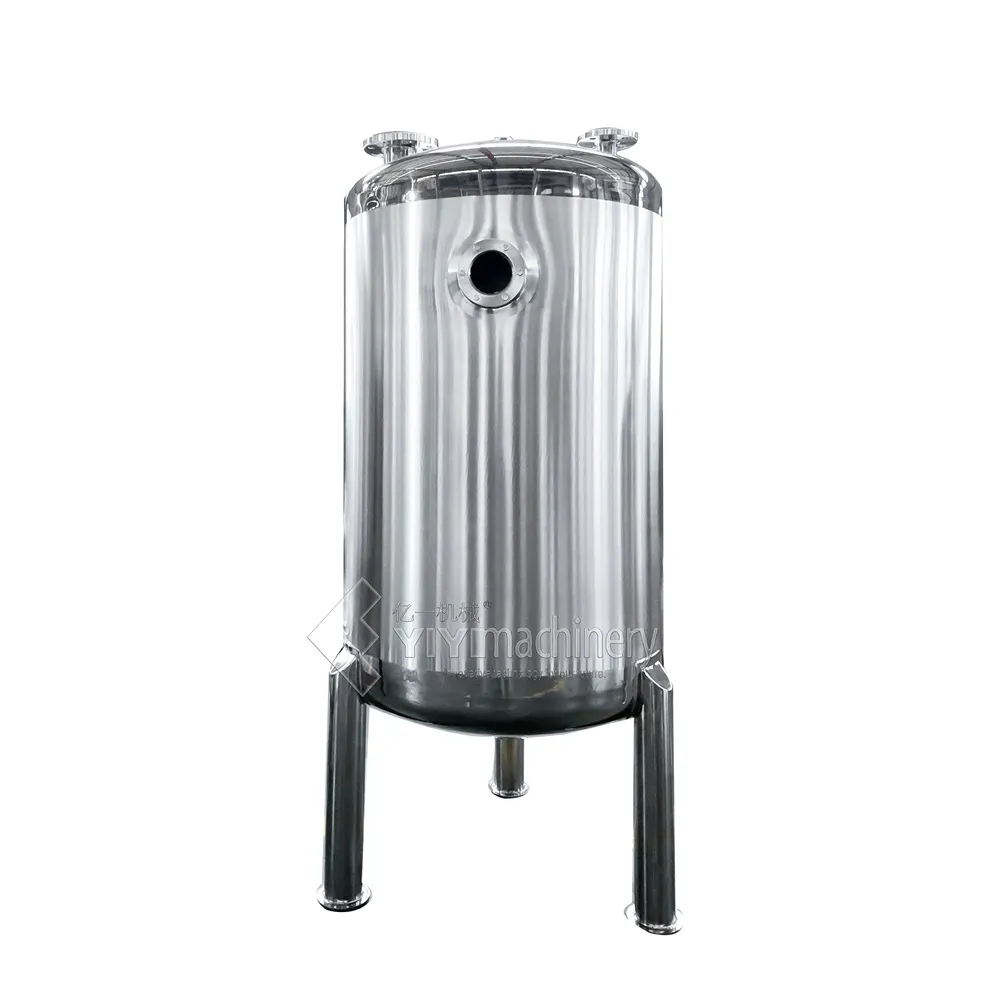
Published alcohol-service equipment anchors the conversation. The 1000L alcohol receiving tank shows a receiving-duty class, the 1000L wine tank shows a beverage-holding class, and the Storage Tank category covers further volumes and layouts. These pages provide configuration context, not approval of a specific ethanol stream.
Send one identical package to every bidder. Include the stream description and concentration range, duty class, temperature, capacity basis, filling method, vent concept, grounding expectations, containment description, hygiene and cleaning needs, materials and gaskets, connection schedule, instrumentation, and documentation.
Ask each bidder to separate supplied scope from site responsibilities and to list assumptions and exclusions. When the package is ready, send your ethanol duty for a configuration discussion and compare answers point by point.
FAQs
What tank material is best for ethanol storage?
Stainless steel is the usual baseline across beverage and industrial ethanol duties. Confirm the grade and welds against your concentration, temperature, and impurity data rather than accepting a generic claim.
Does ethanol corrode stainless steel tanks?
Clean ethanol-water mixtures are generally considered compatible with common stainless grades. Impurities, denaturants, and unusual temperatures can change the review, so provide the full stream description.
Is an ethanol storage tank different from a wine or spirit tank?
Geometry can be similar, but duty class changes hygiene, finish, documentation, and accessories. Beverage vessels emphasize product contact and cleaning; industrial and recovery tanks emphasize venting and robustness.
Why does ethanol concentration matter for storage?
Concentration changes density, vapor behavior, and mixture properties, which affect instruments, loss control, and the safety review. State the expected range and its variation in the RFQ.
Do ethanol storage tanks need grounding?
Yes, grounding and bonding provisions are a standard request because flammable-liquid transfers can generate static charge. The earthing design itself belongs to the site’s reviewers.
Can an ethanol tank be installed outdoors?
Outdoor installation is common, subject to the site’s flammability review, temperature extremes, and containment arrangements. Describe the location so venting and protection scopes are quoted correctly.
What should an ethanol storage tank RFQ include?
Include the stream description, concentration range, duty class, capacity basis, temperature, filling method, vent concept, grounding and containment context, hygiene needs, materials and gaskets, connections, instrumentation, and documentation.