Some batch processes need a vessel that people can see into and work around. An open-top reaction vessel can make additions, observation, sampling, cleaning, and viscous-material handling easier. That convenience is valuable only when it fits the product and when the plant can manage the operating conditions that an open surface introduces.
The selection question is not whether an open vessel is “better.” It is whether access solves a real process problem that outweighs the need for containment, a controlled atmosphere, or a fully enclosed cleaning arrangement. This guide converts that trade-off into clear RFQ inputs.
Part 1. Define Why the Process Needs Open Access
Start with the task that cannot be done well through a closed manway or feed nozzle. It might be staged manual additions, visual observation of a batch transition, insertion of a portable tool, recovery of a thick material, cleaning access, or frequent recipe changeover. Write that task in sequence, including who performs it and at what point in the batch.
Then identify what remains open. Some processes need a completely open top during a short addition but can run with a cover in place afterward. Others need a permanent opening for a lifting frame, scraper, or operator access. The distinction affects cover design, agitator mounting, guarding, cleaning, and the plant layout around the vessel.
An open-top reaction vessel is a process choice, not a generic safety category. The owner should define product behavior, temperature, viscosity, additions, and operating controls before asking a fabricator to propose the layout.
| Access need | Example RFQ detail | Design question |
|---|---|---|
| Manual additions | ingredient form, quantity, frequency, and height | Is a full opening, charge port, or removable cover needed? |
| Visual observation | what must be observed and when | Does the operator need line of sight during agitation? |
| Cleaning access | component removal and washdown method | What opening and safe reach are required? |
| Thick-material handling | viscosity, sticking behavior, and discharge method | Can the batch be moved and cleaned without retained material? |
| Sampling | sample frequency and product condition | Can a closed sample point serve the actual need? |
Part 2. Map Additions, Observation, and Operator Work
List every interaction with the batch. Include charging powders or liquids, adjusting an addition rate, checking dispersion, taking samples, scraping a wall, changing an agitator tool, inspecting the bottom outlet, and washing the interior. A vague request for “easy operation” gives a bidder no way to set the opening, platform, lifting, or guarding details.
Addition sequence matters. A powder poured into a moving batch can create dust, splash, floating agglomerates, or an operator-exposure concern depending on the material and process. The article cannot select controls for those conditions; it can ensure the RFQ records them so the owner’s process and safety review can address them.
Observation has alternatives. A sight glass, camera, sample point, level instrument, or documented batch procedure may remove the need for continuous open-top access. Compare those options before committing to a large permanent opening.
Part 3. Match Mixing and Geometry to the Batch
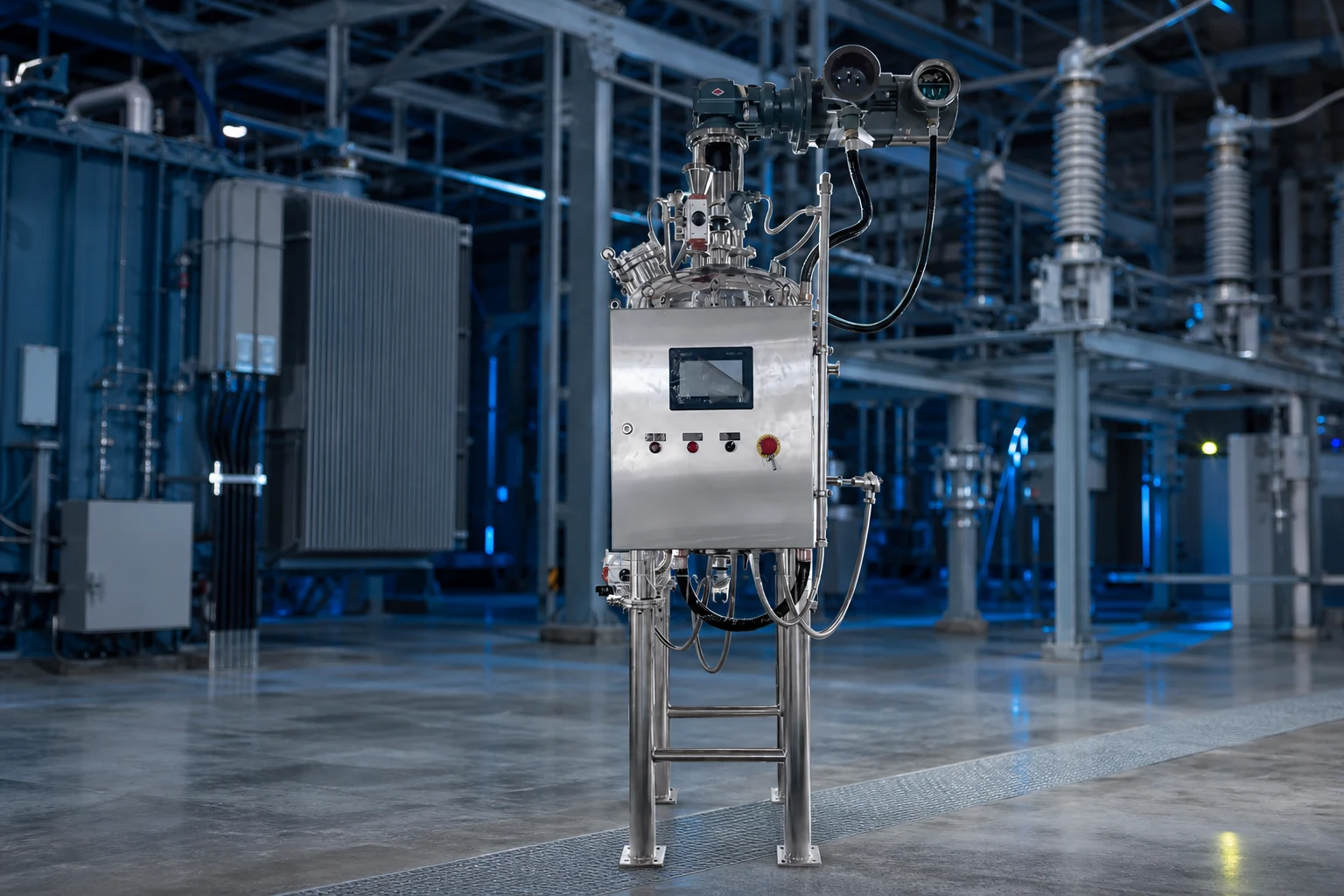
Access does not replace mixing design. State the viscosity range, solids behavior, batch depth, density difference, temperature profile, and required process steps. A top-entering agitator, sweep, disperser, or other arrangement must be evaluated against those facts and the available headspace.
The opening also changes what can be mounted above the batch. A broad open top may compete with an agitator drive, lifting arrangement, powder-charging device, or removable cover. Put all of those elements on a preliminary layout rather than resolving them after the vessel diameter is fixed.
For high-shear or dispersion duties, the high shear mixing tank guide offers related mixing questions. Use it alongside this access-focused article: one addresses the mixing duty, while this guide asks whether the operating team truly needs an open configuration.
| Batch feature | What to provide | Why it affects an open vessel |
|---|---|---|
| Viscosity range | start, peak, and final values or behavior | Sets torque and may affect wall access |
| Addition method | powder, liquid, chunks, or manual tool | Determines opening and charging layout |
| Agitation step | blend, disperse, suspend, heat, or cool | Changes drive, internals, and guarding |
| Headspace | normal fill, foam allowance, and freeboard | Affects splash and cover decision |
| Discharge behavior | flow, scraping, pumpability, and residue | Shapes bottom and operator-access requirements |
Part 4. Review Splash, Vapor, and Containment Boundaries
Open access changes the containment conversation. A moving agitator can throw liquid or solids; a hot batch can release vapor; and an exposed surface can be affected by nearby dust, moisture, or other contaminants. Record those conditions and submit them to the owner’s process, safety, and environmental review.
OSHA process safety resources provide general management context, not a vessel approval. They do not determine whether an individual product can be mixed openly. The specific material hazards, temperature, emissions, ventilation, exposure controls, and jurisdictional requirements must be evaluated by the responsible owner and qualified specialists.
Consider a closed alternative when the batch needs containment, a controlled atmosphere, vacuum, pressure capability, or protection from an open environment. The low-pressure reaction vessel guide is a useful lateral comparison for defining the vessel boundary and seals before a configuration is selected.
Part 5. Plan Covers, Cleaning, and Discharge
“Open top” can still include a cover strategy. A removable lid, split cover, hinged section, local charge opening, or temporary cover may balance access with housekeeping. Define when each component is installed, how it is lifted or secured, and whether it interferes with the agitator, tools, or cleaning steps.
Cleaning should be described as a complete operating method. State whether the vessel is manually washed, spray cleaned, connected to a clean-in-place loop, or handled by another procedure. Access makes visual inspection easier, but it does not prove that every internal surface, agitator component, or connected line has been cleaned.
Discharge needs its own sequence. Describe whether product flows by gravity, is pumped, is scraped to an outlet, or is assisted by an operator. The bottom geometry, valve position, platform clearance, and cleaning of the outlet must all work in the installed orientation.
Part 6. Check Layout, Access, and Documentation
Put the vessel into the plant layout before releasing the RFQ. Give bidders floor elevations, available height, platform levels, access routes, lifting constraints, nearby utilities, and the space needed to remove a cover or agitator. A vessel that looks accessible in elevation can be difficult to operate after stairs, pipe racks, and handrails are installed.
Request a preliminary general arrangement showing the opening, cover, drive, nozzles, drain, supports, and service clearances. Ask bidders to state exclusions such as platforms, guards, lifting devices, external cleaning equipment, ventilation connections, and controls. This makes the scope comparable.
Document the operating boundary as well. The package should show the materials, batch conditions, access activities, cleaning plan, instrument list, and owner-required inspection records. Good documentation prevents an access requirement from being silently converted into an unsupported safety or compliance claim.
Part 7. Compare Open and Closed Options in the RFQ
Use the configurable reactor range and a configurable mixing tank to begin the configuration discussion, not to decide the open-versus-closed question. Submit identical process data for each option: material, batch range, additions, viscosity, temperature, agitation, access tasks, cover expectation, splash and vapor conditions, cleaning method, discharge sequence, layout, and owner acceptance criteria.
Ask bidders to explain which tasks their opening and cover design supports, what conditions require owner confirmation, and what containment or cleaning items lie outside their scope. A bid comparison becomes useful when it separates a genuine access benefit from a familiar but unsuitable configuration.
When the duty statement is complete, send your vessel duty for review. Include the process sequence and a layout sketch so the equipment discussion starts with the actual work around the batch.
FAQs
What is an open-top reaction vessel?
It is a batch vessel configured to provide direct access from above for defined operating tasks such as additions, observation, sampling, cleaning, or handling. Its suitability depends on the product and operating conditions.
When is open access useful?
Open access can be useful when the process needs frequent manual additions, direct observation, removable tools, cleaning reach, or recovery of difficult material. Document the exact task before selecting the layout.
When should a closed vessel be considered?
Consider a closed configuration when the duty needs containment, a controlled atmosphere, vacuum, pressure capability, or protection from the surrounding environment. The responsible owner must assess the specific process conditions.
Can an open vessel handle viscous material?
It can be configured for viscous batches, but the mixing, wall access, headspace, and discharge arrangement must be designed around the actual viscosity range and batch sequence.
How should splash and vapor be evaluated?
Provide the product, temperature, agitation, addition method, and emission or exposure conditions to the owner’s qualified process and safety reviewers. This article does not replace that assessment.
Can an open vessel be cleaned in place?
Possibly, but only when the complete geometry, internals, spray arrangement, cleaning chemistry, flow, and operating method are defined and verified. Open access alone is not evidence of CIP performance.
What belongs in an open-top vessel RFQ?
Include the material, batch size, additions, viscosity, temperature, mixing duty, access tasks, cover expectation, cleaning method, discharge sequence, layout constraints, and owner acceptance criteria.