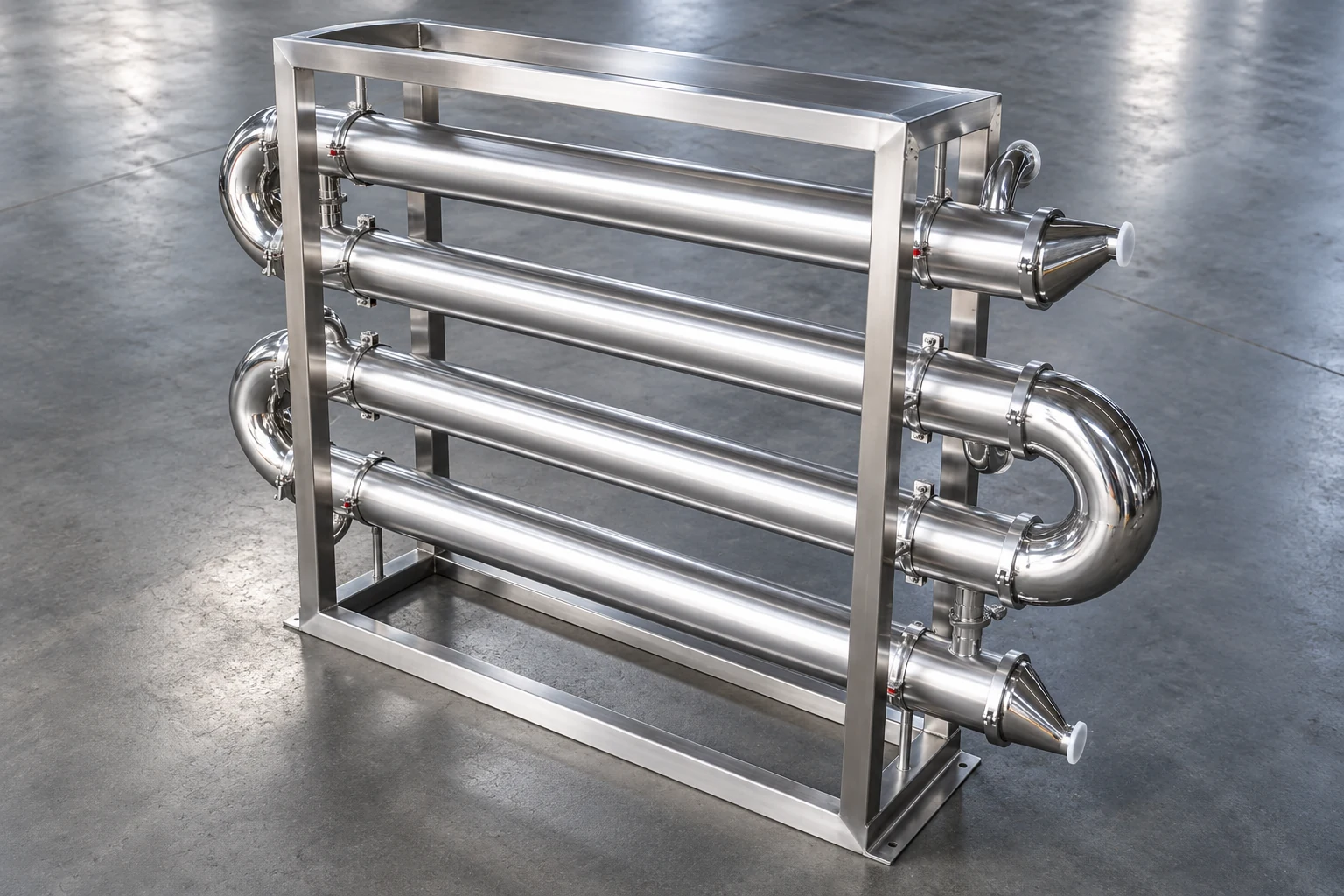
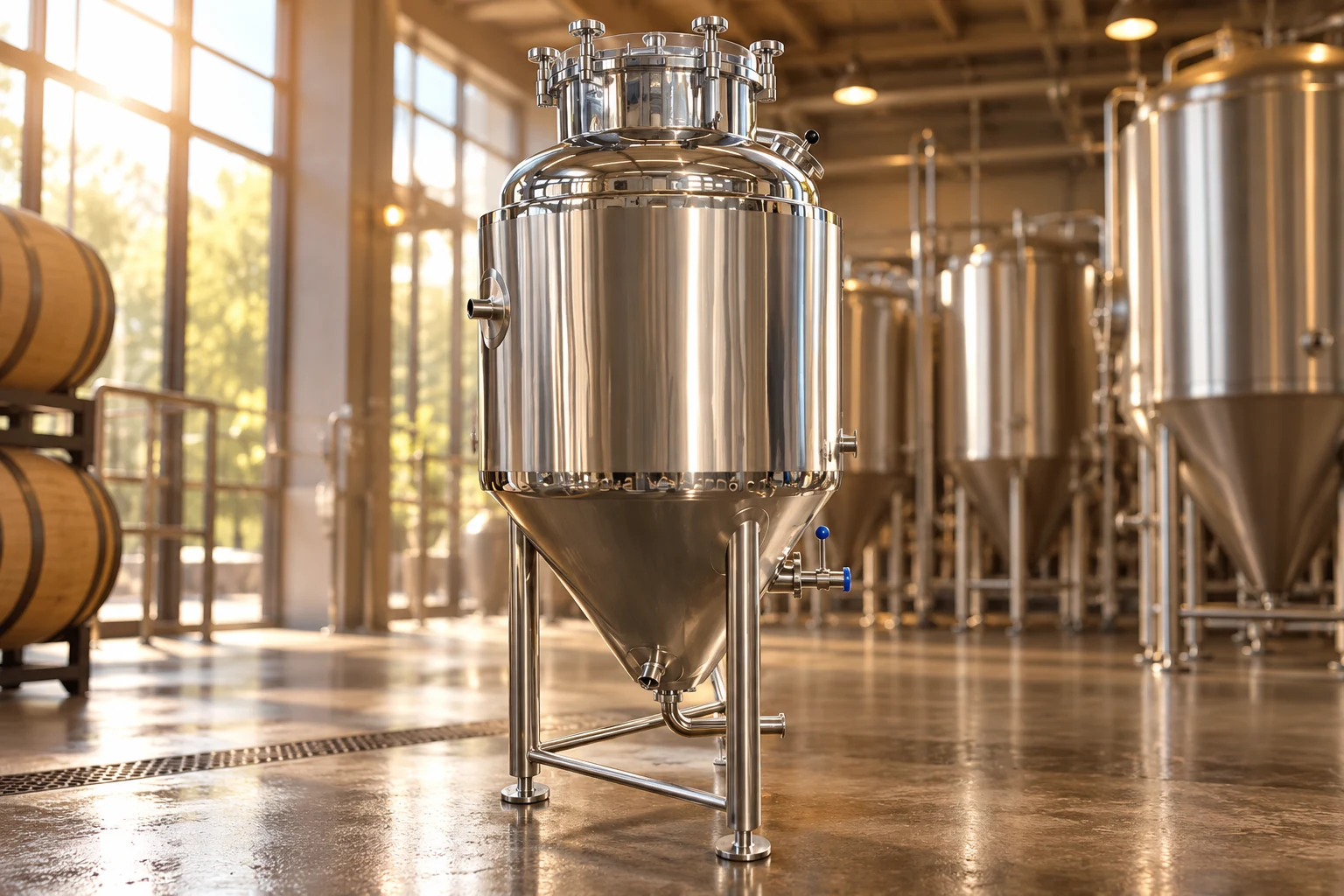
A measurement tank, often called a metering tank, doses a liquid by filling a calibrated vessel to a known level and then releasing that volume into the process. Plants use this approach when a batch recipe needs a repeatable liquid charge and an inline meter is unavailable, impractical, or hard to verify for the medium.
Accuracy in this service is a property of the whole installation. The calibrated span, vessel geometry, level instrument, fill and drain method, and cleaning routine all shape how repeatable each dose will be, so an RFQ should describe the duty rather than only a tank size.
Part 1. Define the Dosing Role in the Batch Line
Start with what the vessel must deliver. Record the liquid name, the dose sizes the recipe needs, how often a dose is drawn, and what happens downstream if a charge runs slightly high or low. These answers determine whether a measurement tank fits the duty at all.
A metering tank suits recipes where the same volume, or a small set of volumes, is charged repeatedly under similar conditions. Highly variable dose sizes, continuous addition, or custody-transfer duties usually point to inline flow measurement instead, because a flow meter totalizes any quantity within its range.
Describe the sequence around the vessel. Note where the liquid comes from, whether filling is by pump or gravity, how the operator or control system confirms the level, and how the dose is released. A short written sequence prevents the supplier from quoting a bare tank when the duty needs a small dosing station.
| Duty question | What to record | Why it matters |
|---|---|---|
| Dose sizes | smallest, largest, and typical charge | Sets the calibrated span |
| Frequency | doses per batch and per shift | Affects wear, cleaning, and automation |
| Consequence of error | product quality, cost, or rework | Sets the repeatability target |
| Fill method | pump, gravity, or header pressure | Changes surge and venting needs |
| Release method | valve type and downstream route | Affects drain time and heel |
Part 2. Separate Nominal Volume from Calibrated Span
Nominal volume is the physical size of the vessel. The calibrated span is the level range that has been checked against a reference and marked or instrumented for dosing. Only the span carries accuracy, and it is normally narrower than the full vessel height.
Keep the working dose inside the middle of the span where the vessel cross-section is uniform. Doses measured near the bottom head or the top curvature change volume quickly with small level differences, which hurts repeatability. Ask the fabricator to state which portion of the height is intended for measurement.
Calibration is the activity that ties the marked span to a reference quantity under defined conditions. Agree early on who calibrates the vessel, against what reference, at what temperature, and how often the check is repeated in service. Without that plan, an accuracy figure on a datasheet has no operational meaning.
Part 3. Choose Level Instrumentation and Verification
The reading method decides how the span is used. Options range from a graduated sight indication for manual dosing to a level sensor feeding a control system for automated charges. Each technology has a different response to foam, vapor, coating, and turbulence.
Match the instrument to the liquid. Sticky or crystallizing media can coat probes, foaming products confuse some non-contact readings, and hygienic duties restrict which fittings are acceptable. Provide the supplier with the media properties instead of naming a technology first.
Verification deserves its own line in the specification. Define how operators confirm a correct dose during production, what alarm or interlock responds to an out-of-range level, and how instrument drift will be detected. A dosing vessel without a verification routine slowly loses the accuracy it was bought for.
Part 4. Control Geometry, Heel Volume, and Drainage
Geometry links level to volume. A tall, narrow vessel gives more level change per liter, which improves reading resolution for small doses. A short, wide vessel does the opposite, so state the smallest dose and let the fabricator propose proportions that keep it readable.
Heel is the liquid that remains after the outlet valve closes. Record whether the process tolerates a constant heel, needs full drainage between doses, or requires a specific residual limit for product changeover. Bottom head shape, outlet position, and internal finish all influence the achievable heel.
Drain time matters when doses are frequent. Ask for the expected empty time at the stated outlet size and viscosity, and confirm the vent can admit air fast enough during release. Slow or inconsistent drainage often shows up in production as dose-to-dose variation that gets blamed on the instrument.
Part 5. Match Materials, Finish, and Cleaning
Material selection follows the liquid, its temperature, and the cleaning chemistry. Stainless grades are the usual starting point for food, beverage, cosmetic, and many chemical duties, and the final choice should reference the media data supplied in the RFQ rather than a generic label.
Surface finish affects both cleaning and measurement. Rough internal surfaces hold residue that changes the effective volume of small doses and complicates changeover between products. State the required internal finish, weld treatment, and whether the duty needs crevice-free hygienic construction.
Cleaning method shapes the design. Manual rinse, spray-ball cleaning, or a full clean-in-place routine each impose different nozzle, drainage, and access requirements. Describe the cleaning agents and temperatures so seals, gaskets, and instrument wetted parts can be checked for compatibility.
| Specification area | Minimum RFQ input | Supplier response to expect |
|---|---|---|
| Material | media name, concentration, temperature | proposed grade and basis |
| Finish | internal finish target, weld condition | achievable finish and method |
| Cleaning | method, agents, temperature | drainage, access, and seal plan |
| Instrument | reading method, automation level | mounting and wetted materials |
| Calibration | reference, interval, responsibility | span marking and documentation |
Part 6. Plan Connections, Valves, and Installation
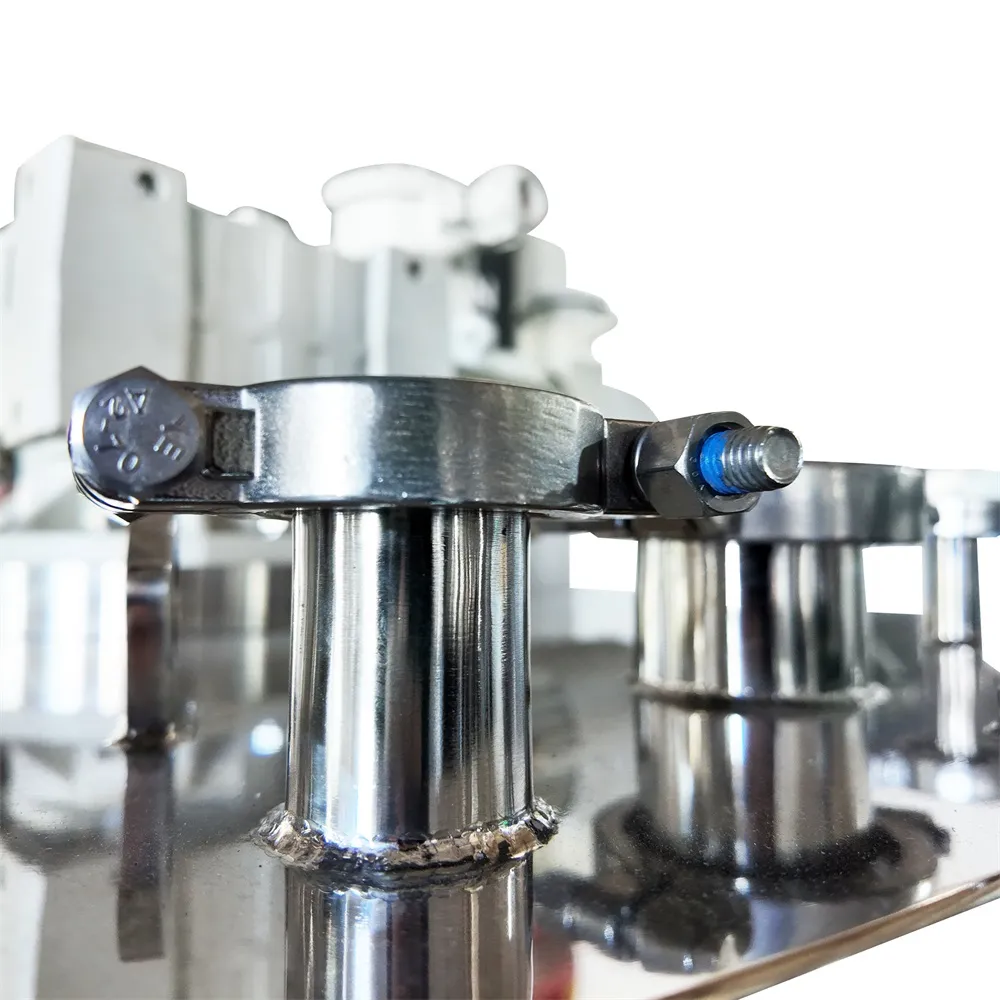
List every connection with size, standard, and orientation: fill, outlet, vent, overflow, drain, instrument ports, and any spare. A dosing vessel with a missing vent or an undersized outlet rarely performs to its calibrated promise, whatever the instrument reads.
Valve selection belongs in the same conversation. The outlet valve’s closing behavior affects how much liquid passes after the setpoint is reached, so automated duties should state the acceptable shutoff response. Include the control interface if a valve, pump, and sensor must act together.
Installation constraints complete the picture. Provide the available footprint, height, seismic or mobility needs, platform access for reading and cleaning, and the surrounding temperature. Small calibrated vessels are often mounted on frames or load cells, and that decision changes the fabrication scope.
Part 7. Compare Configurable Vessels and Prepare the RFQ
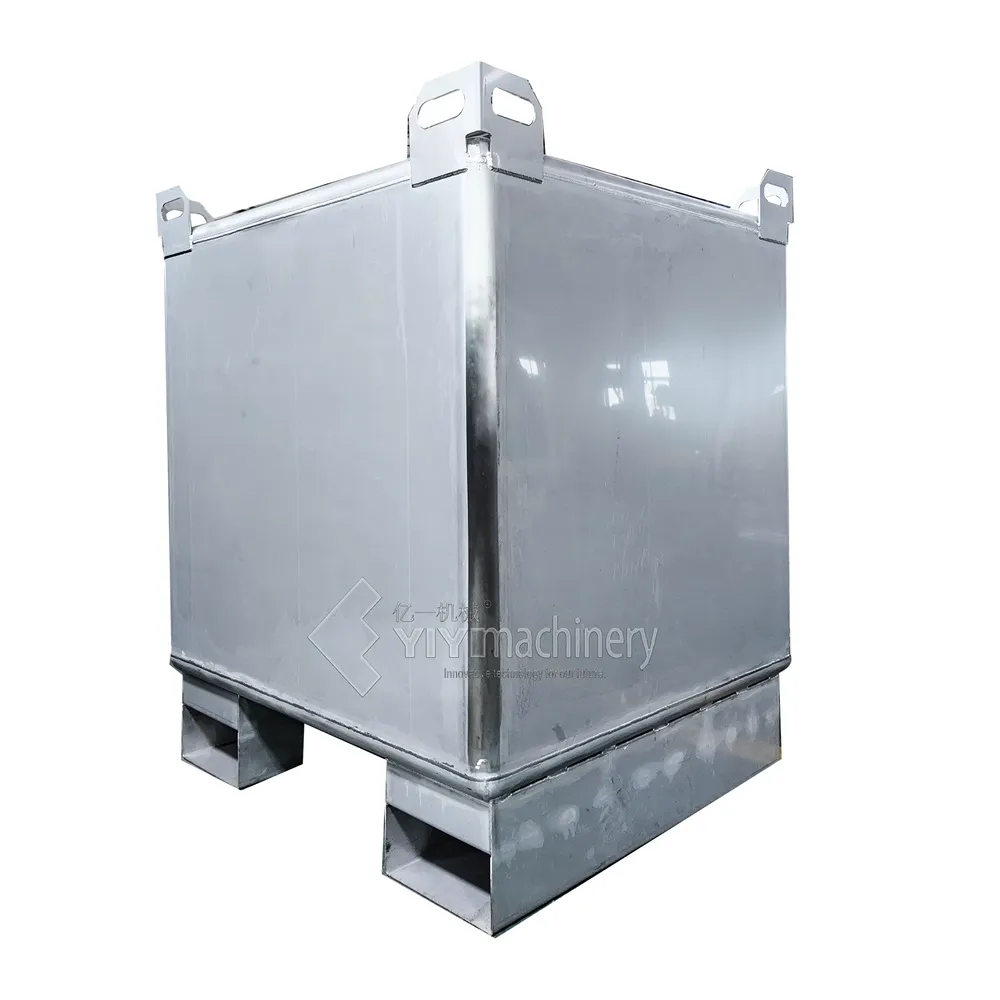
Use published equipment as a starting point for the conversation. The 400L stainless steel transfer vessel shows a movable calibrated-size class, and the wider configurable storage and process tanks range covers fixed vessels that can carry level instrumentation. Published pages set configuration context; they do not state a dosing accuracy for your duty.
Related planning guides help frame the numbers. See ingredient tank sizing for batch formulation lines for capacity reasoning, and buffer tank vs balance tank surge control to keep dosing vessels distinct from surge-control roles.
Send bidders one identical package: liquid data, dose range, repeatability target, calibrated span expectation, instrument preference, heel and drainage limits, material and finish, cleaning method, connection schedule, and installation constraints. When that package is ready, send your dosing duty for a configuration review and ask each bidder to state assumptions and exclusions separately.
FAQs
What is a measurement tank used for?
It charges a known liquid volume into a batch process by filling to a calibrated level and then releasing the dose. Plants use it where repeatable charges matter and inline metering is impractical.
What is the difference between a measurement tank and a metering tank?
In industrial buying the terms usually describe the same vessel: a calibrated tank used for dosing. Confirm the intended duty in writing, because some suppliers reserve “metering” for pump-based dosing systems.
How accurate is tank-based dosing?
There is no universal figure. Repeatability depends on the calibrated span, geometry, instrument, fill and drain behavior, and the calibration routine, so state a target and confirm it by test.
Which level instruments suit a metering tank?
Options include graduated sight indication, float or pressure-based devices, and non-contact sensors. The right choice follows the liquid’s foaming, coating, temperature, and hygiene characteristics.
Can a measurement tank replace a flow meter?
For repeated fixed doses it can be a robust alternative. Variable continuous flows, wide dose ranges, or custody-transfer duties generally favor inline flow measurement with its own verification plan.
What materials suit a metering tank for food or chemical service?
Stainless steel grades are the common baseline, selected against the media, temperature, and cleaning chemistry. Provide a media data sheet so the fabricator can state the material basis.
What should a measurement tank RFQ include?
Include liquid properties, dose range and repeatability target, calibrated span, instrument and automation level, heel and drainage limits, material and finish, cleaning method, connections, and installation constraints.