A thermal oil heating stirrer tank uses a closed-loop heat transfer fluid—circulated through a vessel jacket—to heat product while an agitator blends viscous or shear-sensitive batches. Buyers choose this arrangement when they need stable jacket temperature, even wall heating, and higher hold temperatures than many electric-only skids provide, without condensate handling from steam.
This selection guide covers loop components, viscous-product agitation, fluid maintenance, RFQ inputs, and fit boundaries for global process plants. Confirm temperatures, pump capacity, and certification only on supplier quotations tied to your site conditions.
Part 1. What is a thermal oil heating stirrer tank?
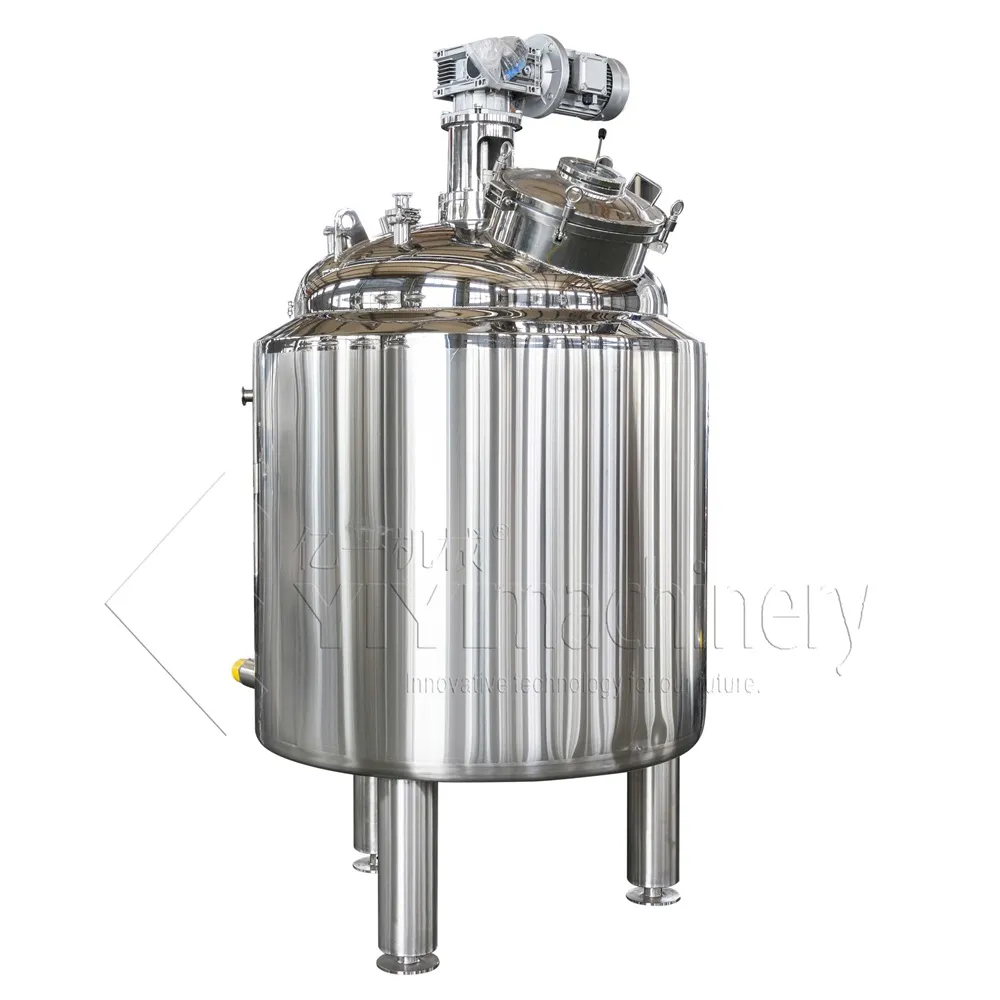
The system has two coupled parts: a stirred process vessel with a jacket channel, and a thermal oil circulation package that heats and pumps fluid through that jacket. Product never contacts the oil when the jacket is properly isolated, which helps with viscous foods, cosmetics, and resins that would foul direct immersion heaters.
Thermal oil heated stirred tanks are common where batch temperature must remain steady for long hold periods—melting solids, keeping chocolate or grease phases uniform, or maintaining resin viscosity before discharge.
| Term in quotes | Meaning for buyers |
|---|---|
| Thermal oil heating stirrer tank | Vessel + agitator + oil-heated jacket system |
| Oil-jacketed mixing tank | Often the vessel portion; may exclude heater skid |
| Heat transfer fluid (HTF) | The circulating oil or synthetic fluid in the loop |
See the mixing tank range for jacketed and heated configurations, then specify whether you need only the vessel or a complete loop package.
Part 2. How does a thermal oil jacket heat a stirred vessel?
The circulation pump moves hot fluid from the heater into the jacket passages. Heat conducts through the vessel wall into the product. Agitation moves viscous fluid away from the wall, reducing hot spots that would otherwise caramelize or degrade sensitive ingredients.
| Stage | What happens | Specification lever |
|---|---|---|
| Heat generation | Electric or gas-fired unit heats fluid in a separate chamber | Connected power or fuel supply |
| Circulation | Pump maintains flow across jacket | Flow rate vs jacket pressure drop |
| Transfer | Wall temperature drives product heating | Jacket area and insulation |
| Mixing | Agitator homogenizes temperature | Impeller type and speed range |
Jacket passages may be dimple, half-pipe, or full jacket depending on pressure and fabrication practice. Ask suppliers for jacket volume, maximum allowable jacket pressure, and hydraulic test scope when the vessel falls under pressure equipment rules such as ASME BPVC Section VIII.
Part 3. When is thermal oil heating better than electric or steam?
Thermal oil excels when product viscosity is high, when temperature must stay uniform for long intervals, or when steam condensate and trap maintenance are undesirable for that line. Electric immersion remains strong for fast heat-up on lower-viscosity fluids; steam jackets remain strong when plant steam is already available and condensate return is managed.
| Criterion | Thermal oil jacket | Electric (see electric heating stirrer tank guide) | Steam jacket (see steam jacketed guide) |
|---|---|---|---|
| Viscous product | Strong when agitator matches rheology | May need high kW or long times | Strong but condensate must be handled |
| Hold temperature stability | Strong | Good with control; element cycling | Good with stable steam pressure |
| Utility footprint | Electrical or gas heater on oil unit | Electrical only | Requires steam infrastructure |
| Maintenance focus | Fluid analysis, seal checks | Element replacement | Traps and corrosion |
From the field: Buyers switching from steam to thermal oil often cite condensate recovery complexity on remote skids—not because steam cannot heat the batch, but because a closed oil loop is easier to package on standalone vessels (heating and stirring tanks background).
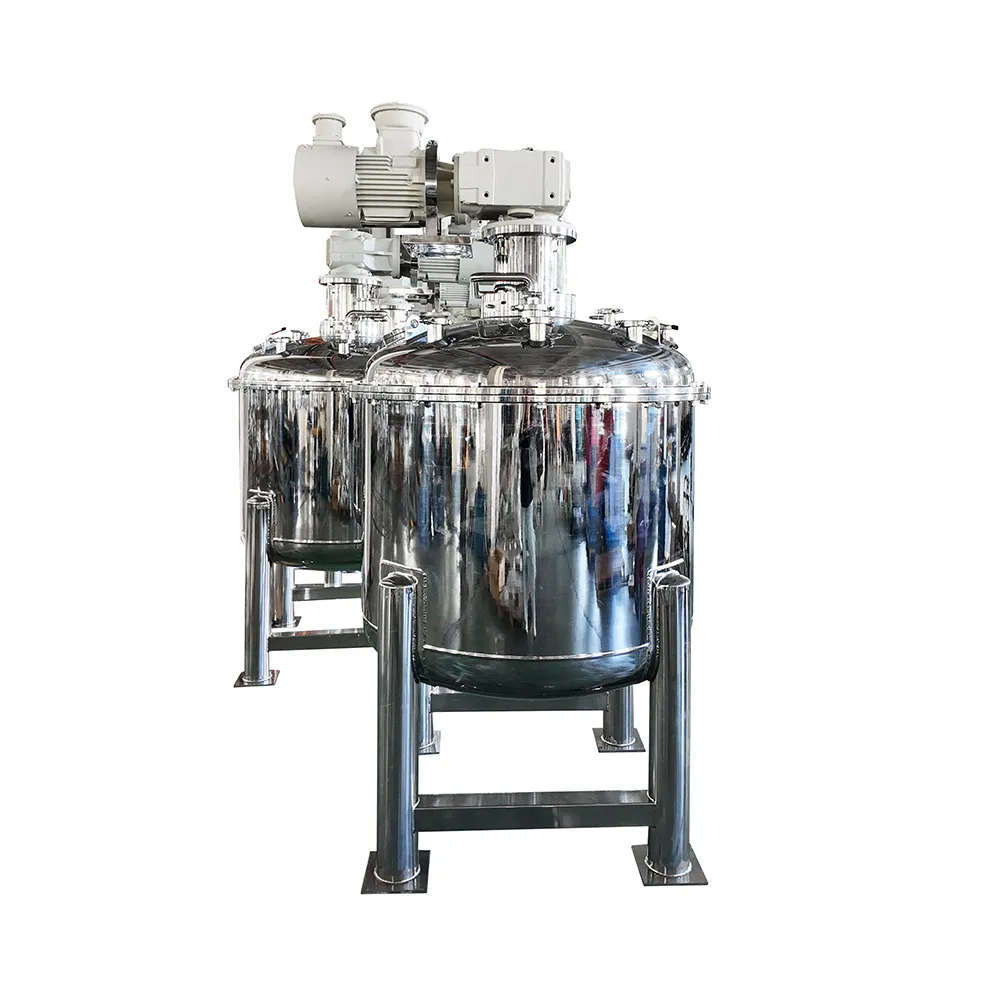
Part 4. What components belong in the thermal oil loop?
A complete thermal oil heating package—not just the vessel—determines reliability. RFQs should list whether the supplier provides an integrated skid or only the jacketed tank.
| Component | Function | Buyer check |
|---|---|---|
| Expansion tank | Accommodates fluid volume change | Volume and vent path |
| Circulation pump | Moves fluid through jacket | Flow/head curve at operating temperature |
| Heater | Adds energy to fluid | Fuel or electric supply, safety interlocks |
| Control panel | Holds setpoint, monitors limits | PID tuning, sensor type, alarms |
| Isolation valves | Maintenance and emergency stop | Accessible locations, leak-free specs |
| Fill and drain ports | Commissioning and fluid change | Containment plan during service |
Ask for a piping and instrument diagram showing oil flow direction, sensor placement, and high-limit cutouts. A quotation that lists only “thermal oil heating stirrer tank” without loop boundaries often excludes items the site must later buy separately.
Part 5. Which agitator and vessel features suit viscous heated batches?
Viscosity drives both heat transfer and motor torque. Anchor, helical ribbon, or double-motion agitators frequently appear on thermal oil heated tanks for thick pastes. Low-speed, high-torque drives prevent stalling during cold start.
| Product behavior | Agitator starting point | Vessel feature |
|---|---|---|
| Paste or grease | Anchor or ribbon | Scraping close to wall |
| Shear-sensitive gel | Slow anchor, avoid high tip speed | Gentle start ramp in control panel |
| Solid chunks melting in oil | Ribbon with breaker bar | Adequate freeboard for foam |
| Abrasive slurry | Confirm wear coatings separately | Not a default sanitary choice |
Sight glasses, sample valves, and heated discharge valves help operators verify temperature before transfer. A heated mixing tank with sight glass jacket illustrates the visibility many buyers request on jacketed lines.
Part 6. How should buyers manage fluid life, leaks, and safety?
Thermal fluid degrades when overheated or exposed to oxygen through open expansion tanks. Buyers should plan fluid sampling, filter changes, and seal inspections on pump and flange joints.
| Risk | Mitigation in specification |
|---|---|
| Fluid oxidation | Closed expansion system with inert blanket if required |
| Hot surface exposure | Guarding on heater and piping per site safety rules |
| Leak to atmosphere | Containment pans and detection near pump seals |
| Fire class of fluid | State required fluid certification; do not assume food-grade oil |
| Over-temperature | Hard high-limit on heater with independent sensor |
Important: Fire safety classification of heat transfer fluid and local electrical ratings for the heater skid are site and owner specific—include them in the RFQ; suppliers cannot infer them from tank volume alone (ASME BPVC Section VIII scope reference for pressure boundaries).
Part 7. What RFQ lines prevent undersized systems, and which YIYI tanks fit?
Undersizing appears when pump head is calculated at room temperature but not at operating viscosity of the oil, when jacket area is quoted for a tank that is only half-filled in production, or when agitator power is based on water rather than product torque.
| RFQ line | Why suppliers need it |
|---|---|
| Product viscosity vs temperature curve | Sizes agitator and heat-up time |
| Minimum and maximum fill volume | Sizes effective heat transfer area |
| Required jacket temperature profile | Sizes heater and pump |
| Heat-up time from ambient | Validates heater duty |
| Available utilities at skid location | Electrical or gas connection |
| Complete skid vs vessel-only scope | Prevents missing expansion tank |
| Cleaning method | Confirms drain slope and port locations |
Fit boundary: Thermal oil heating stirrer tanks fit viscous, hold-temperature batch processes with a maintained fluid loop. They are a weak fit for simple low-viscosity blending where electric heating skids are simpler, or for owners who cannot support fluid testing and leak management.
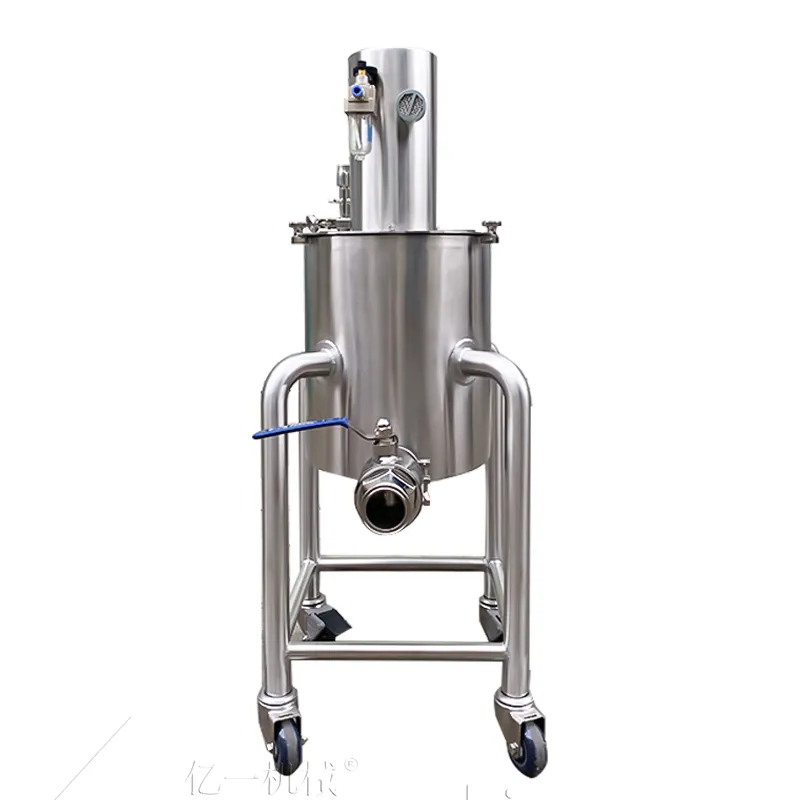
Published YIYI examples include jacketed heated units such as the heated mixing tank with sight glass jacket and capacity references like the 800L stainless steel mixing tank within the broader mixing tank range. Submit loop requirements through request a quote with the table above.
FAQ
What is the difference between thermal oil and oil-jacketed mixing tank in quotations?
Oil-jacketed often means the vessel only. Thermal oil heating stirrer tank should mean vessel, agitator, and circulation heater package—confirm scope line by line.
Can thermal oil jackets reach higher hold temperatures than electric jackets?
They can when the loop is sized for sustained duty, but maximum temperature depends on fluid selection and equipment design—request documented limits on the quote.
Is product ever in contact with thermal oil?
Not in a properly isolated jacket. Leaks are a maintenance and safety issue; specify detection and containment for your site rules.
Do viscous products always need anchor agitators?
Not always, but anchors are a common starting point above moderate viscosity. Provide rheology data so suppliers do not size for water.
How often should thermal fluid be tested?
Follow fluid supplier guidance and site reliability programs. Include sampling ports in the RFQ if condition monitoring is required.
When is steam still the better jacket medium?
When steam is already available at stable pressure and condensate return is managed, steam jackets may be simpler—see the steam jacketed mixing tank guide.
How does this compare to electric heating stirrer tanks?
Electric suits many moderate-temperature batches with simpler utilities. Thermal oil adds loop maintenance but improves stability for viscous long-hold processes—see the electric heating stirrer tank guide.
What should EPC firms attach to an RFQ?
Viscosity data, P&ID tie-ins, utility limits, hazardous-area classification if any, and whether the purchase is vessel-only or a full thermal oil skid.
References
- ASME BPVC Section VIII — Pressure Vessels Division 1 — jacket and vessel pressure scope when applicable
- IEC 60519 industrial electroheat publications — electric heater units on thermal oil systems
- 3-A Sanitary Standards — sanitary expectations when food contact surfaces are included in scope