Procurement teams rarely fail because they cannot name an agitator brand. They fail because the RFQ never forces a fair comparison between a magnetic agitator and a conventional top-entry mixer. Seal architecture, maintenance access, torque ceilings, cleaning burden, and spare strategy decide the winner—not a brochure claim that one design is always better.
This guide is a neutral procurement comparison. It does not rewrite the general magnetic stirrer tank buyer guide.
It also does not cover reaction-vessel magnetic stirring; see the magnetic stirring reaction vessel guide. For seal-free tank containment RFQs, pair this article with the magnetic mixing tank seal-free agitation guide.

Part 1. Frame the Magnetic Agitator vs Top-Entry Mixer Decision
A magnetic agitator transmits torque through a magnetic coupling across a sealed barrier. A top-entry mixer typically mounts the drive on the vessel head and passes a shaft through a mechanical seal, packing, or similar dynamic seal into the product. Both can mix successfully; they optimize different risk profiles.
Start the decision with plant priorities, not catalog photos. If shaft-seal leak paths, flush contamination, or seal-housing hygiene dominate risk registers, magnetic options deserve a serious quote. If high viscosity, dense solids, frequent overload starts, or existing seal-service skill dominate, top-entry sealed drives often remain the practical baseline.
| Decision driver | Magnetic agitator lean | Top-entry mixer lean |
|---|---|---|
| Containment at drive penetration | Prefer no rotating shaft seal | Accept managed mechanical seal |
| Viscosity / solids load | Mild to moderate envelopes | Higher power-density duties |
| Maintenance model | Rotor/barrier service access | Seal rebuild / flush systems |
| Hygiene documentation | Fewer seal-flush variables | Seal flush must be controlled |
| Spare strategy | Coupling/rotor parts | Seal kits and flush hardware |
Link the mixing tank product family so both options stay inside the same vessel category context.
Part 2. Compare Sealing and Containment Architectures
Sealing is the first comparison column. Magnetic designs remove the rotating shaft seal at the drive penetration. Top-entry designs keep that seal and usually add flush, quench, or monitoring details.
Neither removes manway gaskets, sample valves, or instrument seals, so the RFQ still needs a full static-seal list.
Ask magnetic bidders how the barrier or canister is designed, inspected, and cooled if required. Ask top-entry bidders for seal type, flush plan, leak detection, and elastomer compatibility. Keep language neutral: both architectures can be engineered well; the plant must price the failure modes it cannot tolerate.
| Seal topic | Magnetic agitator | Top-entry mixer |
|---|---|---|
| Rotating shaft seal | Typically eliminated | Required |
| Flush / barrier fluid | Often not for shaft seal | Common for mechanical seals |
| Static seals | Still required | Still required |
| Leak detection focus | Barrier integrity / process sensors | Seal cavity / drain / sensors |
| Containment story | Seal-free drive penetration | Managed seal system |
When seal-free vessel selection is the primary project, deepen containment inputs with the magnetic mixing tank seal-free guide rather than expanding this comparison into a full sterile-validation package.
Part 3. Compare Maintenance Access and Downtime Drivers

Maintenance differences show up as access and skill, not as a moral ranking. Top-entry seal changes are familiar in many plants but create confined work around the seal housing and flush lines. Magnetic systems trade seal rebuilds for rotor, bearing, and barrier service procedures that require clearances and lifting plans.
Require each bidder to describe service steps, estimated access needs, and whether the vessel must be emptied and cleaned before agitator work. Ask whether critical wear parts are replaceable without removing the entire drive train. Downtime drivers often include waiting on specialty parts—so spare lead times belong in the same table as labor hours.
For batch plants where changeover already dominates calendar time, align agitator service windows with CIP windows using the batch mixing tank cycle time and CIP RFQ guide. Do not assume magnetic always means lower maintenance; it means different maintenance.
Part 4. Compare Torque, Viscosity, and Overload Fit Without Invented Numbers
Torque and viscosity decide many awards. Magnetic couplings have practical envelopes; beyond those envelopes, slip, decoupling, or oversized couplings become the conversation. Top-entry mixers can often deliver higher continuous torque with conventional gearmotors, which is why heavy slurry or high-viscosity duties frequently stay on sealed shafts.
Do not invent Nm, RPM, or seal-life numbers in the RFQ. Provide qualitative rheology, solids notes, start conditions, and temperature.
Ask each vendor for a rated envelope and overload behavior explanation. If heavy-duty impeller and drive language is needed, cross-check the heavy duty mixing tank torque and impeller guide without copying fabricated ratings.
| Send with quote | Why both sides need it |
|---|---|
| Viscosity band vs temperature | Sets coupling vs gearmotor sizing |
| Solids / slurry character | Abrasion and start load |
| Start condition | Filled start vs soft start needs |
| Overload events | Decoupling vs seal distress risk |
| Mix duty goal | Blend, suspend, dissolve—not brand |
High-shear dispersion remains a separate decision. If the process needs intense dispersion energy, evaluate that duty on its own line rather than forcing either agitator type to pretend it is a high-shear machine.
Part 5. Compare Cleaning, CIP, and Hygiene Implications
Cleaning differences are about geometry and flush chemistry. Magnetic rotors create product-contact zones that must rinse; top-entry seal housings create dead spaces that must not contaminate the batch with flush fluid. Both can be designed for hygienic service; both can fail CIP if spray coverage and drainability are vague.
Buyers comparing agitator architectures should treat hygiene as a plant-owned program. Map product-contact cleaning expectations to guidance such as the FDA Food Code when that framework applies, and use EHEDG vocabulary if the team needs shared cleanability language.
Important: Neither a magnetic agitator nor a top-entry mixer guarantees sterile processing, validated CIP clearance, allergen-free changeover, mixing uniformity, or regulatory compliance — source note: FDA Food Code; keep acceptance criteria and quality ownership with the plant.
Ask for spray coverage notes, elastomer lists for product and CIP chemistry, drainability around the agitator, and whether COP is required for impeller or rotor removal. Score cleaning complexity honestly for each option.
Part 6. Compare Spare Parts and Lifecycle Cost Inputs
Lifecycle cost is more than purchase price. Magnetic packages may carry higher capital cost but reduce seal flush utilities and seal-kit consumption.
Top-entry packages may cost less up front but add seal inventory, flush media, and periodic rebuild labor. The RFQ should request a spare list with lead times for both architectures.
| Lifecycle input | Magnetic agitator notes | Top-entry mixer notes |
|---|---|---|
| Capital | Coupling/barrier hardware | Seal system + drive |
| Utilities | Usually no seal flush | Flush/quench media possible |
| Spares | Rotor, bearings, barrier parts | Seal kits, sleeves, flush parts |
| Skills | Specialty service procedures | Familiar seal crafts in many plants |
| Risk cost | Decoupling / envelope limits | Seal leak / flush contamination |
Keep competitor language out of the lifecycle table. Compare architectures and service models, not brands. When jacketed heating is part of the same vessel package, a heated mixing tank configuration reference can provide category context after the agitator decision table is drafted.
Part 7. Build the RFQ Decision Table and Configuration Context
Build one decision table and force every bidder to fill the same cells. Recommended columns: sealing architecture, maintenance access, torque/viscosity fit statement, cleaning approach, spare list, exclusions, and documentation pack. Award on scored risk, not on the most confident marketing sentence.
| RFQ decision column | What good answers include |
|---|---|
| Seals / containment | Barrier or seal type; flush plan if any |
| Maintenance | Access, steps, downtime assumptions |
| Torque / viscosity fit | Rated envelope vs duty sheet (vendor data) |
| Cleaning / CIP | Spray, drain, rotor or seal-zone rinse |
| Spares | Part list and lead-time notes |
| Exclusions | What is not included |
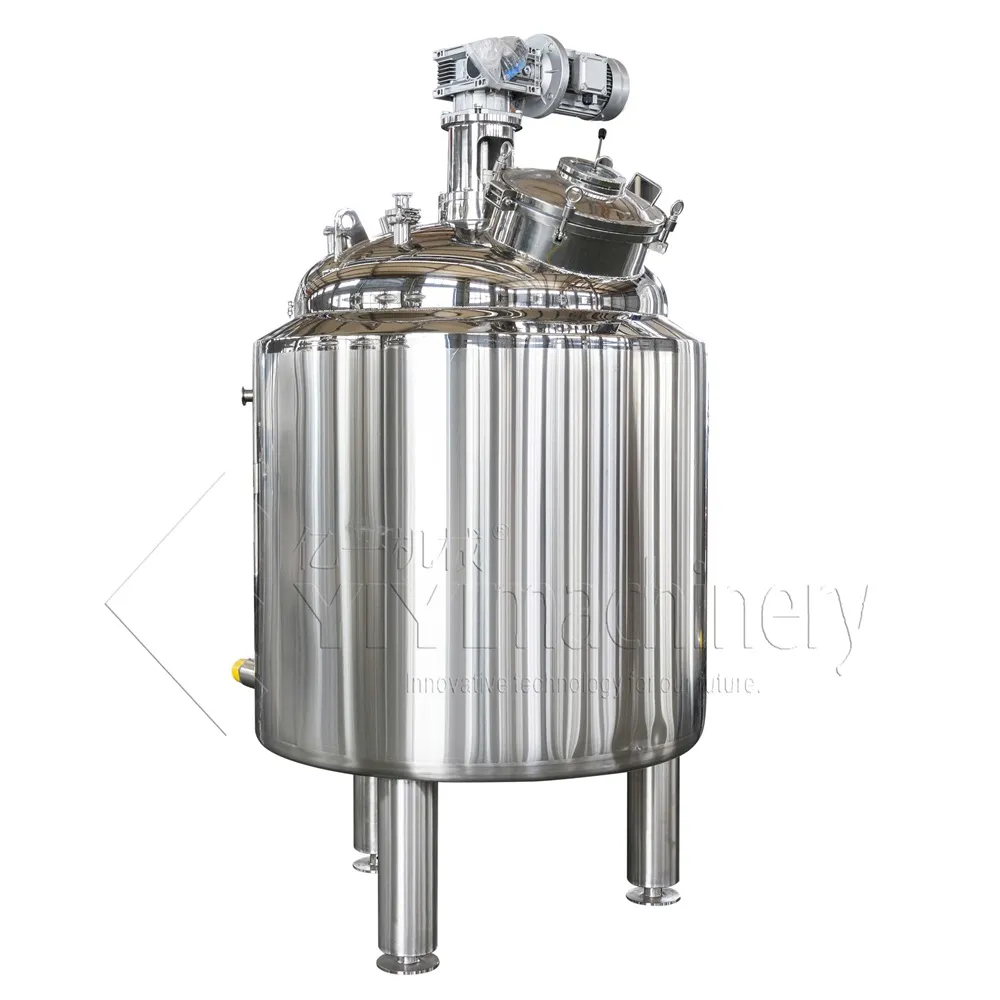
Review the mixing tank product family for vessel options, then use the heated mixing tank configuration reference as a discussion baseline when jacket and sight-glass context matters. When the comparison sheet is complete, contact YIYI with duty data for engineering review.
FAQs
What is a magnetic agitator in plant procurement terms?
It is an agitator driven through magnetic coupling so torque crosses a sealed barrier without a rotating shaft seal at the drive penetration, quoted against vessel duty, hygiene class, and coupling envelope limits.
How does a magnetic agitator differ from a top-entry mixer on seals?
A magnetic agitator typically eliminates the rotating shaft seal; a top-entry mixer retains a mechanical seal or packing and often needs flush and monitoring details. Static seals remain on both.
Which option usually wins on high-torque or viscous duty?
Top-entry sealed mixers often fit higher continuous torque and heavy viscosity/solids duties when magnetic coupling envelopes are exceeded. Confirm with vendor-rated data, not invented numbers.
What maintenance differences belong in the RFQ?
Require service steps, access clearances, whether the vessel must be cleaned first, critical spare lead times, and which wear parts are field-replaceable for each architecture.
How should cleaning and CIP be compared?
Compare spray coverage, drainability, product-contact lists, elastomer compatibility, and how the magnetic rotor zone or seal housing is rinsed. Plant validation ownership stays with the buyer.
What should a side-by-side RFQ decision table include?
Include seals/containment, maintenance, torque/viscosity fit, cleaning/CIP, spares, exclusions, and documentation so magnetic agitator and top-entry mixer bids are scored on the same fields.
References
- EHEDG hygienic design resources for cleanability comparison language
- FDA Food Code for plant hygiene accountability
- ASME codes and standards when pressure-rated vessel scope is quoted