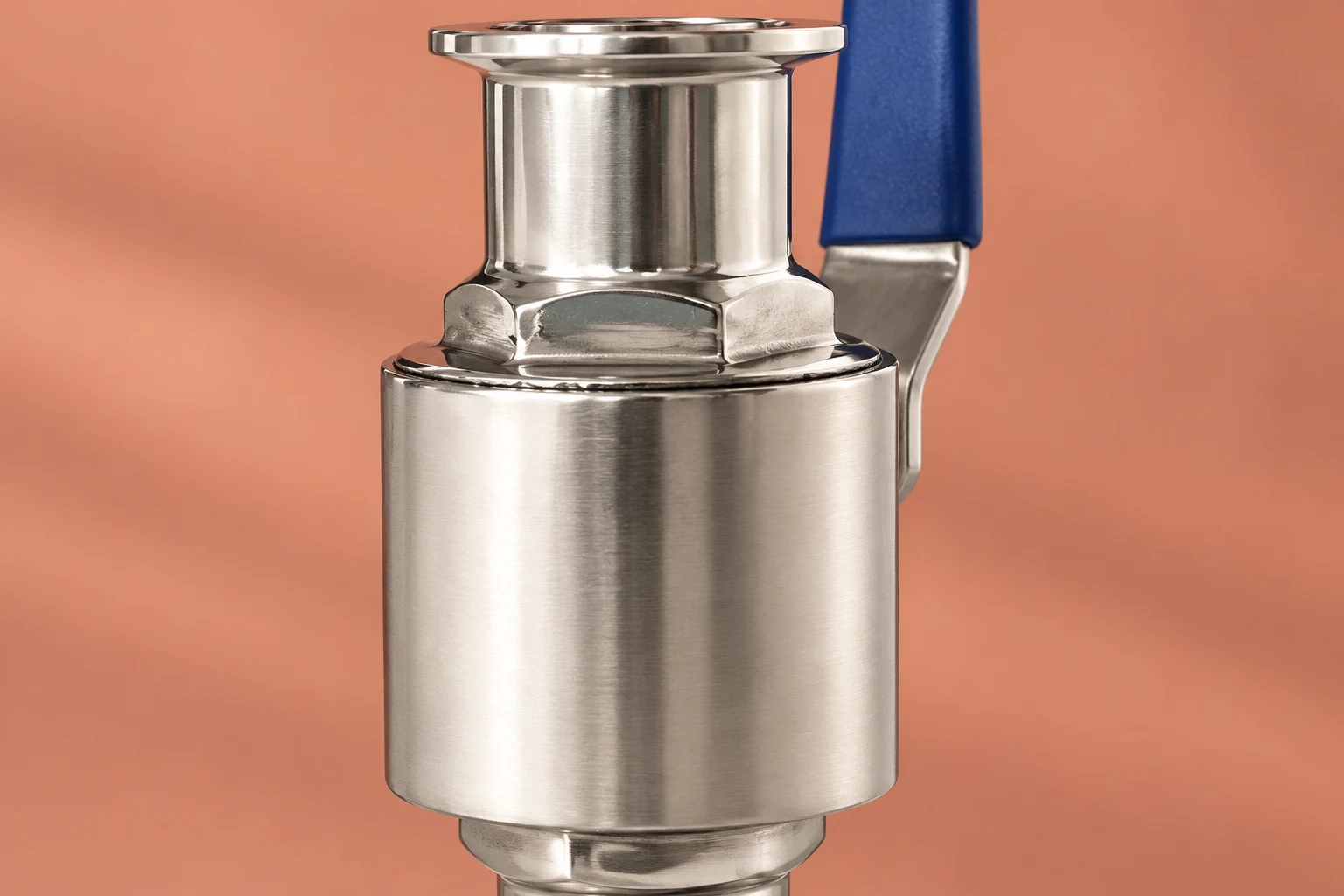
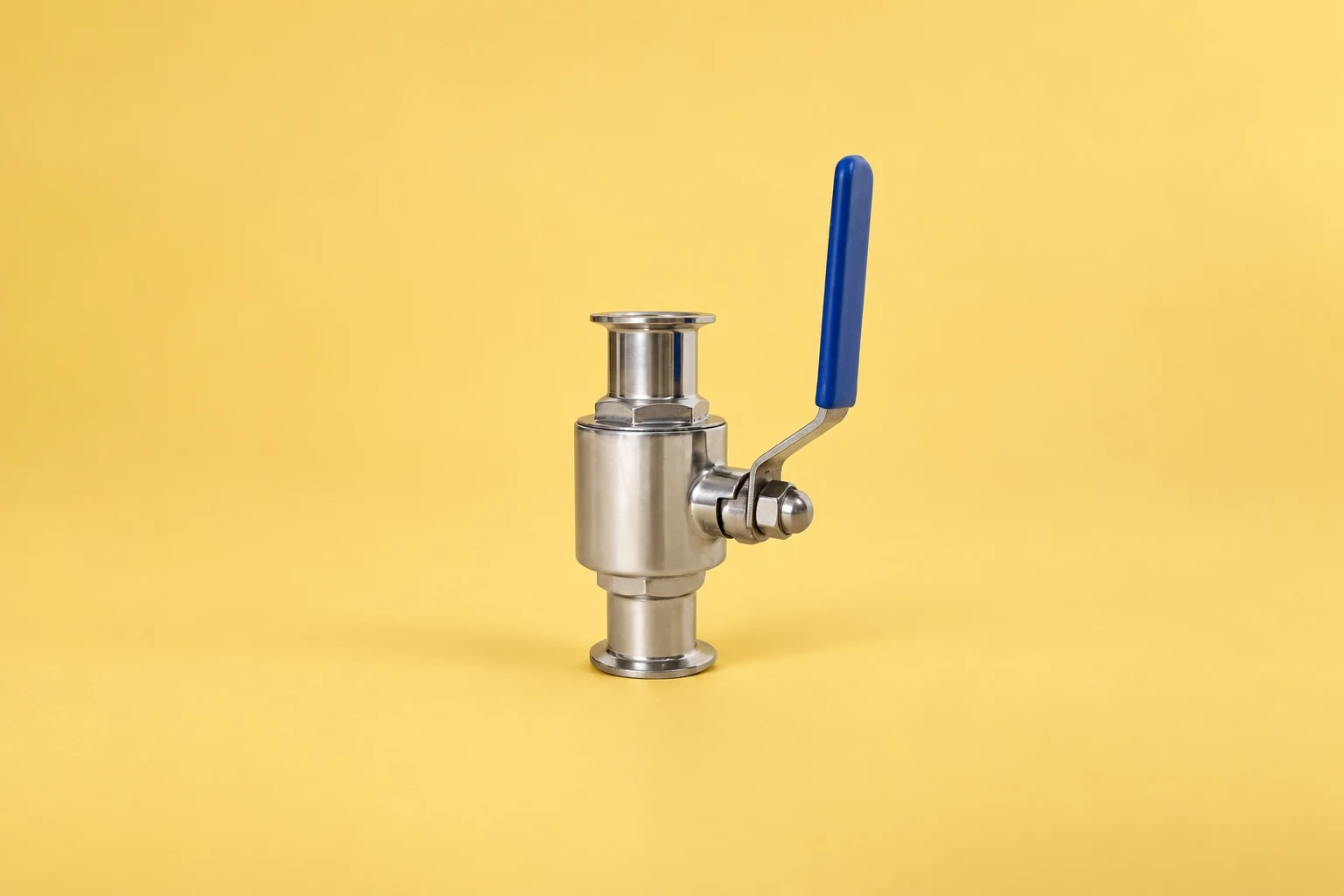
High temperature ball valve selection requires the complete assembly’s permitted pressure-temperature envelope, not just a stainless body or a maximum temperature on a sales page. Check seats, seals, packing, connections, operating torque and the actual heating and cooling cycle. A valve can be suitable at one pressure and temperature combination but unsuitable at another. Specify normal duty, startup, cleaning, shutdown and credible upset conditions, then request supplier confirmation for the offered model. The product-reference images in this guide illustrate visible equipment features; they do not establish a high-temperature rating or certification.
Define the full temperature and pressure duty
Record normal temperature, minimum and maximum operating temperature, maximum credible pressure and the duration of each condition. Describe whether temperature changes slowly or whether the valve sees rapid switching between hot and cold fluids. Include steam exposure or heated cleaning only when it is actually part of the approved process.
Identify fluid composition, phase, corrosiveness, solids and any tendency to polymerise or crystallise. A hot clean liquid, saturated steam and a heated resin are different duties. The valve enquiry should describe the actual material rather than relying on the phrase high temperature to represent all of them.
Clarify whether the valve is normally open, normally closed or frequently cycled. A long hot closed period can have different consequences from continuous hot flow. State the required shutoff performance and the direction of the pressure difference. Include the condition in which the valve must be operated, rather than assuming operation only occurs after cooling.
Read the pressure-temperature envelope correctly
Ask for a rating table or curve that identifies the offered model, size, body material and seat or seal configuration. Confirm units and whether the rating concerns the body alone or the complete assembly. Do not combine a body pressure limit from one document with a seat temperature limit from another and assume both apply simultaneously.
The ASME B16.34 standard description is a useful reference for valves within its scope. The applicable code, pressure class and material requirements must be determined for the project. A sanitary clamp valve or a specialised assembly may have a different basis; do not assign a standard solely because the product is made from metal.
Keep operating duty separate from test conditions. A pressure test does not establish continuous operation at that same pressure and every temperature. Request the operating rating and the relevant acceptance test separately. Check that the quoted configuration has not changed between selection, manufacturing and delivery.
Compare seat options using the actual service
Soft seats and metal seats have different design considerations, but neither category produces a universal answer. Ask for permitted temperature, pressure, fluid compatibility, leakage performance and cycling conditions for the actual seat arrangement. Material names alone are insufficient because formulation, support geometry and assembly design influence behaviour.
If a supplier proposes a metal-seated design, request its documented shutoff performance and the conditions of the test. Do not assume it has the same leakage behaviour as a soft-seated assembly. If a supplier proposes a polymer seat, review its complete operating limit and the cleaning or upset exposure, not only the normal product temperature.
Consider solids and deposits near the seating surfaces. A hot process can leave residue as it cools, and repeated operation through deposits may change torque or sealing. Describe the residue and ask how the proposed design will be operated and serviced. Avoid recommending a generic seat material without compatibility evidence for the actual fluid.
Check packing, gaskets and other seals
The main seat is only one potential limiting component. Stem packing, body gaskets, connection seals and any elastomer in the assembly require review. Ask for a complete wetted and pressure-boundary material list. A high-temperature claim for one component does not establish suitability of all the others.
Describe chemical exposure during cleaning and shutdown. A seal that performs in hot product may behave differently in cleaning solution. Include concentration, contact time and temperature in the supplier enquiry. Avoid substituting a seal based on dimensions alone when the original material is unavailable.
Review the service procedure for packing and gaskets. Define when replacement is required and what inspection evidence is needed. Retightening or adjustment at temperature must follow the manufacturer’s instructions and the site’s safety procedure; it should not be improvised to stop a leak during production.
Use an assembly-level selection table
| Item to review | Information required | Common incomplete evidence |
|---|---|---|
| Body and connections | Model-specific pressure-temperature limits and connection definition | Stainless material name without an operating envelope |
| Seats | Fluid compatibility, temperature and pressure combinations, shutoff requirements | A seat material’s isolated maximum temperature |
| Stem packing | Material, permitted duty and service instructions | No packing detail in the quotation |
| Body and connection seals | Materials and compatibility with product and cleaning fluids | An assumption that all gaskets match the seat rating |
| Actuation | Torque at actual duty, cycle time and ambient limits | An actuator sized only from nominal valve diameter |
| Thermal cycle | Heating/cooling rates and operating sequence | A steady-temperature test used for every transient |
The table is an enquiry framework, not a list of universal safe limits. Its purpose is to expose missing information before purchase. The final selection should have a documented limiting component and a clear operating envelope rather than several unrelated maximum values.
Review thermal cycling and trapped liquid
Heating and cooling change dimensions and can alter loads within the assembly. Ask how the design is qualified for the specified cycle and whether operation at temperature needs different torque data. The consequence depends on materials and construction; a high steady-temperature rating does not automatically settle rapid-cycling suitability.
Assess trapped liquid in body cavities or isolated pipe sections. Thermal expansion can create pressure in a closed volume. Request the manufacturer’s documented arrangement and orientation where cavity relief is relevant, and review the connected system. Do not drill, modify or reverse a valve to create a relief function without an approved engineering design.
The HSE introduction to pressure equipment provides a useful framework for considering pressure hazards and safe management. Use the project’s applicable requirements and competent engineering review for protective arrangements. A valve selection guide is not a substitute for the plant’s pressure-system design.
Size the actuator for the demanding condition
Request breakaway, running and seating torque information where relevant to the proposed duty. Include pressure difference, temperature, deposits and the expected idle time. A valve left closed in hot service can present a different operating condition from a clean newly assembled unit at room temperature.
Review the actuator’s own ambient and environmental limits. Process temperature can affect the stem area and nearby equipment; an actuator should not be assumed suitable because the valve body is. Ask whether an extension, mounting arrangement or other documented provision is needed for the selected configuration.
Define required fail behaviour and opening or closing time. Evaluate the system consequence of rapid movement and of a valve that remains in place after loss of power or air. Actuator choice should serve the process and protective strategy, rather than merely provide enough torque on a catalogue sheet.
Plan installation, insulation and access
Obtain the valve and actuator envelope, handle travel and service-space requirements. Review accessibility with the actual piping and insulation. An operator may need a safe position to identify valve state or perform a controlled action. A maintenance team needs a practical removal route, not just enough clearance to install the assembly once.
Consider connection compatibility, alignment and imposed piping loads. A valve should not be used to force mismatched pipework into position. Ask for installation instructions covering orientation, support and fastening where relevant. The correct procedure depends on the assembly and connection type.
Define how hot surfaces will be managed under the site’s procedure. Insulation can affect access, inspection and nearby actuator conditions. Do not conceal identification or inspection points without a plan for reading them. Installation convenience should not remove information needed to verify the operating envelope later.
Agree acceptance checks and operating records
Before delivery, confirm documentation, materials, rating basis, model identification and the required test records. Distinguish a factory test from verification of installed operation. Check that the supplied seat, packing and actuator match the selected configuration rather than an assumed standard catalogue version.
During commissioning, use an approved sequence to observe operation, leakage indications, temperature, actuator response and system pressure. Include the defined thermal transition if it is part of normal duty. Any untested condition should remain an explicit acceptance item. Avoid taking a successful cold operation as evidence that hot cycling has been proven.
Retain the operating envelope and service instructions with the equipment file. Record changes in closing force, leakage or cycle time and investigate their cause. If a process temperature or chemical recipe changes, review the valve selection again; previous successful service does not automatically authorise the new duty.
Prepare a complete enquiry
Send the supplier fluid composition, temperature and pressure range, thermal cycle, cleaning conditions, required shutoff performance, connection details and operating frequency. Include the desired actuation and available utilities. Ask for confirmation of the complete assembly and its limiting components.
Use the website’s valve range for an initial equipment discussion. The industrial ball valve selection guide, 316 stainless ball valve guide, and motorised ball valve principles address complementary material and operation questions. None independently certifies the pictured valve for a high-temperature duty.
Further learning
The following independent saVRee animation explains the ball, stem and seats. Use it to understand component functions; its general mechanism explanation does not establish a temperature rating for a particular assembly.

Watch How Ball Valves Work by saVRee
Frequently asked questions
Is a stainless steel ball valve automatically suitable for high temperature?
No. Check the whole assembly, including seats, packing, gaskets, connections and actuator. Request a model-specific pressure-temperature envelope and confirmation for product, cleaning and thermal-cycle conditions.
Are metal seats always the correct choice?
Not universally. Compare the actual temperature and pressure duty, fluid, deposits, torque and required shutoff performance. A metal-seated proposal still needs compatibility information and documented acceptance criteria.
What is the most important document to request?
Request a complete assembly specification with the pressure-temperature envelope, limiting components, materials, test basis and operating instructions. Confirm that every document identifies the same offered model and configuration.