Full port vs standard port ball valve selection is mainly a question of the actual flow passage and the duty it must serve. A full-port design provides a larger bore relative to its end connections; a standard or reduced-port design has a smaller passage. Compare the documented bore and flow coefficient rather than relying on the product name. Full port does not mean zero pressure loss, and a smaller bore does not automatically make a valve unsuitable. Review flow, available pressure, solids, cleaning, isolation requirements and installation space before choosing the final configuration.
Compare actual bore dimensions
Begin with the connected pipe’s internal diameter and the proposed valve’s documented bore. Nominal pipe size, connection outside diameter and valve bore are different dimensions. Pipe schedule can change internal diameter without changing nominal size. A supplier description such as full bore needs a corresponding drawing or specification for the selected valve size.
Ask whether the term standard port has a defined meaning in the supplier’s catalogue. Different product families can use different conventions. Compare the actual passage, end transition and the fully open ball position. Do not assume two valves with identical connection labels have identical hydraulic behaviour.
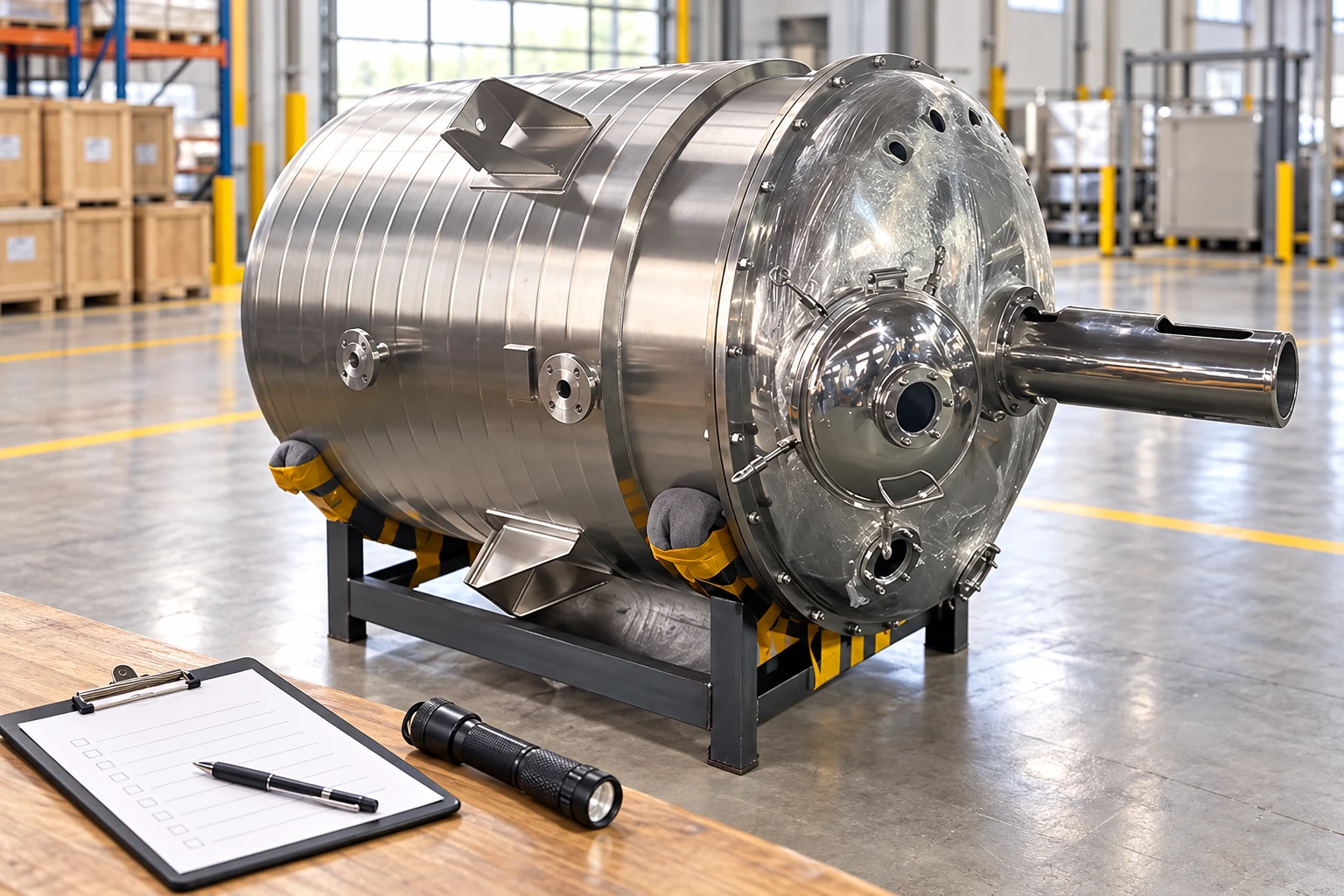
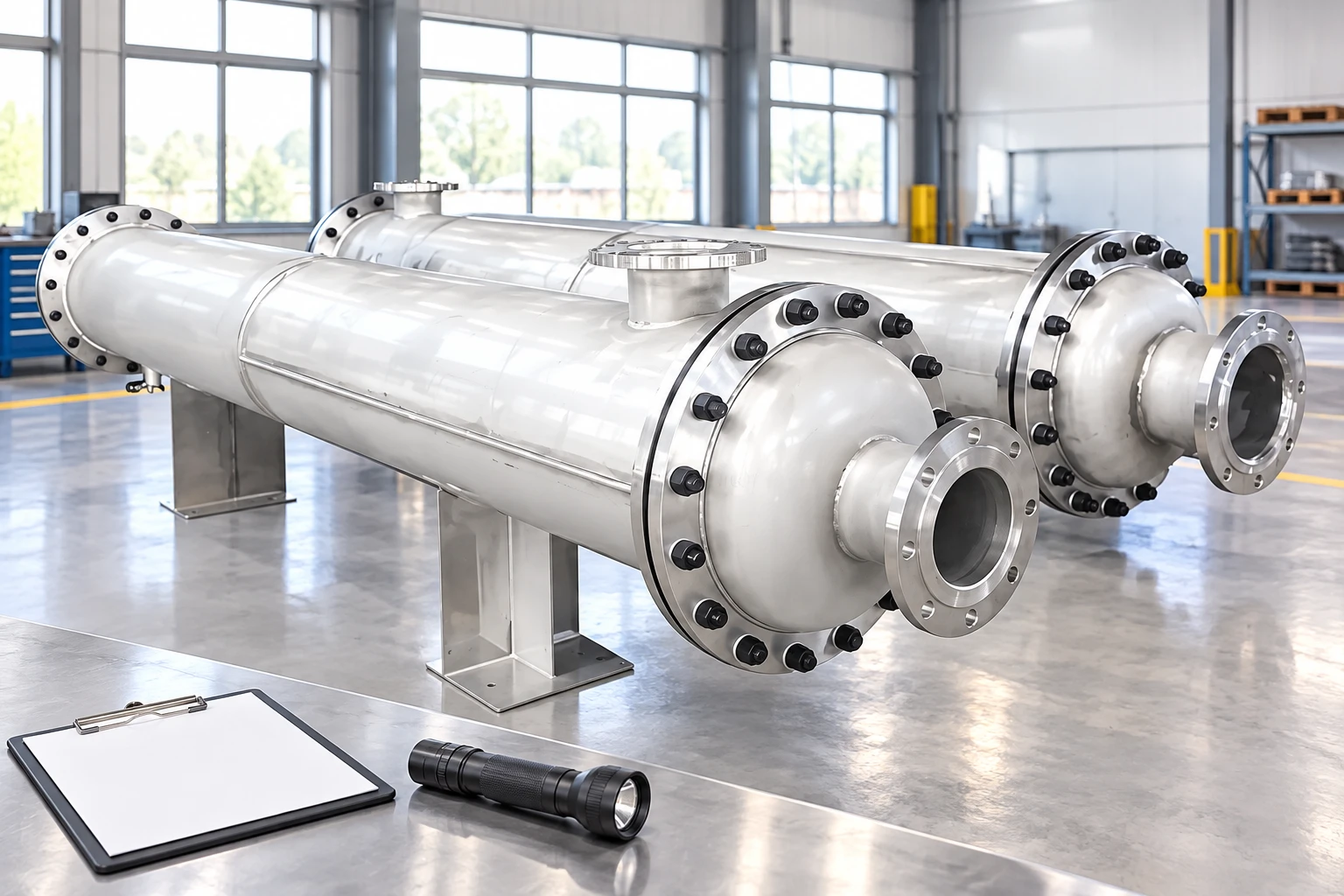
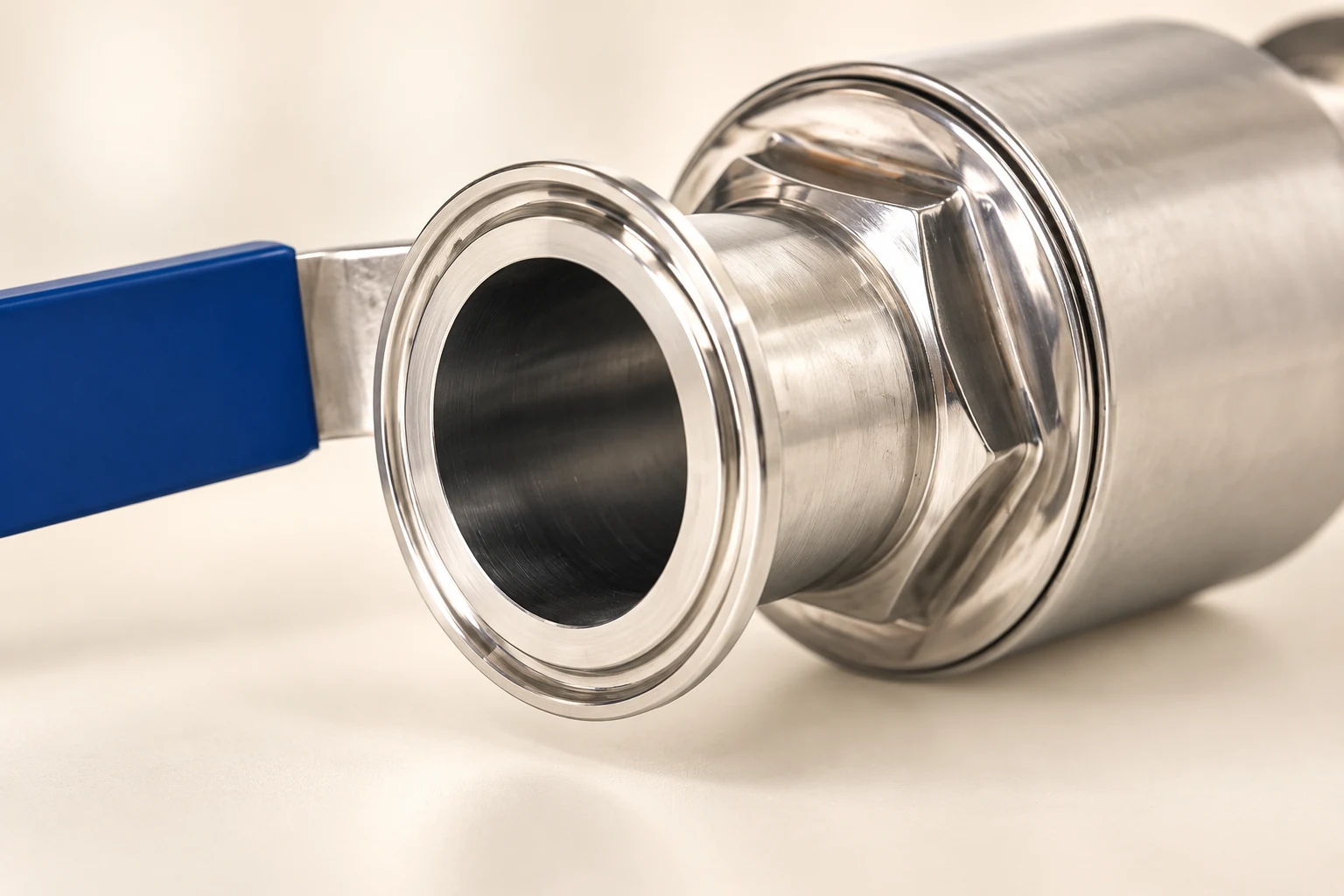
The photograph of a connection opening cannot establish the internal bore throughout the valve. Request a section drawing or dimensional statement when passage is important. The website’s product-reference illustrations in this article identify equipment features; they do not certify that a particular illustrated assembly is full port or suitable for a specified pressure.
Evaluate pressure loss at the operating flow
A smaller passage can increase local velocity and contribute to pressure loss. The practical consequence depends on flow, liquid properties, the valve’s flow coefficient and the rest of the system. Use documented Cv or Kv data with the applicable calculation method, units and fluid conditions. Avoid estimating a valve’s loss solely from its external appearance.
For a qualitative screening, compare the same operating point for both proposals. Ask what pressure loss each creates at normal and maximum flow, and whether that affects downstream demand or the pump’s available margin. A valve difference may be material in a high-flow low-pressure circuit and relatively unimportant in another installation.
The Department of Energy pumping-system sourcebook supports reviewing valves and piping as part of the connected system. Its system perspective is useful here; final valve selection still needs the proposed model’s flow data and the process hydraulic calculation.
Keep bore size separate from pressure rating
Full port describes the flow passage, not the pressure-temperature rating. A full-port valve and a reduced-port valve can have different ratings because of body construction, materials, seats, seals and applicable design standards. Conversely, similar ratings do not establish similar pressure loss.
For pressure equipment, request the exact rating information at the operating temperature, including seats and seals. The ASME B16.34 valve standard description identifies the scope of that standard for relevant valve types. Do not assume that every sanitary clamp-ended valve falls within the same standard or that a catalogue pressure class settles all installation requirements.
Define maximum credible pressure as well as normal pressure. Include blocked flow, cleaning and thermal conditions where applicable. Evaluate the complete assembly with compatible pipework and connections. A valve’s body marking alone is insufficient if another component governs the allowable operating condition.
Consider solids and obstruction
For product containing particles, describe particle size, hardness, concentration and tendency to bridge. A larger bore can be useful, but the fully open passage is only one concern. Partial opening, seat pockets, cavities and the product’s behaviour during stoppage also matter. Ask the supplier to confirm suitability for the defined material.
Do not interpret full port as a guarantee that any solid can pass. A soft food inclusion and abrasive grit require different assessments. If a critical particle or inclusion must remain intact, use an agreed product trial and inspect the transferred material. For materials that crystallise or settle, review how the valve will be flushed and reopened after a pause.
Consider the consequences of an obstruction. The valve may serve a pump discharge, tank outlet or cleaning return. A restriction in one position can affect process flow; an obstructed positive-displacement pump discharge can create a pressure hazard. Select the bore alongside the system’s protective arrangement and operating sequence.
Use a duty-based comparison table
| Process condition | Why a larger passage may matter | What still needs verification |
|---|---|---|
| High liquid flow with limited pressure margin | Lower local restriction may help the hydraulic duty | Documented Cv/Kv and pressure loss at the duty point |
| Particle-bearing product | More passage space may reduce an obvious obstruction | Particle suitability, seat pockets and operating position |
| Tank draining | Restriction can affect discharge time | Outlet layout, viscosity and complete drain sequence |
| Cleaning circuit | Flow path influences cleaning access and circulation | Verified cleaning method and retained volumes |
| Tight equipment layout | A compact reduced-port assembly may fit more easily | Service access, actuator clearance and actual dimensions |
| General isolation duty | Both designs may meet the process requirement | Ratings, leakage requirement and operating conditions |
This is a selection framework, not a claim that one design always wins. Review the confirmed pressure loss and process outcome before paying for a larger assembly. When the duty is marginal or the product is unusual, keep an installed or representative trial in the acceptance plan.
Review cleaning and drainability
The main bore is not the only wetted space in a ball valve. Seat areas, body cavities and the connection arrangement can influence retained material and cleaning access. Ask whether the proposed assembly is intended for the cleaning method and how the supplier recommends positioning it during cleaning. Avoid making a universal half-open cleaning rule across different designs.
Specify cleaning liquids, concentration, temperature and contact time alongside the product conditions. A valve with a suitable bore can still have an incompatible seat or gasket. Include how the assembly drains and whether disassembly is required for inspection or a validated cleaning procedure.
For food applications, refer to 21 CFR 117.40 equipment and utensil requirements when relevant to the facility and market. A full-port description does not itself establish hygienic suitability, regulatory compliance or successful cleaning of the installed circuit.
Decide whether the valve is for isolation or control
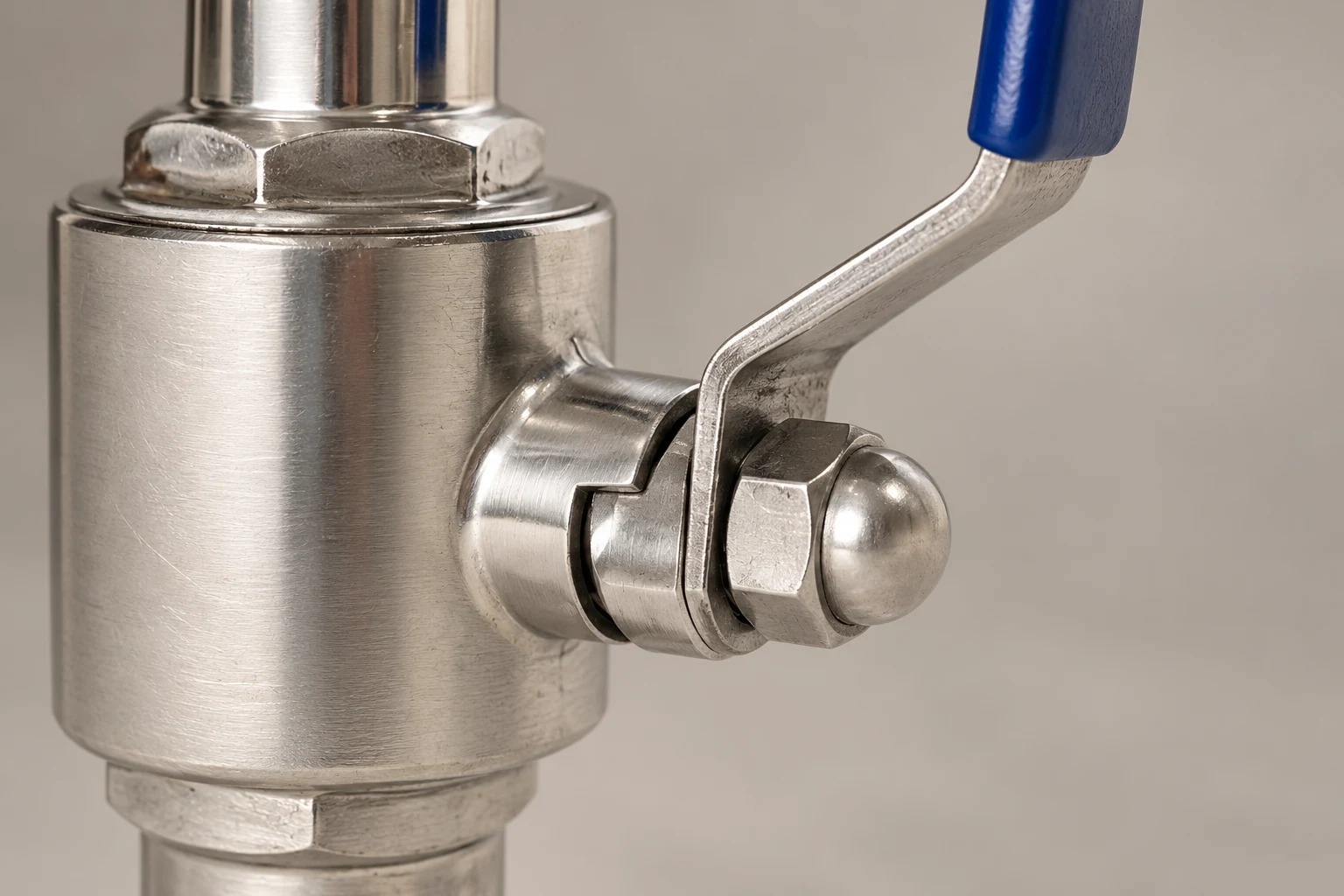
Ball valves are commonly used for on-off service. A standard round-bore isolation valve should not automatically be treated as a precision control valve. If the process needs throttling, ask for a design and flow characteristic intended for that duty, together with limits on differential pressure and operating position.
Review opening and closing speed. A larger bore can permit high flow, while rapid closure can create a transient in the connected system. The relevant risk depends on liquid velocity, pipe length, system response and valve operation. Bore selection and actuator selection therefore need to be discussed together.
Specify the required shutoff performance using the applicable method and conditions. A general statement that a valve seals tightly is not a test specification. Identify fluid, pressure direction, temperature and acceptance requirements. If cavity pressure or trapped liquid is a concern, request the manufacturer’s documented design and operating guidance.
Compare installation and service requirements
Obtain overall dimensions, handle travel, actuator envelope and required removal space. A larger valve can affect the surrounding piping layout or maintenance route. Check whether a handle can be operated with insulation, nearby equipment and the operator’s working position taken into account.
Confirm connection compatibility. A sanitary clamp-ended valve is not interchangeable with a threaded or bolted-flange assembly merely because the nominal size is similar. Compare connection standards, mating parts, seals and alignment. Do not use adapters to conceal an unresolved fit or rating mismatch.
Ask how seats and seals will be serviced and whether the proposed assembly can be repaired in the available space. Include replacement parts, required isolation and any support or lifting needs. A purchase decision should compare installed usefulness and maintainability, not valve price alone.
Verify the proposed valve before ordering
Request a drawing, bore dimension, flow coefficient, wetted-material list, pressure-temperature limits, connection definition and operating instructions. Check that all documents identify the same model and size. A curve from another valve family is not evidence for the offered assembly.
State the acceptance criteria for the final installation. They can include correct flow, permissible pressure loss, connection fit, approved leak test, operability and cleaning review. Use supplier ratings and the project’s applicable standards rather than adding an unsupported universal number to the checklist.
For equipment discussion, see the website’s valve product range. The industrial ball valve selection guide addresses the broader enquiry, while ball valve handle replacement and motorised ball valve principles cover complementary service and operation questions.
Further learning
This educational video from saVRee explains the basic ball, seat and stem arrangement. It helps distinguish flow passage from the rest of the assembly; it is not a performance demonstration or product recommendation for the pictured valve.

Watch How Ball Valves Work by saVRee
Frequently asked questions
Does full port mean there is no pressure drop?
No. A fully open valve still has a real flow path and associated losses. Use its documented flow coefficient and the actual duty to calculate pressure loss rather than treating full port as a zero-loss guarantee.
Is full port always the better purchase?
It depends on flow, pressure margin, solids, cleaning and installation needs. Compare the hydraulic benefit and process outcome with size, cost and maintenance requirements. Either design can be suitable when the documented duty is met.
What documents confirm the port choice?
Ask for the actual bore dimension, model-specific Cv or Kv data, connection drawing and complete pressure-temperature limits. Include product and cleaning conditions so the supplier can confirm the whole assembly rather than only its nominal size.