Heat exchanger tube inspection cleaning preparation should produce a safely accessible, identified and suitably clean tube condition for the selected examination method. Agree the required surface condition with the inspection specialist before cleaning starts, then verify the condition with a defined readiness check. A tube that passes flow may still contain deposits that interfere with a probe or interpretation. Conversely, aggressive cleaning can damage the surface being assessed. This guide focuses on the handover between cleaning and inspection, including tube identity, contamination records and incomplete coverage; it does not prescribe a universal cleaning pressure or inspection acceptance limit.
Start with the inspection objective
Define why the tubes will be inspected. The objective may involve a baseline examination, a suspected damage mechanism, an outage assessment or comparison with earlier results. The inspection team needs the tube material, dimensions, arrangement, service history and expected deposits. These inputs influence the method, probe and required preparation.
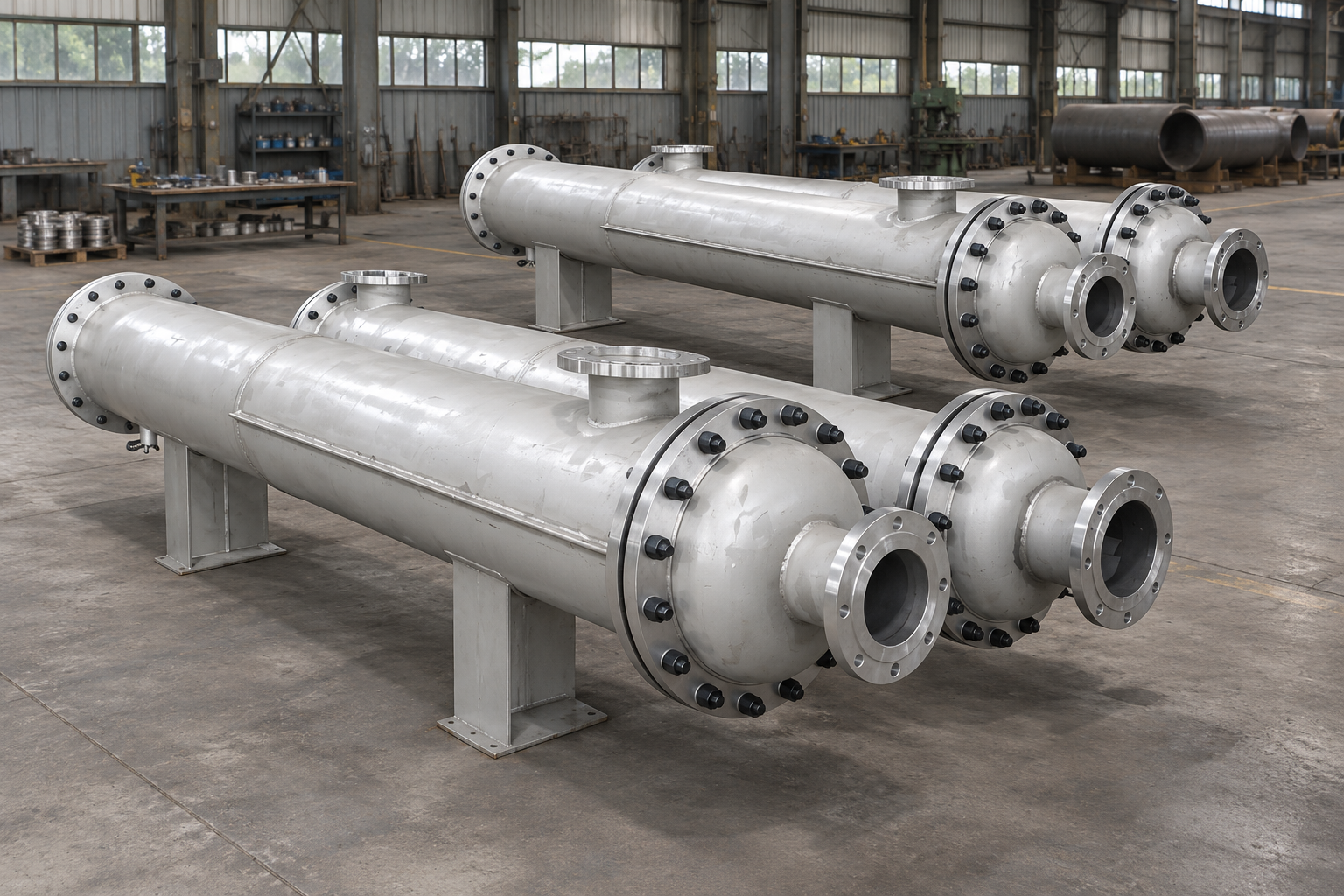
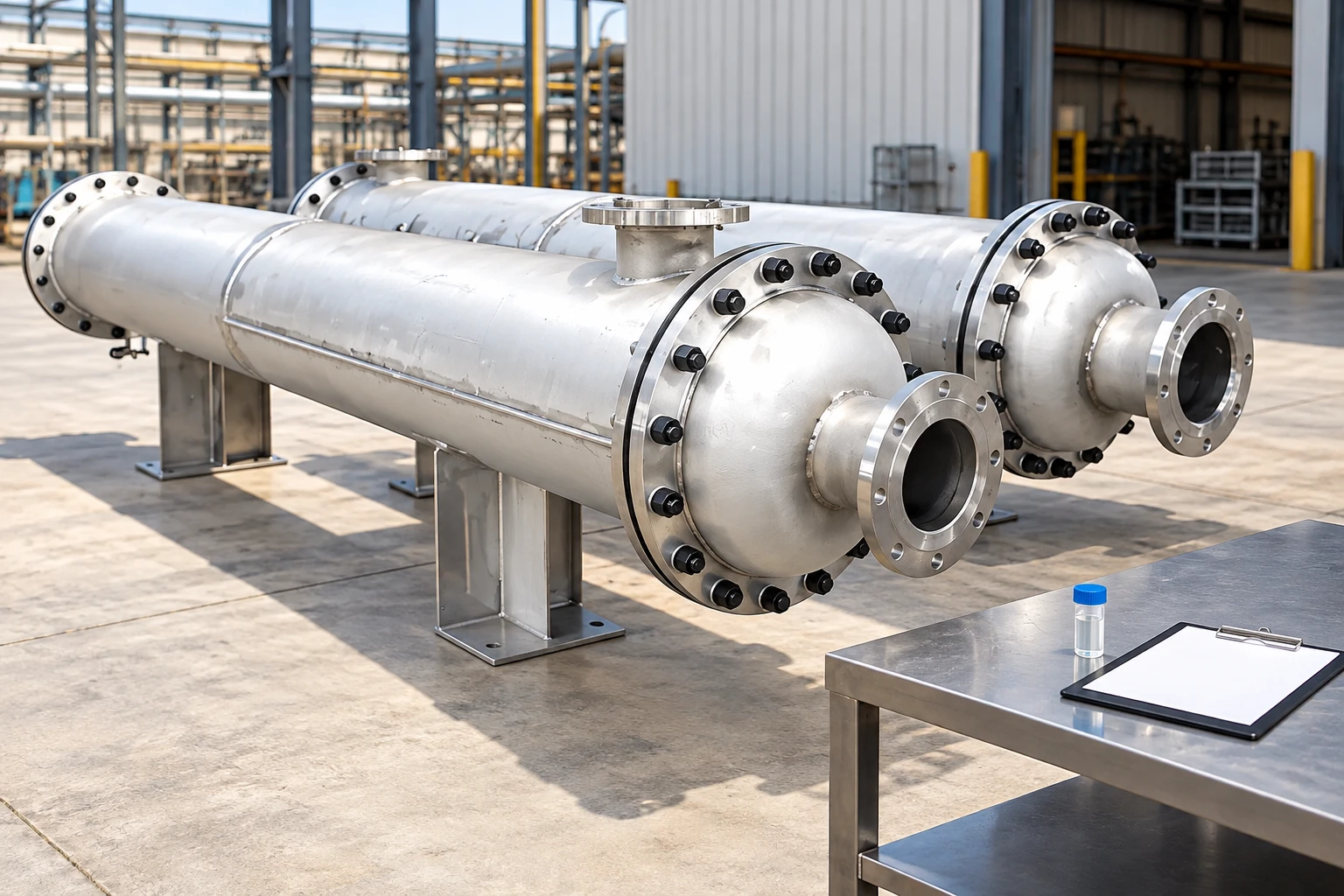
A fixed tube sheet shell and tube heat exchanger provides relevant equipment context. The product’s exterior photograph cannot establish tube alloy, wall thickness, internal cleanliness, removable access or the suitability of a particular examination method. Confirm those items using the actual order documents and approved drawings.
Keep the scope narrower than a general cleaning project. Restoring thermal performance and preparing a tube for nondestructive testing can overlap, but the acceptance evidence may differ. A reduced pressure drop is not proof that an inspection probe can examine every required region. Specify the inspection handover criteria separately from the process-performance objective.
Agree the method before choosing the cleaning endpoint
Discuss the proposed technique with the qualified inspection provider. Different methods interact differently with deposits, surface condition, geometry and tube material. Ask what condition is necessary for probe passage, coupling where applicable and meaningful signal interpretation. Record any limits at supports, bends, ends or previously plugged tubes.
The IAEA training publication on eddy current testing at Level 2 provides technical background on electromagnetic examination. It supports method-specific preparation and reference practices; it is not a substitute for a qualified procedure for this exchanger. The inspection specialist must determine applicability to the actual tube material and condition.
For related method-selection context, review the tubular heat exchanger buyer guide. This article addresses what must be ready before the examination starts. A clean tube does not remove the need to qualify the technique, establish reference settings or document limitations.
Plan the isolation and contamination controls
Cleaning and inspection access should follow the site’s approved isolation, draining, cooling and verification procedures. Identify pressure, stored energy, hot surfaces, process residues and cleaning chemicals before opening equipment. Determine whether additional controls apply to hazardous atmospheres, confined spaces or high-pressure cleaning equipment. The required controls depend on the actual task and jurisdiction.
A useful starting point for the isolation discussion is the UK HSE guidance on safe isolation of plant and equipment. It describes a structured approach to isolation planning and verification. It does not establish that a particular exchanger has been isolated, nor does a written checklist replace field verification by authorized personnel.
Give the cleaning contractor the actual service-residue information. Include the process safety data, likely deposit composition and disposal route for recovered material. A visually ordinary deposit can still require specific handling. Do not classify waste as harmless based on appearance, odor or a short exposure history.
Preserve the evidence before removing it
Record the as-found condition while access is safe and authorized. Photograph tube ends, deposits, blocked openings, corrosion products and unusual patterns with a clear location reference. Collect samples only under an approved method and identify their origin. The cleaning process can remove information needed to understand the damage mechanism.
Distinguish observations from conclusions. A dark deposit is not automatically corrosion, and a tube that appears blocked at the opening may have a different condition deeper inside. Label the observation, the location and the examination method. Preserve uncertainty rather than forcing every finding into a premature diagnosis.
If earlier inspection records exist, keep a controlled copy available to both teams. They may identify areas that require special care or regions where a particular deposit previously limited coverage. Use a stable tube numbering system so that pre-cleaning evidence can be compared with inspection results and later engineering decisions.
Define the cleaning scope and restrictions
Choose cleaning methods through the responsible engineering and contractor review. Consider the tube material, wall condition, deposit characteristics, access and downstream waste handling. Mechanical, water-based and chemical processes can have different risks and limitations. No universal pressure, chemical concentration or brush material is appropriate for every exchanger.
State what must not be altered. Tube ends, protective layers, seals and surrounding components may need specific protection. Review the possibility that deposits are covering defects or temporarily limiting a leak. Removing them can reveal an existing problem, so plan containment and the response to unexpected leakage before work begins.
For the broader maintenance context, use the tube bundle maintenance planning guide. Confirm the actual exchanger construction before assuming a bundle can be removed. A fixed tube sheet design must not be treated as a removable-bundle unit merely because another cleaning procedure includes bundle extraction.
Use a shared readiness checklist
The following table is a handover template. The inspection provider should supply the method-specific requirements, while the owner and cleaning team confirm what was actually achieved.
| Handover item | Cleaning team evidence | Inspection team readiness check | Action if incomplete |
|---|---|---|---|
| Equipment identity | Exchanger tag and approved scope | Match the work pack and drawing | Resolve identity before examination |
| Tube map | Orientation and numbering reference | Confirm the same tube can be relocated | Establish a controlled map |
| Deposit removal | Method, passes and as-left observations | Check the condition against the procedure | Define targeted additional preparation |
| Probe access | Obstructions and inaccessible tubes recorded | Verify passage using an approved check | Record limitation and agree next step |
| Residues and moisture | Rinse, drainage or drying record as required | Confirm compatibility with the method | Recondition using the approved procedure |
| Unusual findings | Damage, leaks and samples located on map | Review before interpreting signals | Escalate to responsible engineering |
| Release status | Cleaning supervisor handover | Inspection lead acceptance of readiness | Keep the boundary clearly unreleased |
Demonstrate readiness without damaging the tubes
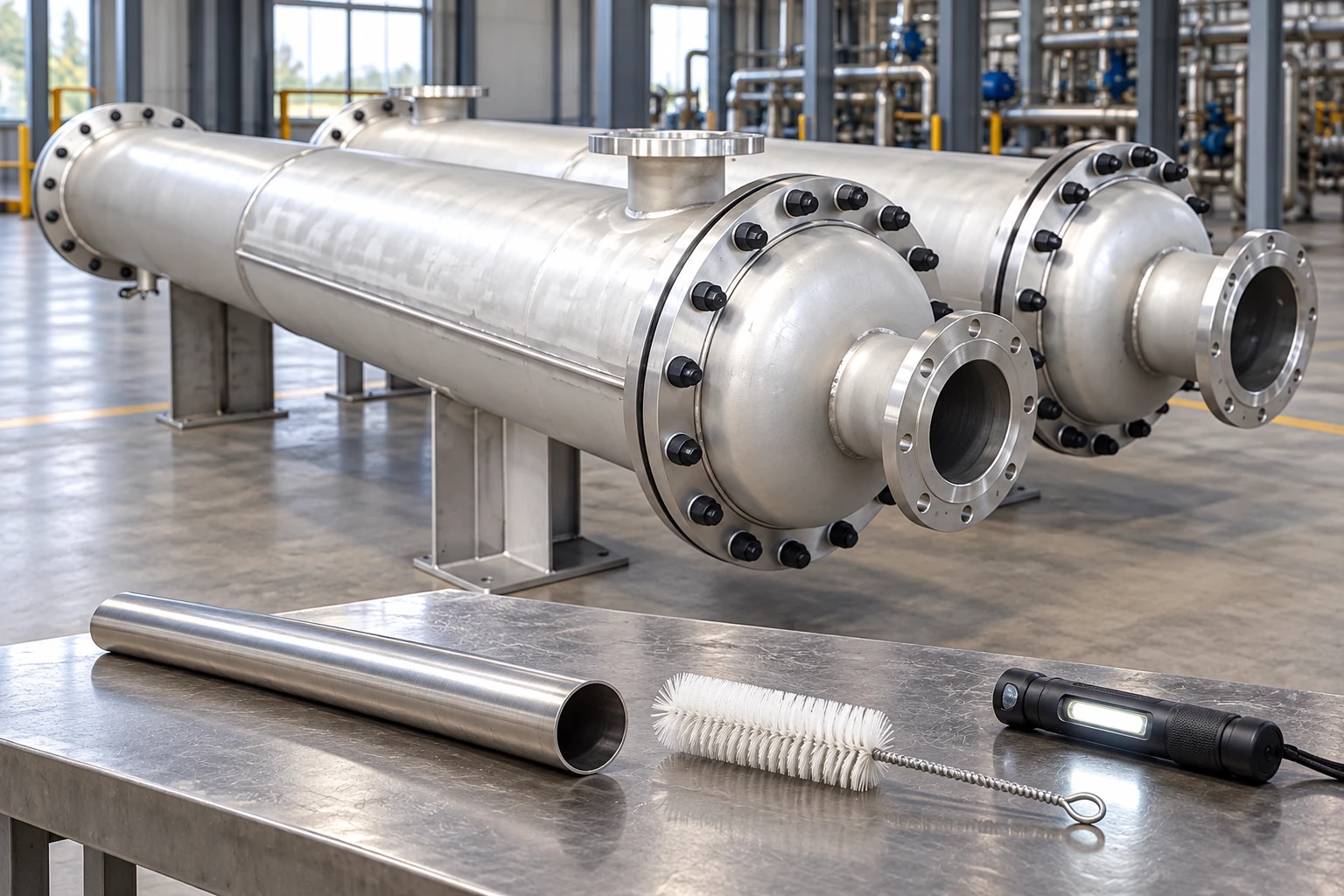
Agree the readiness check in advance. It may include visual examination, an approved passage check or an initial trial examination on representative tubes. A successful check on one location does not automatically establish readiness across the entire bundle. Include different deposit zones, access conditions and known problem areas in the plan.
Avoid improvised tools or forced passage. A probe or gauge that stops should trigger the agreed response rather than increasing force until it moves. Record the tube identity, approximate obstruction location if known and the check performed. Refer the issue to the inspection lead and cleaning supervisor for a controlled next step.
Confirm whether the technique requires a particular moisture condition or other surface preparation. Do not assume that every method needs a completely dry bore, or that visible dryness alone proves chemical residues have been removed. The qualified procedure and compatibility assessment should define what evidence is needed.
A readiness sample is especially useful when the full cleaning campaign is large. It allows the teams to identify an unsuitable endpoint early, before the inspection crew waits for widespread rework. Keep the sample selection and result in the work pack so that the basis for progressing is visible.
Record incomplete coverage honestly
Create separate categories for examined tubes, unexamined tubes and tubes examined with a stated limitation. A tube that could not be accessed must not be described as having passed inspection. Likewise, a limited signal interpretation should not be converted into a complete wall-condition statement without supporting evidence.
For an illustrative work pack containing 100 required tubes, suppose 94 are fully examined, four are obstructed and two have a documented restricted region. Report those three categories explicitly. Describing all 100 as inspected would hide the practical limitation. The example is a reporting illustration, not an acceptable coverage threshold or a release criterion.
Link every limitation to a location and proposed action. Options may include additional cleaning, a different qualified method, engineering review or another action approved for the situation. The responsible owner must understand the unresolved areas before any service decision. Do not let schedule pressure turn a preparation difficulty into an undocumented assumption.
Protect the prepared condition during the outage
The condition can change between cleaning and examination. Open tube ends can collect debris, moisture or handling contamination. Agree temporary protection and access controls that preserve identification and do not introduce incompatible materials. Record any disturbance that occurs after the initial readiness acceptance.
Coordinate nearby work. Grinding, painting, insulation removal and movement of cleaning equipment can affect prepared openings or inspection access. A short shared work sequence can prevent avoidable rework. Keep the inspection equipment staging area separate from contaminated cleaning waste and maintain the disposal route defined in the work plan.
If the exchanger will remain out of service after inspection, coordinate with the heat exchanger layup planning guide. Protection after examination is a separate stage from preparation before it. Inspection readiness does not establish a long-term preservation condition or authorize return to service.
Build a usable handover record
The record should identify the exchanger, drawing revision, tube map, service history supplied, cleaning method, relevant restrictions, as-found evidence, readiness checks and unresolved items. Name the parties accepting the cleaning handover and inspection readiness. Record the time so that later work can be assessed against the accepted condition.
Keep cleaning completion, inspection completion and engineering release as separate decisions. They involve different evidence and responsibilities. A contractor finishing its cleaning scope does not mean the exchanger is fit for continued operation. A set of inspection results still requires interpretation against the applicable design and operating requirements.
For an inquiry, provide the tube material and dimensions if known, exchanger arrangement, deposit information, access constraints, previous findings and outage window. State which party supplies the preparation acceptance criteria. This allows the proposed cleaning and examination work to be quoted as a coordinated scope instead of two disconnected activities.
Further learning: electromagnetic examination principles
The following IIT Madras NPTEL lecture introduces eddy current testing. It helps explain why an examination method has its own conditions and limitations. It is educational background; it does not demonstrate the cleanliness, coverage or fitness for service of the exchanger being considered.
Watch Eddy current testing – 1 by Theory and Practice of Non Destructive Testing
Frequently asked questions
Does an open tube automatically satisfy inspection preparation?
No. Probe passage is only one possible requirement. Deposits, surface condition, moisture and method-specific effects may still limit the examination. Use the qualified procedure and the inspection lead’s agreed readiness criteria.
Should every tube be cleaned by the same method?
The approved plan should account for materials, condition and deposits. Different areas may need different controlled preparation, but every deviation and limitation must remain traceable. Avoid changing the method informally during the job.
Who decides whether preparation is sufficient?
The cleaning team documents the achieved condition, the inspection lead confirms readiness against the examination procedure, and the owner retains responsibility for the broader work and service decisions. Assign these roles before the outage begins.