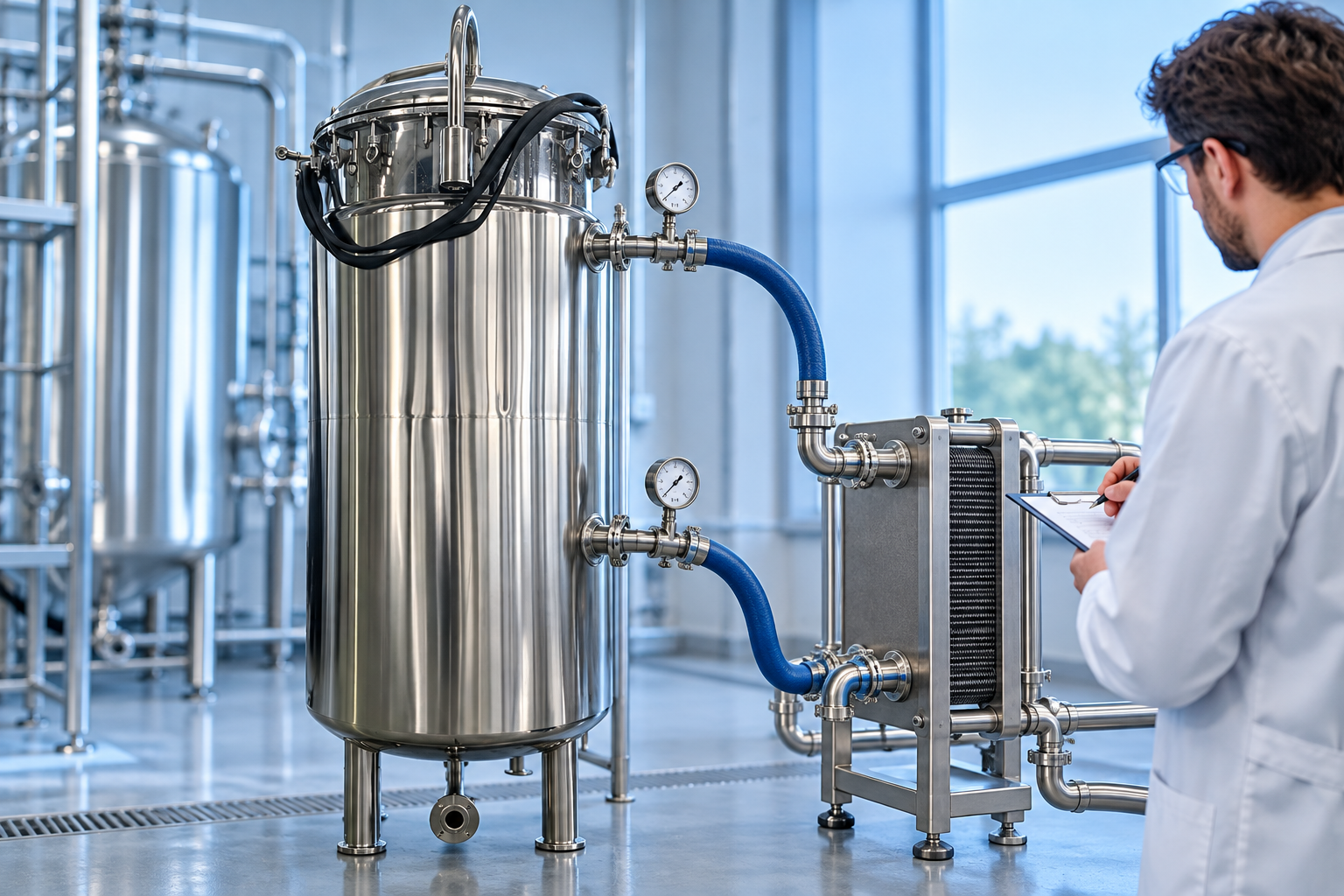
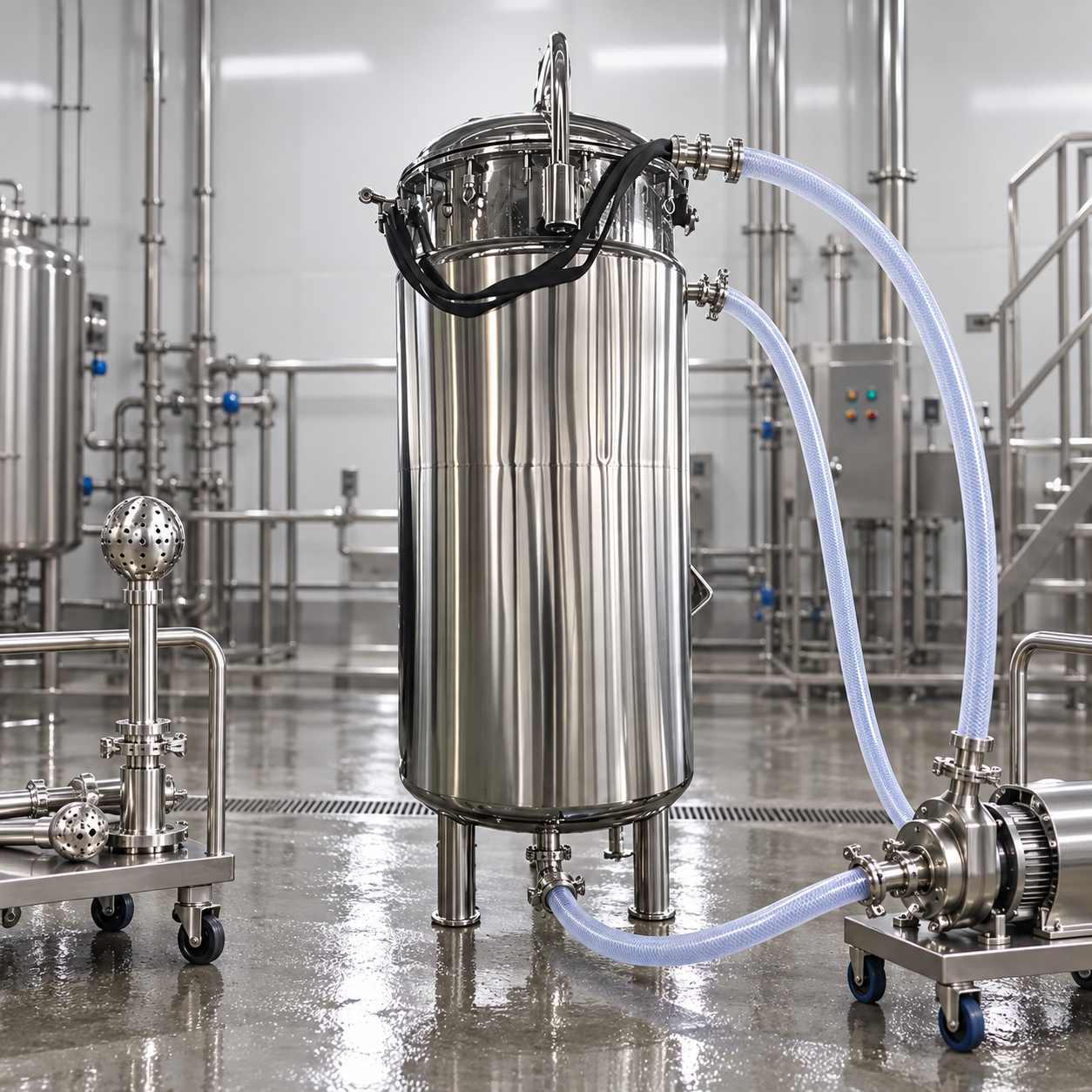
Bottom entry agitator for tank a bottom-entry agitator is often selected for sanitary mixing when a short shaft, low product heel, compact top head, and strong bottom circulation are valuable. Its seal, bearing, drainability, removal method, and protection against dry operation require careful review because the drive sits below the product. This guide explains the engineering decisions, purchasing information, commissioning checks, and operating limits needed to turn that principle into a usable specification. Final values must follow the real product, hazard review, applicable rules, and approved manufacturer documentation.
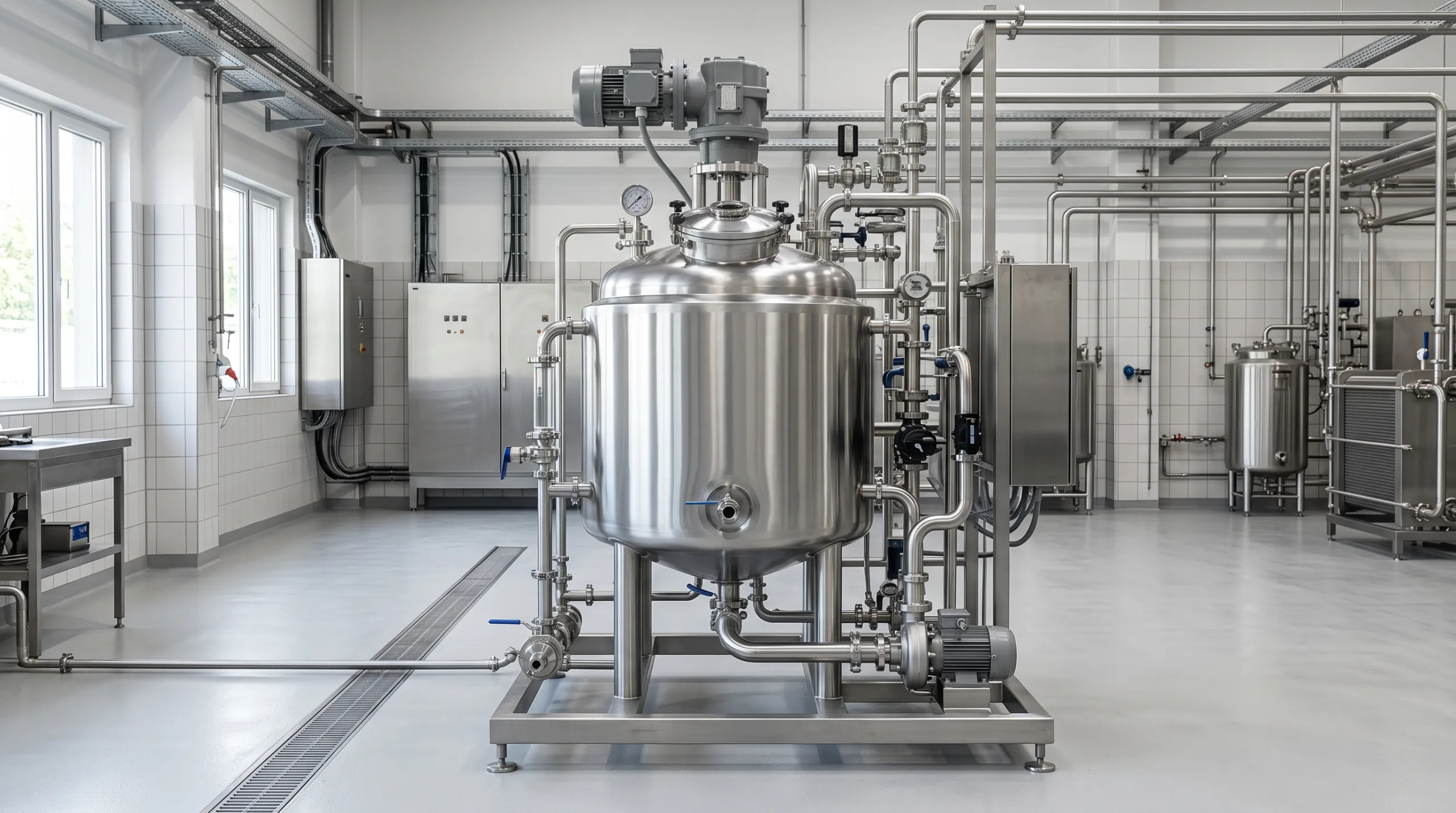
Start with a measurable process requirement
Define the required result, operating range, batch stage, allowable variation, and the method that will prove success. Separate normal operation from startup, shutdown, cleaning, maintenance, and abnormal conditions. Define who supplies, installs, calibrates, tests, and accepts this part of the system. Clear responsibility prevents an interface between the vessel, instrument, drive, piping, or control package from being omitted from every supplier’s stated scope.
Decision and troubleshooting table
| Condition | Why it matters | Action to evaluate |
|---|---|---|
| Low product heel | Bottom circulation can remain effective | Confirm minimum level and seal limits |
| Sanitary processing | Short product-side shaft and cleanable geometry | Verify spray coverage and drainability |
| Leak consequence | Product can reach drive area | Define containment and detection |
| Maintenance | Removal occurs below vessel | Provide clearance and safe support |
| Solids near outlet | Impeller may aid movement or suffer buildup | Review particle behavior and shutdown sequence |
This is a screening table, not a final design. Confirm every choice against the complete process and the approved project requirements.
Confirm the reason for bottom entry
Use it to solve a defined circulation, space, heel, or hygiene problem rather than treating orientation as a quality label. State units, temperature, concentration, test method, and allowable variation wherever they affect the decision. If an input is uncertain, preserve that uncertainty in the review and plan a trial instead of converting an assumption into an unsupported guarantee.
Review minimum operating level
The impeller and seal need appropriate wetting, lubrication, cooling, and hydraulic condition during startup, mixing, and discharge. Document the proposed limit, its safety margin, and the response when the limit is approached. Alarms and interlocks should have defined set points, delays, reset rules, and failure behavior, with independent protection where the risk assessment requires it.
Select the seal arrangement
Match pressure, vacuum, temperature, product, cleaning chemicals, solids, speed, and allowable leakage to a documented seal plan. Use the final fabricated geometry, not an ideal sketch, when checking the result. Nozzles, baffles, coils, probes, welds, supports, and access openings can change circulation and available space, so the approved drawing must remain part of the evidence package.
Design the bottom geometry together
Coordinate impeller, outlet, sump, drain slope, valve, support, and cleaning flow so one feature does not defeat another. Check product-contact materials, elastomers, weld treatment, surface condition, drainage, and cleaning exposure together. Compatibility at room temperature or with the product alone does not prove compatibility with hot cleaning chemicals, concentration changes, or retained residues.
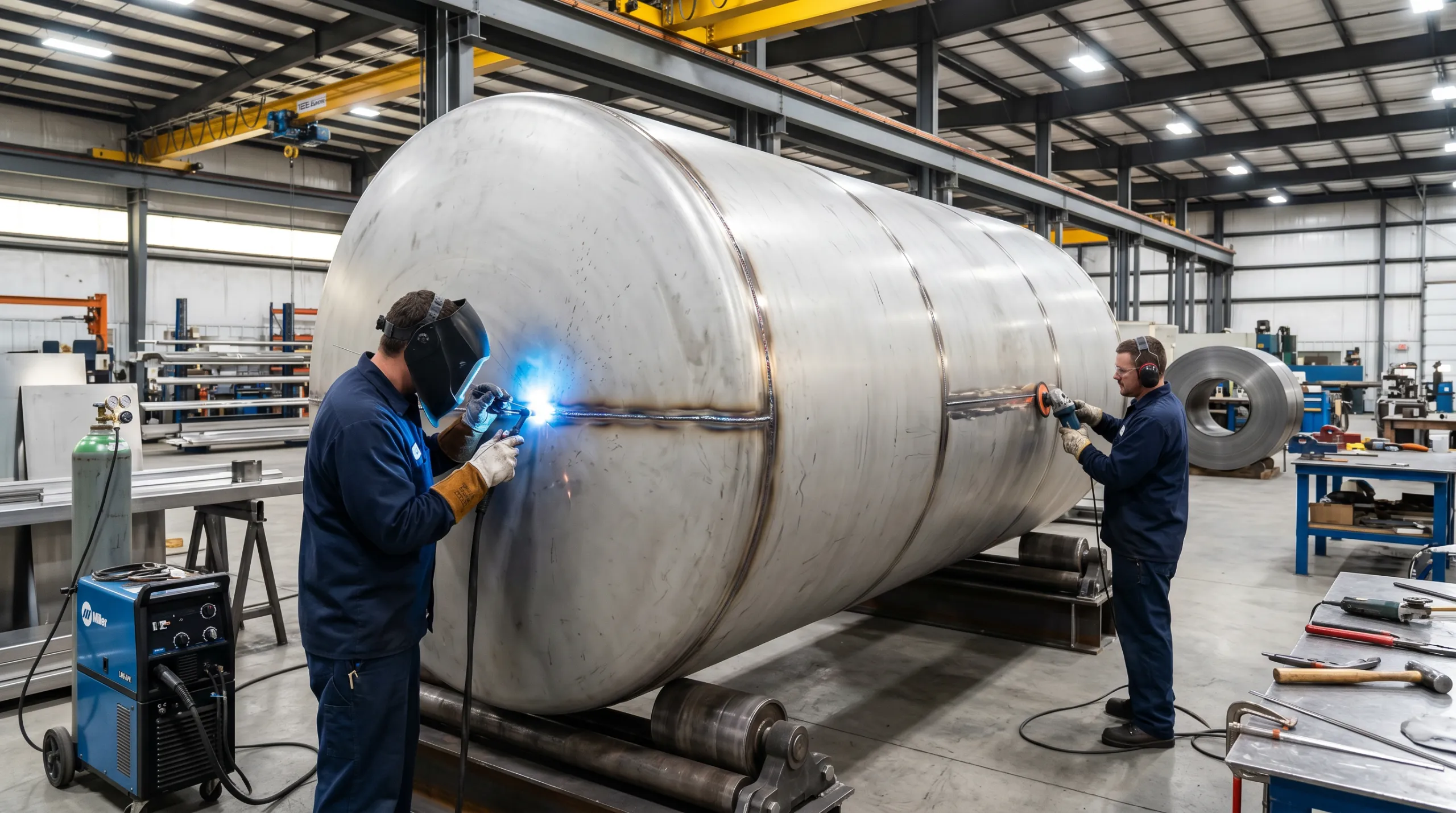
Protect hygiene at the mounting
Specify product-contact finish, weld treatment, crevice control, elastomers, flush boundaries, drainability, and inspection access. Check product-contact materials, elastomers, weld treatment, surface condition, drainage, and cleaning exposure together. Compatibility at room temperature or with the product alone does not prove compatibility with hot cleaning chemicals, concentration changes, or retained residues.
Plan maintenance below the tank
Provide lifting or handling method, drive clearance, guards, isolation, access, and a way to support internal components safely. Document the proposed limit, its safety margin, and the response when the limit is approached. Alarms and interlocks should have defined set points, delays, reset rules, and failure behavior, with independent protection where the risk assessment requires it.
Integrate operating permissives
Use approved low-level, seal, pressure, and drive conditions to prevent dry running, reverse rotation, or unsafe start. Compare normal production with startup, shutdown, partial batches, cleaning, and credible upset conditions. Mark the resulting limit on the operating procedure and control system so the equipment is not later used outside the condition on which it was selected.
Prove performance and cleanability
Test mixing at minimum and maximum level, drainage, spray coverage, seal behavior, vibration, and post-cleaning inspection. Compare normal production with startup, shutdown, partial batches, cleaning, and credible upset conditions. Mark the resulting limit on the operating procedure and control system so the equipment is not later used outside the condition on which it was selected.
How to compare supplier proposals
For bottom entry agitator for tank, place every bidder’s response beside the same process data and acceptance requirement. Compare stated assumptions, included equipment, wetted materials, instrument ranges, drive and mechanical basis, utility demand, control functions, cleaning provisions, documentation, testing, exclusions, and site work. A low price can reflect a narrower boundary rather than an equivalent design. Resolve blank cells and conflicting definitions before scoring the offers. Ask for a dimensioned drawing and a completed data sheet, then check that the written proposal, drawing, material list, and performance claim describe the same configuration. Record agreed clarifications in the purchase specification; email discussion that never reaches the controlled order is easily lost. Keep optional features separate from requirements so the technical comparison remains clear. Where two designs use different engineering approaches, compare them against the measurable result and lifecycle consequences rather than forcing identical components. The final recommendation should state why the selected arrangement is suitable, what remains to be confirmed, and which tests will close those open points.
Documents to retain through the equipment lifecycle
Keep the approved process data, purchase specification, drawings, material records, manuals, instrument information, test results, spare-parts list, and commissioning baseline for the full life of the tank. Link later repairs, calibration findings, cleaning changes, software revisions, and process changes to that controlled record. For bottom entry agitator for tank, operators need the current limits and normal response, while maintenance staff need isolation points, removal clearances, part identity, inspection criteria, and reassembly checks. Procurement needs an agreed supplier boundary and deviation list. When information changes, withdraw obsolete copies and record who approved the revision. A complete history helps distinguish a design limitation from wear, buildup, incorrect operation, or an undocumented modification. It also prevents a replacement component from being selected only because it appears similar. Before transferring the system to another product or duty, compare the new requirement with the preserved basis and repeat the affected risk, compatibility, performance, and cleaning reviews.
Safety and operating boundaries
Do not work on a tank that is energized, pressurized, under vacuum, hot, rotating, chemically contaminated, or connected to an uncontrolled source. Use the facility hazard assessment, isolation procedure, permits, protective equipment, and trained personnel. Compare normal production with startup, shutdown, partial batches, cleaning, and credible upset conditions. Mark the resulting limit on the operating procedure and control system so the equipment is not later used outside the condition on which it was selected.
Commissioning and acceptance plan
Before startup, compare the installed vessel with the approved drawing and material list. Confirm orientation, supports, guards, connections, instrument ranges, control direction, alarms, interlocks, drainage, access, and utilities. Run a controlled representative trial and preserve the measured baseline. Compare normal production with startup, shutdown, partial batches, cleaning, and credible upset conditions. Mark the resulting limit on the operating procedure and control system so the equipment is not later used outside the condition on which it was selected.
Maintenance and change control
Set inspection and maintenance from service severity, risk, manufacturer instructions, and observed condition. Review changes to product, concentration, temperature, batch size, speed, cleaning chemistry, piping, instruments, software, or operating sequence before assuming the original design remains valid. Coordinate the process, mechanical, piping, electrical, controls, safety, and cleaning implications before approving the layout. A locally convenient choice can create a new dead zone, maintenance hazard, false reading, or cleaning problem elsewhere in the vessel.
RFQ checklist
Send the process description, fluid properties across the operating range, vessel geometry and levels, required result, utilities, cleaning method, site environment, hazards, controls, documents, and acceptance test. Ask bidders to list assumptions, deviations, exclusions, maintenance access, spare parts, and evidence for the proposed solution. Validate the decision with the actual product or a defensible representative fluid whenever performance is sensitive to rheology, solids, foam, gas, or temperature. Record conditions and sample locations so a successful trial can be reproduced and a failed trial can be diagnosed.
Authoritative references
- FDA Current Good Manufacturing Practices for food
- 21 CFR Part 117
- 29 CFR 1910.147 control of hazardous energy
Use each source only for its stated scope. The edition, jurisdiction, chemical guidance, and approved project specification take precedence over this general guide.
Educational video
This neutral educational video from NPTEL-NOC IITM explains a directly related measurement, mixing, or inspection principle. It supplements the article and does not represent a YIYI product claim.

Open Mixing and Solution: Material and Energy Balances on YouTube.
Related YIYI equipment and guides
Review the stainless steel mixing tank product page and the mixing tank product category. Complementary planning guidance covers the mixing vessel specification, batch mixing and cleanability, and agitator and material decisions. These pages address separate parts of the equipment decision.
Frequently asked questions
What should be specified first for bottom entry agitator for tank?
Begin with the measurable process result, full operating range, product properties, vessel geometry, hazards, cleaning method, utilities, and acceptance test. Do not select equipment from tank volume or one rule of thumb alone.
Can a standard tank drawing be accepted without review?
No. Confirm nozzle orientation, internals, access, loads, materials, controls, drainability, cleaning, and interfaces against the real installation before fabrication.
What should be recorded during commissioning?
Record the installed configuration, calibration and control checks, operating conditions, equipment load, observations, sample results, deviations, and the approved baseline for future comparison.