

Mixing tank agitator lubricant contamination risk should be assessed by identifying each lubrication point, its approved lubricant, and the possible route from that point to the product or product-contact surfaces. An appropriate lubricant does not remove the need to prevent leaks, control application, and manage maintenance residues. Build the assessment around the actual drive and vessel arrangement, then assign inspection, spare-parts and batch-disposition responsibilities. This guide provides a practical review framework for food-related applications, with clear boundaries for other industries. It does not establish that the pictured equipment has a specific lubricant, food-contact approval, or contamination-control feature.
Start with the installed drive and its documents
Identify the tank, agitator, motor, gearbox and any separately lubricated bearings by their installed tags. Obtain the manufacturer’s lubrication schedule and service instructions for the exact configuration. Some components may be sealed or require different maintenance arrangements; do not create a lubrication point simply because a generic checklist includes one.
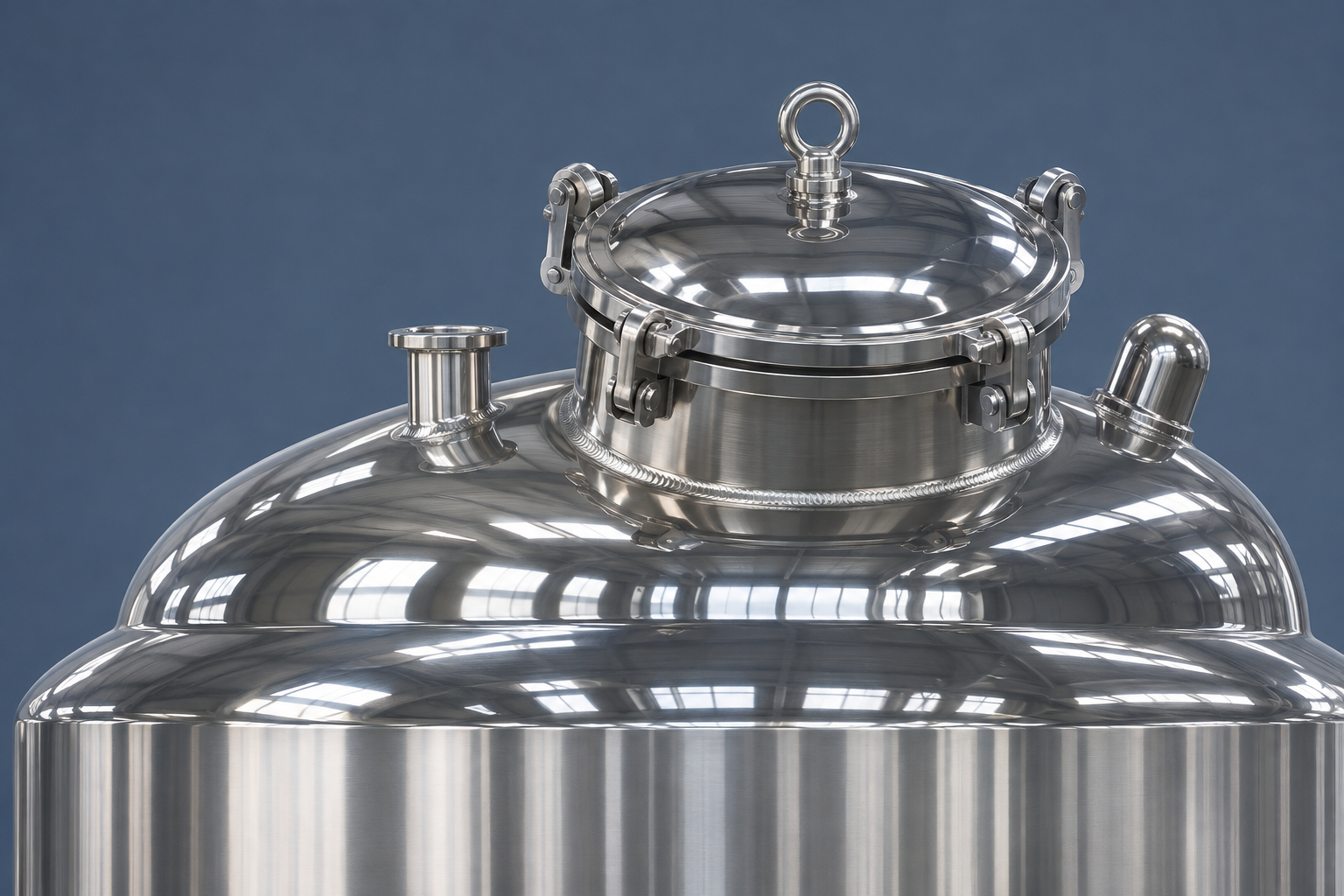
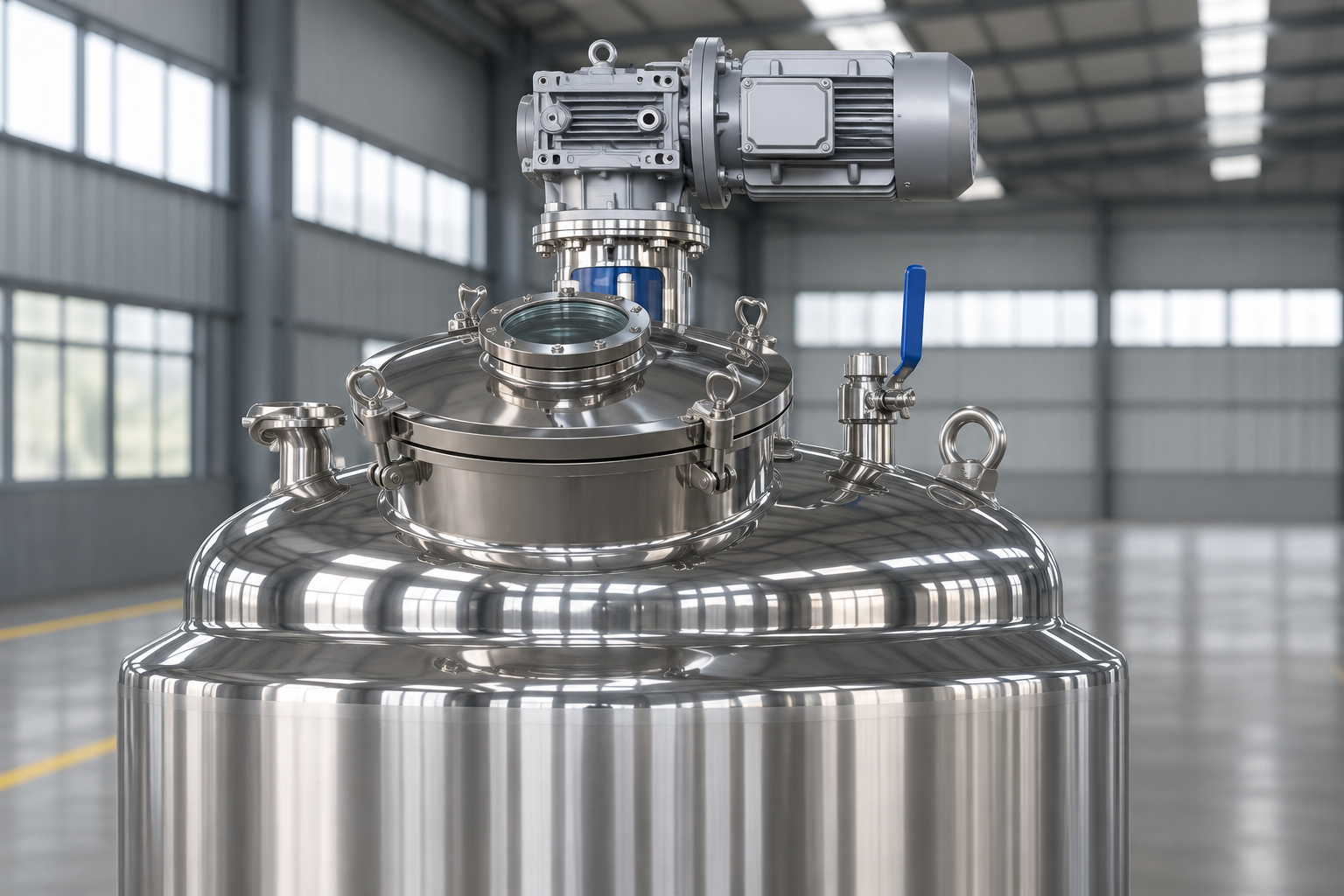
The website’s mixing-tank product page provides the relevant equipment context. The visible motors and vessel surfaces do not establish the lubricant inside a gearbox or the arrangement below the drive. Ask for the supplied configuration and maintenance documentation rather than treating a photograph as evidence of internal separation or sanitary qualification.
Use the broader agitator drive selection guide to establish the drive context; the contamination assessment here concerns the installed lubrication points and exposure routes.
List the approved lubricant identity for each confirmed point, including the controlled specification, application method and responsible role. Preserve the distinction between the equipment maker’s mechanical requirement and the process owner’s product-contact assessment. Both may need review before a lubricant is approved for a particular application.
Map how lubricant could reach a sensitive area
Walk the accessible exterior with the appropriate operations, maintenance and quality representatives. Consider the position of lubrication points relative to the vessel opening, removable lids, product-contact tools, cleaning equipment and operator work areas. Assess direct dripping separately from transfer by hands, rags, tools or maintenance parts.
A closed lid during normal production does not settle the whole assessment. Maintenance or ingredient addition may temporarily expose a different route. Record those operating states explicitly. Similarly, a lubrication point outside the vessel may still require attention if contaminated tools or gloves can later contact a product-contact surface.
For US human-food applications within its scope, the official 2025 edition of 21 CFR 117.40 addresses equipment construction, maintenance and contamination prevention, including lubricants. This is a regulatory context for the assessment, not a certificate for a particular tank. Other products and jurisdictions require their own applicable requirements and responsible review.
Separate lubricant suitability from permission to contaminate
A label describing a lubricant as suitable for incidental food contact does not authorize uncontrolled leakage into a batch. Confirm the exact product identity, intended application and current supporting documentation. Avoid converting broad marketing wording into a blanket claim that any amount or exposure is acceptable.
The official 2025 CFR edition of the US incidental-food-contact lubricant provision describes conditions governing the lubricants within its scope. Its formulation and use conditions should be evaluated as written; they are not a universal batch-release rule. This article deliberately does not assign a generic contamination limit to every lubricant or product.
Mechanical suitability also remains necessary. A lubricant selected for one gearbox cannot be assumed suitable for another without checking the equipment requirements. Changing formulations can involve compatibility and service considerations. Obtain the appropriate manufacturer and process approvals instead of mixing products or substituting an available container on the assumption that similar labels mean equivalence.
Build a point-by-point control record
Use a qualitative table such as the following to connect the physical arrangement with actions and evidence. Fill it with verified installation details rather than generic component assumptions.
| Review area | Question to resolve | Evidence to keep | Control or decision |
|---|---|---|---|
| Lubrication-point identity | Which component and service point are actually installed? | Tag, drawing and manufacturer schedule | Approve a controlled point list |
| Lubricant identity | Is this exact product approved for this equipment and exposure route? | Specification, container identity and approval record | Restrict purchasing and issue to accepted products |
| Application | Can dispensing create drips, residue or tool transfer? | Work method and dispensing-tool assignment | Use the approved method and required amount |
| Equipment condition | Is there evidence of leakage or an unresolved defect? | Location-specific observations and maintenance history | Assign repair and verification responsibility |
| Product exposure | Which batch or surface could have been affected? | Time window, process state and traceability records | Obtain quality disposition where required |
| Maintenance release | Have tools, residues and temporary items been accounted for? | Work order, cleaning evidence and release checklist | Authorize return to the intended operating state |
Control storage, dispensing and identification
Keep lubricant containers identifiable throughout receipt, storage, issue and use. If a product is transferred to a working container, retain the identity and controls required by the site procedure. An unlabelled bottle makes it difficult to establish whether the correct product reached the intended point, even when the original drum was approved.
Assign dispensing equipment so that it does not silently transfer incompatible or unapproved material between applications. Colour coding can support identification, but it should not be the only evidence: personnel need a controlled reference connecting the code to the exact product and point. Review how tools are cleaned, stored and replaced.
Record lubricant issue and unusual consumption in a way that can support an investigation. A repeated need to top up a component should prompt a defined review rather than becoming an invisible routine. Consumption alone does not locate a leak, but it can help identify the period and equipment requiring closer attention.
Plan maintenance around the exposure route
Before work, define the equipment boundary, product state and protection required for nearby surfaces. Apply the approved isolation and safe-work arrangements for moving machinery and other hazards. Quality protection and personnel protection are related work-planning concerns, but neither substitutes for the other.
Account for removed components, rags, dispensing tips, packaging and temporary covers. If a vessel opening or product-contact item is exposed, identify how it will be protected and how the area will be released after work. Do not assume that an exterior wipe-down resolves an internal exposure that was never assessed.
The food mixing tank cleaning guide addresses the adjacent cleaning framework. The cleaning method used after maintenance must still be appropriate to the actual residue, equipment and product. A familiar routine should not be treated as validated removal of an unfamiliar lubricant without the necessary assessment.
Respond to a suspected contamination event with traceable facts
If oil, grease or an unexplained film is observed, document the location, time and process state without assigning its source prematurely. Record recent lubrication, cleaning, component replacement and product-handling activities. Preserve relevant containers, part identities and maintenance records where required by the investigation procedure.
Use the site process to control affected equipment and potentially affected product. The responsible quality team should determine the investigation and disposition requirements. Do not release a batch solely because the lubricant was described as food grade, and do not declare every visible film to be gearbox oil without evidence.
When requesting analysis or supplier assistance, explain what decision the result must support. Identifying a material, locating a leak route and judging product acceptability are different questions. The sample method, reference material and chain of custody should be appropriate to the question. A visually similar substance is not a confirmed chemical match.
Request corrective action that addresses the route
Replacing a worn component may be necessary, but the investigation should also consider whether access, application or identification contributed. A repair that stops an external drip does not automatically correct a practice of placing contaminated tools on a clean lid. Assign separate actions when the evidence identifies separate routes.
After repair, verify the relevant condition using the approved procedure. Record the installed parts, work performed, observations and acceptance owner. Do not invent a universal inspection interval or pressure test to close the record. The required checks depend on the assembly, service and consequences of recurrence.
Connect the maintenance release with the batch changeover line-clearance record where appropriate. This helps ensure that temporary maintenance items, remaining residues and unresolved work do not disappear from view when the production schedule changes.
Make contamination prevention part of the next tank inquiry
For procurement, provide the intended product family, cleaning approach, operating environment and maintenance constraints. Ask the supplier to identify lubrication points, supplied lubricants, access requirements, applicable documentation and any offered separation or collection features. Request drawings and written scope confirmation; do not assume a feature from the appearance of another model.
Specify what you need at handover: a component list, lubrication schedule, approved service documents, spare-parts identification and maintenance-access information. If process-specific suitability is required, state the requirement clearly and ask for the corresponding evidence. Avoid asking only whether the tank is “food safe,” because that phrase leaves the actual service and acceptance criteria undefined.
A useful inquiry also explains how maintenance will occur at the installation site. Ceiling height, access platforms, nearby product openings and cleaning space can affect practical control. These details allow the supplier and process owner to review the arrangement before installation rather than discovering an avoidable exposure route during the first service.
Train the team on the boundary between routine care and intervention
The following neutral hazardous-energy-control video supports maintenance planning around powered machinery. It explains safety principles, not lubricant selection or food-product acceptance. Use it alongside the equipment-specific work instructions and the site’s contamination-control training.
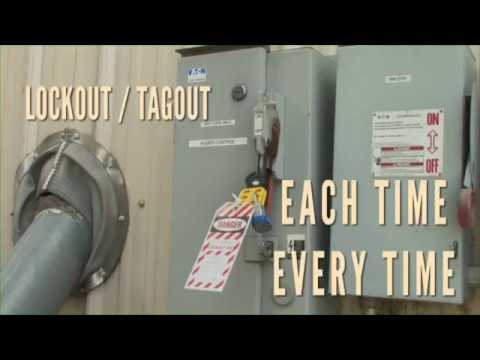
U.S. Agricultural Safety and Health Centers: Control of Hazardous Energy for lockout/tag out.
FAQ
Does an incidental-food-contact lubricant make a leak acceptable?
No. Suitability for a defined incidental-contact use does not authorize uncontrolled leakage or determine the disposition of an affected batch. Confirm the exact lubricant, exposure and applicable requirements through the responsible equipment and quality review.
Can the same grease be used at every point on the agitator?
Only if the controlled equipment documentation and process approval establish that it is suitable for every relevant point. Components may have different requirements. Similar packaging or general food-related wording does not establish mechanical compatibility or permission to substitute.
What should a buyer request before approving a mixing tank?
Request the offered drive configuration, lubrication-point list, supplied lubricant identities, maintenance instructions, access requirements and any documented contamination-control features. Define the actual product and cleaning service so the supplier can confirm scope without relying on broad suitability claims.


