Fermentation harvest criteria should describe the product state and the evidence needed to begin recovery, rather than a fixed number of hours that is assumed to suit every batch. The appropriate endpoint depends on whether the desired product is biomass, an extracellular compound, an intracellular material or another process output. Growth, product formation and downstream suitability do not necessarily reach their preferred conditions together. Define the endpoint before the run, collect suitable samples and review relevant process trends. This guide concerns planning and documentation for legitimate industrial fermentation. It does not supply strain-specific culture conditions, product yields or a universal harvest schedule.
Start with the material that downstream processing needs
State what the harvest is intended to recover and where that material is found. A process recovering viable biomass asks a different question from one recovering a secreted product or material that must be released from cells. The downstream team may also need a particular physical condition, impurity profile or transfer window. Those requirements should be part of the endpoint definition rather than an afterthought once the fermenter is declared finished.
Describe the relevant acceptance attributes and their measurement methods. Identify which results are available in time to support the decision and which require a separate hold or review. Avoid a vague endpoint such as growth complete if the actual commercial requirement concerns product concentration or recoverability. The responsible process and quality team must define the organism- and product-specific requirements using appropriate development evidence and applicable controls.
Use growth phases as context, not a universal harvest rule
The familiar batch-culture growth curve describes broad stages of population behavior. It does not establish that every product should be harvested at the same stage. Product formation, viability and degradation can have different relationships to growth, and a measured population signal may not describe the property that determines downstream value.
The OpenStax explanation of microbial growth provides educational context for growth phases. It is not an industrial harvest specification. Use that framework to ask what is happening in the culture, then evaluate the actual product and process evidence. Do not translate a teaching diagram into a fixed production time or treat a plateau in one signal as proof that the desired material has reached its best recovery condition.
Choose endpoint measurements that answer different questions
A useful endpoint package may include a product-specific assay, a biomass-related measurement, a relevant substrate or by-product observation and selected process trends. The required combination depends on the process. Each measurement should have a stated purpose and a suitable method. Several correlated indicators do not necessarily provide independent confirmation of product readiness.
Distinguish direct product evidence from indirect process evidence. A change in oxygen demand, pH-control activity or another online signal may help identify a transition, but its interpretation can be affected by instrumentation or operating changes. The final decision should reflect the justified endpoint rule, not the most convenient available trace. If a direct assay has a delay, agree how sampling time and decision time will be reconciled before the production run.
Preserve representative and traceable samples
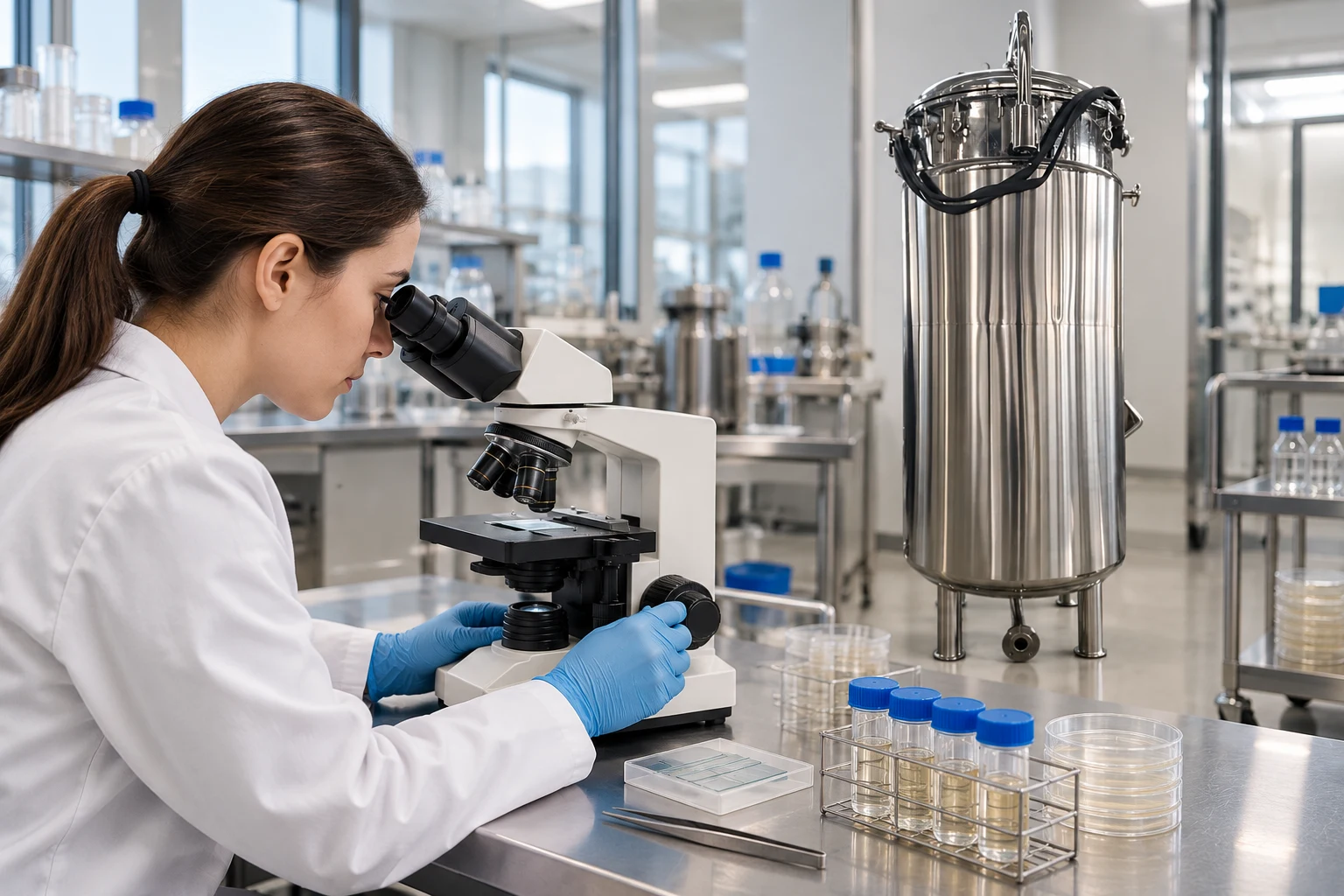
Define the collection point, batch state, sample handling and analysis interval. A sample can change after it leaves the vessel, and the test result should remain linked to its actual collection time. Use the approved containment and aseptic arrangements appropriate to the process. This article does not authorize opening a fermenter, bypassing a sampling safeguard or handling an unknown culture outside the required controls.
Record sample identity, collection time, relevant process condition and any preparation or storage step. If duplicate or retained samples are needed, define their purpose. A retained tube without an agreed storage and interpretation method may not preserve the original state. The sampling plan should be reviewed with the laboratory and downstream team so that the quantity, timing and handling are suitable for the decisions they support.
Review trends with their operating context
Trend interpretation needs the corresponding operating record. An online signal can change when a setpoint, feed condition, gas arrangement or measurement configuration changes. A sudden feature on a graph is not automatically a biological endpoint. Confirm instrument status, signal quality and relevant events before assigning a process explanation.
Use synchronized time references for samples and online data. If a sample collected earlier is analyzed later, mark it at the collection time when interpreting the process trajectory. Preserve data gaps and suspect measurements rather than smoothing them into an apparently complete story. A sound review can explain why an indicator was accepted or discounted. It should not hide an inconvenient measurement simply because the batch otherwise resembles previous successful runs.
| Endpoint question | Evidence category | Limitation to address |
|---|---|---|
| Has the desired product reached the agreed state? | Suitable product-specific analysis | Assay delay, sample stability and method capability |
| Is the biomass condition suitable? | Justified biomass or viability measurement | An indirect optical signal may not establish viability or composition |
| Is the process still changing meaningfully? | Time-resolved samples and relevant trends | Instrument or operating changes can imitate a biological transition |
| Can downstream recovery begin safely and effectively? | Receiving-system readiness and material requirements | A ready fermenter does not guarantee available recovery capacity |
| Is a delay acceptable? | Product-specific hold evidence | A convenient waiting period is not automatically a validated hold |
| Who can authorize the decision? | Defined responsibilities and review record | An alarm or setpoint alone may not constitute release authority |
This table is a planning framework. It does not define organism-specific operating conditions or acceptance limits.
Integrate harvest with downstream readiness
A technically justified endpoint is useful only if the next operation can receive the material under the required conditions. Confirm receiving capacity, transfer arrangements, relevant cleaning status and availability of downstream equipment. Identify who communicates readiness and how a changed schedule is managed. Do not improvise a transfer because the nominal batch duration has elapsed.
The NPTEL course on downstream processing places recovery and purification within the broader processing sequence. Its course scope underscores that fermentation output and downstream operations are connected, but it does not approve an actual plant transfer. For the installation, define the interface using the product’s requirements and the approved process. Preserve the distinction between ending a cultivation stage and releasing material for further processing or sale.
Define the hold decision before a delay occurs
A harvest delay may affect product quality, viability or recoverability. The appropriate response is process-specific. Establish what evidence supports any permitted hold, which conditions must remain controlled and who reviews deviations. Do not assume that a batch can remain in the fermenter indefinitely because its main growth signal is stable.
Record when the endpoint was reached, when the decision was made and when transfer actually began. These are different events. If a delay occurs, retain the reason and the monitoring or sampling performed during it. The investigation should consider whether the material still meets the downstream requirement, rather than treating schedule compliance as the sole criterion. Where supporting evidence is absent, the responsible team must determine the appropriate controlled disposition.
Avoid deciding from elapsed time alone
A fixed time can be part of a justified process, but elapsed time by itself does not explain batch-to-batch differences. Raw materials, inoculum condition, instrumentation and other controlled process factors can affect the trajectory. A run that reaches a familiar age may still require review if its product evidence or trend pattern differs from the established basis.
Conversely, an earlier favorable signal should not automatically authorize an earlier harvest. The endpoint rule may require confirmation from another measurement or a defined review. Apply the approved decision logic consistently and preserve exceptions. The purpose is not to maximize or minimize run time in isolation; it is to obtain material that is suitable for its intended recovery and subsequent use.
Write a decision record another person can reconstruct
A harvest record should identify the batch, the applicable endpoint-rule version, relevant sample results, reviewed trends, downstream readiness and the approving role. Include unresolved observations, deviations and any hold assessment. Link the record to the actual transfer event and receiving system rather than filing it as a disconnected laboratory report.
Maintain an explanation for changes to the endpoint rule. A new assay, product variant or recovery process may alter which evidence matters. Review whether previous development data remain applicable. Do not claim a process improvement from a shorter run unless product quality, recovery and other relevant outcomes have been assessed. A useful record makes both the successful conditions and their limits clear.
Specify the equipment interfaces the endpoint plan requires
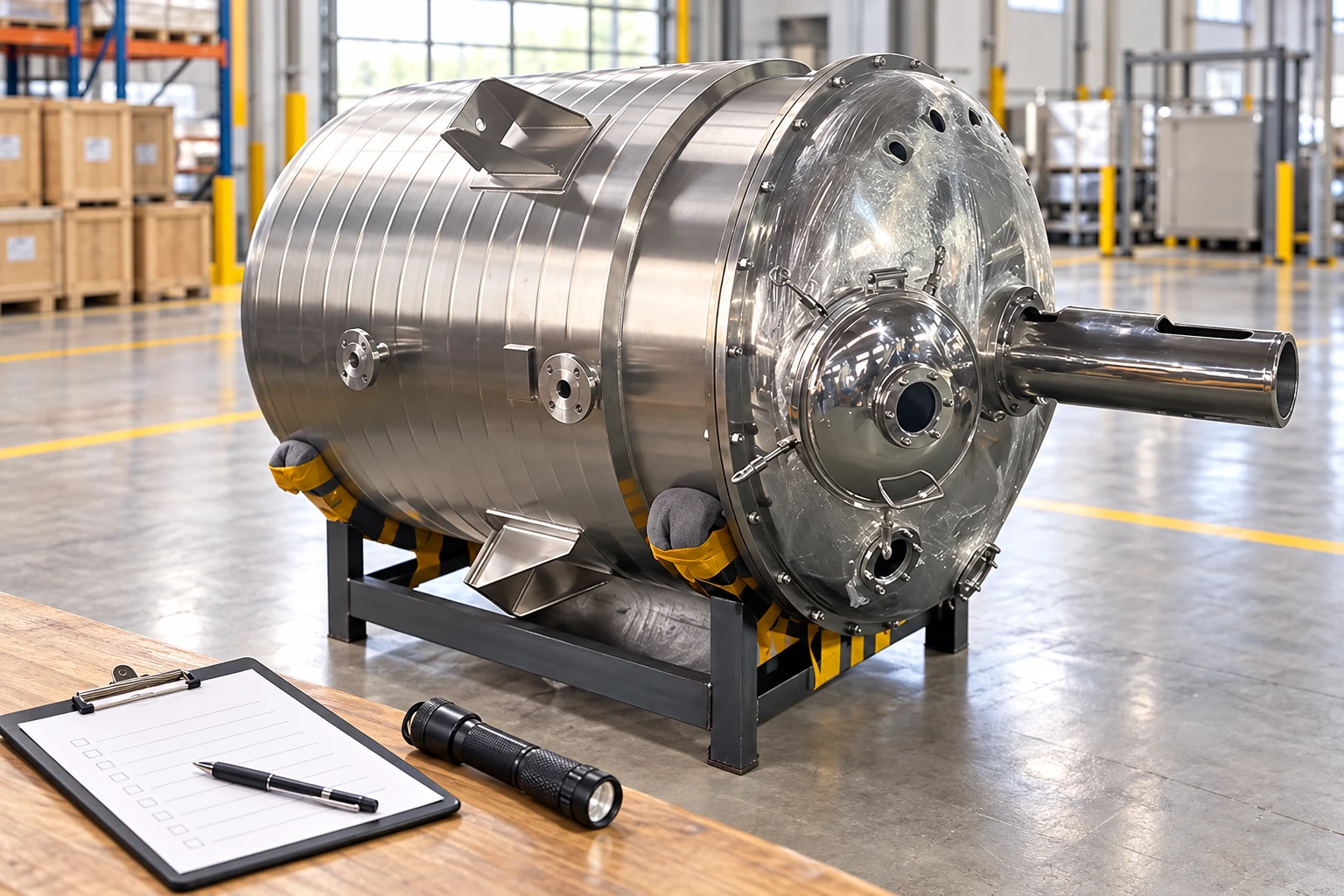
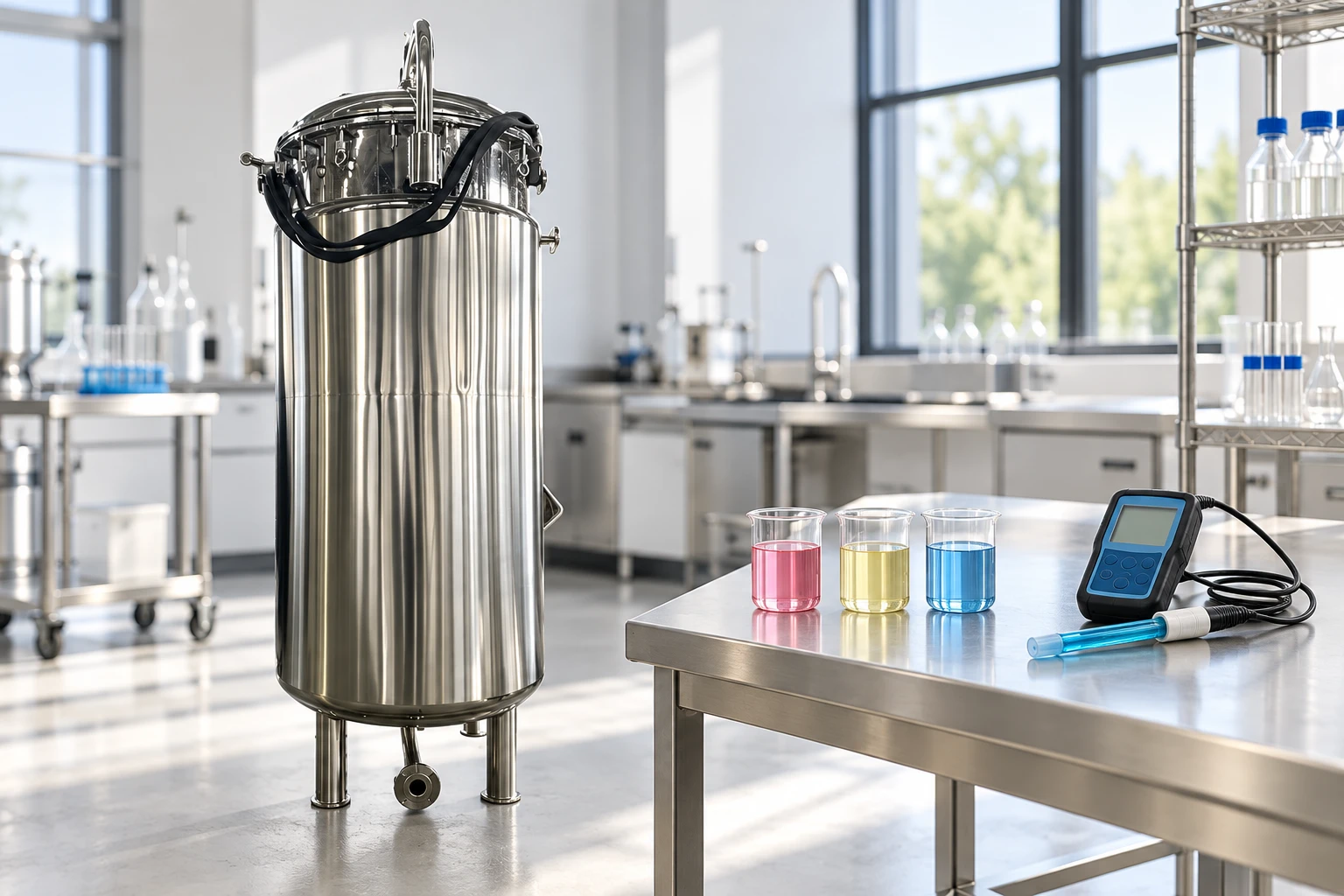
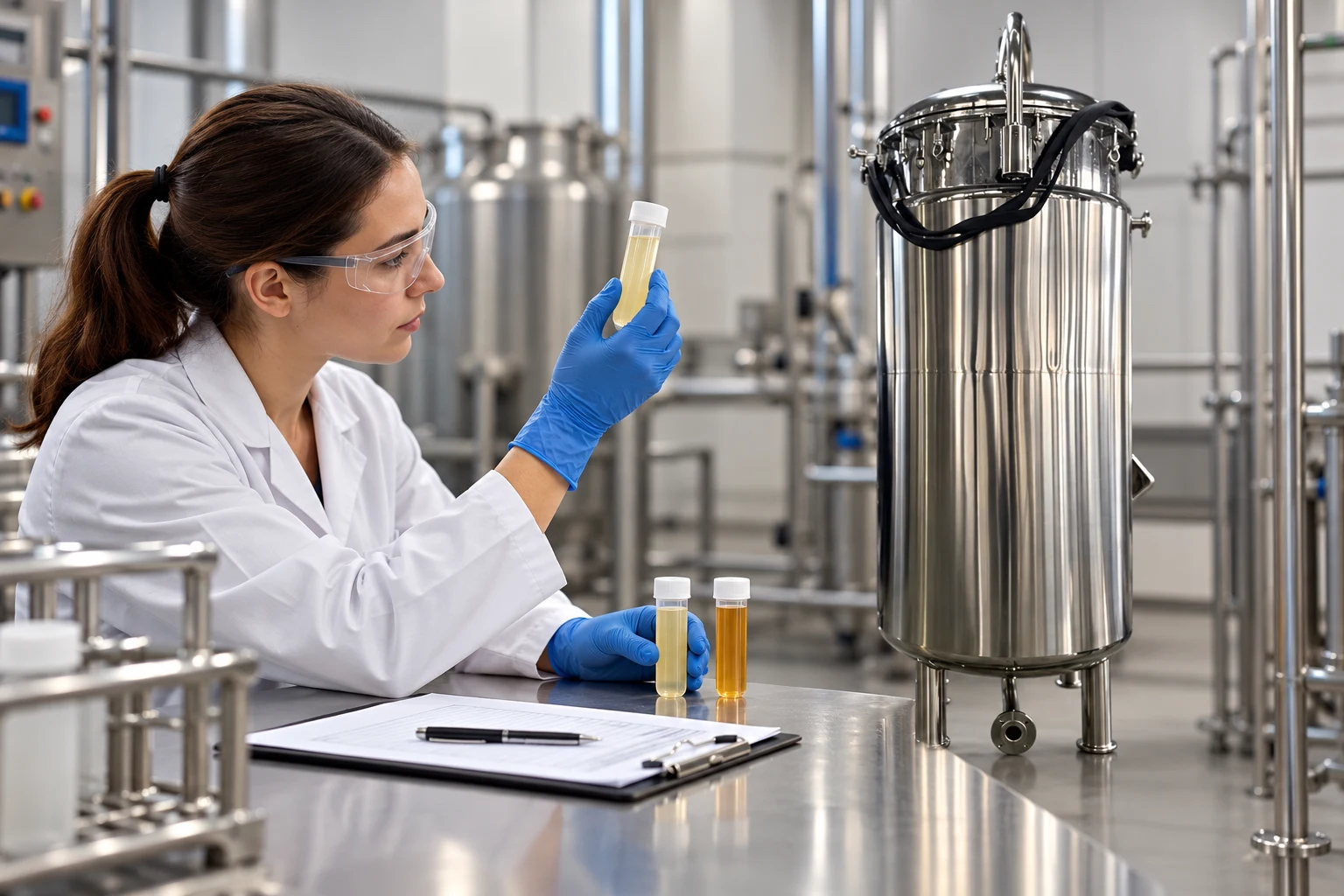
When discussing a YIYI fermenter, provide the process purpose, required containment, sampling needs, measurement interfaces, cleaning arrangements and downstream transfer requirements. Ask the supplier to confirm the actual proposed configuration and what is included in the scope. The reference photograph shows a vessel family; it does not prove a supplied assay system, a particular biological performance or a validated harvest program.
Use the fermenter working-principle guide for equipment context, the dissolved-oxygen probe calibration guide for a distinct measurement-quality question and the fermenter validation-document guide when defining the handover evidence. An endpoint plan benefits from reliable instruments and documentation, but neither a sensor nor a document package alone determines the correct harvest time.
Educational reference: microbial growth phases

Watch Mod-01 Lec-23 Microbial Growth : Phases and Models by nptelhrd
The educational explanation supports interpretation of growth behavior. It is not a production protocol, a strain-specific cultivation instruction or evidence of a guaranteed result in the illustrated vessel.
Frequently asked questions
Should every fermentation be harvested at stationary phase?
No. The relevant endpoint depends on the desired product, biomass condition and downstream requirements. A general growth-stage description is not a universal recovery rule.
Can an online oxygen signal replace a product assay?
Only where the process-specific evidence justifies its defined role. An indirect signal can be affected by instrument and operating conditions, so its meaning must be established rather than assumed.
What if the recovery equipment is not ready?
Follow a predefined hold and deviation process supported by suitable evidence. Record the endpoint, delay, monitoring and authorization. Do not invent an unlimited holding period from a stable trend.