Filter housing pressure drop is the pressure difference between defined inlet and outlet measurement points at a stated flow and fluid condition. It may include losses through the housing passages, installed elements, retained solids, and nearby fittings, depending on where the readings are taken. A rising difference can indicate loading, but flow changes, colder liquid, incorrect valves, blocked sensing lines, or installation problems can produce similar symptoms. Monitor pressure alongside flow and outlet quality, then use the approved element and process limits to decide when to clean or change the filter. There is no universal differential-pressure threshold that safely applies to every industrial liquid filter.
Define the measurement boundary
Write down exactly where inlet and outlet pressure are measured. A gauge upstream of an isolation valve and another downstream of a long pipe section will include more than the filter’s resistance. That may be useful for a system assessment, but it cannot be compared directly with a supplier curve measured across a bare housing. Draw the measurement boundary on the installed arrangement.
Distinguish absolute pressure, gauge pressure, and differential pressure when reading instruments. Use compatible units and reference conditions. Two gauge readings can be subtracted only when their references and measurement arrangements support that comparison. If elevations differ significantly, the liquid’s hydrostatic contribution may need correction by the responsible engineer.
A differential-pressure instrument simplifies recording but still depends on correct connections and suitable sensing lines. Check the high and low sides, isolation valves, calibration, and the possibility of trapped gas or deposits. A precise display can give misleading information if its sensing path does not represent the process. Record the instrument identity and measurement configuration with the baseline.
Separate clean housing, clean element and loaded element losses
An empty housing has resistance through its ports, passages, and internal distribution geometry. Installing an element adds another contribution. Retained solids and changes in the element can add resistance during operation. The measured total is useful, but diagnosing it requires knowing which components lie within the measurement boundary.
Request supplier curves for the actual housing and element configuration, not simply a product family. Ask which fluid, temperature, element count, and rating were used. A clean-water curve may help establish a reference, but process viscosity and contamination can require validated corrections or testing. The industrial filter tank sizing guide connects these conditions to active area and capacity.
The EPA filtration-design discussion describes the relationship between driving pressure and growing media and solids resistance in water filtration. It supports the physical explanation, not a numerical pressure limit for a YIYI product or a different industrial liquid.
Establish a clean operating baseline
After approved commissioning, record inlet pressure, outlet pressure, flow, liquid temperature, relevant viscosity information, element configuration, and outlet quality. Confirm that the system is in the intended valve state and that temporary strainers or test fittings have been removed or explicitly included. Take the baseline after the applicable startup flushing and stabilization steps.
A baseline should be a set of operating points when the process has a meaningful flow range. One reading at reduced production cannot establish the clean pressure drop at peak duty. Record repeatability and measurement uncertainty where they affect the decision. If the baseline already exceeds the agreed clean allowance, investigate before treating it as normal simply because the equipment is new.
Link the baseline to the exact installed element type and quantity. If media, seals, or piping later change, review whether a new baseline is needed. Keep the original record so that maintenance can understand the difference between a changed configuration and a deteriorating unit. This improves diagnosis without relying on memory of a gauge reading.
Compare readings at comparable conditions
Pressure drop is sensitive to flow. It can also change with viscosity, temperature, phase behavior, and deposit condition. A higher reading after production increases does not prove that the element has become more loaded. Conversely, reduced flow can conceal increasing resistance. Record these variables together instead of plotting differential pressure alone.
For a simple diagnostic example, suppose a clean baseline at 8 cubic metres per hour is 0.2 bar and a later reading at the same flow and comparable fluid condition is 0.5 bar. The additional 0.3 bar is evidence of changed resistance within the boundary, but it does not identify the cause or authorize continued operation. These are hypothetical numbers, not operating recommendations or product ratings.
Do not apply a generic linear or squared correction to every filter. Housing passage losses and porous-media losses can behave differently, and deposited material can change the relationship. Use the supplier’s documented model or repeat measurements at controlled conditions. If the fluid is non-Newtonian or the deposit compressible, simple corrections may be especially unreliable.
Use a symptom-to-check table
This table is a diagnostic planning aid. It follows the principle of monitoring resistance and operating conditions described in the EPA guidance, with actual intervention limits taken from the approved supplier and process documentation.
| Observed symptom | Possible explanation | Useful verification |
|---|---|---|
| Gradual rise at steady flow | Solids loading or developing deposit | Review feed data, quality samples and cycle history |
| Sudden rise after startup | Valve state, wrong element, blocked path or viscosity change | Compare configuration and operating conditions |
| High inlet pressure but modest differential | Downstream backpressure or system condition | Review outlet requirement and measurement boundary |
| Unexpectedly low differential | Reduced flow, bypass or damaged seating | Confirm flow, assembly and outlet quality |
| Fluctuating reading | Unstable flow, gas or sensing-line issue | Check instrument paths and process stability |
| Poor recovery after cleaning | Residual fouling, damage or changed configuration | Compare clean reference and verified element condition |
| Quality deterioration without pressure rise | Breakthrough, seal problem or unsuitable rating | Investigate retention evidence and assembly integrity |
Set cleaning and changeout limits from evidence
At least three constraints may matter: the element’s allowable differential pressure, the pressure available to sustain production, and the outlet-quality requirement. The action threshold should protect all relevant constraints with an approved response plan. The housing design pressure is another separate boundary and must not be confused with the element differential limit.
The EPA small-system handbook discusses pressure monitoring and following the manufacturer’s cleaning or replacement limits in filtration systems. For an industrial duty, obtain the limit for the exact element, temperature, and operating direction. Avoid copying a drinking-water example as an industrial setpoint.
Define who acts when the threshold is approached and whether the response is controlled shutdown, changeover to a standby unit, backwash, or another approved procedure. An alarm without a practical response can become routine background noise. Review transient conditions and instrument faults separately so that operators do not reset a meaningful warning without investigation.
Do not infer filtration quality from pressure alone
An element can become damaged, incorrectly seated, or bypassed while the pressure difference remains low. If outlet quality is important, retain the appropriate particle, turbidity, or other acceptance check. The micron-rating guide explains why a rating needs efficiency and test conditions; differential pressure does not replace that retention evidence.
Conversely, high resistance does not establish that a filter is removing the required contaminant. A clogged element may still have a seal problem or be inappropriate for dissolved contamination. Diagnose the complete assembly and process requirement. Changing to a coarser element purely to reduce pressure drop can sacrifice the required outlet quality.
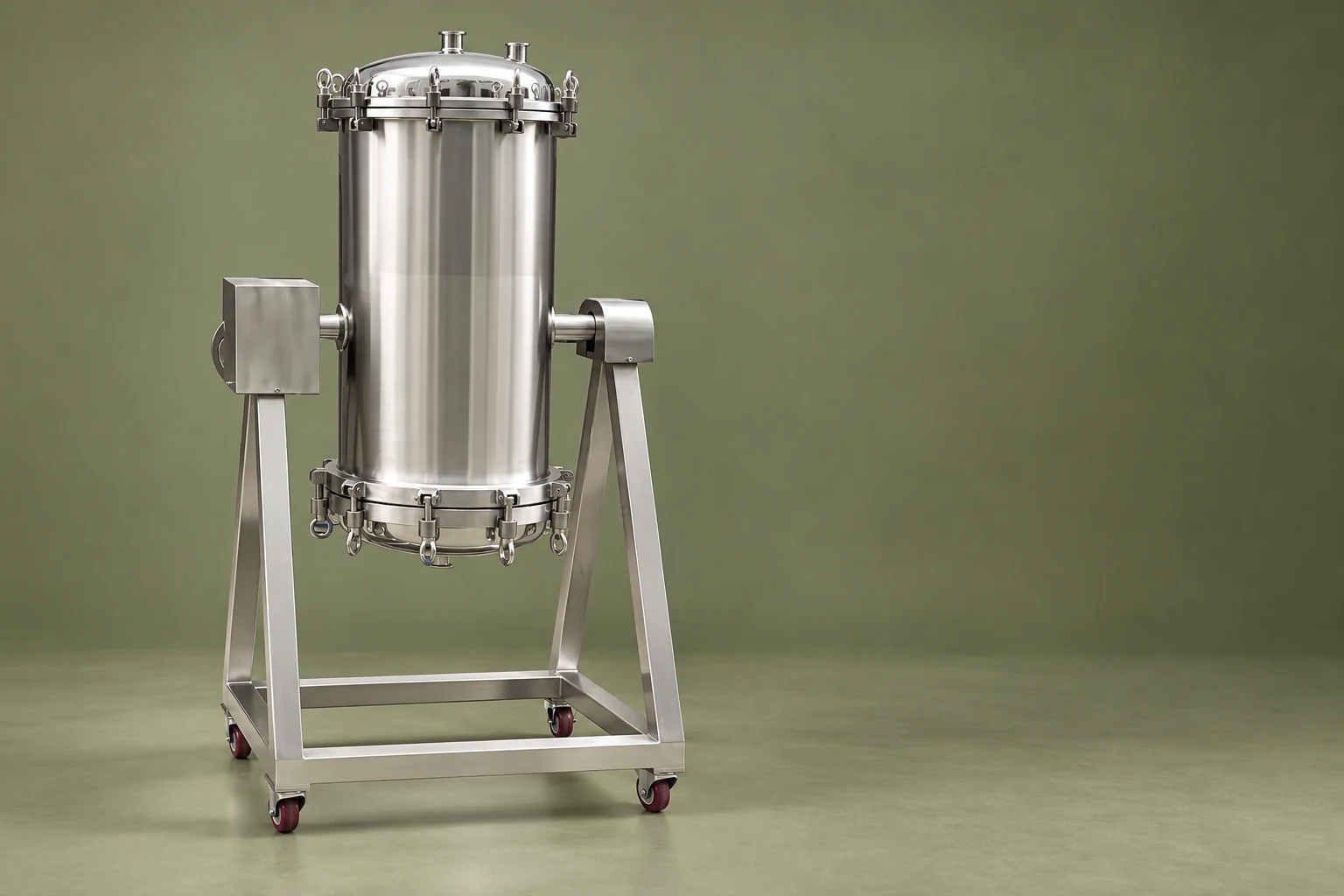
YIYI’s titanium-rod filter provides a relevant reusable-element housing example. The exterior closure and support arrangement cannot establish allowable pressure difference or retention efficiency. Request the actual proposed element specification and process limits. The filter-tank overview supplies broader vessel context.
Investigate poor recovery after cleaning
Compare the post-cleaning result with the original baseline at comparable flow and fluid conditions. Partial hydraulic recovery may indicate residual deposits, but a changed element, incorrectly reassembled parts, or a measurement issue can also explain it. Record the cleaning cycle and inspect the assembly according to the approved procedure before assigning a cause.
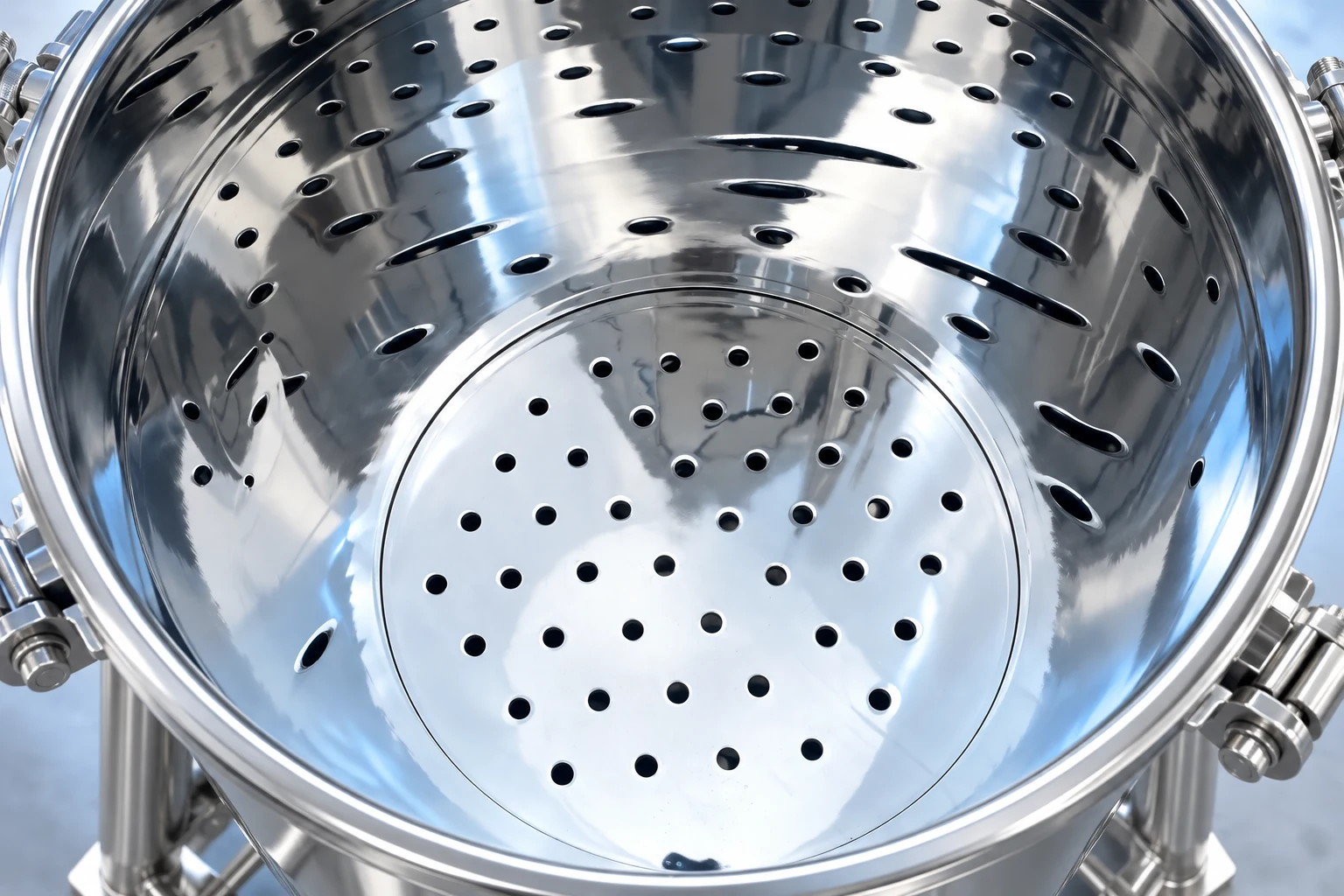
Reusable elements require a method that verifies both restored flow behavior and acceptable retention after cleaning. Aggressive cleaning may reduce resistance while damaging the element or seals, so a lower pressure difference alone is not a successful regeneration criterion. The food-grade tank cleaning-validation guide provides related verification principles; a porous filter element needs its own supplier-approved method.
Maintain a trend of service hours, processed volume, feed conditions, cleaning method, and recovery. A declining interval between cleaning cycles can reveal a changed process or an aging element. Investigate the trend before simply increasing cleaning frequency. The most useful maintenance record explains why the filter reached its limit and what changed after the intervention.
Further learning: resistance during filtration
NPTEL’s IIT Madras lecture introduces filtration principles and retained-solids behavior. It offers background for understanding changing resistance, while the actual housing and element limits remain application-specific. This educational video does not establish a cleaning trigger for the illustrated equipment.
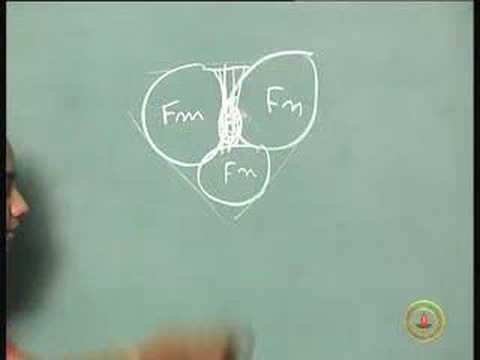
Watch Lecture 13 Filtration by nptelhrd
Request a monitoring-ready supplier proposal
Specify normal and peak flow, fluid properties, temperature range, outlet quality, available pressures, solids data, and the proposed measurement points. Request clean and loaded performance evidence, element differential limits, housing design conditions, instrument recommendations, and a defined cleaning or changeout strategy. Require the supplier to identify assumptions that need a sample trial.
Ensure the operating record is usable by the site team. A simple log that captures flow, temperature, pressures, outlet quality, and intervention reason can be more valuable than an isolated automatic pressure trend. Review alarms and standby arrangements during commissioning, and connect maintenance instructions to the exact installed configuration.
Frequently asked questions
Is inlet pressure the same as filter pressure drop?
No. Pressure drop is the difference across defined measurement points. Inlet pressure alone also reflects downstream pressure and the wider system, so it cannot identify filter resistance.
Does low differential pressure mean the filter is healthy?
Not necessarily. Reduced flow, bypass, damaged seating, or instrument problems can produce a low reading. Check operating conditions and outlet quality as well.
Can I use a universal changeout pressure?
Use the approved limits for the exact element and process. Available production pressure, element integrity, temperature, and required quality can all affect when action is necessary.