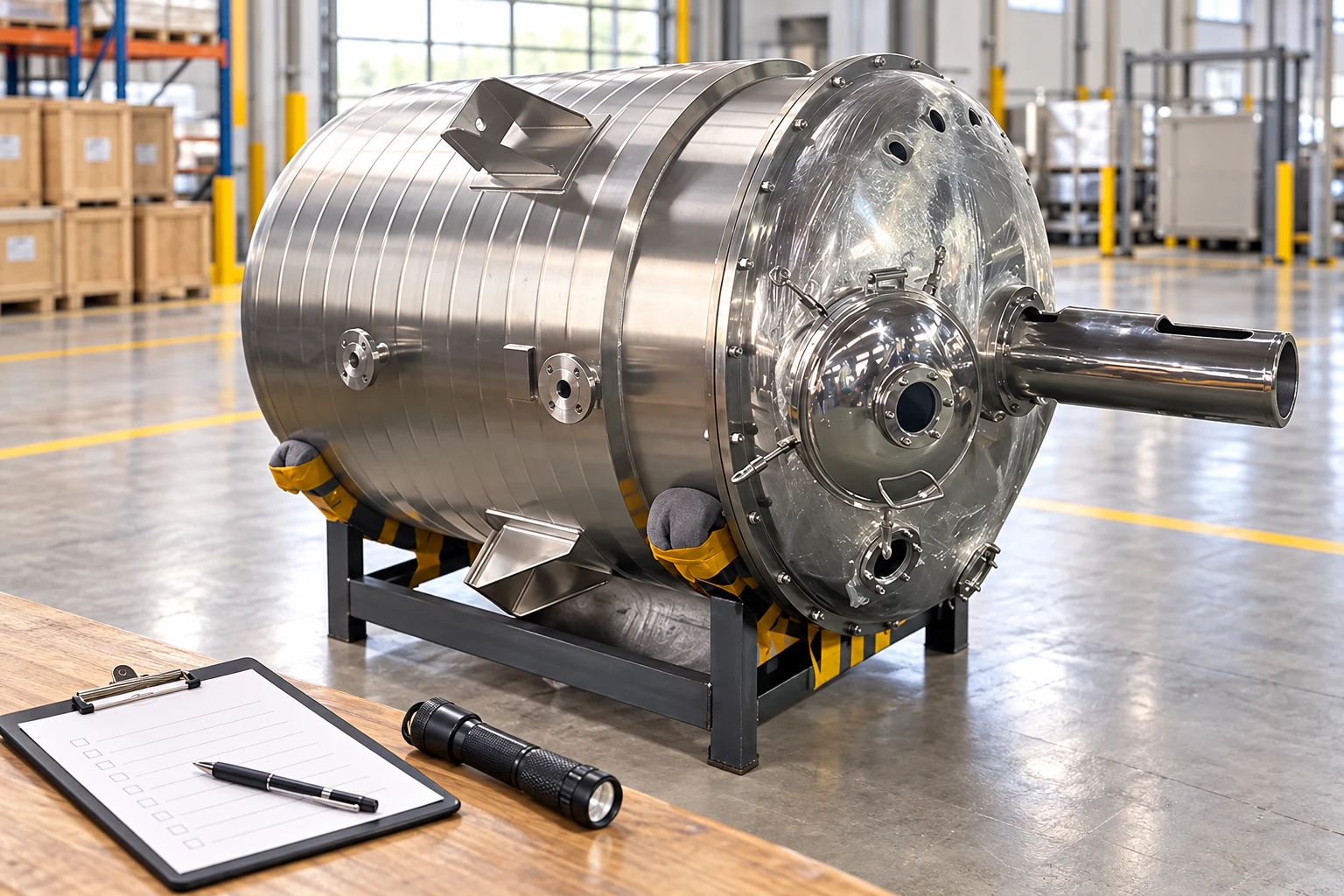
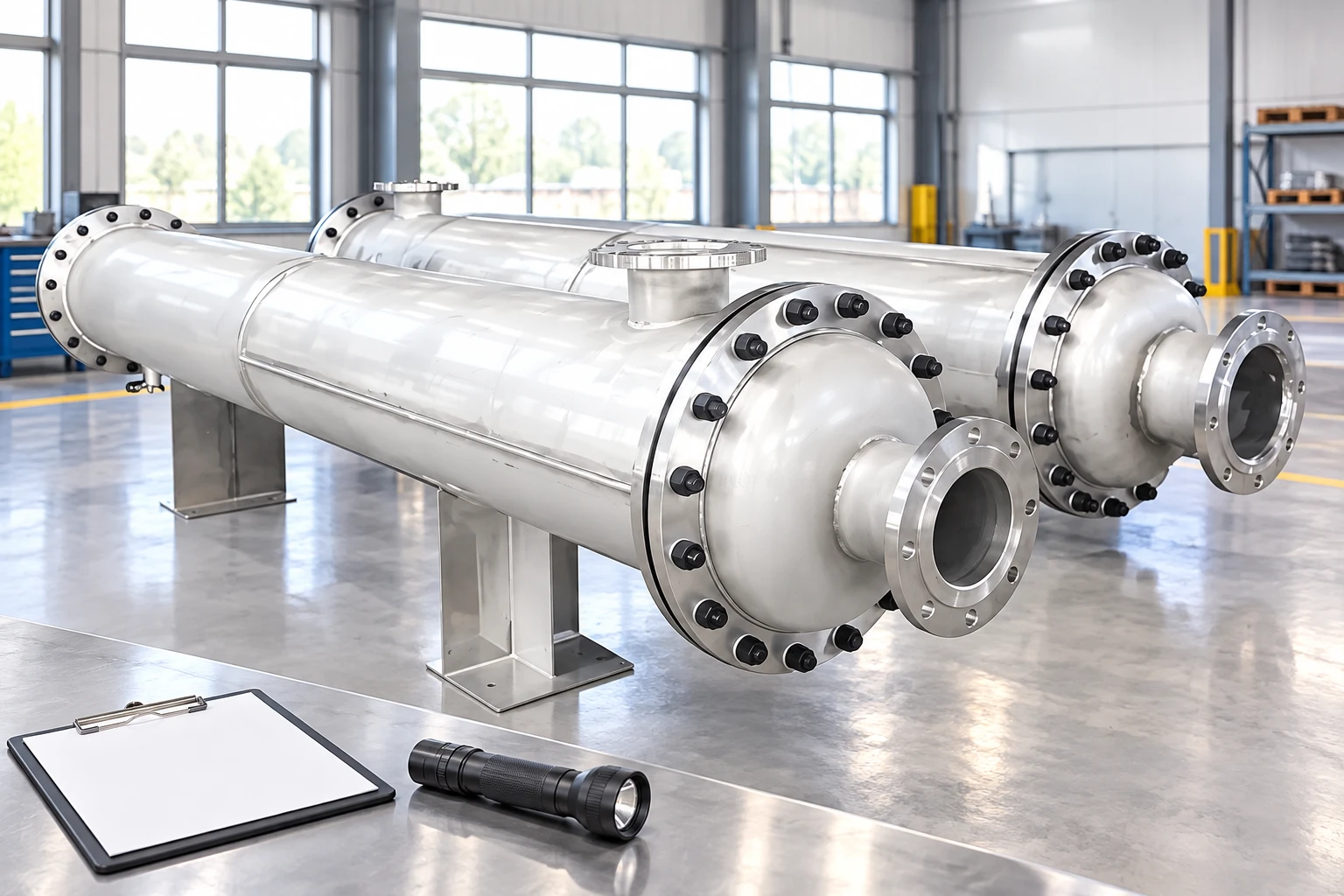
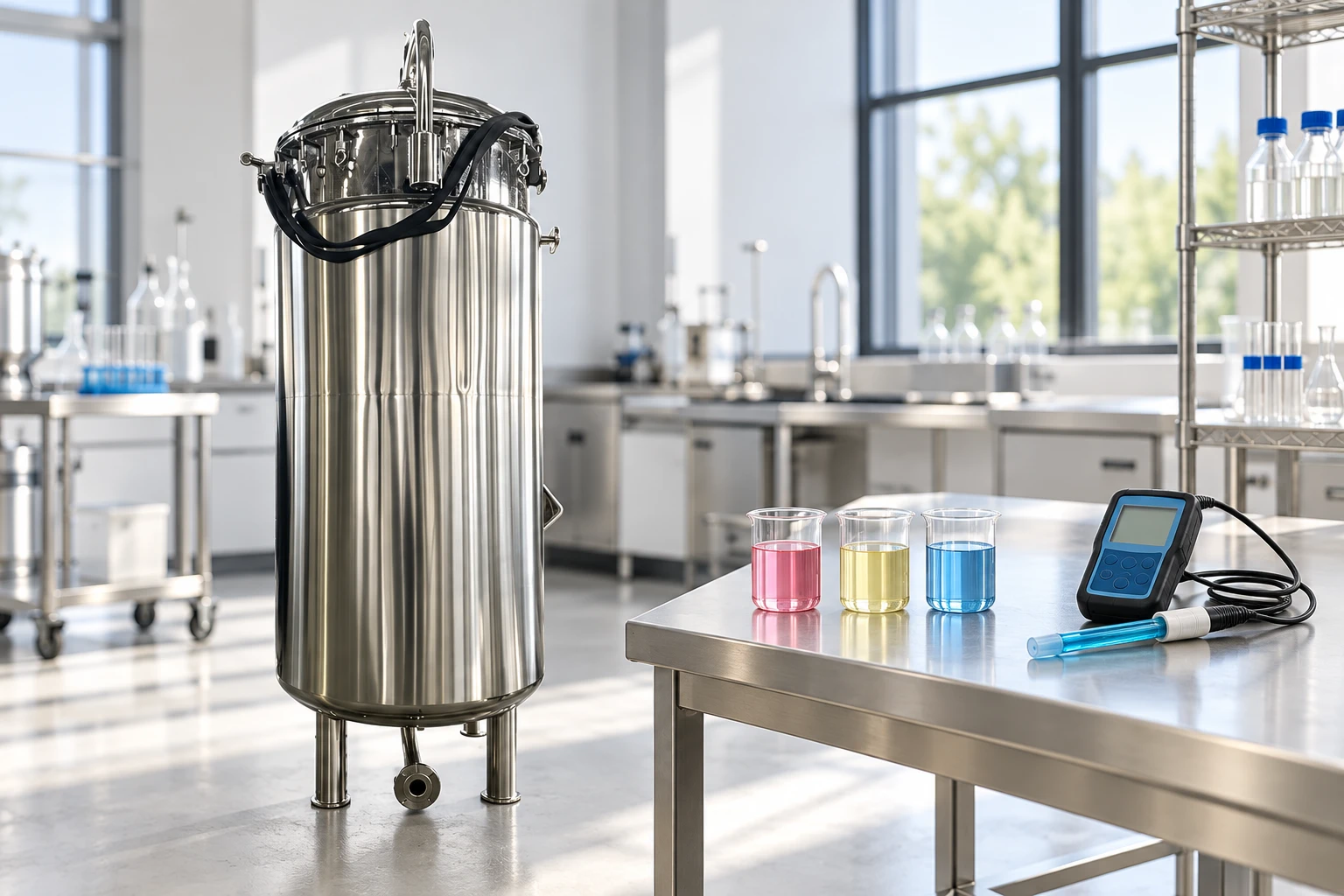
A chemical mixing vessel should be specified from the complete chemical and thermal duty, not from a stainless grade or jacket label alone. Media, concentration, impurities, temperature, exposure time, working volume, agitation, heating or cooling objective, utilities, and acceptance criteria all influence a viable proposal. A vessel image cannot establish corrosion life, heat-up time, cooling performance, or a pressure rating.
This guide helps buyers organize a corrosion and jacket review before requesting quotations. For a broader vessel purchase checklist, see the chemical mixing tank buyer guide. If the key question is a steam-jacket arrangement, compare it with the steam jacketed mixing tank guide.

Part 1. What Defines the Chemical and Thermal Duty?
Begin with the material that will contact the vessel, then describe the thermal process. Record each product component, concentration, impurities, operating temperature range, cleaning chemistry, exposure time, and whether the batch changes during heat-up or cooling. A corrosive duty can change when concentration rises, a solvent flashes, a cleaning cycle runs hotter, or a batch remains idle.
Thermal duty needs the same discipline. State the working, minimum, and maximum volume; starting and target temperatures; the heat or cooling medium available; batch frequency; mixing sequence; and how the plant will decide that the batch is ready. Do not turn a target temperature into an assumed heat-up or cool-down promise.
| Process input | What to record | Why it changes vessel selection |
|---|---|---|
| Chemical exposure | Constituents, concentration, impurities, and time | Starts the metal, elastomer, and seal review |
| Temperature profile | Product and cleaning maximum/minimum | Changes compatibility and thermal-control questions |
| Batch range | Minimum, normal, and maximum working volume | Changes wetted area, agitation, and control response |
| Thermal objective | Heat, cool, hold, melt, dissolve, or remove reaction heat | Defines jacket and utility discussion |
| Acceptance method | Approved sample, temperature profile, or plant test | Prevents unsupported process-result claims |
Part 2. How Should Corrosion Review Inputs Be Classified?
The first class is chemical exposure: identify the media, concentration, impurities, temperature, and expected contact time. The second is construction scope: list the vessel wall, agitator, shaft, fittings, gaskets, seal faces, and any instruments that contact the batch. The third is cleaning and upset conditions, because a component can experience a different chemical environment during CIP, maintenance, or abnormal operation.
304 and 316L are material labels, not blanket compatibility answers. A plant should ask the supplier what chemistry and temperature assumptions apply to each wetted component, and whether the requested evidence covers the product and the cleaning cycle. If the duty is hazardous, corrosive, or pressure-relevant, define the plant review and documentation responsibilities explicitly.
| Corrosion-review class | Supplier question | Evidence to request |
|---|---|---|
| Product media | Which constituents, concentration, impurities, and temperature are assumed? | Written duty-sheet assumptions |
| Wetted construction | Which grades apply to vessel, jacket interface, agitator, fittings, and seals? | Material identification and requested certificates |
| Cleaning media | Are cleaning chemicals, temperature, and exposure time part of the review? | Cleaning boundary and elastomer list |
| Upset or idle condition | Are hot cleaning, concentration excursions, or retained product considered? | Plant/supplier review; no corrosion-life inference |
Important: A stated metal grade does not establish corrosion life, chemical suitability, or regulatory compliance. Confirm the actual exposure and the plant’s applicable requirements before approving a configuration (ASME codes and standards).
Part 3. Which Jacket Option Fits the Utility and Process Objective?
A jacket is an outer heat-transfer space that exchanges energy between a utility and the vessel contents through the vessel wall. The practical decision begins with the process objective: heating, cooling, holding temperature, melting, dissolving, or removing heat. It then moves to utility medium, supply and return conditions, control approach, product viscosity, agitation, available heat-transfer area, and any safety or pressure boundary.
Steam, thermal fluid, hot water, chilled water, or another plant utility may be considered in a project-specific design, but each introduces different operating and control questions. The correct answer is not “choose the strongest jacket”; it is “state the utility and thermal acceptance criteria so proposals use the same assumptions.”

| Jacket decision | Buyer question | RFQ evidence |
|---|---|---|
| Heating or cooling | What energy direction and temperature range are required? | Starting/target temperatures and product behaviour |
| Utility | Which medium, supply condition, return constraint, and control boundary are available? | Utility data from the plant |
| Agitation | How does viscosity change while heat is transferred? | Mixing sequence and fill range |
| Acceptance test | What confirms the batch is ready without a guaranteed cycle time? | Approved temperature and product-quality method |
Part 4. What Vessel, Jacket, and Agitation Boundaries Must Be Stated?
Separate the vessel boundary from the thermal-jacket boundary. Describe working volume, freeboard, process pressure or vacuum requirement where applicable, connections, agitation, and product transfer. Then define the jacket utility boundary, instrumentation, insulation expectations, access, and who owns external piping, safety devices, controls, and commissioning. That separation prevents a quotation from silently omitting interfaces.
Viscous batches and non-Newtonian products add another reason to keep agitation in the thermal discussion. Product motion influences how heat reaches the bulk material, yet no generic vessel page can predict the result. Ask for the proposed mixing arrangement, fill range, and operating sequence alongside the jacket assumptions.
| Boundary | Clarify before quotation | Why it matters |
|---|---|---|
| Vessel process scope | Working volume, product conditions, connections, and transfer | Defines the product-contact equipment scope |
| Jacket utility scope | Medium, supply/return, controls, insulation, and external piping | Defines thermal interfaces and exclusions |
| Agitation scope | Impeller, speed range, viscosity change, and minimum fill | Links bulk circulation to the thermal duty |
| Safety/document scope | Required review, records, and acceptance criteria | Avoids implying an unverified rating or certification |
Part 5. Which Cleaning, Drain, and Control Details Need Evidence?
Ask how the vessel drains after product and after cleaning. Low points, bottom outlet, spray coverage, manway access, removable parts, seals, and trapped volumes can determine whether the plant can execute its cleaning procedure. EHEDG provides useful vocabulary for hygienic-design and cleanability discussions, but it is not evidence that a specific vessel or plant is certified.
Controls should state what is measured, what is alarmed, and what is outside the supplier scope. Temperature, level, agitator status, utility control, and motor protection may be relevant, but their presence does not prove a safe operating procedure. For a reactive or pressure-relevant process, coordinate plant safety responsibilities and applicable management requirements rather than relying on a product label; OSHA process safety management is one public context for covered operations.
Part 6. What Belongs in a Corrosion-and-Jacket RFQ?
Use the jacketed mixing tank configuration reference and the wider mixing tank product family as equipment context. Then send the vessel duty sheet to YIYI so the quotation can document the assumptions.
- Product and cleaning chemistry, concentrations, impurities, temperatures, and exposure times.
- Working/minimum/maximum volume, batch sequence, viscosity behaviour, solids, and agitation objective.
- Heating or cooling target, available utility, supply/return constraints, and control boundary.
- Wetted metals, elastomers, seals, drainability, access, documentation, and requested records.
- Pressure or vacuum relevance, external piping and safety interfaces, acceptance method, and exclusions.

FAQs
What makes a chemical mixing vessel corrosion-compatible?
Compatibility comes from a documented review of media, concentration, impurities, temperature, exposure time, cleaning chemistry, wetted metals, elastomers, and seals. A material label alone is not enough.
Does 316L work for every chemical?
No. 316L is not a universal corrosion guarantee. The complete product and cleaning duty must be reviewed, including temperature and concentration changes.
What is a jacketed chemical mixing vessel?
It is a vessel with an outer heat-transfer space that exchanges energy between a utility and the contents through the vessel wall. The achievable result depends on the complete thermal and mixing duty.
What should be included in a jacket RFQ?
Include product chemistry, volume, temperature profile, heating or cooling objective, utility data, viscosity behaviour, agitation, material expectations, controls, and acceptance criteria.
Can a jacket guarantee heat-up or cool-down time?
No. Heat-transfer time depends on vessel geometry, available area, utility conditions, product properties, agitation, fouling, and the actual process sequence. Agree a duty-specific assessment and test method.
Is a mixing vessel automatically pressure-rated or certified?
No. A vessel title or image does not prove rating, code scope, or certification. State the required operating boundary, documentation, and applicable plant requirements in the RFQ.
References
- ASME codes and standards — scope reference when a vessel or thermal-jacket boundary requires applicable code review.
- EHEDG — vocabulary for evaluating drains, accessible surfaces, and cleanability questions.
- OSHA process safety management overview — public context for identifying safety-management responsibilities in covered operations.