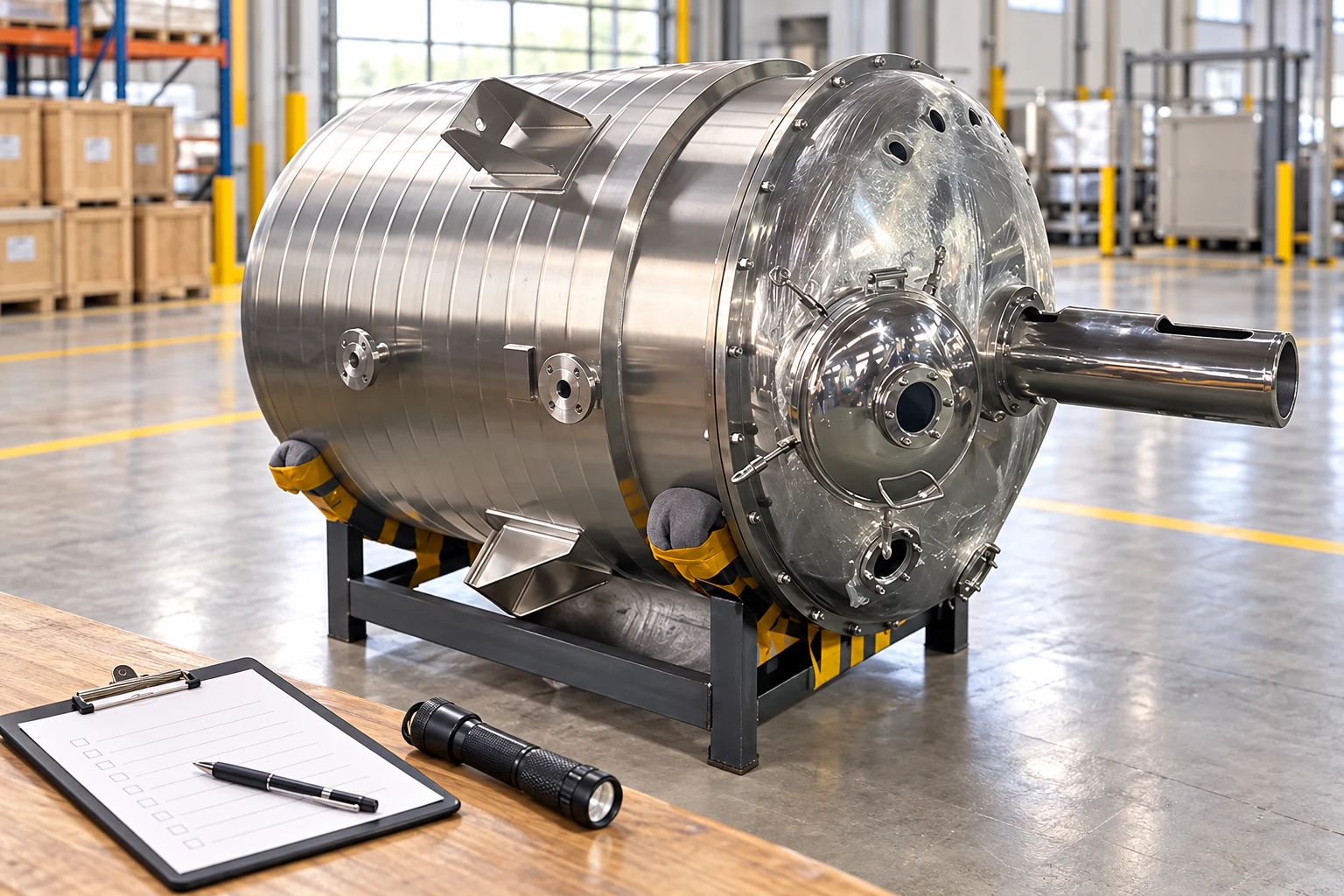
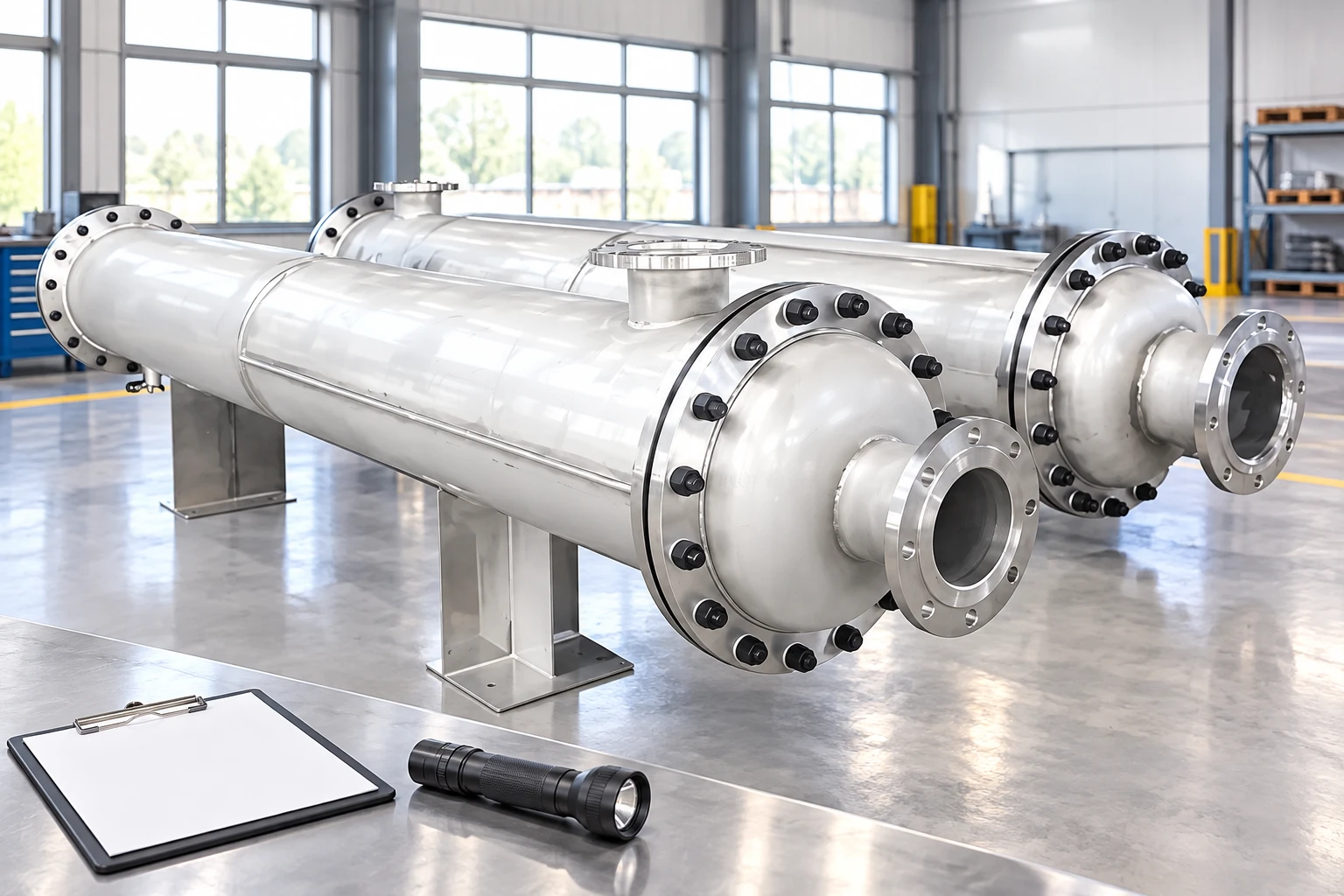
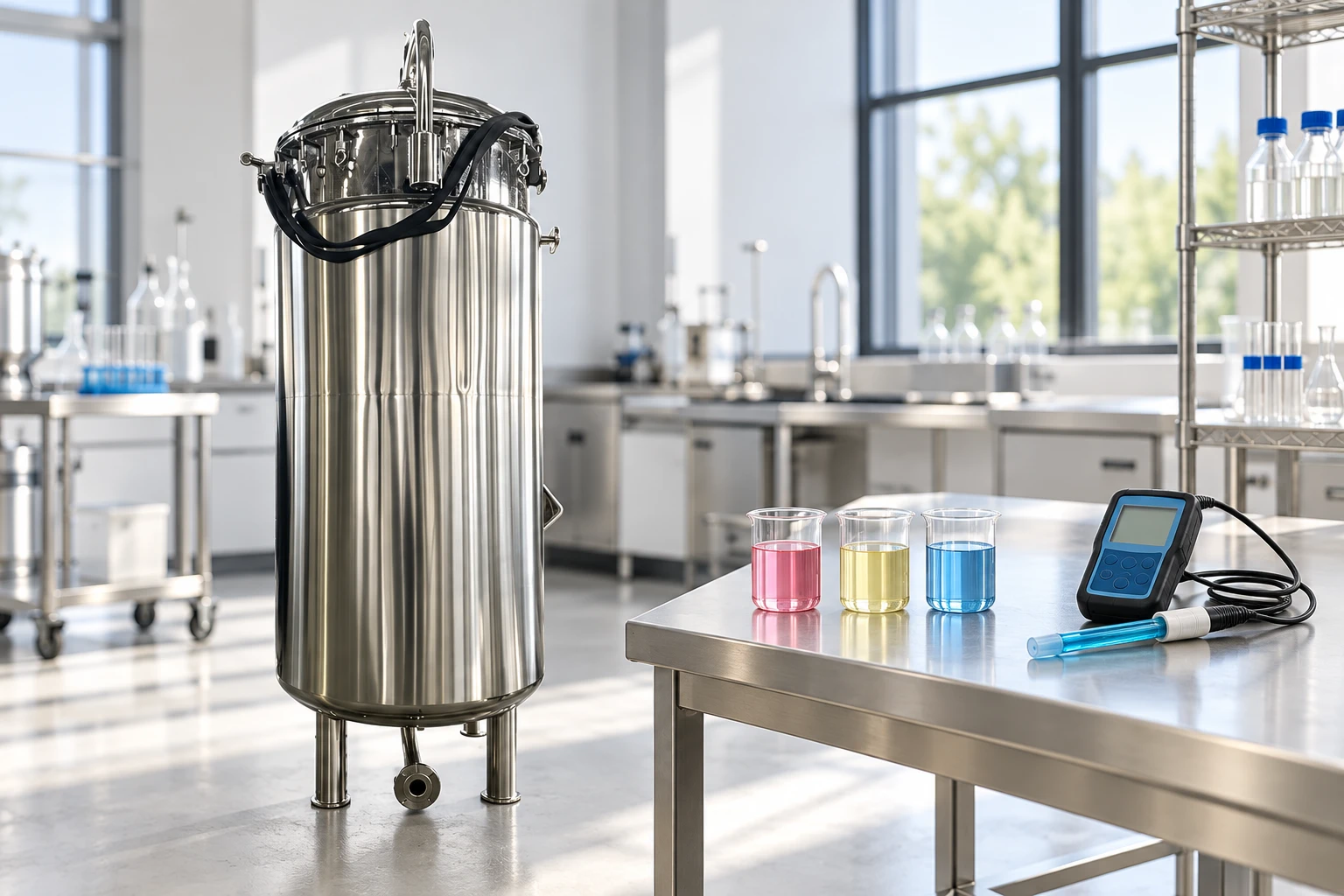
A chemical tank agitator is selected from the process duty, not from the motor label alone. Chemistry, viscosity, solids, temperature, working volume, flow pattern, cleaning method, wetted materials, and acceptance test all change the specification. A named impeller can describe a geometry, but it does not prove corrosion life or a mixing result in an unreviewed batch.
This procurement guide turns those variables into questions a buyer can send to an equipment supplier. For a wider vessel-level view, read the chemical mixing tank buyer guide; for uses rather than agitator selection, see chemical mixing tank uses and advantages.

Part 1. What Defines the Chemical Mixing Duty?
Start with the product, not the equipment label. Record phases, viscosity at operating temperature, solids concentration, density, working volume, temperature, pressure, product chemistry, cleaning chemistry, and the result the process must demonstrate. Blending, suspension, dissolution, heat transfer, gas dispersion, and gentle turnover do not demand the same circulation pattern.
The minimum fill is as important as the nominal batch. A vessel can circulate acceptably at one fill level yet develop a weak zone at a smaller trial batch. If solids settle during downtime, state whether the agitator must restart with settled material present.
| Duty input | What to send | Why it changes the proposal |
|---|---|---|
| Product chemistry | Components, concentration, impurities, and exposure time | Establishes the wetted-material review |
| Viscosity | Start, operating, and end-of-batch range | Changes circulation and drive loading |
| Solids | Concentration, settling tendency, abrasiveness, and fibre length | Changes impeller, clearance, and wear questions |
| Working volume | Minimum, normal, and maximum fill | Tests circulation over the actual range |
| Mixing objective | Blend, suspend, dissolve, disperse gas, or maintain temperature | Defines the flow pattern and acceptance test |
Part 2. Which Impeller Flow Pattern Fits the Batch?
Axial-flow impellers direct a large share of motion along the shaft axis and are commonly considered when bulk circulation or suspension is central. Radial-flow designs direct more flow outward from the impeller and are often evaluated where local turbulence or gas handling is relevant. Hydrofoil-style and pitched-blade options are configurations within that discussion, not universal answers.

Baffles, diameter, clearance from the base, off-bottom position, and tank shape can change what a given impeller does in practice. Ask the supplier to identify the assumed geometry and operating sequence rather than accepting “axial” or “high shear” as a complete selection.
| Flow question | Buyer decision | Proposal evidence to request |
|---|---|---|
| Bulk blending or suspension | Is vertical circulation needed through the full fill range? | Proposed impeller type, diameter, position, and baffle assumption |
| Gas dispersion or local energy | Is a localized turbulent zone part of the process? | Flow rationale and duty limits, not a generic result claim |
| Viscous or settling batch | Can the drive start under the stated condition? | Start-under-load assumption and restart sequence |
| Shear-sensitive product | Must energy be staged or limited? | Speed range, recipe sequence, and acceptance method |
For torque and drive questions that go beyond this material-focused article, compare the heavy-duty mixing tank drive discussion with your own viscosity and restart data.
Part 3. How Should Wetted Materials Be Reviewed?
“Stainless steel” is not a complete compatibility statement. 304 and 316L are distinct material grades, but neither is universally suitable because corrosion behaviour depends on chemistry, concentration, impurities, temperature, cleaning agents, and exposure time. The shaft, impeller, vessel wall, fittings, gaskets, and seal faces must be reviewed as a system.
| Compatibility field | Question for the supplier | Evidence or boundary |
|---|---|---|
| Product and cleaning chemistry | Which chemicals, concentrations, and temperatures are assumed? | Written duty sheet and compatibility review |
| Wetted metal | Which grade applies to vessel, shaft, impeller, and fittings? | Material identification and requested certificates |
| Elastomers and seal faces | Are product and cleaning media both included in the review? | Seal-material list and maintenance boundary |
| Exposure and process changes | What happens at hot cleaning, idle time, or concentration excursions? | Site process review; do not infer corrosion life |
Important: A material grade or product page does not establish corrosion life, regulatory compliance, or safe service in a chemical duty. Confirm the actual duty with the supplier and the plant’s applicable requirements (ASME codes and standards).
Part 4. Which Shaft, Seal, and Cleaning Interfaces Matter?
The shaft seal is a process boundary, not a detail to add after the impeller is chosen. Identify whether the proposal uses a mechanical seal, packing arrangement, magnetic drive, or another configuration, and record access for inspection and replacement. A corrosive or abrasive duty may move seal materials and flush arrangements to the top of the review list.
Cleaning deserves the same level of detail. Product-contact parts can tolerate a product but be unsuitable for the plant’s cleaning chemicals or temperature. Drainability, spray coverage, manways, bottom outlet geometry, removable parts, and trapped-volume risks should be compared before a buyer calls a vessel easy to clean.
Use hygienic-design vocabulary where it is relevant, but do not imply a certification. EHEDG provides useful terminology for cleanability discussions; the final equipment and plant validation remain duty-specific.
Part 5. What Speed, Power, and Control Limits Should Be Stated?
Do not request a motor size without explaining the process sequence. Instead, state the required speed range, start condition, batch temperature, viscosity range, solids behaviour, expected runtime, and whether the mixer must operate while heating, cooling, charging, or discharging. That information lets a supplier describe the motor, gearbox, overload protection, and control boundary without inventing a portable torque or RPM figure.
Instrumentation can include temperature, level, agitator status, and motor protection, but a device list is not an interlock philosophy. Ask what happens after overload, vacuum loss where relevant, low level, an unexpected temperature rise, or a failed utility. For a shear-sensitive product, agree a staged operating recipe and a measurable acceptance test instead of treating maximum speed as a quality guarantee.
| Control boundary | Clarify before quotation | Why it protects the buyer |
|---|---|---|
| Operating sequence | Charge, wetting, mix, hold, heat/cool, discharge | Aligns drive use with the process |
| Start condition | Empty, partially filled, or settled solids | Prevents a hidden load assumption |
| Instrumentation | Required signals, alarms, and records | Defines panel and automation scope |
| Acceptance method | Blend sample, suspension observation, or approved plant test | Replaces unsupported performance wording |
Part 6. What Belongs in a Chemical Agitator RFQ?
Use the mixing tank agitator configuration reference and the broader mixing tank product family as equipment context. Then send the chemical agitator duty sheet to YIYI with the inputs below so the proposal can state its assumptions.
- Product and cleaning chemistry, including concentrations and temperature range.
- Working, minimum, and maximum volume; vessel geometry if it already exists.
- Viscosity range, solids behaviour, and whether loaded restart is required.
- Mixing objective, preferred flow pattern if known, and acceptance method.
- Wetted-metal and elastomer expectations, seal requirements, and inspection access.
- Utilities, controls, safety boundary, documentation requested, and exclusions.

FAQs
Which impeller fits low-viscosity chemical batches?
An axial-flow or hydrofoil-style option may be considered for bulk blending, but the proposal must account for vessel geometry, baffles, fill range, solids behaviour, and the acceptance method.
How should buyers assess material compatibility?
Provide product and cleaning chemistry, concentration, temperature, impurities, and exposure time, then ask for a documented review of wetted metals, elastomers, and seal faces.
Does 316L automatically suit every chemical?
No. A grade name is not a corrosion guarantee. Compatibility changes with the complete duty, including concentration, temperature, cleaning media, and unexpected process conditions.
What should an agitator RFQ include?
Include phases, viscosity, solids, volume, temperature, pressure, mixing goal, impeller proposal, materials, seal requirements, controls, utilities, and acceptance criteria.
When is a top-entry agitator a poor fit?
It may be a poor fit when access, seal exposure, extreme viscosity, abrasive solids, or process architecture calls for another arrangement. Ask the supplier to compare alternatives against the documented duty.
Can YIYI guarantee a mixing result from a product page?
No. A product page provides configuration context. Mixing performance requires a written duty sheet, a process-specific proposal, and an agreed test method.
References
- ASME codes and standards — reference point when a chemical agitator proposal connects to an applicable pressure-equipment scope.
- EHEDG — vocabulary for reviewing cleanability around shafts, seals, and product-contact surfaces.
- OSHA process safety management overview — public background for documenting risks in covered chemical-process operations.