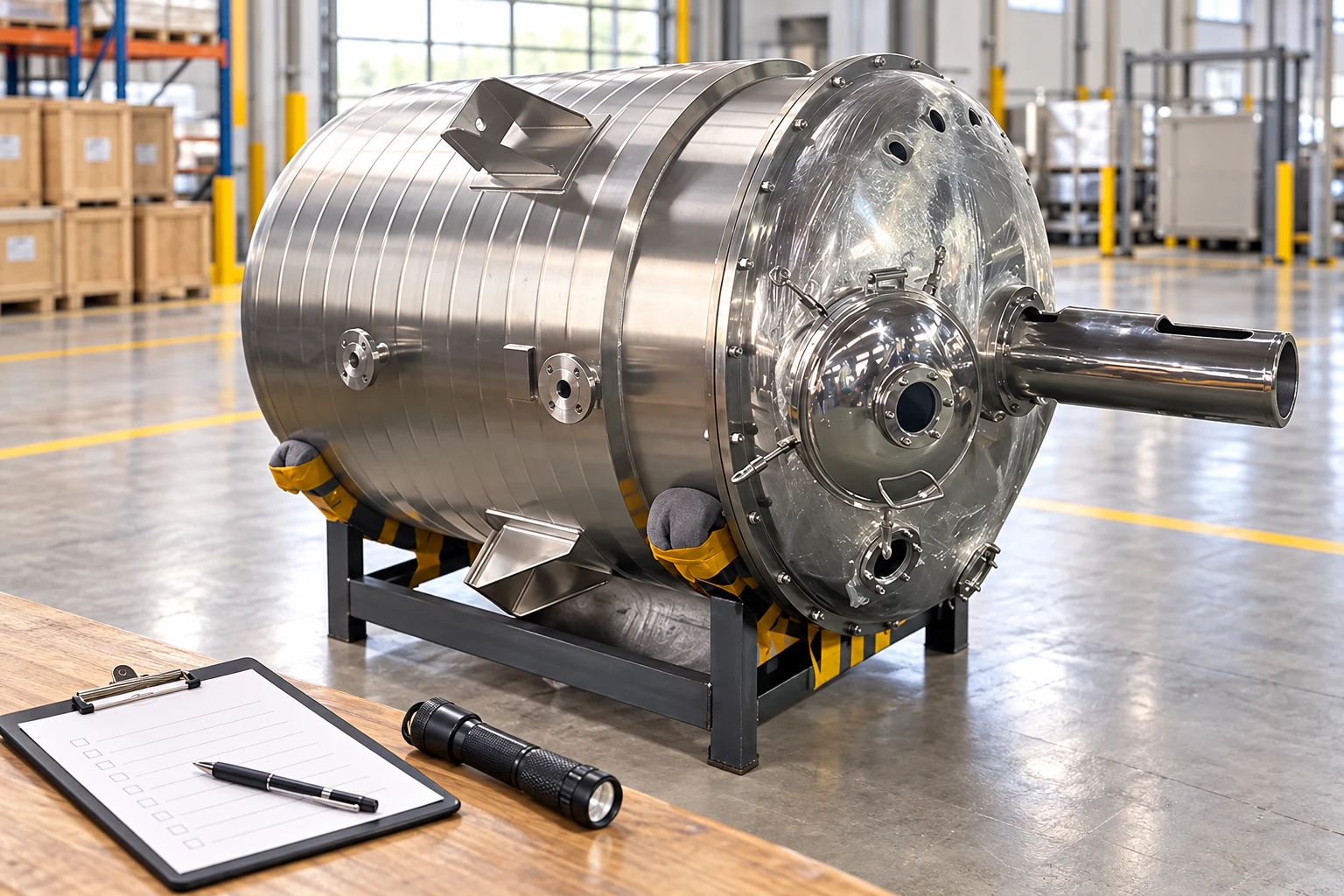
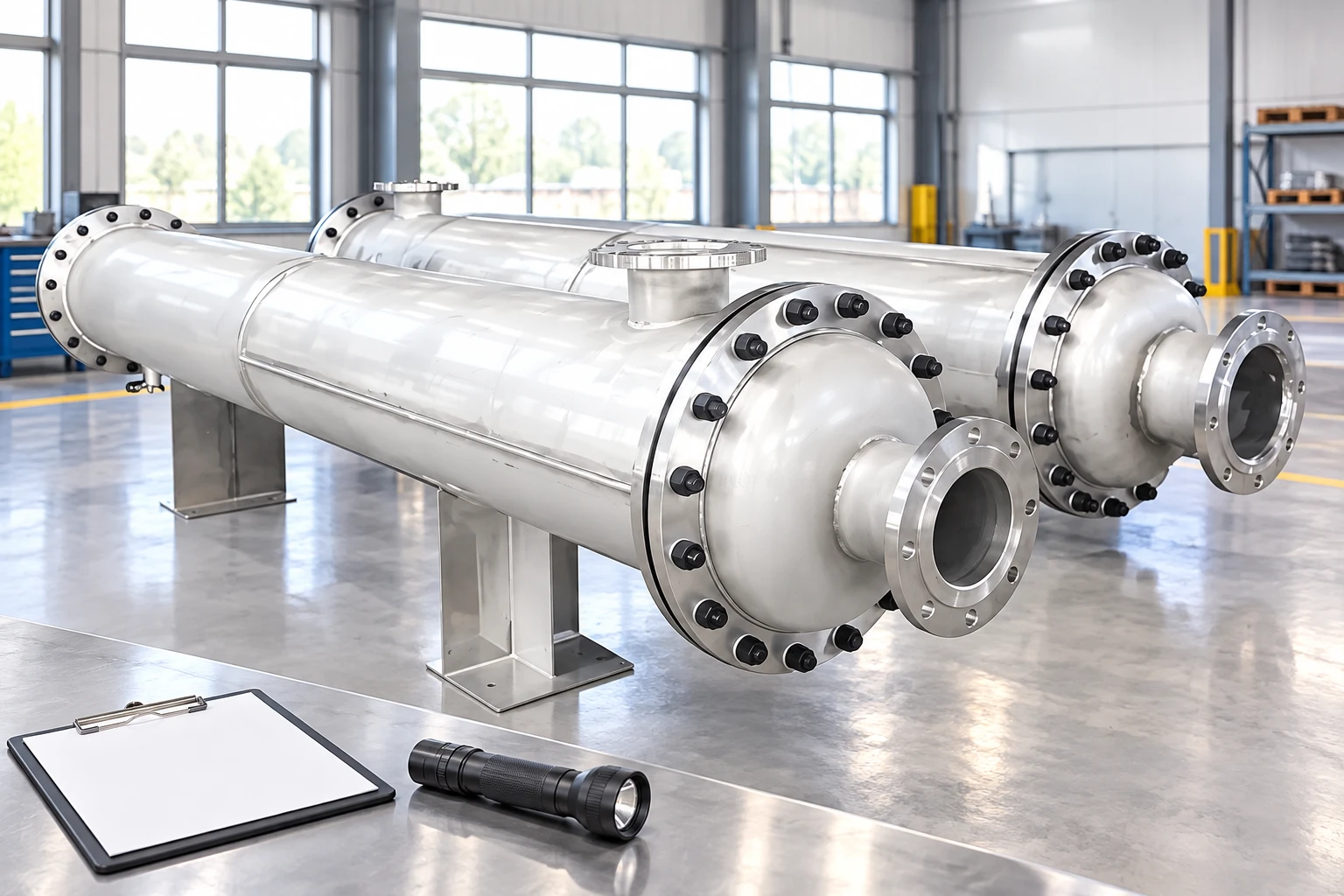
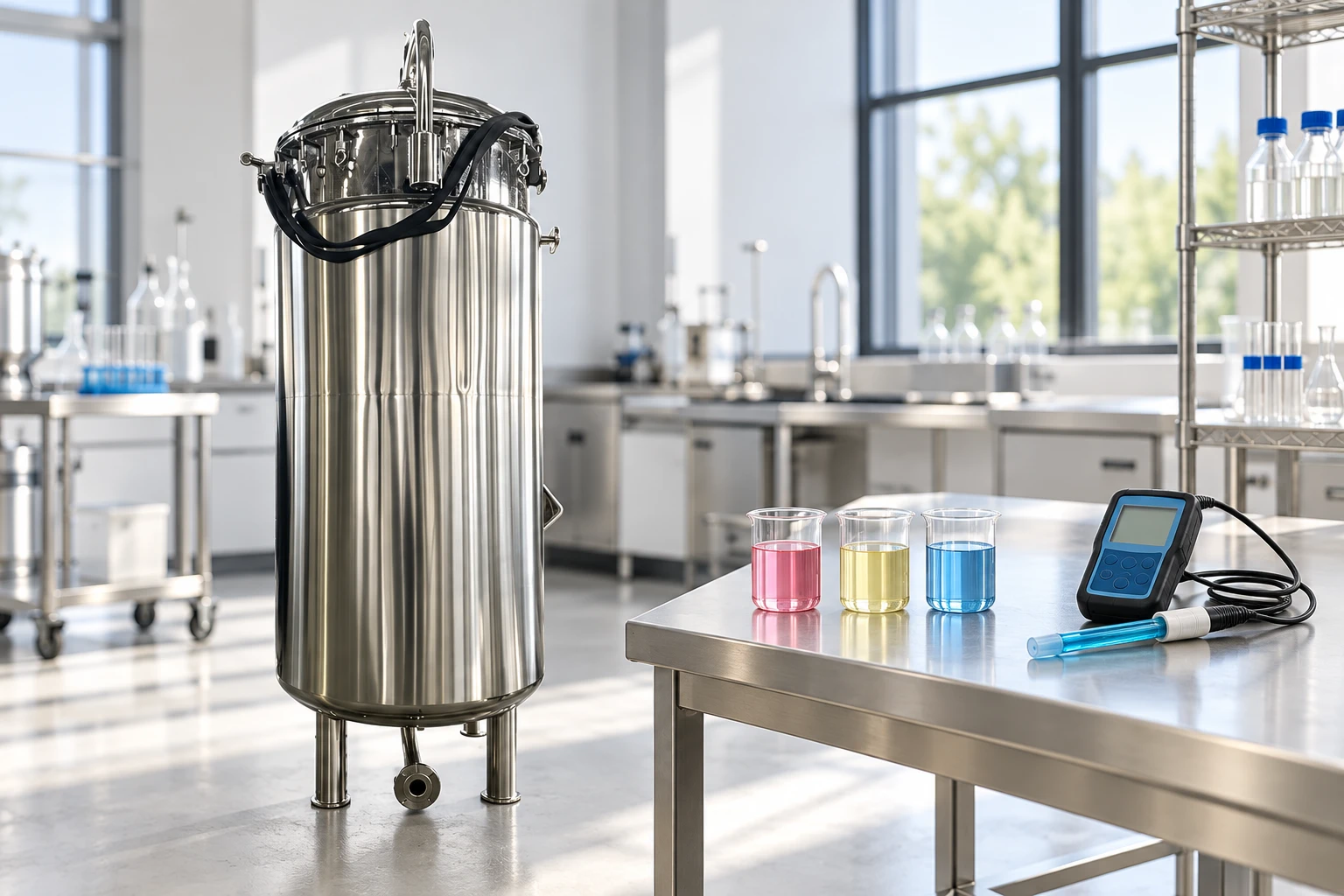
As industrial facilities upgrade their production lines, buyers are moving away from generic storage tanks and paying closer attention to customized stainless steel storage tanks designed around real process conditions. A tank used for purified water, for example, has different requirements from a tank used for chemical liquid storage or sanitary fermentation. Material grade, surface finish, welding quality, drainage design, temperature control, and documentation can all affect whether the equipment performs reliably after installation.
For procurement teams, the key question is not simply “What is the price of the tank?” A more practical question is: “Can this tank safely store the intended liquid, fit the production process, meet cleaning requirements, and support long-term operation?” This article explains how industrial buyers can evaluate a stainless steel storage tank manufacturer from the perspective of application, material selection, fabrication, quality control, OEM customization, and project support.
Note: In this article, “stainless steel storage tank” refers to industrial liquid storage tanks made primarily from SS304, SS316, or SS316L stainless steel for water, food, chemical, pharmaceutical, fermentation, and general process applications.
Industry Demand for Stainless Steel Storage Tanks
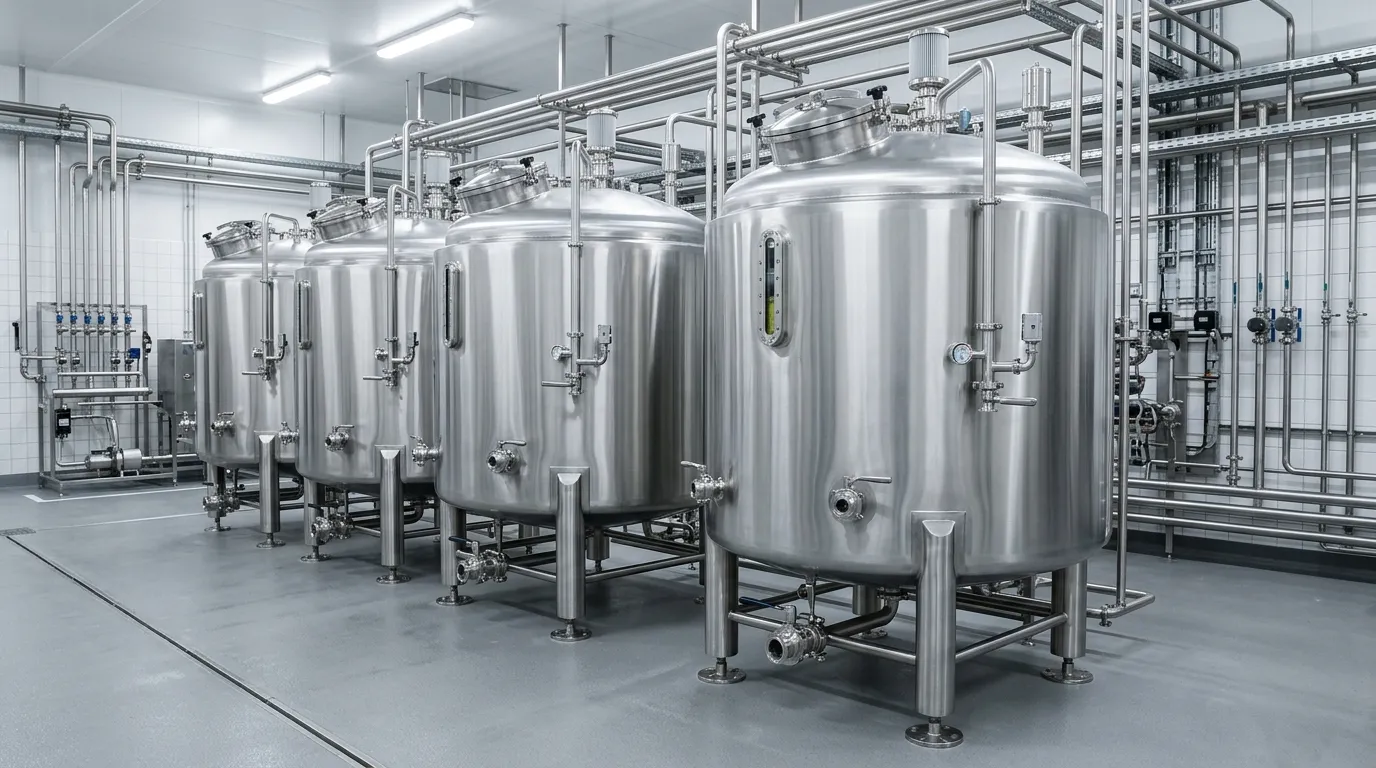
The demand for stainless steel storage tanks continues to grow because more industries require cleaner, safer, and more durable liquid storage systems. Food and beverage manufacturers use stainless steel tanks for milk, juice, syrup, edible oil, liquid ingredients, and process water. Pharmaceutical and biotechnology facilities need sanitary storage equipment that supports contamination control and material traceability. Chemical plants focus on corrosion resistance, sealing performance, and liquid compatibility. Water treatment projects value durability, clean internal surfaces, and stable long-term operation.
In regulated production environments, equipment design is closely related to hygiene and contamination prevention. The U.S. Food and Drug Administration’s Current Good Manufacturing Practice regulations emphasize sanitary operations, equipment cleanliness, and contamination control in pharmaceutical and related manufacturing environments. While not every industrial storage tank must meet pharmaceutical-level requirements, these principles reflect why sanitary design, cleanable surfaces, and reliable quality documentation have become important across many industries.
This market shift also explains why buyers increasingly search for terms such as stainless steel water storage tank, stainless steel chemical storage tanks, sanitary stainless steel tank, 316L stainless steel tank, custom stainless steel storage tanks, and industrial liquid storage tank supplier. These search terms show that buyers are not only looking for a product; they are looking for a supplier that understands how tanks function inside a real production system.
What Industrial Buyers Look for in a Stainless Steel Storage Tank
When evaluating a stainless steel storage tank, capacity is usually the first visible specification, but it is rarely the only factor that matters. A reliable tank should match the stored liquid, temperature range, installation space, cleaning method, pressure condition, and process connections.
For example, a stainless steel water storage tank used in a commercial water treatment system may focus on storage volume, inlet and outlet layout, outdoor durability, and easy maintenance. A tank used in dairy, beverage, or pharmaceutical production may require sanitary weld treatment, CIP cleaning compatibility, internal polishing, and hygienic fittings. A chemical storage tank may require deeper review of liquid concentration, operating temperature, corrosion behavior, venting method, and material compatibility.
The table below summarizes the core specification areas buyers usually review before confirming a tank order.
| Specification | Common Options | Buyer Consideration |
|---|---|---|
| Material Grade | SS304, SS316, SS316L | Corrosion resistance, hygiene, liquid compatibility |
| Capacity | 500 L–200,000 L+ | Batch size, storage cycle, available site space |
| Tank Structure | Vertical, horizontal, jacketed, insulated | Installation layout and process requirements |
| Surface Finish | 2B, brushed, mirror polish, sanitary polish | Cleanability, appearance, hygiene level |
| Accessories | Valves, manways, level gauges, agitators, CIP spray balls | Operation, cleaning, maintenance, automation |
A well-specified tank reduces avoidable risks during installation and operation. Buyers should evaluate the tank as part of a complete liquid handling system rather than as a standalone metal container.
From Technical Design to Stainless Steel Tank Manufacturing
The manufacturing process usually begins with technical clarification. Before production starts, the manufacturer needs to understand the stored liquid, concentration, required volume, working temperature, cleaning method, installation environment, and whether the tank is used under atmospheric or pressure-related conditions. These details influence tank diameter, height, wall thickness, nozzle layout, manway position, bottom structure, support design, and accessory configuration.
In practical sanitary stainless steel equipment projects, a storage tank is rarely isolated from the rest of the production line. It often needs to match pipeline direction, pump capacity, valve type, cleaning sequence, operator access, and commissioning requirements. For industries such as dairy beverage, beer fermentation, pharmaceutical extraction, and biological fermentation, tank design must also consider how the equipment will be cleaned, inspected, and integrated with upstream and downstream processes.
Before fabrication, technical drawings are prepared or reviewed. For custom stainless steel storage tanks, drawing confirmation is essential because it helps buyers verify tank dimensions, connection points, fittings, supports, and installation details before stainless steel plates are processed. This step can prevent costly adjustments after production.
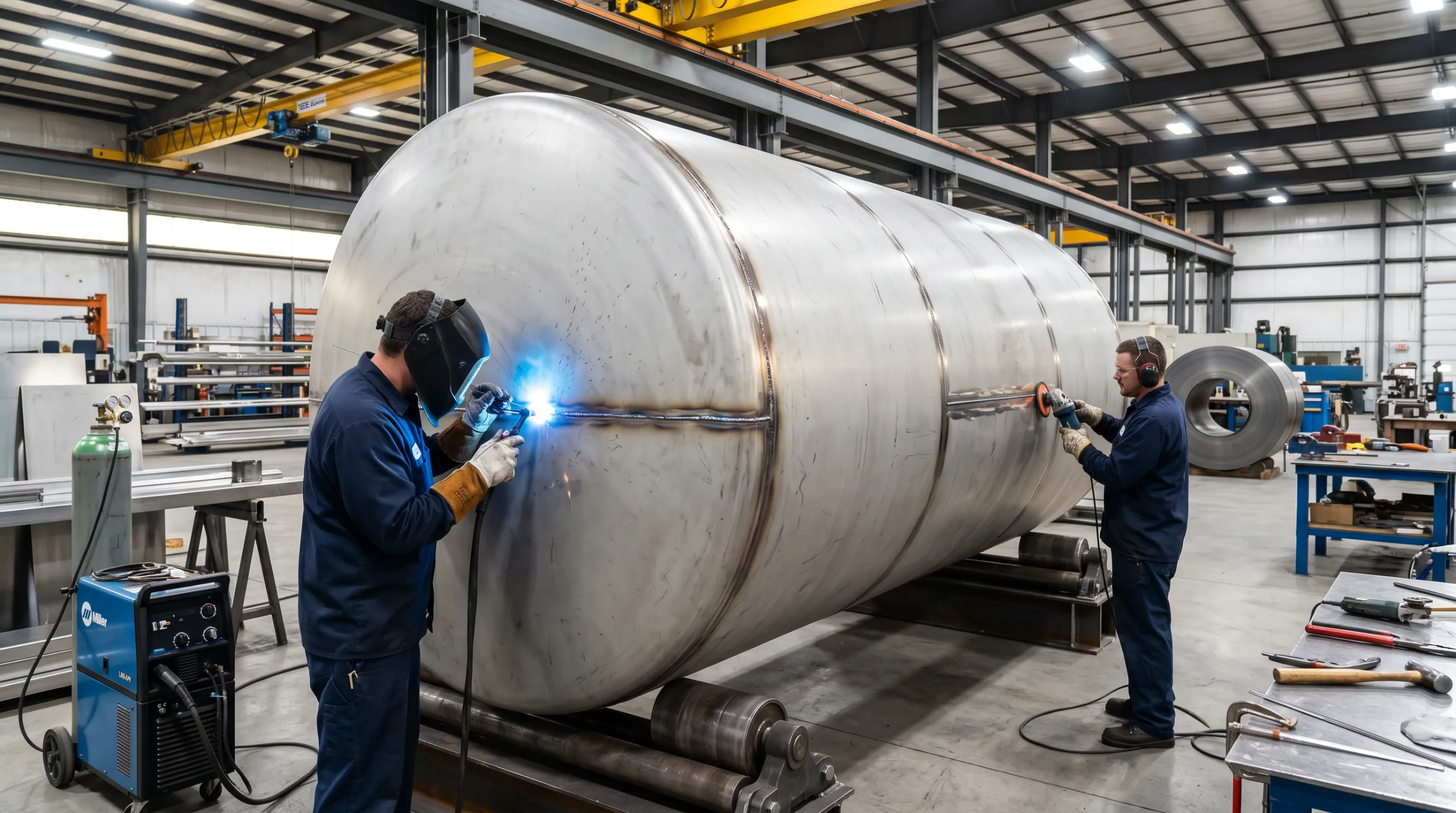
During manufacturing, stainless steel plates are checked, cut, rolled, formed, welded, and assembled according to the approved design. Tank shells, heads, bottoms, supports, lifting lugs, nozzles, and manways must be fabricated with dimensional accuracy. Welding quality is especially important because poor welds may cause leakage, corrosion points, or hygiene risks.
For sanitary applications, several engineering details deserve special attention:
- Cleanability-related design: internal surface roughness, weld polishing, full drainage, and dead leg control can affect cleaning efficiency and residue prevention.
- Process integration: inlet and outlet positions, CIP spray ball coverage, agitator mounting, venting, and sensor ports should match the actual production workflow.
- Maintenance access: manway location, valve accessibility, support height, and inspection ports should allow operators to clean, inspect, and maintain the tank safely.
Surface treatment depends on the application. General industrial tanks may use standard finishes, while food-grade or pharmaceutical-related tanks may require internal polishing, sanitary weld treatment, pickling, or passivation.
Note: Passivation is a chemical treatment process that helps restore and enhance the protective oxide layer on stainless steel surfaces after fabrication or welding.
Material Selection: SS304, SS316, and SS316L
Material selection is one of the most important decisions in stainless steel storage tank procurement. SS304 is commonly used for water, food ingredients, mild industrial liquids, and many general-purpose storage applications. It offers good corrosion resistance and is widely used in standard industrial environments.
SS316 provides better corrosion resistance than SS304 in more demanding conditions. SS316L, with lower carbon content, is often selected for sanitary applications, pharmaceutical processing, chloride-containing environments, and projects where weld-area corrosion resistance is a concern.
However, buyers should not choose material grade by price or name alone. The correct choice depends on the stored liquid, concentration, temperature, cleaning chemicals, storage duration, chloride exposure, and hygiene requirements. In some applications, SS304 may be sufficient and cost-effective. In others, SS316L may be necessary to reduce corrosion risk and support longer equipment life.
For industrial fabrication, stainless steel material selection is often evaluated with reference to ASTM specifications for stainless steel plate, sheet, and strip materials. ASTM A240/A240M, for example, covers chromium and chromium-nickel stainless steel plate, sheet, and strip for pressure vessels and general applications. Using recognized material standards helps buyers and manufacturers communicate more clearly about material grade, mechanical properties, and documentation requirements.
Material selection also affects later fabrication and maintenance. A sanitary 316L stainless steel tank may require smoother internal surfaces, more controlled weld polishing, and stronger documentation. A chemical storage tank may require compatibility review before production. This is why early technical communication is one of the most valuable steps in the procurement process.
OEM and Custom Options for Different Industrial Applications
Standard tanks may work for simple storage tasks, but many industrial buyers need OEM or customized designs. Customization is not about adding unnecessary complexity. It is about ensuring the tank matches the buyer’s process, cleaning method, site layout, and long-term operation.
A tank used for beer fermentation may require temperature control, sanitary fittings, and fermentation-specific design details. A tank used for fine chemicals may focus on sealing, corrosion resistance, and safe liquid transfer. A dairy or beverage tank may prioritize smooth internal surfaces, hygienic valves, and CIP cleaning. A pharmaceutical extraction or concentration system may require a higher level of sanitary design, documentation, and process integration.
Fujian Yiyi Intelligent Control Co., Ltd. is one example of a manufacturer working in sanitary stainless steel equipment for applications such as pharmaceutical extraction and concentration, fine chemicals, dairy beverages, bone broth seasoning, beer fermentation, biological fermentation, and high-precision fluid equipment. In projects like these, buyers often evaluate not only fabrication capacity, but also whether the manufacturer can support design, production, installation, commissioning, and after-sales coordination.
| Industry | Typical Tank Type | Customization Focus |
|---|---|---|
| Food & Beverage | Food grade stainless steel tank | Sanitary finish, CIP cleaning, hygienic fittings |
| Chemical Processing | Stainless steel chemical storage tanks | Corrosion resistance, sealing, material compatibility |
| Water Treatment | Stainless steel water storage tank | Capacity, outdoor durability, inlet and outlet layout |
| Pharmaceutical | 316L sanitary storage tank | Surface finish, documentation, contamination control |
| Fermentation | Fermentation or process storage tank | Temperature control, mixing, sanitary operation |
Common customization options include capacity, tank diameter, height, vertical or horizontal structure, jacketed heating or cooling, insulation, agitators, CIP spray balls, sanitary valves, level gauges, load cells, thermowells, vent filters, mobile frames, skid-mounted systems, and customized documentation packages.
Quality Assurance Before Delivery
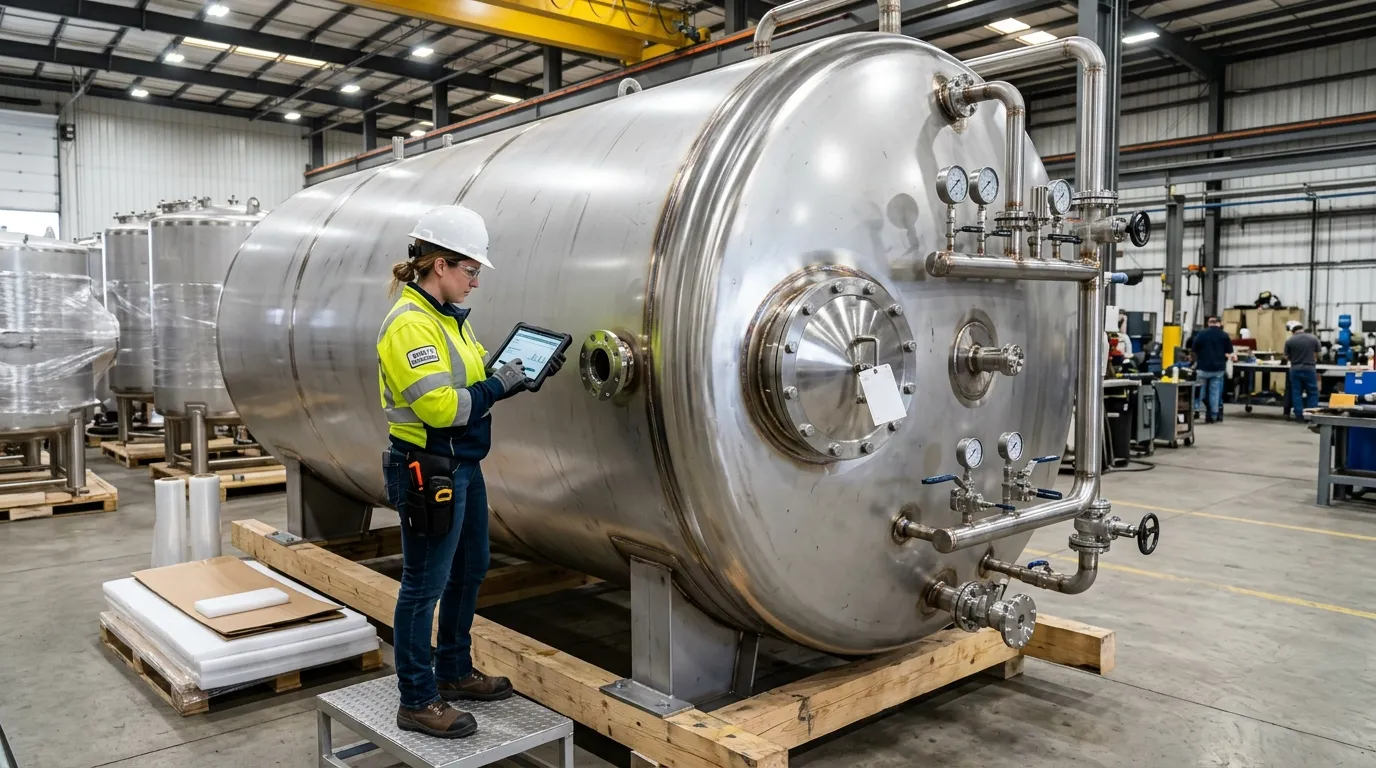
Quality assurance should begin before fabrication and continue until final delivery. For industrial buyers, a stainless steel storage tank should be checked not only by appearance, but also by material conformity, welding quality, dimensional accuracy, surface treatment, fitting layout, leakage resistance, and document completeness.
At the raw material stage, manufacturers should verify stainless steel grade, plate thickness, surface condition, and material certificates. During production, quality checks typically focus on cutting accuracy, shell forming, weld appearance, nozzle position, manway installation, support stability, and surface finish. For sanitary tanks, internal smoothness and weld treatment are particularly important because they affect cleanability and residue control.
Before delivery, tanks may undergo leakage testing, hydrostatic testing, dimensional inspection, surface inspection, accessory checking, and final cleaning. The exact testing process depends on the tank structure and application. A water storage tank, a chemical storage tank, and a sanitary pharmaceutical tank may have different inspection priorities.
For export projects, documentation is part of quality assurance. Material certificates, inspection reports, technical drawings, packing lists, and shipment-related files help importers, distributors, engineering contractors, and end users complete customs clearance, installation review, and project acceptance. A structured quality assurance process helps buyers verify that the finished tank matches the approved drawing, selected material grade, and intended operating conditions.
How to Evaluate a Stainless Steel Storage Tank Manufacturer
Choosing a stainless steel storage tank manufacturer requires more than comparing quotations. A lower initial price may not provide better value if the tank later causes installation problems, cleaning difficulties, corrosion issues, or production delays.
Buyers can evaluate a supplier from three practical dimensions:
- Engineering communication
The manufacturer should be able to discuss stored liquid properties, capacity, working temperature, cleaning method, installation space, connection layout, and process integration. Technical drawings before production are important for confirming details. - Manufacturing and quality control
Buyers should review whether the supplier has experience with stainless steel fabrication, welding, polishing, passivation, sanitary fittings, accessory integration, and testing. For sanitary applications, knowledge of CIP cleaning, full drainage, and internal surface treatment is especially valuable. - Project and after-sales support
Overseas buyers may also need export packaging, documentation, installation guidance, commissioning support, and after-sales communication. A manufacturer with turnkey project experience can often reduce coordination difficulty when the tank is part of a larger fluid handling system.
Fujian Yiyi Intelligent Control Co., Ltd. describes its service scope as covering design, development, production, installation, commissioning, and after-sales service. This type of full-process support can be useful when buyers need a stainless steel storage tank integrated into a complete sanitary process system rather than delivered as a standalone item.
Practical Procurement Guidance for Industrial Buyers
Before requesting a quotation, buyers should prepare a concise technical brief. The brief should describe the stored liquid, concentration, required tank capacity, working temperature, pressure or atmospheric condition, preferred stainless steel grade, and installation environment. These details help the manufacturer determine whether SS304, SS316, or SS316L is more suitable and whether the tank requires a vertical, horizontal, jacketed, insulated, or sanitary design.
For process integration, buyers should also clarify inlet, outlet, vent, drain, and manway positions, as well as surface finish, cleaning method, heating, cooling, mixing, or insulation requirements. If the project involves export delivery, the destination country, packaging requirements, documentation standards, and inspection files should be discussed early to avoid delays during shipment or site acceptance.
This approach keeps procurement communication efficient and reduces the risk of receiving quotations that look attractive but do not reflect the actual operating conditions. For buyers searching terms such as stainless steel storage tank quotation, custom liquid storage solutions, or industrial stainless steel tank supplier, clear technical information is often the fastest path to a reliable proposal.
Frequently Asked Questions About Stainless Steel Storage Tanks
1. What is a stainless steel storage tank used for?
A stainless steel storage tank is used to store liquids such as water, food ingredients, chemicals, pharmaceutical liquids, dairy products, beer, fermentation media, cosmetic ingredients, and industrial process fluids. It is commonly selected when corrosion resistance, hygiene, durability, and cleanability are important.
2. What is the difference between SS304 and SS316L storage tanks?
SS304 is suitable for many general water, food, and mild industrial liquid applications. SS316L offers stronger corrosion resistance, especially in chloride-containing, sanitary, pharmaceutical, or more demanding chemical environments. The right choice depends on liquid composition, temperature, cleaning chemicals, and operating conditions.
3. Can stainless steel storage tanks be customized?
Yes. Stainless steel storage tanks can be customized by capacity, tank dimensions, material grade, surface finish, jacket design, insulation, agitator type, CIP cleaning system, valve layout, sensor ports, manway position, and documentation requirements.
4. What capacity options are available for industrial storage tanks?
Capacity can range from small process tanks to large industrial storage tanks above 200,000 liters. Common project sizes may include 500 L, 1,000 L, 5,000 L, 10,000 L, and 500 gallon stainless steel water storage tank configurations, depending on production scale and site space.
5. How is the quality of a stainless steel storage tank checked?
Quality checks may include raw material verification, drawing confirmation, weld inspection, dimensional inspection, leakage or hydrostatic testing, surface finish review, accessory checking, final cleaning, and documentation preparation before shipment.
6. Are stainless steel chemical storage tanks suitable for corrosive liquids?
They can be suitable for many chemical liquids, but material compatibility must be evaluated carefully. Buyers should provide the chemical name, concentration, temperature, storage duration, and cleaning method before confirming whether SS304, SS316, SS316L, or another material solution is appropriate.
7. What surface finish is recommended for food-grade storage tanks?
Food-grade storage tanks usually require smoother internal surfaces, sanitary weld treatment, and cleanable fittings. Mirror polishing or sanitary polishing may be used depending on hygiene requirements, cleaning process, and product characteristics.
8. What information should buyers provide before requesting a quotation?
Buyers should provide the stored liquid, capacity, temperature, pressure condition, material preference, installation environment, connection requirements, cleaning method, surface finish needs, accessories, documentation requirements, and destination country for export projects.
References
- U.S. Food and Drug Administration. Current Good Manufacturing Practice regulations related to sanitary equipment, contamination control, and manufacturing operations.
Official page: https://www.fda.gov/drugs/pharmaceutical-quality-resources/current-good-manufacturing-practice-cgmp-regulations - ASTM International. ASTM A240/A240M — Standard Specification for Chromium and Chromium-Nickel Stainless Steel Plate, Sheet, and Strip for Pressure Vessels and for General Applications.
Official standard page: https://www.astm.org/a0240_a0240m.html - World Health Organization. Guidelines for Drinking-water Quality and water safety management.
Official page: https://www.who.int/publications/i/item/9789241549950
Final Thoughts for Industrial Buyers
A stainless steel storage tank should be selected as a long-term production asset, not only as a purchase item. Its performance depends on correct material selection, practical design, reliable welding, appropriate surface treatment, and consistent quality assurance.
For industrial buyers in food, pharmaceutical, chemical, dairy, fermentation, water treatment, and high-precision fluid applications, the best procurement result usually comes from early technical communication. When buyers clearly define liquid properties, operating conditions, cleaning requirements, documentation needs, and installation details, manufacturers can provide tank designs that better match real production conditions and long-term operating goals.