

Tank nameplate drawing reconciliation establishes whether a delivered vessel, its identification, and its controlled documents refer to the same equipment and approved configuration. Start with the physical serial number and equipment tag, then compare the nameplate information with the applicable drawing, order, and manufacturer records. Log discrepancies without altering markings or assuming the latest-looking document is correct. Resolve identity and revision questions before using the equipment for its intended service. This process supports acceptance and maintenance planning; it does not authorize a pressure rating, replace a required examination, or turn an atmospheric vessel into pressure equipment.
Establish which vessel the documents describe
Receiving inspection often starts with a packing list and a photograph. Those are useful, but they may identify a shipment rather than a unique vessel. A purchase order can contain several similar tanks, and project equipment tags may have changed between design and delivery. Build a traceable connection between the installed item and the manufacturer’s serial identification before comparing individual specifications.
Record the tag, serial number, manufacturer, physical location, and the documents presented for that unit. Where a marking is obscured or inaccessible, arrange safe access through the site’s procedure. Do not climb on pipework, remove insulation, or disturb connected equipment simply to obtain a photograph. An unreadable identifier should remain an open item until the responsible parties establish an acceptable evidence route.
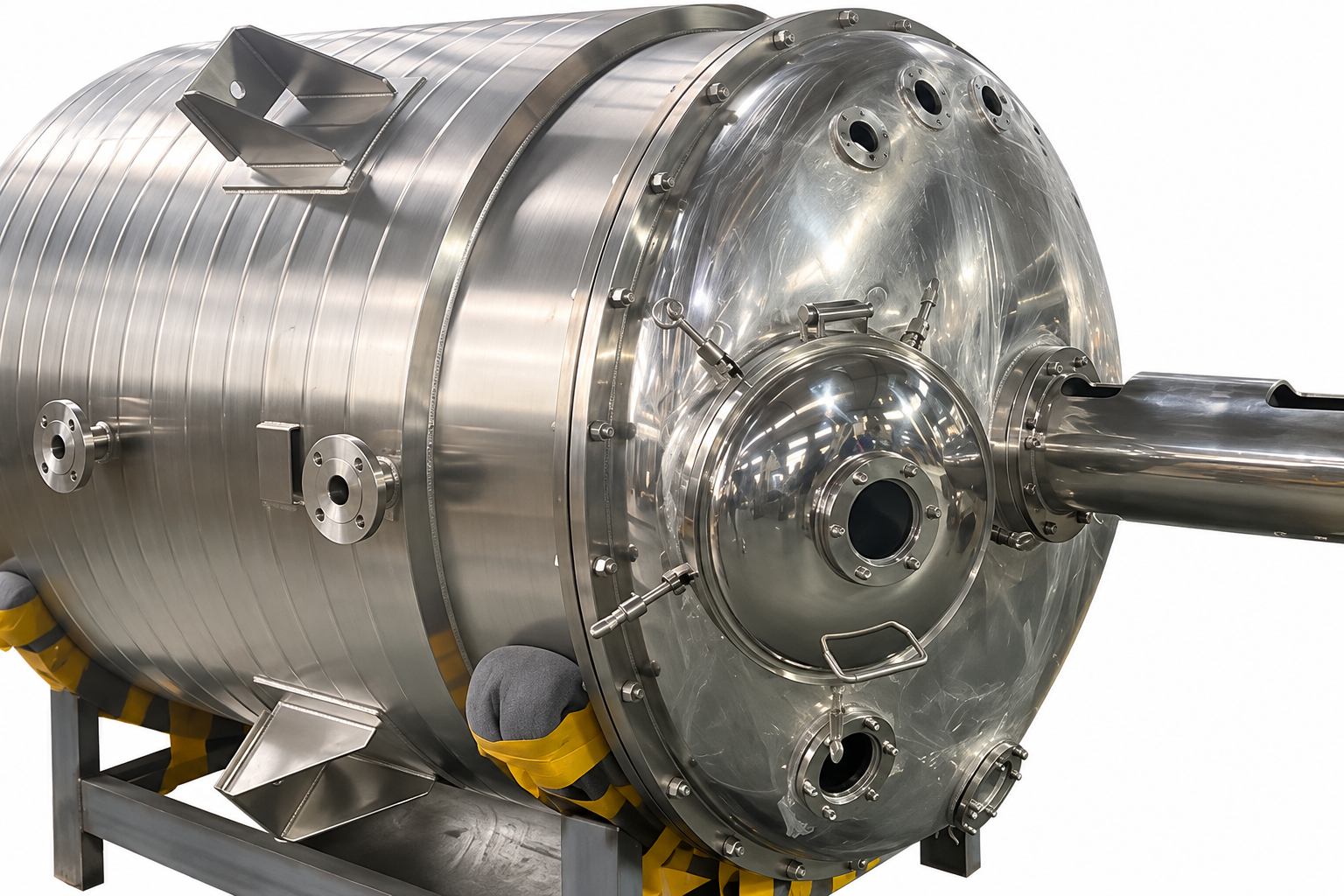
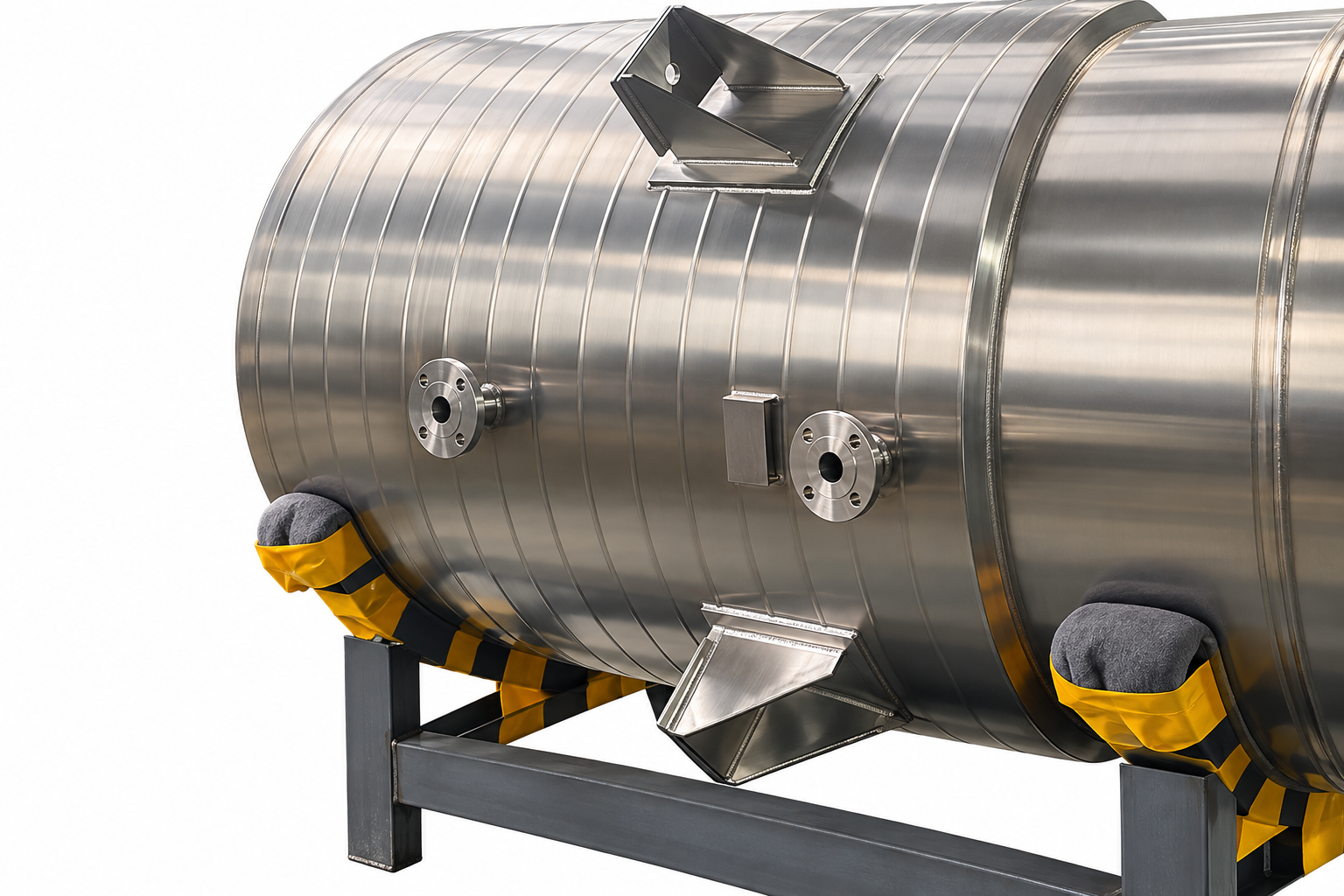
Эт website vessel photograph supplies equipment context only. It does not prove the rating, internal construction, certification, orientation in service, or identification of a customer’s vessel. An enquiry should use the actual delivered unit’s records, not a catalogue image as a substitute for its nameplate.
Build a document hierarchy before comparing values
Collect the purchase specification, approved equipment drawing, relevant manufacturing record, nameplate transcription, and any authorized change notices. List the document number and revision for each. Distinguish preliminary, approved-for-manufacture, and as-built documents where those states are used by the project. A later date alone does not establish approval or applicability.
Ask the manufacturer or responsible engineer which document controls each disputed field. The nameplate may contain a compact subset of information, while the drawing contains geometry and connection details. A general arrangement may not be the design calculation record. A material certificate identifies a material item only through the documented traceability system; it does not automatically prove that every visible component has that grade.
Preserve superseded documents in the history while making their status unmistakable. If an emailed sketch changed a nozzle location, locate the approved change and determine whether the final drawing incorporates it. Do not silently edit the receiving checklist to make contradictory documents appear consistent. A good reconciliation shows both the original discrepancy and the authority for its resolution.
Compare identity first, configuration second
Begin with fields that connect the records to the physical item: manufacturer identification, serial number, equipment tag, order reference, and drawing applicability. Once identity is established, compare the configuration relevant to the purchase: connection schedule, support arrangement, orientation, access openings, and supplied accessories. Use safe observations and appropriate records rather than assumptions about hidden construction.
Treat materials, pressure-related information, and temperature-related information as separate controlled questions. Do not infer allowable service from shell thickness, a flange’s appearance, or an internet product description. Where pressure equipment rules apply, the responsible organization must establish which requirements and examination arrangements cover the actual system. Atmospheric service also requires appropriate venting and consideration of foreseeable conditions; an absence of a pressure rating is not permission to apply pressure.
Эт HSE introduction to pressure systems explains the safety context within its jurisdiction. Its written schemes of examination guidance describes a specific control framework where applicable. These sources do not classify the vessel in your project or supply a missing manufacturer rating. Obtain an equipment-specific determination from the responsible competent parties.
| Comparison area | Полезные доказательства | Discrepancy response |
|---|---|---|
| Identity | Serial marking linked to order and manufacturer records | Hold acceptance of identity until the connection is established |
| Drawing applicability | Document number, revision, approval state, and unit reference | Request the correct controlled issue |
| Connections and orientation | Approved schedule and safely observed installed arrangement | Assess changes before connecting services |
| Service-related markings | Actual nameplate transcription and applicable design records | Obtain manufacturer and responsible-engineer clarification |
| Material traceability | Certificates connected through the manufacturing record | Resolve missing links rather than assigning a grade by appearance |
| Change history | Authorized modification and final documentation | Update the controlled record through its approval process |
The table is an evidence workflow, not a regulatory acceptance certificate. Your contract, local rules, and the responsible engineering assessment determine the actual release criteria and any mandatory hold points.
Write discrepancies so they can be resolved
A useful discrepancy record states the expected information, the observed information, the evidence source for each, and the affected decision. For example, a drawing revision mismatch may prevent connection work until orientation is confirmed. A serial-number mismatch may affect the entire document package. Avoid vague statements such as “documents incorrect” that require the next reviewer to repeat the investigation.
Keep transcription separate from interpretation. Preserve the exact text of a marking in a photograph or controlled record, then add the engineer’s explanation in a different field. If units differ, compare them using a documented conversion only after confirming that the values describe the same quantity and basis. Do not treat design, operating, and test conditions as interchangeable labels.
Assign each issue an owner and required response. A supplier clarification, a corrected document, a physical modification, and a further examination are different actions. Identify which must happen before installation, which before commissioning, and which before final handover. Do not allow an administrative status such as “response received” to imply that the technical concern has been accepted.
Do not correct a plate informally
An apparent typographical error still requires an authorized resolution. Do not stamp a new value, attach a replacement label, or modify a serial marking on the basis of a phone conversation. Establish the responsible authority, the evidence supporting the correction, and the process for maintaining traceability. Requirements vary with equipment type and jurisdiction, so obtain specific instructions rather than using a universal repair method.
If the discrepancy concerns supplied configuration, inspect the actual item within the safe receiving scope. The broader mixing tank receiving inspection guide helps organize photographs and outstanding items. The reconciliation task remains focused on identity and documents, rather than repeating every mechanical acceptance check.
If a physical change affects a sealed boundary or connection, keep any required leak-testing record связано с изменением. Успешное испытание на утечку не подтверждает правильную расчетную оценку или устранение несоответствия документа. Аналогично, исправленный чертеж не доказывает, что физическая модификация была проверена и принята.
Объясните, почему информация о давлении требует тщательной обработки
Различия в давлении могут нагружать сосуд даже тогда, когда оператор не намерен его создавать. Следующая демонстрация из научного музея иллюстрирует эффект внешнего атмосферного давления на барабан. Она включена, чтобы объяснить, почему важны конкретные для оборудования рабочие пределы и защитные меры; это не процедура испытания сосуда, расчет оценки или инструкция по воспроизведению демонстрации на производственном оборудовании.
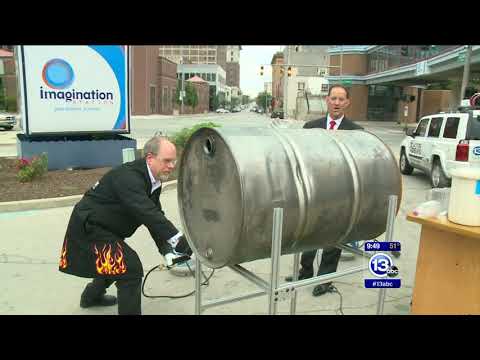
Демонстрация станции воображения Тулита: Раздавить стальной барабан с помощью воздушного давления.
Для поставленного сосуда определите одобренные условия эксплуатации и меры, обеспечивающие их соблюдение. Не выбирайте устройство для сброса давления или вакуумной защиты, копируя табличку другого оборудования. руководство по давлению и люкам атмосферных резервуаров обсуждает, как основание эксплуатации влияет на решения о доступе через отверстия, в то время как эта статья рассматривает идентификацию и документацию, делающие эти решения прослеживаемыми.
Закончите сверку с помощью контролируемой записи
Комплект завершения должен содержать подтвержденную идентификацию оборудования, список применимых документов, журнал несоответствий, одобренные ответы и доказательства выполнения необходимых действий. Ясно укажите оставшиеся ограничения. Запишите, кто принял каждое решение и на основании какого полномочия. Храните оригинальные фотографии табличек и предыдущие версии документов, чтобы будущие команды обслуживания могли восстановить принятое решение.
Проверьте, что окончательный чертеж действительно отражает поставленную и принятый конфигурацию. Если производитель обещал исправленный документ, но не предоставил его, сохраните соответствующий незавершенный пункт. Избегайте замены нерешенной проблемы заявлением о том, что документ “будет предоставлен позже”, если разрешительный процесс проекта явно не допускает такую договоренность и не фиксирует связанные ограничения.
Для запроса YIYI отправьте тег оборудования, серийный номер, соответствующие номера и ревизии чертежей, безопасные фотографии, предполагаемую эксплуатацию и точное несоответствие. Спросите, какие предоставленные записи применимы к этому устройству и какая одобренная разъяснительная документация есть в наличии. Такой целенаправленный запрос более действенен, чем вопрос о том, подходит ли резервуар в целом на основе внешней фотографии.
ЧаВо
Всегда ли самый новый чертеж является правильным чертежом?
Нет. Подтвердите его статус одобрения, применимость к конкретному судну и внедрение разрешённых изменений. Более новая предварительная чертеж может не заменять утверждённую запись о выполненной работе.
Можно ли определить давление по фотографии сосуда?
Нет. Внешний вид не устанавливает ограничения по дизайну, прослеживаемость материалов, сертификацию или пригодность для эксплуатации. Используйте актуальные контролируемые записи оборудования и ответственную техническую оценку.
Что должно произойти, когда табличка с названием и чертёж не совпадают?
Сохраните обе записи, опишите расхождение, определите затронутое решение по выпуску и получите разрешённое решение. Не изменяйте неофициально маркировки и не делайте предположений о правильности одного источника без доказательств.


