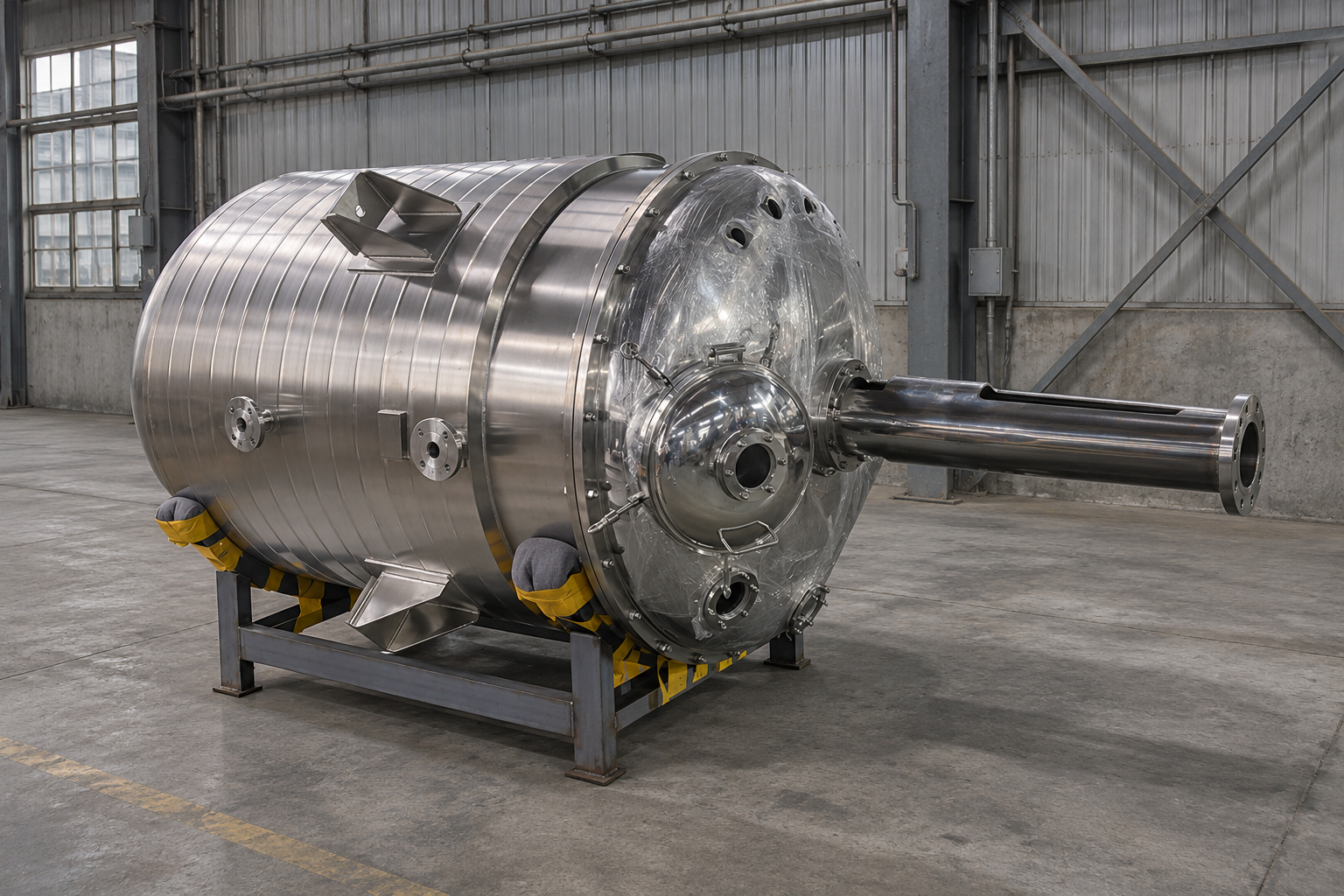
Mixing tank maintenance simultaneous work coordination means checking how separate jobs can affect one another before allowing them to overlap. A motor inspection, nearby pipework repair and vessel cleaning may each have an acceptable individual plan while their combined conditions remain unresolved. The practical decision is whether those jobs can proceed together, require a controlled sequence, or need separation. Make that decision through the site’s responsible work-control process, using the actual equipment, connected systems and work boundaries. This article provides planning questions, not authorization to isolate, enter, dismantle or restart a tank.
Start with the equipment boundary, not the contractor list
A useful coordination review begins with one clear equipment identity. Record the tank tag, location and connections covered by the work. Include relevant adjacent equipment rather than assuming the boundary ends at the vessel wall. A transfer line, shared access platform or neighboring production activity may connect two otherwise separate work packages.
The site’s equipment drawings should determine those relationships. A photograph can help people recognize the vessel, but it cannot establish the isolation boundary or show concealed connections. Ask the responsible technical reviewer to resolve differences between drawings and the installation before the work packages rely on them.
Эт YIYI mixing tank product page provides a visual equipment reference for a procurement discussion. The illustrated vessel and drive arrangement do not establish the configuration of an installed customer’s tank. When requesting equipment documents, identify the actual model and agreed supply scope rather than assuming every pictured component has the same function on every order.

Look for interactions that individual job plans miss
The central question is what one job can change for another. Work above a tank may affect people below it. A temporary barrier can alter the approach to a work area. A planned test may change an equipment condition another team expects to remain unchanged. These relationships deserve explicit review even when different contractors control the jobs.
Используйте HSE guidance on permit-to-work systems as Great Britain guidance for understanding coordination principles in the petroleum, chemical and allied industries. It discusses combined operations and the need to consider other work taking place in the area. Its examples do not constitute a ready-made permit procedure for every mixing installation.
Avoid accepting “different trades” as evidence that activities are independent. Electrical, mechanical, cleaning and inspection teams can share the same tank, access route or equipment state. Require each job owner to explain its dependencies in language another team can understand. An unresolved dependency should stay visible until the responsible coordinator decides how to manage it.
Separate common conditions from individual task controls
Some conditions belong to a particular job; others affect several jobs at once. The planning record should show which is which. For example, one contractor may control its own tools and work method while site personnel retain responsibility for the overall work area and coordination of related permits.
This distinction prevents a handover gap. A contractor saying that its task is complete does not establish that a shared condition can be changed. Identify the person or role that receives all affected teams’ status before authorizing a change under the site system. Do not create an informal release arrangement beside the approved procedure.
Существующий контрольный список передачи оборудования после технического обслуживания смесительного резервуара can support task completion records. Simultaneous-work coordination addresses a different question: how the jobs relate while they are planned or active. Keep both records connected so that completion of one task does not silently release another task’s dependency.
Build a coordination table that leads to a decision
The following table is a planning aid. It deliberately avoids giving universal combinations that are always permitted or prohibited. The site’s assessment must determine the actual decision using competent review, applicable requirements and equipment information.
| Вопрос планирования | Документы для сбора | Decision needed before overlap |
|---|---|---|
| Do jobs rely on the same equipment state? | Linked job references and the approved boundary information | Who controls that state and receives each team’s status |
| Can one task affect another work area? | Site layout, work location and identified interactions | Whether separation, sequencing or another approved control is required |
| Are access arrangements shared? | Current access plan and affected personnel | How access remains suitable throughout the agreed sequence |
| Does a test alter expected conditions? | Approved test scope and other teams’ dependencies | When the test may occur and how affected work is controlled |
| Does work extend into another shift? | Current task status and continuing dependencies | Who accepts coordination responsibility at handover |
| Has the work scope changed? | Revised job description and the reason for change | Which related plans and authorizations require review |
A completed table should produce an unambiguous coordination outcome, rather than merely a list of signatures. State which activities are linked, the agreed order where necessary, and the conditions that must be met before the next stage. If a decision is still pending, give it an owner and keep the affected activity outside the released scope.
Compare sequencing with controlled overlap
Sequencing can simplify coordination when jobs depend on incompatible equipment conditions or compete for a limited work area. The cost may be a longer planned outage or repeated contractor attendance. Compare that cost with the uncertainty and supervision demands of overlapping activities; speed alone is not evidence that overlap is suitable.
Controlled overlap may be considered only where the site’s assessment establishes suitable conditions and responsibilities. A coordination meeting does not replace task-specific controls. Nor does a schedule containing different colors prove that the actual activities are compatible. The schedule is useful when it points to the reviewed work packages and their current status.
For an illustrative planning case, suppose a mechanical contractor requests an earlier inspection slot while another contractor’s work remains incomplete. The planner should identify what equipment state and access the inspection requires, then refer the interaction to the responsible coordinator. This is a hypothetical document review example, not an instruction to enter or operate equipment.
Check the contractors’ understanding of shared responsibilities
Send contractors the relevant coordination boundaries before asking them to confirm their own scope. A general statement that they will follow site rules is less useful than confirmation that they understand the particular interface affecting their work. Ask what information they require and who will communicate changes during the job.
Используйте проверку доказательств компетентности подрядчика when considering whether the proposed team can perform its assigned task. Competence evidence and coordination evidence answer different questions. A qualified contractor still needs current information about neighboring activities and restrictions at this site.
Check subcontractor arrangements as well. If one contractor introduces another team, identify who will convey the shared conditions and obtain its status. Do not assume that communication automatically passes through every commercial relationship. Make responsibility visible without assigning technical judgments to a purchasing contact who cannot resolve them.

Keep coordination current when conditions change
The approved plan describes expected conditions at a particular point. A delayed task, changed work location or newly discovered defect can alter the relationship between jobs. Require a clear route for reporting those changes and deciding whether affected activities can continue under the site’s process.
Эт Руководство HSE по техническому обслуживанию emphasizes competent work, planning and communication. In practical coordination, that means the information used at the start must remain usable as work develops. Avoid treating the initial review as permission for every later variation.
Do not add a revision to one work package while leaving linked packages unchanged. Identify the related permit or task references and notify their responsible owners through the approved system. Where a change affects an isolation identity, use the separate isolation point identification review to resolve that information; coordination does not substitute for verified isolation.
Use the video to discuss the wider work area
The US Chemical Safety Board investigation video below examines hidden hazards around hot work. It is relevant to the question of how work on one item can affect connected or nearby equipment. It is not a mixing-tank procedure or a checklist for approving simultaneous work. Discuss the communication and boundary questions with the responsible site team after reviewing the full investigation context.

USCSB: Hot Work: Hidden Hazards.
Close linked work without losing outstanding conditions
At completion, reconcile what each team has finished with what remains open. Identify remaining defects, temporary arrangements and unfinished tasks through the site’s handback process. A job being financially complete does not establish that the equipment or shared work area is ready for its next stage.
Keep the coordination record accessible alongside the linked job references. Future planners should be able to see why a particular sequence was chosen and which interface caused a delay or revision. That record can improve the next maintenance inquiry without turning one historical decision into a universal rule.
For a new mixing-tank inquiry, send the equipment identity, process context and document requirements relevant to maintenance planning. Ask YIYI which equipment-specific drawings and instructions belong to the agreed supply. The purchaser and responsible site team must then determine the local coordination and authorization arrangements.
ЧаВо
Наличие отдельных разрешений доказывает ли, что две работы могут выполняться одновременно?
Нет. Отдельные разрешения могут определять конкретные задачи, не устраняя при этом неопределённость в отношении их взаимодействия. Ответственный производственный процесс на объекте должен проверить состояние связанного оборудования, рабочие зоны и зависимости между задачами, прежде чем принимать решение о возможности их одновременного выполнения.
Can a contractor approve changes to the overall work sequence?
That depends on the authority assigned under the site’s arrangements. A contractor should report the proposed change and its effects; it should not assume control of other teams’ permissions or shared conditions without the assigned authority.
Should the same coordination table be reused for every maintenance visit?
The format may be reused, but the evidence and decisions must reflect the current job. Changes in contractors, connected equipment, access or nearby activity can make a previous decision unsuitable.
Ссылки
Prepare the next coordination review
Bring the actual equipment identity, linked work scopes and unresolved interfaces to the responsible site coordinator. Agree the sequence and authority before seeking a start date, then keep the decisions connected to the work packages throughout the job.