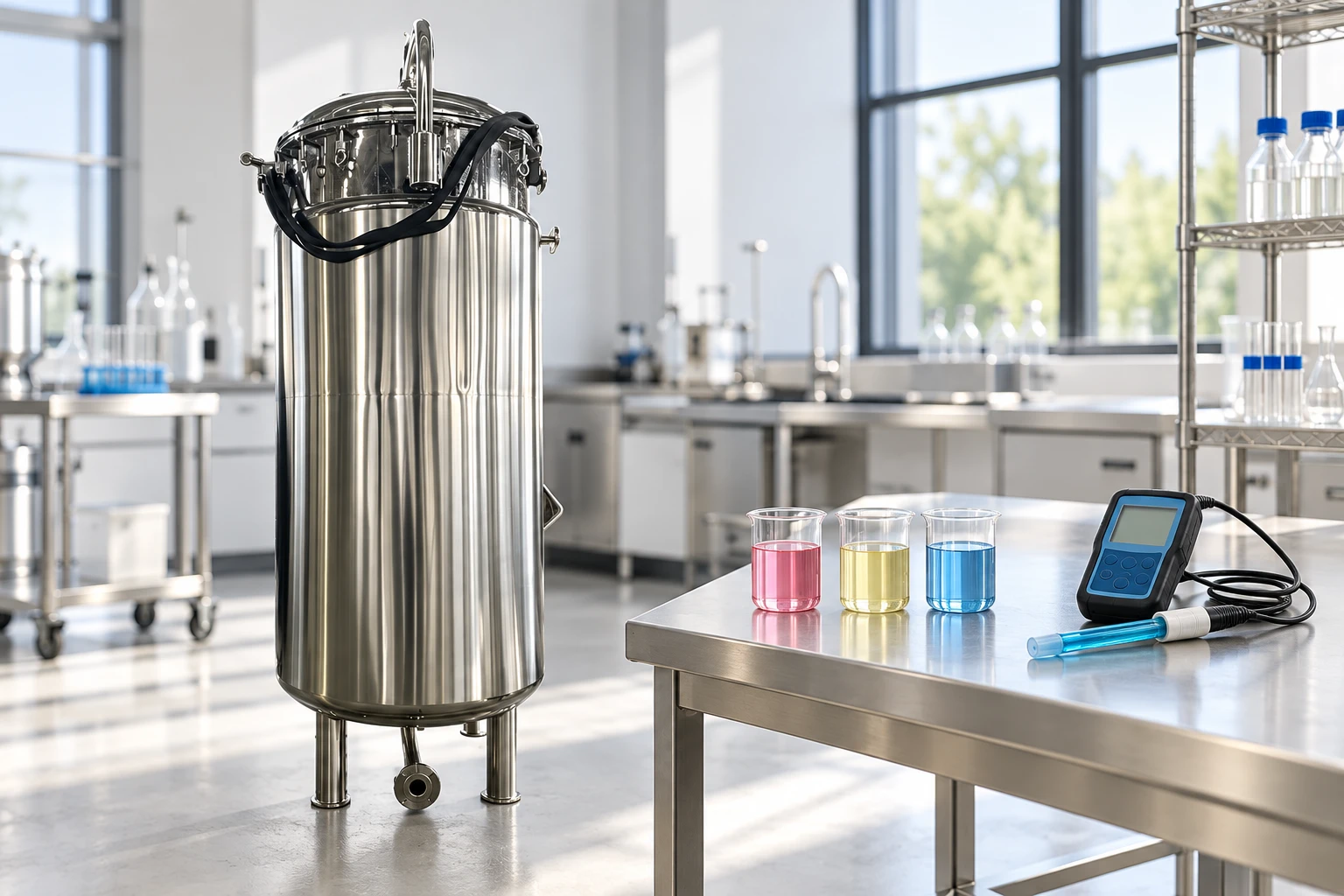
Mash pH measurement temperature must be recorded with the reading. A result from a hot mash sample should not be compared directly with a result from a cooled sample as though the two describe identical conditions. Temperature affects both the measuring system and the chemical state of the sample. Automatic temperature compensation does not make every sample’s pH independent of temperature. Establish a sampling, cooling, calibration and reporting method before changing the recipe in response to a surprising value. This guide explains measurement practice and equipment questions; it does not prescribe a universal mash pH target or an acid-addition recipe.
Define the brewery’s measurement convention
State whether the routine check is made at a defined cooled-sample condition or through a suitable inline measurement under process conditions. Both approaches can provide useful information, but they are not interchangeable without a justified interpretation. The chosen convention should match the method, instruments and decisions used by the brewery.
Write the convention into the production record and laboratory procedure. Include the sampling stage, preparation, measurement temperature and reporting format. Avoid a logbook column labeled only pH if the surrounding conditions can vary. When reviewing a historical trend, identify whether older readings used the same convention. A comparison can be misleading even when every meter reading was recorded correctly, if the samples were measured at materially different conditions.
Keep mash temperature control and pH measurement separate
Mash temperature and pH both influence the process, but measuring them raises different questions. A vessel temperature sensor may control the heating sequence, while a sampled pH result supports a formulation or process check. Do not assume that a stable tank-temperature display establishes the actual temperature inside a small sample beaker at the meter.
Эт NIST-hosted guide to industrial platinum resistance thermometers discusses how immersion and response behavior affect temperature measurement. It is not a brewing method or a source of mash pH targets. For this workflow, its relevance is narrower: confirm that the temperature associated with a pH result describes the sample being measured, using a suitable measurement arrangement. The brewery should establish its product-specific requirements and applicable pH method independently. Keep the measurement evidence distinct from any decision to alter water treatment, ingredients or the mash process.
Collect a sample that represents the intended stage
Define the point and time of collection relative to additions, mixing and the mash sequence. A sample taken before an adjustment has distributed is not equivalent to one taken after the agreed process condition is established. Include enough context in the record to identify what the reading represents.
Use the approved safe collection arrangement. Hot liquid and mash can cause burns, and sampling should not require reaching into moving equipment or opening an unsafe system. This article does not provide an operating procedure for an unknown brewhouse. Identify the sample container, preparation and quantity through the brewery’s method. If the sample contains both solids and liquid, specify how the test portion is obtained rather than allowing each operator to choose a different convenient fraction.
Standardize cooling without changing the sample unnecessarily
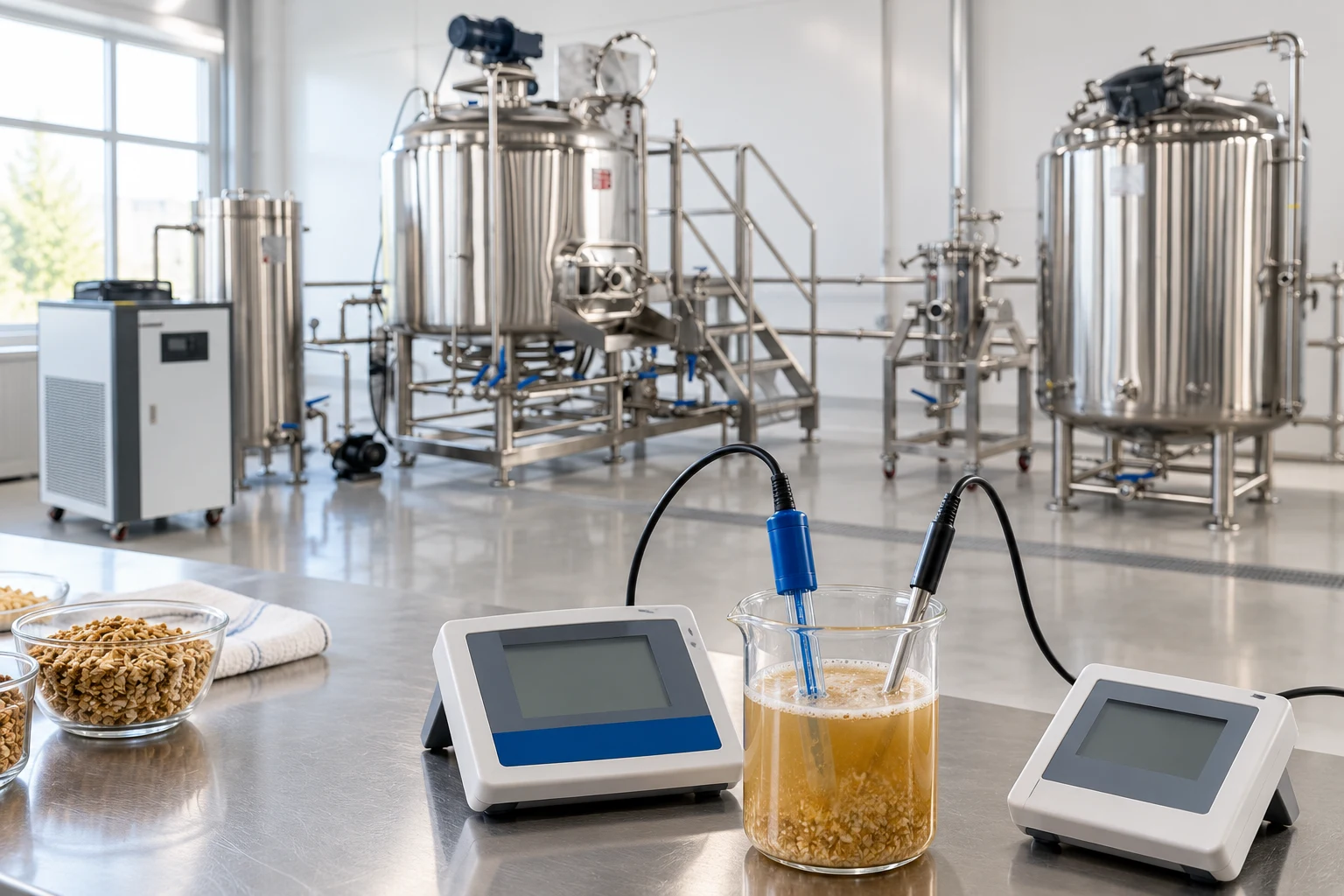
If the method calls for a cooled sample, define how it is cooled and when it is measured. Use a suitable arrangement that avoids contamination, uncontrolled dilution or an excessive delay. Do not add water merely to make the sample cool faster unless the analytical method specifically requires and accounts for that preparation.
Record the actual sample temperature. The phrase room temperature is not a measurement, particularly in a brewhouse where room conditions can change. A reproducible convention makes batch comparisons more meaningful. Also consider the time between collection and measurement: cooling is a preparation step, not a guarantee that the sample remains unchanged indefinitely. The method should explain how to manage an interrupted or delayed test rather than silently treating every later reading as equivalent.
Understand the limit of automatic temperature compensation
A pH electrode’s response changes with temperature, and the instrument may compensate for part of that measuring behavior. The solution’s own pH can also change with temperature because its chemical equilibria change. Instrument compensation should not be interpreted as a universal conversion of an unknown sample’s chemistry to another reference temperature.
Эт USGS manual chapter on pH measurement discusses measurement and calibration principles in its water-quality context. Its field methods are not a mash recipe, and a complex mash matrix needs a suitable brewery method. The relevant distinction is between correcting instrument response and predicting the temperature dependence of the actual sample. Do not apply a generic numerical hot-to-cold correction to every mash without evidence that it is appropriate.
Check calibration under the actual method
Use suitable buffers, the instrument instructions and the brewery’s defined calibration procedure. Buffer values and temperature belong together, so use the applicable information rather than assuming a printed nominal value applies under every condition. Record the calibration, instrument identity and any relevant acceptance checks.
Do not use the production sample to conceal an unsuccessful calibration. If the instrument fails its check or behaves abnormally, follow the approved investigation and replacement method. A stable display is not proof of accuracy. Keep buffers and sample handling organized to avoid contamination. The instrument manufacturer should confirm the electrode’s suitability for the sample type, temperature and cleaning method, particularly where solids or coatings can affect its performance.
| Recorded item | Почему это важно | An error to avoid |
|---|---|---|
| Sampling stage and time | The mash may change after additions and mixing | Comparing a pre-adjustment sample with a later equilibrated sample |
| Test-portion preparation | Solids handling or dilution can change the tested material | Letting operators choose different fractions without a method |
| Actual sample temperature | A temperature convention is essential for comparison | Calling every cooled sample room temperature without measuring it |
| Meter and electrode identification | Performance and suitability belong to a specific setup | Assuming a replacement probe behaves identically without checking |
| Calibration and buffer information | Instrument response must be established suitably | Ignoring buffer temperature or an unsuccessful check |
| Result and decision | The measured condition should remain traceable to any action | Recording only the final favorable retest |
This table specifies reporting questions. It does not set a pH target, calibration tolerance, sampling frequency or ingredient-adjustment quantity.
Recognize electrode and sample problems
An unstable reading can result from incomplete temperature equilibration, poor contact with the sample, a coated or unsuitable electrode, instrument issues or an inconsistent preparation method. Review those possibilities before assigning the problem to the mash formulation. Follow the manufacturer’s approved cleaning, storage and maintenance instructions for the actual electrode.
Do not scrape or aggressively clean a sensitive element using an improvised method. Do not continue interpreting a suspect instrument simply because a batch decision is urgent. Use the brewery’s approved alternative or escalation process. Preserve the original observation and any action taken. The goal is a trustworthy measurement, not a plausible number obtained by repeatedly changing the sample or instrument until the result looks familiar.
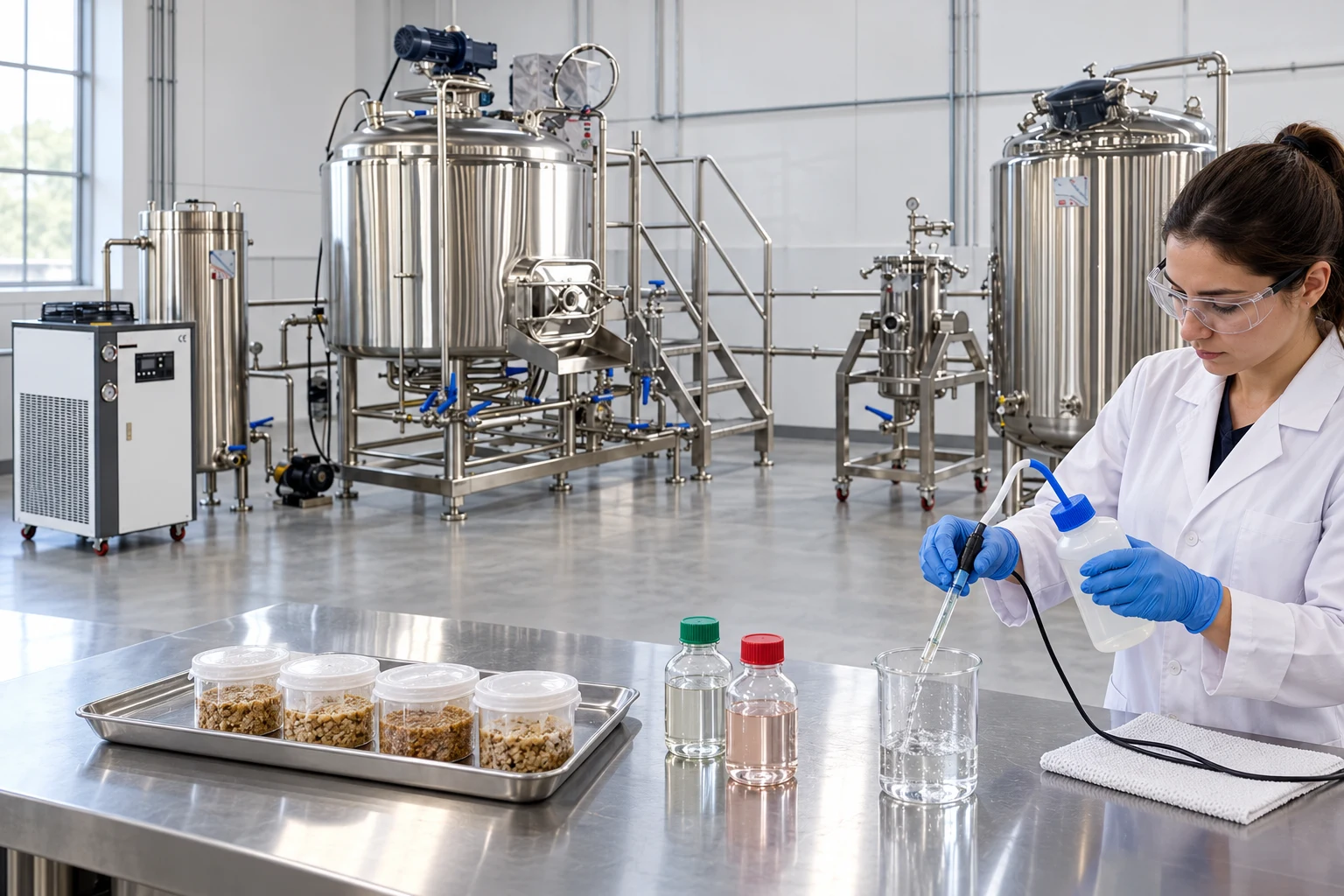
Investigate disagreement before adjusting the process
If inline and bench measurements disagree, first confirm that they refer to the same batch stage and temperature convention. Then review sampling, preparation, instrument status and location. They may be observing different material at different times. A constant offset applied to one device should not replace an investigation into those differences.
Where an appropriate comparison is possible, use a planned check with suitable reference equipment and documented conditions. Review method capability and repeatability before concluding that the disagreement is commercially meaningful. Do not increase acid or alkali addition solely to reconcile two measurements made under incompatible conditions. Any process adjustment should follow the brewery’s approved formulation and safety controls, with an appropriate recheck after the intended change has distributed.
Separate a measured result from a recipe correction
A pH result is one piece of process information. The correct response depends on the recipe, water, ingredients and stage of the mash. This article deliberately supplies no universal chemical dose or numerical correction. Such a dose cannot be calculated reliably from a pH difference alone without the relevant buffering behavior and process evidence.
Record an authorized adjustment as a separate event: what was changed, why, by whom and how it was verified. Keep the original reading and the subsequent reading rather than replacing the first value. A complete record allows the team to learn whether a recurring issue relates to raw materials, measurement practice or the process itself. It also prevents an informal operator correction from becoming an undocumented recipe change.
Use trends only after standardizing the method
A useful trend compares like measurements over time. Review whether the same sampling stage, preparation and temperature convention were used. Mark instrument changes, procedure revisions and unusual delays. If the method changed, separate the resulting data series or establish a justified comparison before treating them as one continuous performance record.
Look for meaningful patterns rather than reacting to every small movement. The method’s normal variation should inform interpretation. If an apparent batch shift is smaller than unresolved sampling or measurement variation, improve the measurement process before tightening the operating target. Conversely, a repeatable difference supported by reliable records deserves process review even when a single batch still meets its approved requirement.
Specify sampling and instrumentation with the brewhouse
Для YIYI saccharification system, explain the mash sequence, required sample access, temperature-measurement needs and cleaning arrangement. Ask the supplier to confirm the actual proposed interfaces and instruments. The reference equipment photograph does not prove a supplied inline pH loop, a particular analytical method or a guaranteed wort result.
Используйте saccharification control-points guide for sequence and automation planning, the vertical saccharification-tank guide for equipment inputs and the saccharification-system buying guide for the broader enquiry. The pH measurement convention should be documented alongside those requirements so that the operator, laboratory and supplier interpret the same signal consistently.
Educational reference: using a pH meter
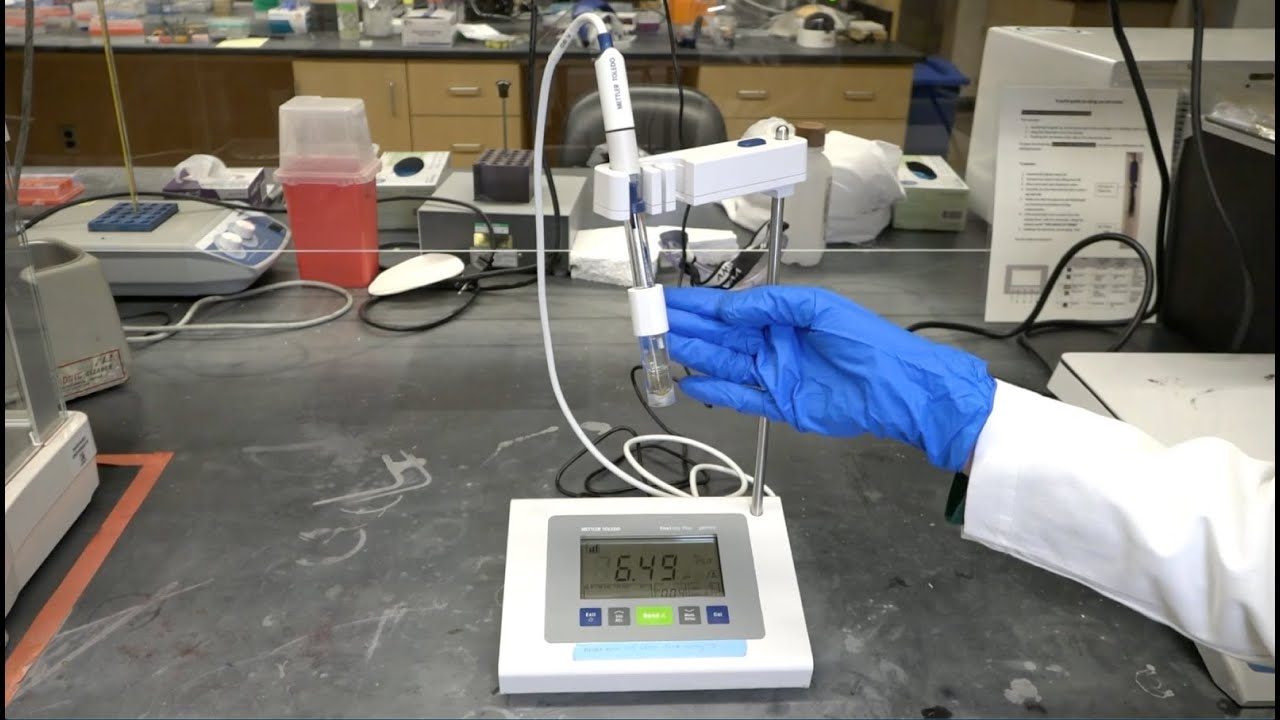
Watch How To: Measure pH with a pH Meter by LabXchange
The educational demonstration explains basic pH-meter practice. It does not establish a brewery recipe, a mash-specific electrode qualification or a production adjustment for the illustrated system.
Часто задаваемые вопросы
Does automatic temperature compensation convert every mash reading to a cold-sample pH?
No. Correcting electrode response is different from knowing how the sample’s own chemical pH changes with temperature. Establish and record a measurement convention rather than assuming universal conversion.
Can I cool a sample by adding water?
Only if the approved analytical method specifically calls for that preparation and its interpretation. Uncontrolled dilution changes the material being tested and can invalidate a comparison.
Should a surprising pH reading trigger an immediate recipe adjustment?
First confirm sample identity, stage, temperature, preparation and instrument status. Follow the brewery’s authorized decision process and retain the original result with any subsequent action or recheck.