Heat exchanger approach temperature is the temperature difference between two streams at a specified end of an exchanger. For a counterflow liquid-to-liquid exchanger cooling a hot product, the cold-end approach is commonly the hot outlet temperature minus the cold inlet temperature. A smaller approach means a tighter thermal target at that end, usually requiring closer attention to exchanger conductance, flow, fouling allowance, and measurement accuracy. Always state the two temperatures being compared: an unspecified “approach” can describe different conditions and cause an incorrect quotation.
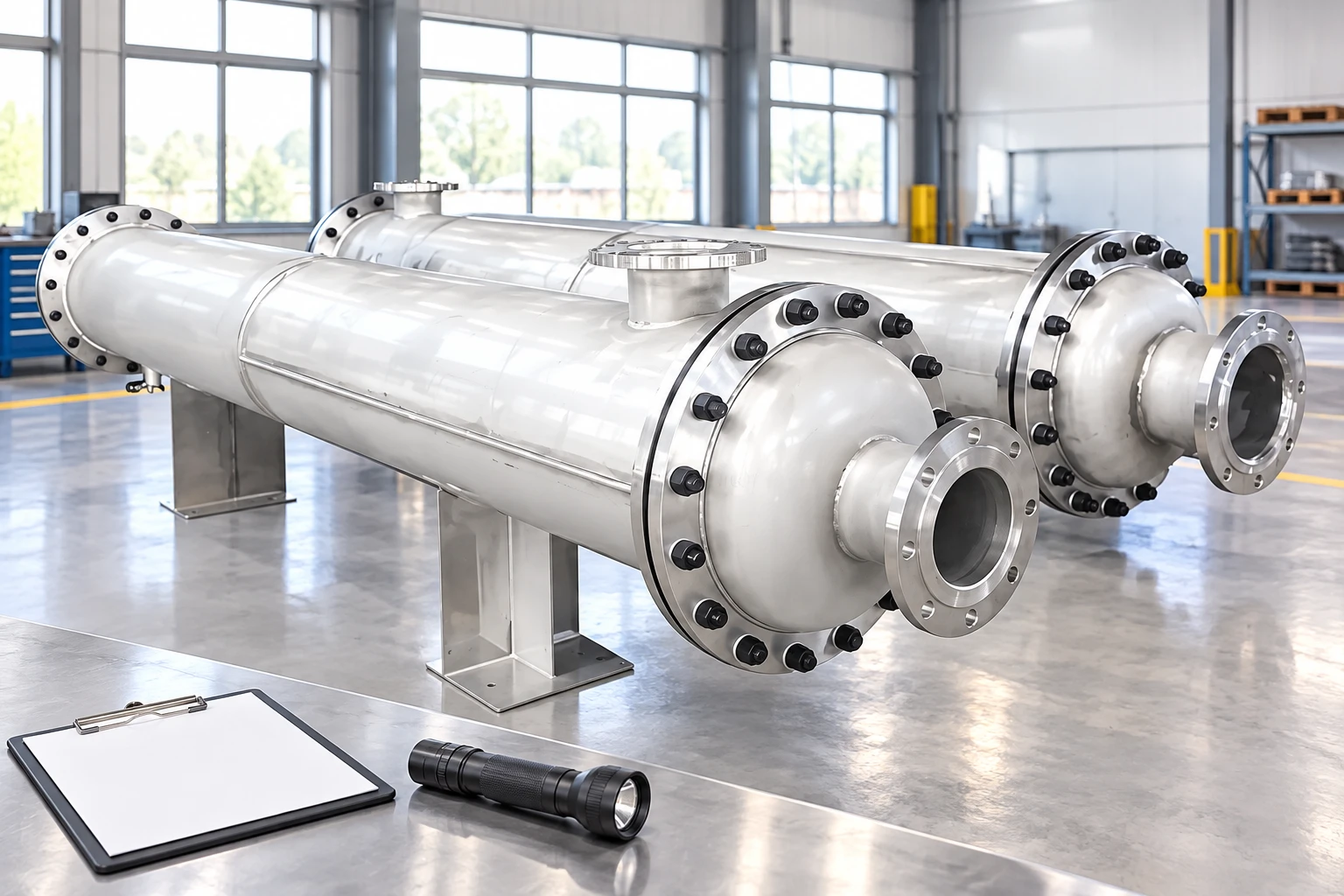
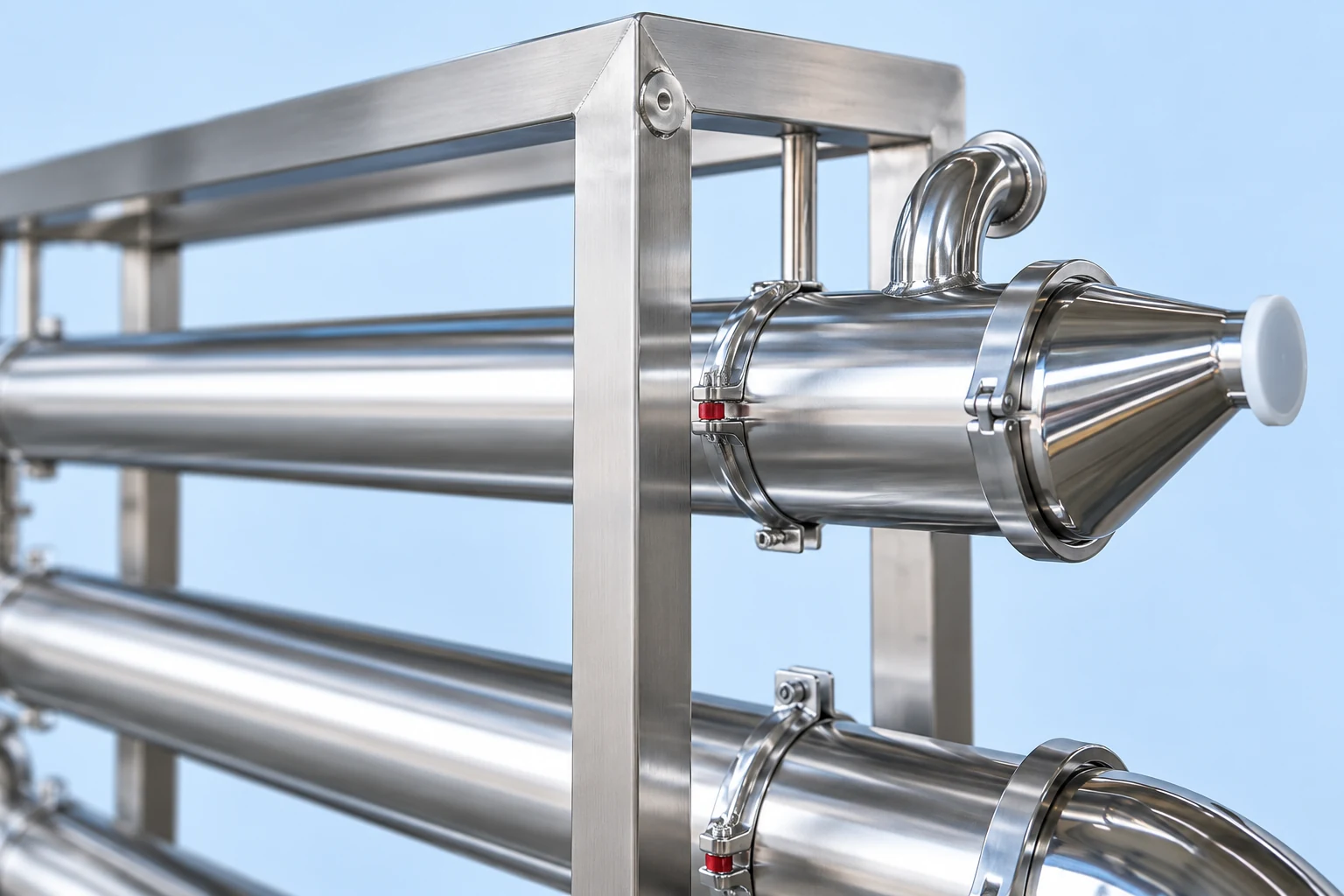
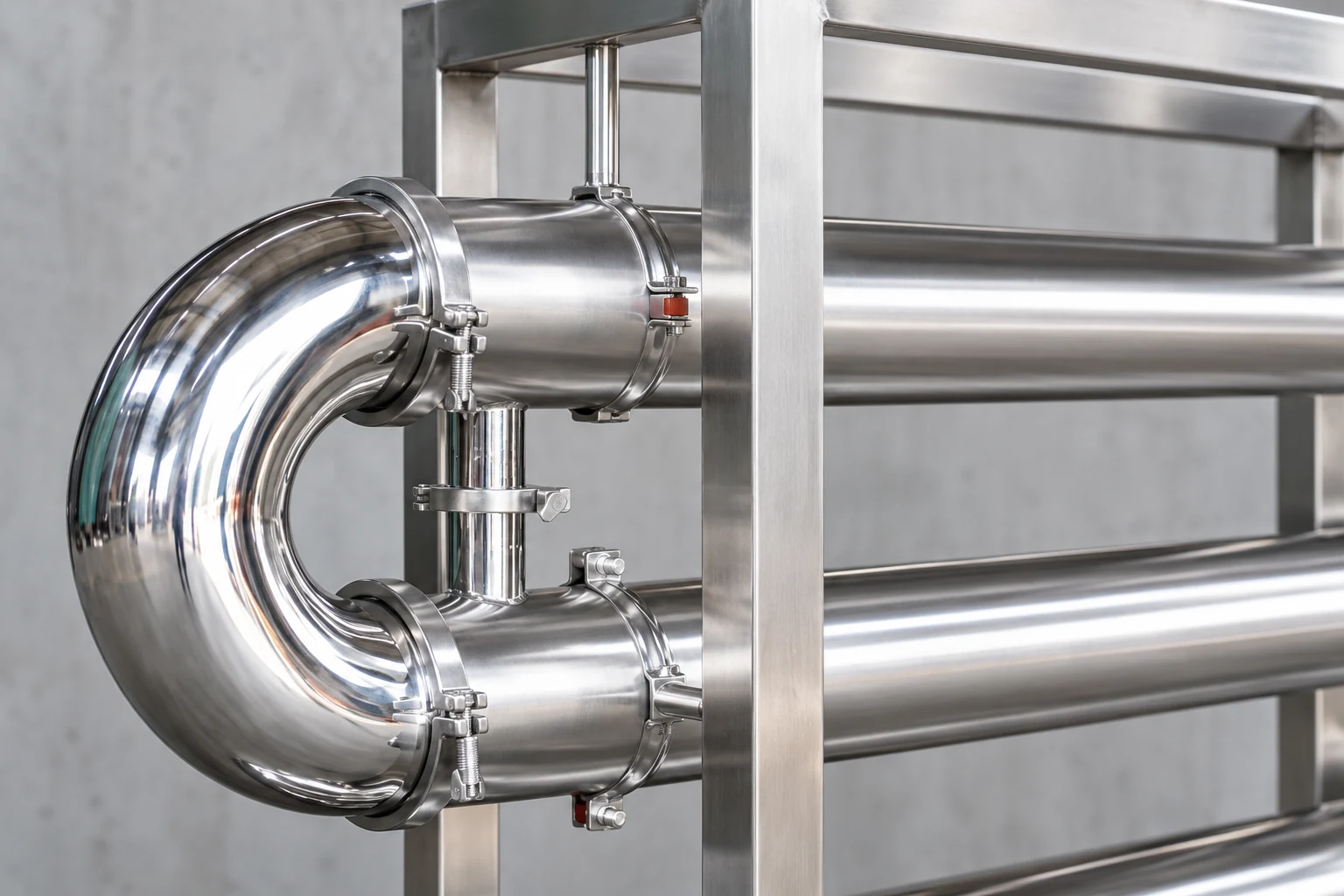
This guide explains the definition, calculations, and buyer’s decisions. For the broader equipment selection, begin with our tubular heat exchanger buyer’s guide. Product photographs of YIYI’s sanitary tubular exchanger establish its visible configuration, not its guaranteed approach for an unspecified duty.
Define both terminal differences
Use clear stream labels: hot inlet and outlet, and cold inlet and outlet. In ideal counterflow, the hot inlet meets the cold outlet at one end, while the hot outlet meets the cold inlet at the other. The corresponding terminal differences are hot inlet minus cold outlet, and hot outlet minus cold inlet. Neither difference should be silently substituted for the other in a data sheet.
For parallel flow, the inlet streams meet at the same end and the two outlets meet at the other. The terminal differences therefore use different pairings. Multipass equipment can also depart from ideal counterflow. Record the arrangement and the specified end along with the value. This naming discipline prevents a thermal target from changing meaning between the process engineer, equipment supplier, and commissioning technician.
Separate approach from temperature change and LMTD
Approach describes a difference between streams. Temperature change describes how much one stream heats or cools as it passes through the equipment. Log mean temperature difference, or LMTD, represents the mean thermal driving difference for a suitable exchanger model. These quantities answer different questions even when they all use degrees Celsius or kelvin.
Эт NPTEL lecture on multipass exchanger analysis explains why nonideal flow arrangements require a correction to the simple counterflow driving force. An approach value alone cannot determine heat-transfer area. The engineer also needs duty, both stream conditions, the applicable overall coefficient, and the actual arrangement. Ask a supplier to show those inputs rather than quoting an approach as a stand-alone equipment capability.
Calculate a counterflow example carefully
Consider an illustrative steady, single-phase counterflow duty. The hot stream enters at 80 °C and leaves at 40 °C; the cold stream enters at 30 °C and leaves at 50 °C. The cold-end approach is 40 − 30 = 10 K. The hot-end terminal difference is 80 − 50 = 30 K. These values are assumptions for explaining the method, not product ratings or a promised operating point.
For positive unequal terminal differences, LMTD = (ΔT1 − ΔT2) / ln(ΔT1 / ΔT2). This example gives 20 / ln(3), approximately 18.2 K. The 10 K approach is therefore not the LMTD. Temperature differences in °C and K have the same numerical increment, but use absolute temperature where a separate thermodynamic calculation requires it. Keep heat capacity, mass flow, and energy units consistent.
Before using these temperatures for sizing, check the energy balance. Without loss or phase change, the heat removed from the hot stream should match the heat gained by the cold stream within the measurement or design tolerance. If the mass flows and heat capacities cannot support the stated changes, the proposed duty is inconsistent. Do not hide that conflict by increasing exchanger area.
Why a tighter approach can increase cost
Reducing the smaller terminal difference reduces the available driving force near that end. Maintaining duty then depends on the combined effect of coefficient, area, and flow arrangement. More area can increase equipment size and material cost, but changing geometry or velocity also affects pressure drop and serviceability. The lowest purchase price and smallest terminal difference may not be achievable together within the same utility and pumping limits.
Treat each quote as a complete operating case. Ask for thermal performance at the stated flow, the pressure losses on both sides, the clean and fouled assumptions, and the relevant materials. Compare proposals using the same cooling-water inlet condition. A quotation based on colder utility water may appear more capable while describing a condition the plant cannot maintain during its warmest season.
Use an approach review table
The table below translates the thermal definition into procurement checks. It does not prescribe a universal minimum approach. The formula basis is the cited NPTEL multipass discussion; the practical acceptance conditions should be agreed for the actual fluids, instrumentation, and equipment arrangement.
| Вопрос | What to specify | What an incomplete answer can hide |
|---|---|---|
| Which approach? | Exact stream names, locations, and subtraction order | Different terminal differences being compared |
| Which utility case? | Cooling-stream inlet condition and available flow range | Performance based on unavailable colder water |
| Which load? | Heat duty and both stream flow rates | An easy low-load case presented as full-duty performance |
| Which thermal model? | Flow arrangement, coefficient basis, and correction | Ideal counterflow assumptions applied to another geometry |
| Which pressure limit? | Allowable differential pressure on each side | A thermal improvement requiring excessive pumping |
| Which condition? | Clean and fouled performance assumptions | A target met only immediately after cleaning |
| Which measurement? | Sensor locations, calibration, stability, and tolerance | Apparent approach caused by mixed readings or sensor error |
Respect thermodynamic and equipment limits
For ordinary passive heat transfer between two single-phase streams, heat flows locally from the hotter fluid to the colder fluid. An outlet temperature crossing can occur in counterflow: the cold outlet may exceed the hot outlet because they are at different ends. That does not imply a reversal of local heat flow. The illustrative example above has this crossing while both counterflow terminal differences remain positive.
Zero terminal difference is a limiting condition in the simple finite-conductance model, not a routine guarantee. A negative terminal difference can signal an impossible requested case, incorrectly paired temperatures, or a model needing more careful interpretation. Phase change, strong property variation, and complex arrangements require appropriate analysis. The NPTEL effectiveness and NTU discussion provides a complementary framework for rating equipment when outlet conditions are unknown.
Diagnose an approach that has become larger
Start by checking whether the comparison conditions changed. A larger cold-end approach might accompany fouling, lower coolant flow, a hotter product load, valve movement, bypass leakage, air accumulation, or inaccurate readings. It is a symptom to investigate, not a diagnosis. Record duty and both-side conditions before attributing the change to the exchanger surface.
Check instrument identity and time alignment. A hot-outlet reading from one production phase and a cold-inlet reading from another phase do not form a valid steady approach. Place sensors where they measure representative bulk conditions, following the approved installation design. Record mixing, bypasses, and ambient exposure that might affect the values. Investigate the hydraulic data alongside the thermal trend to distinguish reduced flow from degraded transfer.
Include fouling and utility variability
A demanding approach target can expose small changes in water temperature or surface condition. Keep the specified fouling allowance consistent with the service and planned cleaning strategy. Review the fouling causes and prevention guide before accepting an assumption that the exchanger remains permanently clean. Do not use an arbitrary extra area percentage as a substitute for identifying the expected deposit mechanism.
For cooling-water service, treatment and solids management influence operation. The DOE guidance on cooling-water efficiency explains the wider importance of controlling fouling and water conditions. Translate that into a plant-specific utility envelope: seasonal inlet temperature, normal and minimum flow, water analysis, and any shared-loop restrictions. Specify whether performance must be maintained at the most demanding agreed combination or only at a nominal design point.
Turn an approach guarantee into a usable test
A contract should identify the acceptance duty, inlet temperatures, flows, instrument locations, clean or specified fouled condition, stabilization requirements, and tolerance. It should also state who supplies the utilities and how deviations are handled. A measured outlet temperature outside the target cannot be fairly assessed without checking whether the guaranteed input conditions were provided.
Use a commissioning record with complete operating data. Retain temperature and flow readings, pressure losses, valve configuration, calibration evidence, and observations. Our Список задач по пусконаладке helps organize that handover. When testing conditions differ from design, request an agreed engineering comparison rather than adjusting one temperature informally and declaring a pass. Avoid reporting more precision than the instruments can support.
Learn the relationship through a neutral simulation
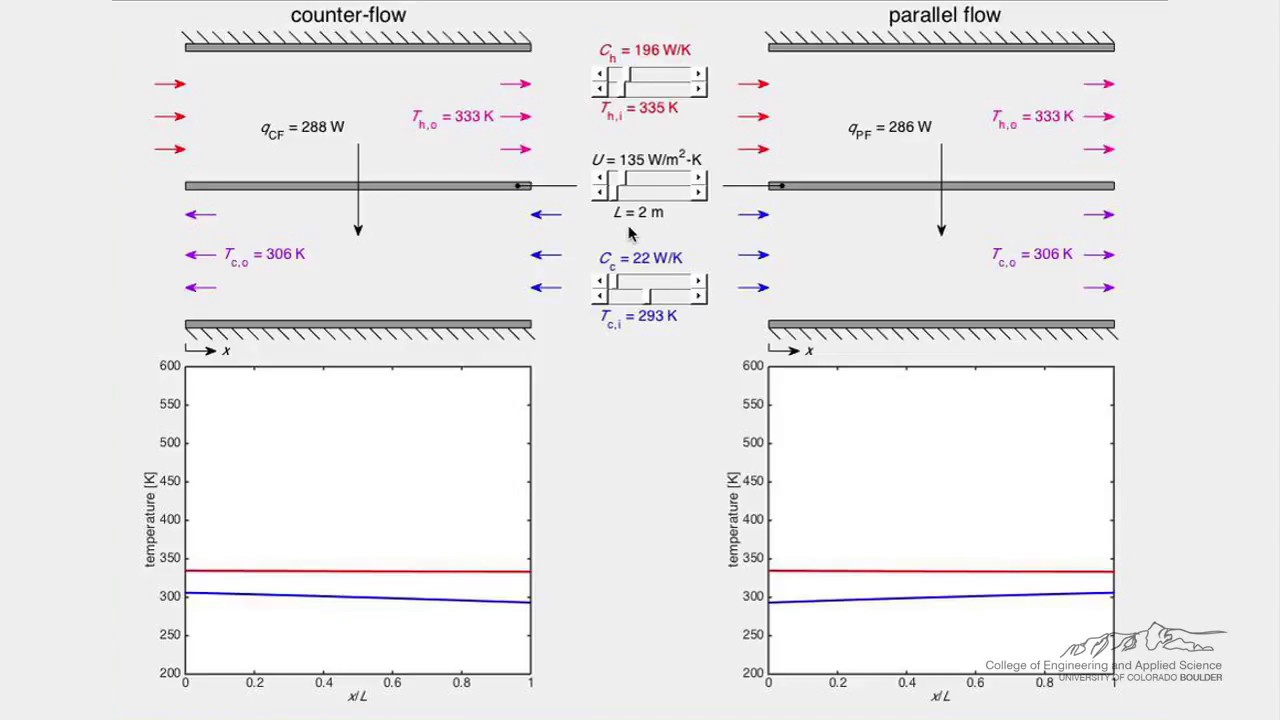
The following LearnChemE video demonstrates heat-exchanger behavior in an educational simulation. It is useful for relating terminal temperatures to operating inputs. Its example is not a YIYI equipment test and does not establish a minimum approach for a sanitary or industrial product. Use the underlying relationships to ask better questions, then require a project-specific calculation and acceptance method.
Посмотрите видео «Теплообменник (симуляция)» от LearnChemE
Prepare the next supplier discussion
Provide the service, fluids, composition where relevant, duty or production basis, four target temperatures, and both stream flow ranges. State the exact approach definition, permitted pressure losses, cleaning method, material requirements, installation space, and utility variation. Identify which values are measured and which are proposed design targets so the supplier can distinguish evidence from assumptions.
For a YIYI tubular exchanger inquiry, ask for confirmation of the approved flow arrangement and thermal calculation at your agreed operating conditions. Request a comparison of a practical nominal approach and any tighter alternative, including implications for area, pressure drop, cleaning, and cost. This creates a decision that can be reviewed instead of a single temperature number without an operating basis.
Часто задаваемые вопросы
Is approach temperature the same as LMTD?
No. Approach refers to a specified terminal difference between streams. LMTD combines both terminal differences for a suitable thermal model. A small approach cannot replace LMTD in an area calculation.
Is there one minimum approach for all exchangers?
No. A practical target depends on duty, flow arrangement, fluids, conductance, pressure-loss limits, fouling, and utilities. Obtain a calculation and clearly defined operating conditions instead of relying on a universal number.
Can the cold outlet be hotter than the hot outlet?
Yes, in suitable counterflow service, because those outlets are at opposite ends. This does not violate local heat-flow direction when the corresponding terminal differences remain physically consistent.
Does a rising approach prove fouling?
No. First compare duty, inlet temperatures, flows, bypasses, and instrument reliability. Fouling is one possible explanation, but altered operating conditions can produce a similar symptom.