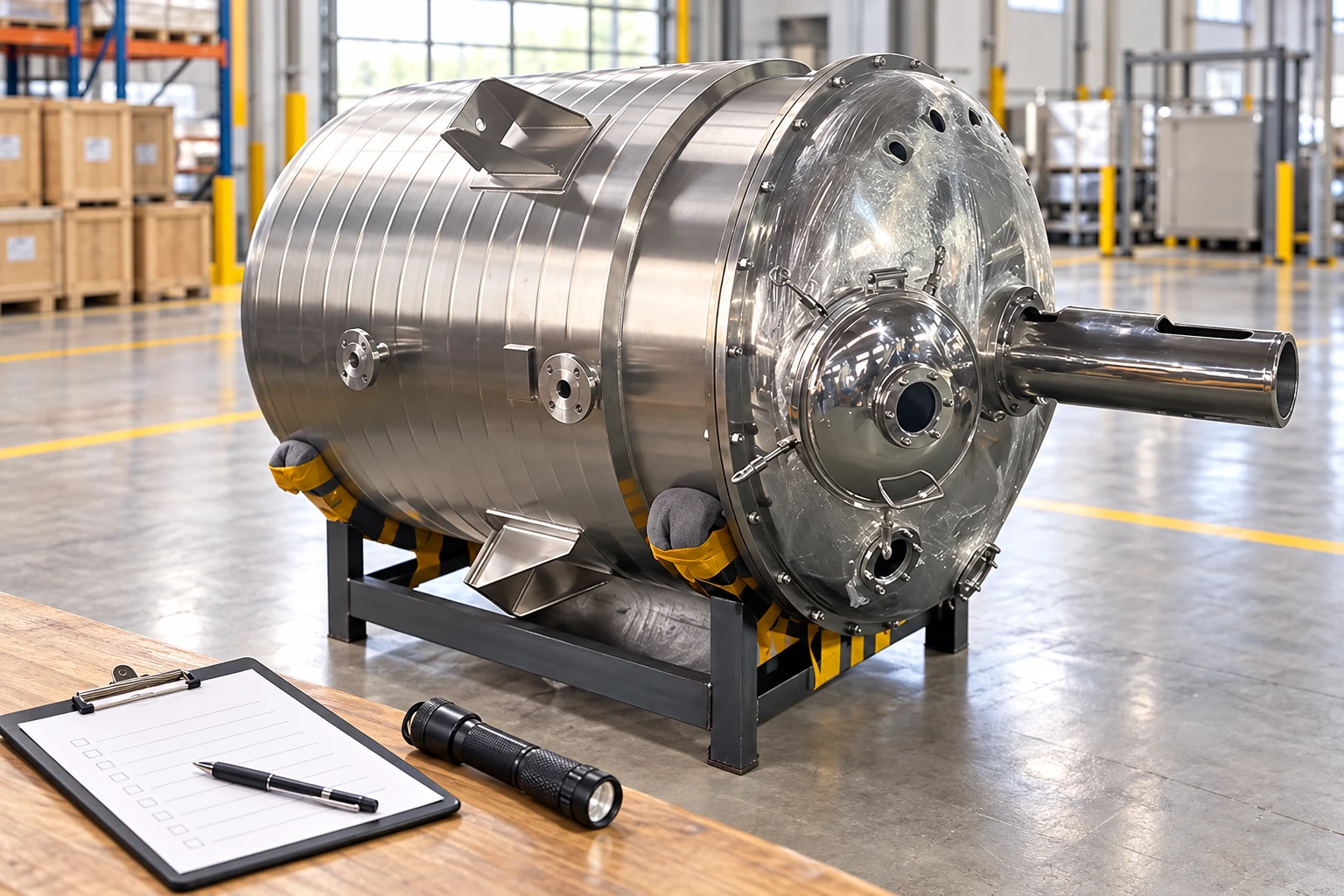
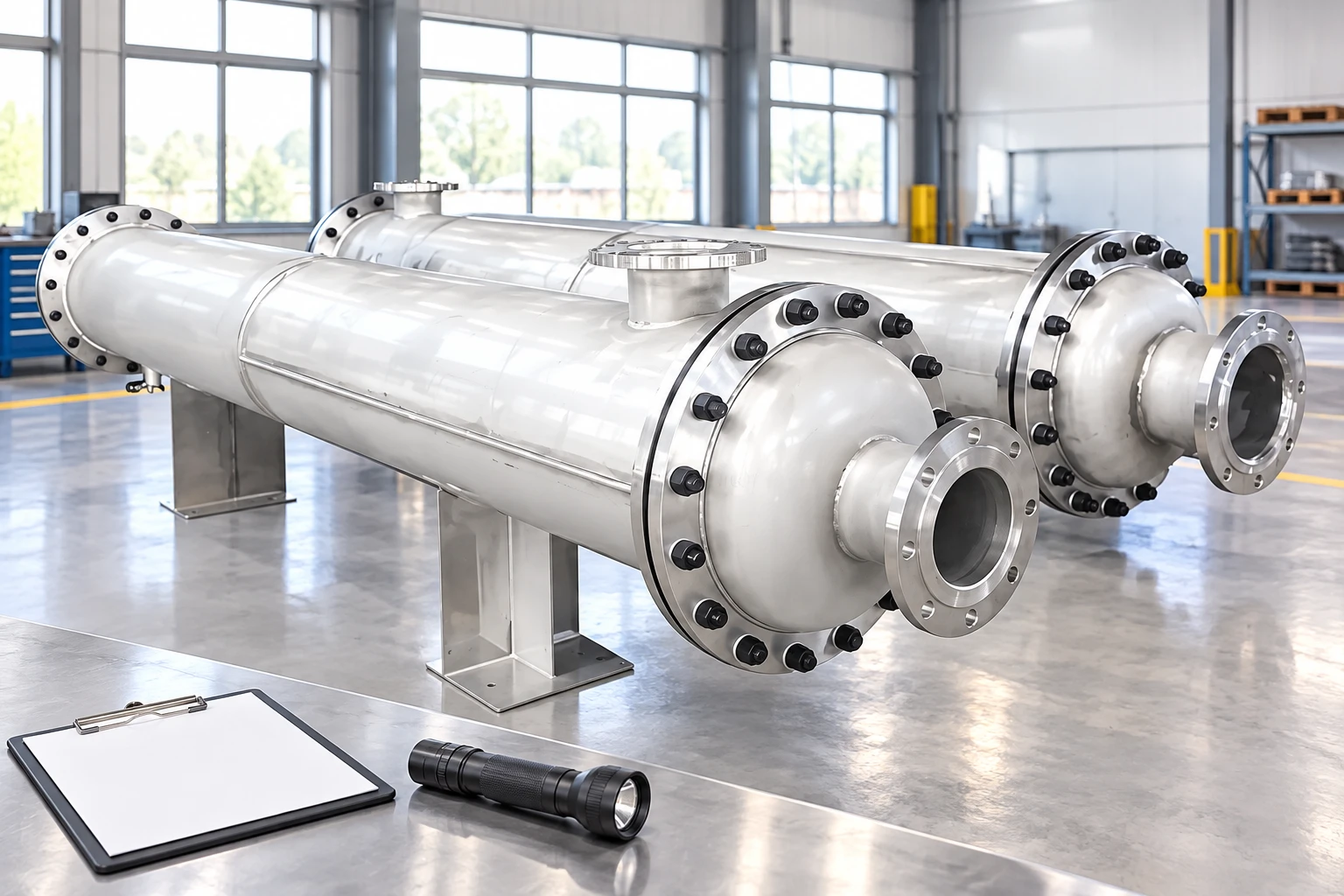
Heat exchanger preservation during storage needs an agreed plan for the internal passages, external surfaces, connections and inspection responsibilities while the unit is out of service. Stopping flow is not the same as establishing a protected storage condition. Choose the preservation method with the manufacturer and responsible materials specialist, using the actual construction, previous fluids, storage environment and expected outage length. Record how the selected condition will be maintained and how it will be removed before restart. This guide organizes that decision; it does not provide a universal drying recipe, chemical dose or gas pressure.
Distinguish a short stop from a preservation campaign
An operational standby may keep utilities, controls and routine checks available. A stored spare may be disconnected and placed in a warehouse. A seasonal shutdown may leave the exchanger installed but outside normal operator rounds. These states create different responsibilities, even if all three appear on a schedule as “not running.”
Define the start and expected end of the preservation period. Record whether the unit can be inspected, whether power or climate control will remain available and who owns the equipment during contractor handover. An extended outage needs a review when its assumptions change rather than automatic continuation of an expired plan.
Используйте YIYI fixed-tubesheet shell-and-tube exchanger as the equipment reference for a specific enquiry. The visible shell and closed heads do not establish internal dryness, metallurgy, design pressure or a supplied preservation package. Those details must come from the equipment documentation.
Map each side separately
List the shell side, tube side and any associated pockets or auxiliary connections. For each boundary, record the last process fluid, cleaning history, known residues and accessible drainage or vent points. One side may have carried clean utility water while the other carried a product with quite different compatibility and contamination concerns.
Do not assume that a drained outlet proves every low point is empty. Geometry, installed orientation and connected piping can retain liquid. Equally, an external dry surface says little about internal condition. The plan should identify what can actually be observed and which parts require another approved verification method.
Обзор руководство по обслуживанию кожухотрубного пучка when identifying access limitations. A fixed-tubesheet unit and a removable-bundle unit cannot be treated as though the same inspection surfaces are available without disassembly.
Establish the condition before preservation
Preservation should begin with a documented starting state. Record whether cleaning, rinsing, inspection and any required repair have been completed. Identify unresolved defects and restrictions. A storage tag saying “protected” should not hide an open leak investigation or a cleaning result that was never accepted.
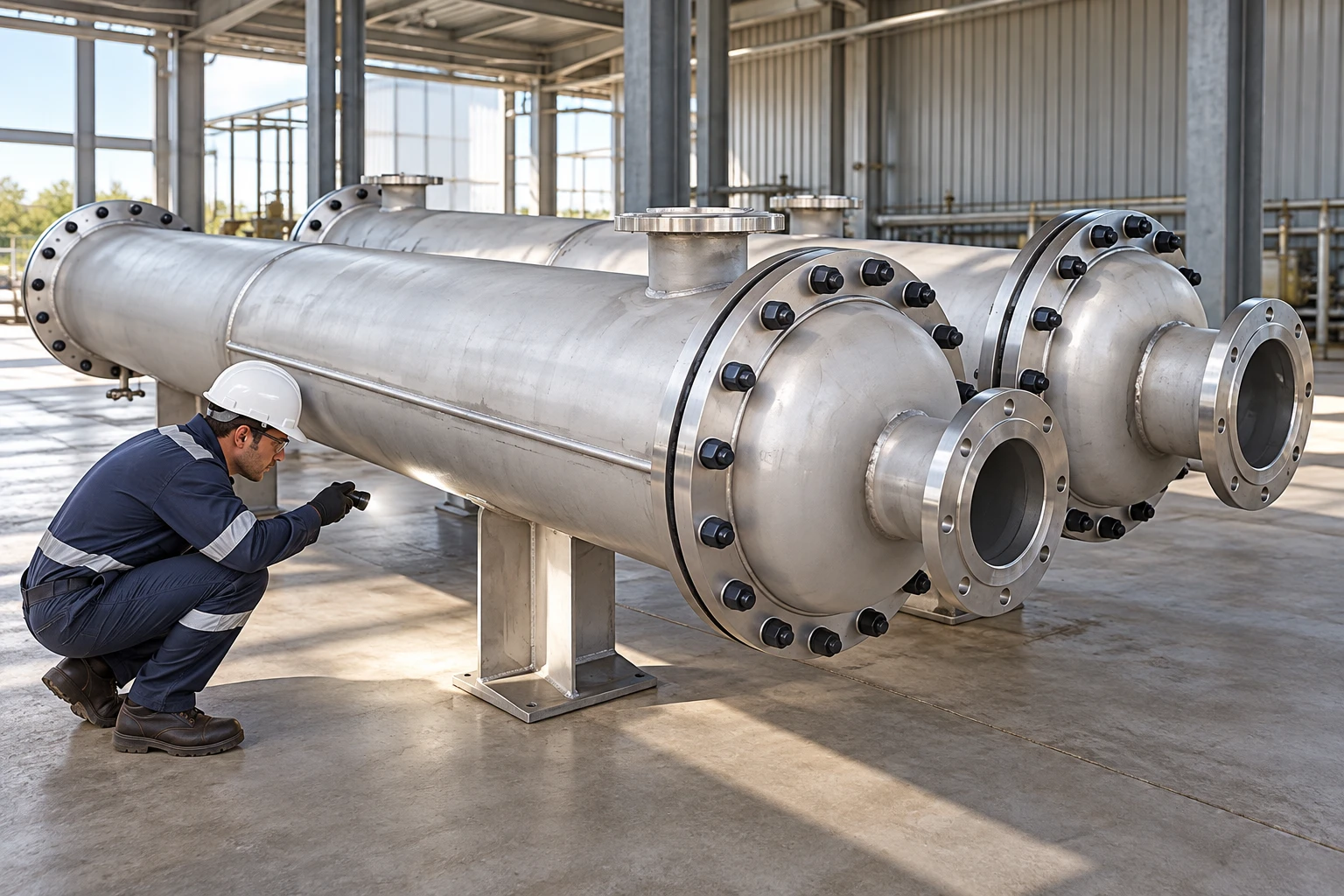
Have the responsible team assess residues and their interaction with proposed preservation materials. Cleaning chemicals, process contaminants and retained moisture may affect material compatibility. The relevant evidence can include the cleaning record, fluid history and qualified inspection findings; appearance alone should not settle the question.
HSE’s heat exchanger safety overview identifies corrosion, maintenance faults and other failure modes that need appropriate controls. It supports treating storage as part of equipment risk management. It does not supply a preservation method for an individual exchanger, and the project must not present it as such.
Select a method with explicit acceptance conditions
The decision may consider an approved dry condition, a compatible maintained liquid condition or another manufacturer-specified arrangement. Each requires different controls. “Dry” needs a defined verification basis; “wet” needs an approved fluid condition and monitoring. A nominal method without maintenance responsibility can deteriorate unnoticed during a long outage.
Do not copy boiler layup concentrations or another manufacturer’s pressure instructions into an exchanger work pack. Different materials, seals, pressure boundaries and process cleanliness requirements can make that transfer inappropriate. The same caution applies to instructions for gasketed plate exchangers when the actual unit is a fixed-tubesheet design.
Before selecting a chemical, coating or gas system, establish compatibility, safe handling, environmental responsibilities and removal requirements. Any pressurized or oxygen-displacing preservation arrangement needs its own engineered controls. This article does not authorize applying pressure, sealing an unsuitable boundary or introducing inert gas into an uncontrolled space.
Use a preservation decision register
The following table describes information to agree, not numerical operating settings. The manufacturer and responsible site specialists should supply the actual limits and test methods for the equipment and service.
| Decision | Требуется информация | Свидетельство о приемке | Owner to identify |
|---|---|---|---|
| Internal condition | Previous fluids, residues and inspection access | Approved starting-state record | Operations and maintenance |
| Preservation method | Materials, outage length and restart needs | Written method with equipment-specific limits | Manufacturer and materials specialist |
| External protection | Weather, condensation and contamination exposure | Inspection of shelter, supports and coverings | Storage custodian |
| Connection protection | Openings, seals and closure compatibility | Connection register and verified closure status | Обслуживание |
| Мониторинг | What can change and how it is measured | Dated checks against agreed criteria | Named inspection owner |
| Reinstatement | Temporary materials and service restrictions | Completed removal and restart review | Commissioning authority |
A register is especially useful when a unit moves between factory, freight storage and installation site. Record the condition at each handover. Transport packaging may have a limited purpose and duration; do not assume it remains suitable for an indefinite outdoor delay.
Protect the exterior without trapping a new problem
Assess rain, standing water, condensation, airborne contaminants and accidental impact. Review support contact points and the condition of coatings or insulation where present. A covered unit can still suffer from water collecting under a sheet or around an unprotected support.
Use the manufacturer’s approved protection for openings and exposed components. Record the type, location and condition of temporary closures so they are not mistaken for operational pressure components. Do not add an improvised cap that creates an unintended sealed volume or prevents a required inspection.
Keep the equipment identity visible and preserve access to the inspection points in the plan. Record any relocation, dropped load, damaged covering or unexpected wetness. These are changes to storage conditions and may require reassessment even when the exchanger has never been put into operation.
Make inspection intervals respond to the actual risk
Choose an inspection schedule from the approved preservation method and local conditions. A controlled indoor store and an exposed coastal yard should not automatically use the same interval. Define additional checks after weather events, building leaks, relocation or loss of environmental control.

Each check should state what was observed, which method was used and whether the acceptance criteria were met. If humidity or another measured condition forms part of the method, identify the instrument and measurement location. A tick in a calendar cannot substitute for the measurement the plan requires.
Assign a response to an out-of-limit result. That may mean specialist review, restoring the approved protection or inspecting affected surfaces. Avoid recording a failure repeatedly without action. Preserve the history so the restart team can distinguish a continuously maintained condition from one that was lost and later restored.
Control isolation throughout the outage
An installed exchanger may remain connected to systems capable of reintroducing pressure, temperature or hazardous material. Establish the required isolation under the site’s procedure and maintain its identity during contractor work or plant modifications. A storage label is not an isolation certificate.
Эт HSE safe isolation guidance addresses planning and control of process isolations, including reinstatement. Apply those principles through the site’s competent team and equipment-specific work controls. Temporary preservation connections should also appear in the controlled boundary documentation.
Record who can authorize inspection, opening or removal of a temporary connection. If an outage extends beyond the original permit or handover period, review the documentation. Long inactivity can make the equipment state less familiar to the people who eventually return it to service.
Plan reinstatement before the first shutdown task
List everything introduced or changed for preservation: temporary closures, protective materials, disconnected instruments and altered utility connections. Define how each will be removed, restored or checked. An inventory created at the beginning is more reliable than trying to remember temporary changes months later.
Establish whether rinsing, inspection, leak testing or other verification is required for the intended service. The manufacturer and responsible engineer must specify appropriate methods. Do not assume a previous factory test remains sufficient after an uncontrolled storage incident, repair or changed operating duty.
Используйте Список контрольных процедур по пусконаладке теплообменника to organize the return-to-service handover. Preservation records explain what happened while idle; commissioning evidence addresses readiness for the next operating campaign. Keep both available rather than replacing the storage history with a new startup sheet.
After authorized restart, establish the measurement basis described in heat exchanger performance monitoring. Keep the new operating baseline alongside the preservation history. If later performance changes, the team can then distinguish an operating trend from an issue already observed during storage, rather than reconstructing an undocumented outage from memory.
Put preservation requirements into the equipment enquiry
Send the expected shipping route, storage location, delay range, climate exposure and intended process fluids with the enquiry. State whether the equipment will arrive before utilities or the building are ready. Ask what protection is supplied, its limitations and who is responsible after delivery.
Request the permitted storage arrangements, inspection criteria and reinstatement instructions for the actual model and materials. Clarify which accessories are included and which must be supplied on site. Avoid treating a generic photograph or a sales description as evidence of a fully engineered preservation system.
For an existing exchanger, provide the serial number, last service, inspection history and any period when conditions were uncontrolled. A useful next action is a preservation register reviewed by the manufacturer and site team, with named owners for every inspection and a written route back to service.
Educational reference: corrosion fundamentals
The following FuseSchool lesson explains basic corrosion concepts. It offers background for understanding why storage conditions matter. Its introductory examples do not predict stainless exchanger life or replace material-specific corrosion assessment and preservation instructions.

Watch Corrosion | Reactions | Chemistry | FuseSchool by FuseSchool – Global Education
Часто задаваемые вопросы
Is draining a heat exchanger enough for long-term storage?
Not necessarily. Drainage does not prove that all internal areas are dry or appropriately protected. Verify the actual condition using an approved equipment-specific method.
Can boiler layup instructions be used for a shell-and-tube exchanger?
Do not transfer them automatically. Materials, geometry, cleanliness requirements and pressure boundaries differ. Obtain an approved method for the actual exchanger and intended service.
What records are most useful when restarting after storage?
Keep the starting condition, selected method, inspection history, deviations and temporary-change register. Link them to the reinstatement checks and authorized commissioning evidence.