Choosing a rotary lobe pump vs progressive cavity pump for viscous products requires more than comparing nominal flow. Review the fluid’s behaviour, solids, inlet supply, pressure, product-quality limits, cleaning needs and maintenance access. Both are positive-displacement technologies, but their pumping elements and service requirements differ. Neither is universally better for every thick liquid. Request duty-specific evidence and compare the complete installed system, including seals, drive, protection and spare parts. A well-supported selection explains why the chosen design suits the process and which operating conditions still need a trial.
Start with the material and process duty
Describe viscosity at the relevant temperatures and, where applicable, its dependence on shear conditions. Identify solids by size, hardness, concentration and fragility. Include entrained gas, chemical compatibility and any tendency to crystallise or set during a stoppage. A single label such as paste or slurry leaves too much uncertainty for a reliable comparison.
Define normal, minimum and peak delivered flow, discharge-pressure range, supply-vessel level and transfer time. Explain whether the material moves once through the system or recirculates. Product exposure can differ substantially between a short transfer and repeated circulation. Include the required condition of the product after pumping.
Send the same duty sheet to suppliers of both technologies. If one proposal assumes warm liquid and another assumes cold startup, their capacities and prices cannot be compared fairly. Identify the assumptions next to the quoted performance rather than leaving them in separate correspondence.
Understand the different pumping elements
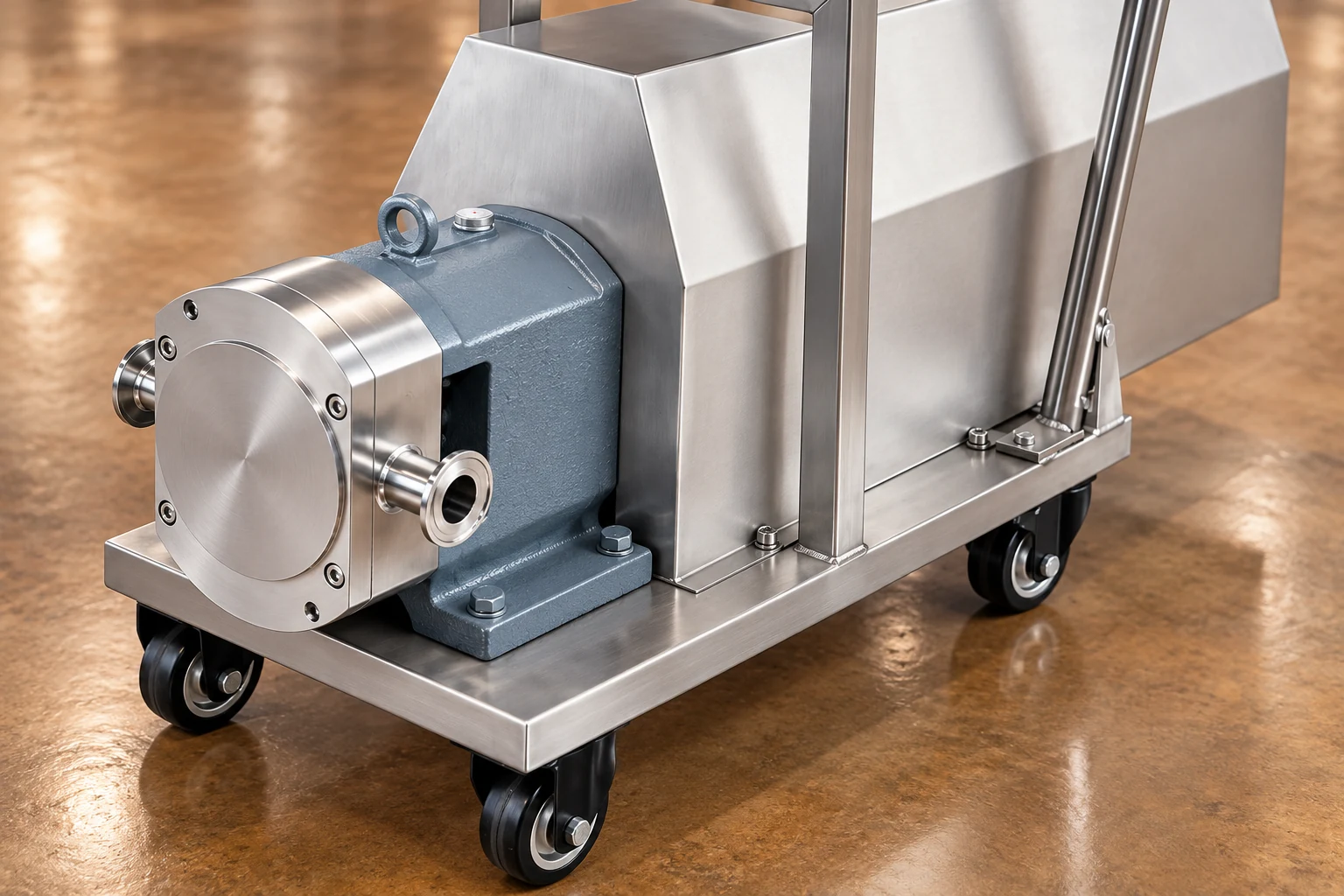
A rotary lobe pump uses synchronised rotating elements that carry fluid around the casing. A progressive cavity pump uses a rotating rotor within a matching stator to form cavities that progress through the pumping section. These descriptions explain the basic mechanisms; actual rotor geometry, stator materials, clearances and stage arrangement vary by design.
El Libro de referencia sobre sistemas de bombeo del Departamento de Energía de los Estados Unidos gives general context for positive-displacement pump types and system performance. Use it to frame the comparison, then request supplier data for the proposed assemblies. Technology names do not establish the permissible speed, pressure or particle passage of a particular model.
Ask each supplier to identify the components exposed to wear and the material compatibility assumptions. A progressive cavity stator may require a specific elastomer or other construction; a lobe pump’s rotor and casing arrangement may require a particular clearance or seal choice. Compare documented configurations rather than generic technology claims.
Compare inlet supply and fluid filling
Both designs need an inlet arrangement that suits the fluid and duty. A viscous material can resist movement through long or narrow pipework, and a low vessel level can reduce supply margin. Examine outlet geometry, suction-line dimensions, restrictions, temperature and the expected gas content. A pump selection cannot compensate indefinitely for a poorly defined feed arrangement.
Request the relevant inlet requirements for each proposed pump. Some applications may call for a feed arrangement or different pumping configuration; that should be stated in the proposal. Do not interpret a general self-priming claim as unlimited suction lift, dry-running permission or proof of performance with a yield-stress product.
El NPTEL explanation of suction head and vapour pressure provides useful background on why temperature and inlet pressure matter. Apply supplier criteria appropriate to each pump type, particularly where the product or inlet condition differs from a clean-water example.
Evaluate solids and product damage
The ability to pass particles depends on the actual geometry, dimensions and material. Specify the largest credible particles and distinguish soft inclusions from hard abrasive grit. A statement that a pump handles solids is incomplete unless it describes the permitted particle characteristics and operating conditions.
For fragile products, arrange a representative trial with agreed before-and-after measurements. Review texture, particle integrity, separation or another meaningful process outcome. Keep temperature and residence time comparable when interpreting results. A sample transferred at a favourable low speed does not establish acceptable handling at peak production demand.
For abrasive service, ask about the wear mechanism, inspection method and expected replacement components. Treat any proposed life estimate as conditional on stated duty and material characteristics. Avoid promising that one technology has lower wear in all slurries; the actual construction and operating conditions determine the result.
Use a decision table instead of universal rankings
| Punto de comparación | Rotary lobe proposal: ask for | Progressive cavity proposal: ask for |
|---|---|---|
| Flujo entregado | Performance at viscosity, speed and pressure | Performance at viscosity, speed and stage arrangement |
| Inlet duty | Filling and suction requirements for the selected geometry | Feed and inlet requirements for the selected assembly |
| Sólidos | Permitted size, hardness and passage evidence | Permitted size, hardness and stator/rotor suitability |
| Product quality | Trial results at production conditions | Trial results at the same production conditions |
| Limpieza | Accessible surfaces, drainage and verified cleaning method | Rotor/stator compatibility and verified cleaning method |
| Mantenimiento | Seal, rotor and casing service procedure | Rotor, stator and seal service procedure |
| Protección | Required pressure and operating safeguards | Required pressure, dry-running and operating safeguards |
This table deliberately requests evidence rather than declaring a winner. Use it to identify a missing selection assumption or an untested duty. A purchasing decision should explain how the proposal meets the process, not simply accumulate favourable catalogue adjectives.
Review cleaning and material compatibility
List product-contact materials and all cleaning fluids, concentrations, temperatures and exposure times. Compatibility must cover seals, rotor or stator materials and any other wetted components. A stainless casing does not establish compatibility of the complete assembly, especially if cleaning conditions differ from product-transfer conditions.
Clarify whether cleaning requires disassembly, circulation or a combination. Assess drainage, retained volumes and access to inspection points. A design described as suitable for CIP still requires an approved cleaning sequence and evidence for the actual soil and circuit. The pump is one part of the cleaning system.
For food processing, 21 CFR 117.40 on equipment and utensils is a useful regulatory reference for cleanability and maintenance. Its applicability depends on the facility and market; it does not certify either technology or validate a supplier’s proposed cleaning procedure.
Check pressure protection and operating safeguards
Both proposals require a review of blocked-discharge protection appropriate to their installed system. A positive-displacement pump can generate excessive pressure when its discharge path is obstructed. Motor control, operator instructions and relief arrangements should be reviewed as parts of the same protective strategy.
Ask about operation without adequate liquid, maximum permitted temperatures, startup conditions and the response to a stopped feed. Progressive cavity designs can be especially sensitive to rotor/stator operating conditions, but the acceptable protection and response must come from the selected equipment documentation. Lobe pump seals and components also have operating restrictions.
Include valve-position permissives, low-level detection, temperature monitoring or drive-load checks only where they serve a defined function. More instruments do not automatically produce a safer system. Identify the failure each safeguard detects, the required response and how the response will be tested during commissioning.
Compare maintenance in the actual installation
Request a service drawing showing removal space and component access. Check how the pump will be isolated, drained, cleaned and lifted. A component that is straightforward to replace on a workshop bench may be difficult to reach in a crowded skid. Include the available maintenance route in the layout review before ordering.
List consumables and critical spares, along with lead time, storage conditions and any specialist tools. Confirm whether the proposed service can be completed by the plant team or requires supplier support. Compare the consequences of a failure during a production shift, including product loss and cleaning effort, rather than spare-part price alone.
Ask how wear will be detected. Changes in flow at a given speed and pressure can provide useful evidence, but they must be interpreted with fluid condition and instrument accuracy. Agree on inspection triggers and a baseline performance record so operators can distinguish changing duty from changing equipment condition.
Evaluate total cost using the same assumptions
Compare purchase cost, drive and control scope, installation space, power at actual duty, cleaning time, consumables, maintenance labour and expected downtime. Where a number is uncertain, keep the assumption visible and evaluate more than one reasonable case. A precise-looking lifetime cost based on unsupported component life is misleading.
Consider production scheduling. A design that needs a longer transfer time may require a different batch sequence or a larger unit. A design that meets peak flow with less favourable product handling may create a quality cost. Discuss these tradeoffs with operations and quality staff, not only procurement.
The useful result is a documented choice with clear acceptance criteria. For example, the selected equipment must demonstrate the required flow at specified startup and normal conditions, preserve agreed product properties, complete the approved cleaning sequence and pass protection tests. State any conditional acceptance or remaining trial openly.
Prepare a supplier comparison and trial plan
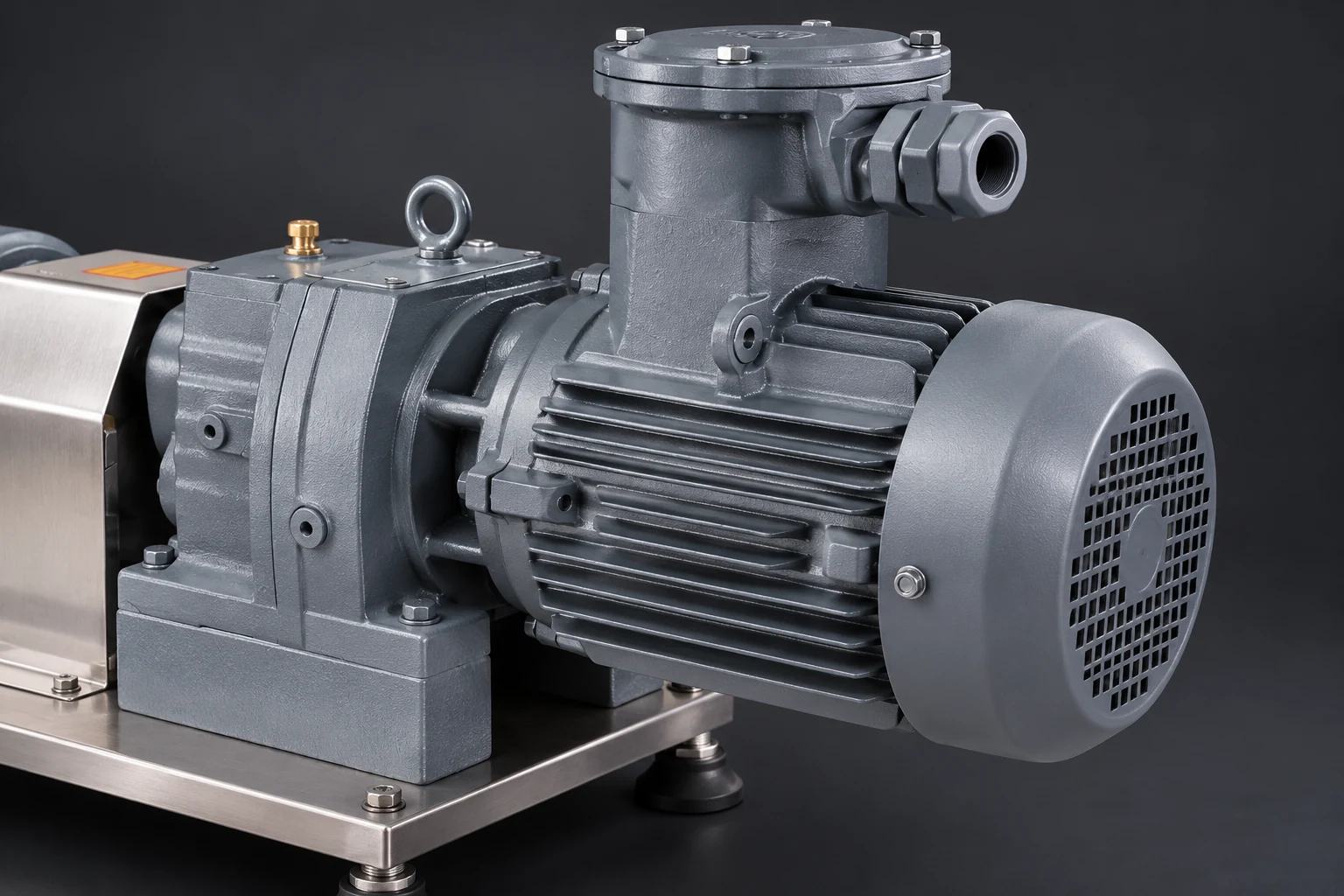
Use the website’s rotary lobe transfer pump as the starting point for a configuration discussion. The page does not establish that the company supplies a progressive cavity alternative or that either technology has been tested with your material.
For a broader enquiry, use the rotor pump selection guide, syrup tank viscosity requirements, y Guía de limpieza del tanque de mezcla de alimentos. These address fluid supply and cleaning decisions that affect both pump proposals.
Formación continua
The following independent animation explains the rotary lobe mechanism. It supports understanding one side of this comparison; it is not a comparative performance test or evidence for the pictured assembly’s limits.
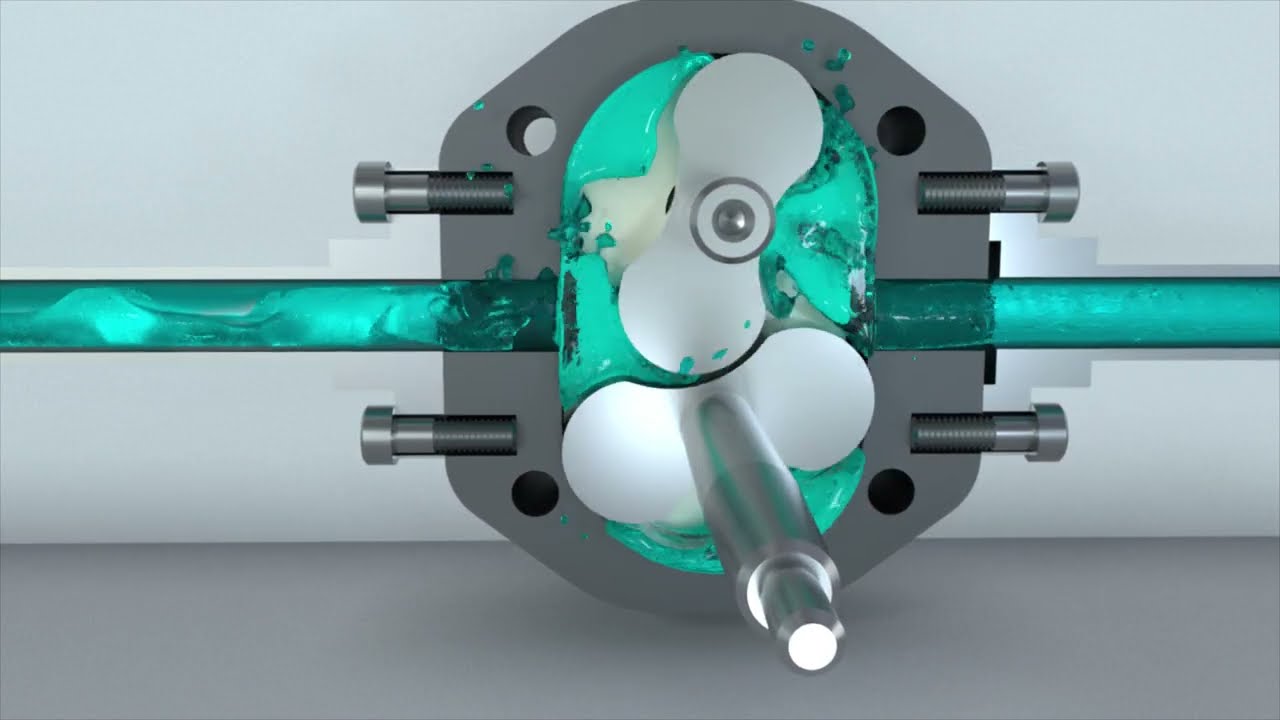
Ver la bomba de cono rotatorio: ¿Qué es? ¿Cómo funciona? por sistemas hidráulicos y neumáticos
Preguntas frecuentes
Which pump is better for very viscous product?
Choose from the actual material, inlet conditions, pressure, flow and quality requirements. Both technologies can be proposed for viscous duties, but a valid choice needs supplier data and, where uncertainty remains, a representative product trial.
Can both pumps be cleaned in place?
That depends on their construction, materials and the installed cleaning circuit. Request an approved cleaning method, drainage and access information, plus verification for the actual residue. A technology label alone does not validate cleaning.
What makes a fair supplier comparison?
Give both suppliers the same fluid properties, temperature range, flow, pressure, inlet layout, solids and acceptance criteria. Compare confirmed configurations, safeguards, maintenance requirements and measured trial results under equivalent conditions.