A transit tank carries product where pipes do not go. Pilot batches, premixes, recovered fractions, and multi-room recipes all create moments when a few hundred liters must move across the plant, wait briefly, and discharge cleanly into the next step.
The vessel looks simple, which is exactly why RFQs for it go wrong. Mobility, lid behavior, spill control, and cleaning between products decide whether a transit tank works in daily operation, and none of those appear in a bare volume-and-material request.
Part 1. Describe the Route and the Hold
Write the move down as a sequence. Where is the tank filled, which corridors and doors does it pass, where does it wait, and where does it discharge? Distances, slopes, thresholds, and elevator use all belong in the description.
State the hold honestly. A transit vessel that waits minutes needs different thinking from one that holds product overnight; temperature drift, settling, and contamination exposure grow with time. Note the longest realistic hold, not the intended one.
Count the cycles. A tank moved twice a week can accept compromises that a vessel cycling every hour cannot, so record the expected moves per day and the number of vessels the flow actually needs.
| Route input | What to record | Why it matters |
|---|---|---|
| Fill point | location and connection type | Defines inlet interface |
| Path | doors, slopes, thresholds, lifts | Drives wheels and stability |
| Hold | typical and longest wait | Frames quality risk |
| Discharge point | height, connection, method | Defines outlet interface |
| Cycles | moves per day, vessels needed | Sizes the fleet honestly |
Part 2. Pick the Volume and Weight Class
Volume follows the batch logic. Transit vessels usually carry a full recipe charge, a fixed premix, or a partial batch matched to downstream equipment; state which case applies and the exact volumes involved.
Weight limits the choice sooner than volume. A filled vessel’s mass includes product density and the tank itself, and that total must suit the moving method and the people involved. A smaller vessel moved more often is sometimes the safer answer.
Leave headspace for movement. Liquid sloshing against a lid during a move stresses seals and operators alike, so agree the working fill level and the freeboard rather than quoting the brim-full number.
Part 3. Match Mobility to Floors and Handling
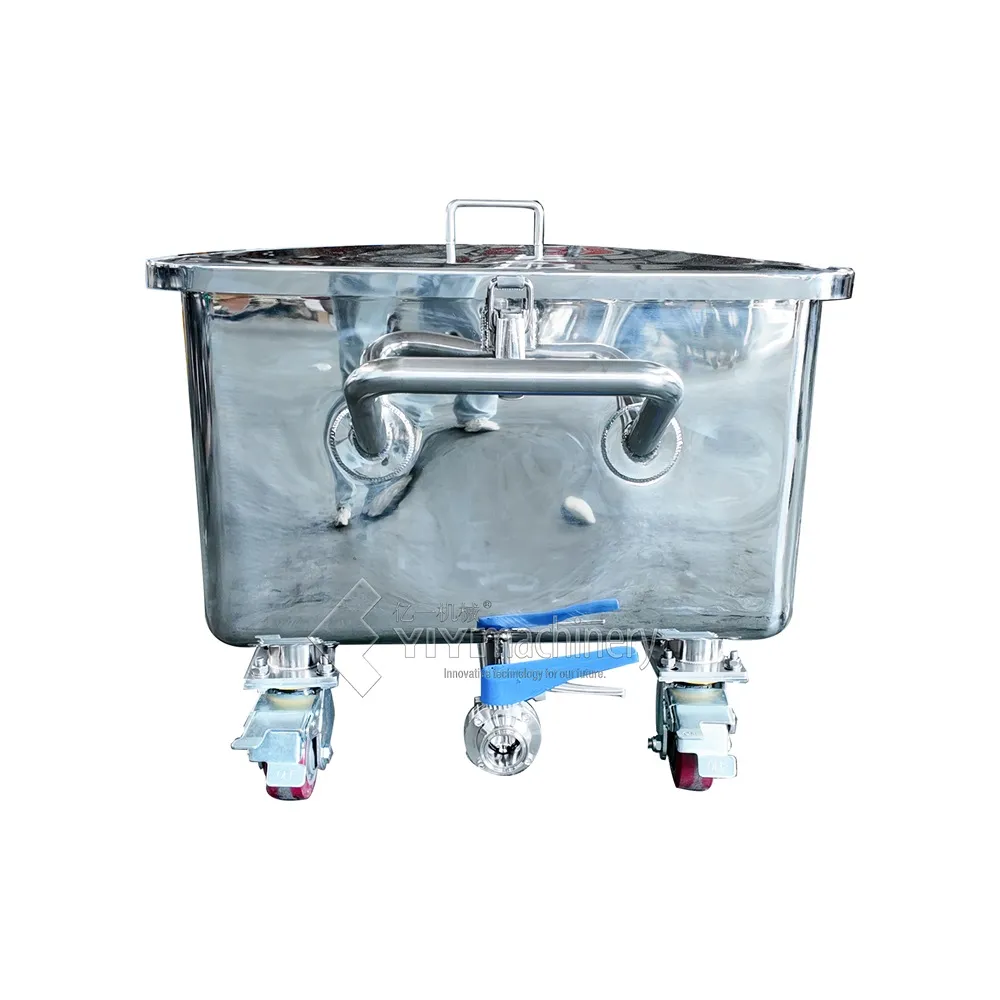
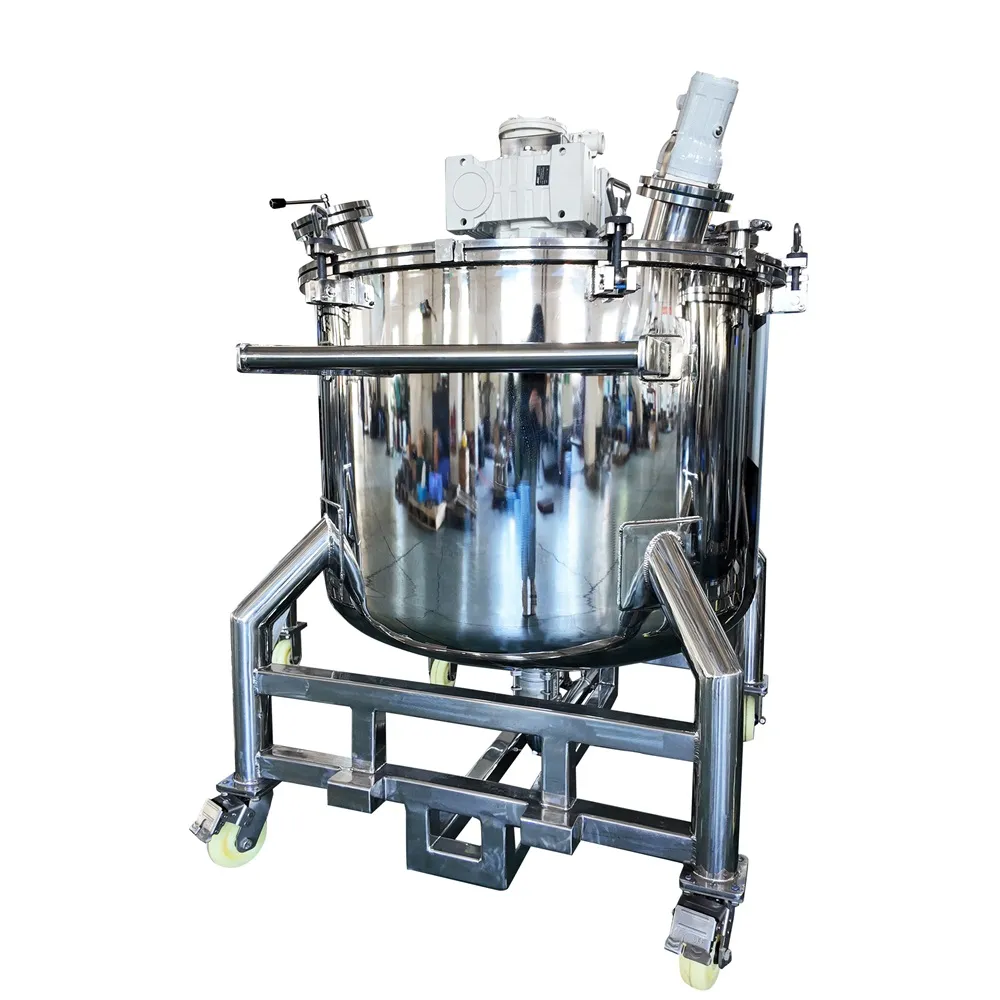
Movement method comes first. Manual push on castors, pallet truck, forklift, and crane lifting each impose different frames, wheel choices, and lifting features, and general material handling practice reminds buyers that the site’s own handling rules govern the procedure.
Describe the floor as it is. Wet epoxy, tiles with joints, drains, ramps, and door thresholds punish small hard wheels and reward larger diameters and brakes; state the worst section of the route, not the average.
Stability is a geometry question. Tall narrow vessels on small wheelbases tip more easily during turns, so give the fabricator the door widths and turning spaces that constrain footprint and height, and ask for a stable proportion within them.
Part 4. Control Lids, Seals, and Spills
Decide what the lid must do. Options run from a loose dust cover to a clamped, gasketed lid that seals during movement; the product’s sensitivity, the route’s traffic, and splash risk set the requirement.
Venting still matters on a mobile vessel. A sealed lid over a warm product can build pressure or pull vacuum as temperatures change, so state whether the lid needs a vent or the procedure keeps it cracked open during holds.
Plan for the small spill. Drip trays, splash-reduced fill points, and a defined response for the route keep a minor slosh from becoming a floor hazard; the vessel supplier provides the hardware, the site provides the procedure.
Part 5. Plan Cleaning and Changeover
Shared transit vessels live or die by changeover. State how the tank is cleaned (manual wash, wash station, or connection to a clean-in-place circuit), where that happens, and how long it may take between products.
Design follows the cleaning method. Wash-station duty wants self-draining geometry, radiused corners, and quick-release fittings; manual cleaning wants access openings a person can actually reach through. Say which method applies so the details are quoted.
Confirm drying and inspection expectations. Some products tolerate a damp vessel; others need dry, inspected equipment before the next fill. Write the acceptance step into the workflow so the fleet size accounts for cleaning time.
Part 6. Specify Materials, Identification, and Connections
Materials follow the product list. A transit fleet often serves several liquids, so provide the whole list with temperatures and cleaning chemistry, and ask for a material and gasket basis that covers the worst case rather than the average.
Identification prevents expensive mix-ups. Label frames, tag holders, or color coding tell operators what is inside and what the vessel last carried; choose a method that survives washing. Container alternatives such as intermediate bulk containers solve some duties, but reusable stainless vessels usually win where hygiene and repeated cleaning dominate.
Define both end interfaces. The fill point and discharge point each need a stated connection type, height, and method (gravity, pump, or pressure), and any weighing or docking interface belongs in the same schedule. Fixed-vessel reasoning in the ingredient tank sizing guide pairs well with this mobile view.
| Interface | What to state | Why it matters |
|---|---|---|
| Fill point | connection type and height | prevents adapter improvisation |
| Discharge point | method and clearance | suits viscosity and equipment |
| Identification | label frames, color coding | survives washing, prevents mix-ups |
| Docking or weighing | scale or station interface | quoted as fabrication scope |
Part 7. Compare Mobile Vessels and Prepare the RFQ
Published mobile equipment anchors the size classes. The 140L mobile square tank shows a compact manual-move class, the 400L transfer vessel a larger wheeled class, and the Storage Tank category covers fixed alternatives. Product pages give configuration context; they do not rate a vessel for your route or product.
Send one identical package to each bidder: product list and properties, batch volumes, route description with floors and doors, moving method, hold time, lid and vent expectations, spill-control hardware, cleaning method and location, identification, materials, and both end interfaces.
Ask for stated capacities, weights, and exclusions, and compare fleet quantity as well as vessel price. When the package is ready, describe your transfer route for a configuration discussion and let bidders respond to the same move. A broader overview of vessel roles sits in what are the different uses of storage tanks.
FAQs
What is a transit tank?
It is a mobile vessel that carries a batch or partial batch between process steps, holds it briefly, and discharges into the next operation. Route, hold time, and cleaning define the duty.
How is a transit tank different from an IBC?
Intermediate bulk containers are standardized logistics containers, while transit tanks are process vessels built for repeated in-plant cycles, hygiene, and specific interfaces. Cleaning needs usually decide between them.
What size should a transit tank be?
Match the batch logic: a full recipe charge, a fixed premix, or a partial batch. Check the filled weight against the moving method before settling on volume.
How do transit tanks move around a plant?
Common methods are manual push on castors, pallet truck, forklift, and crane lifting. The route’s floors, thresholds, and door widths shape the frame and wheel selection.
How are transit tanks cleaned between products?
Options range from manual washing to wash stations and clean-in-place connections. State the method and location so geometry, drainage, and fittings support it.
Do transit tanks need sealed lids?
Sensitive products and busy routes favor clamped, gasketed lids; some duties accept dust covers. Consider venting behavior whenever the lid seals during holds.
What should a transit tank RFQ include?
Include the product list, batch volumes, route and floor description, moving method, hold time, lid and vent expectations, spill control, cleaning method, identification, materials, and both end interfaces.