Stainless steel tank passivation is a controlled chemical treatment used after fabrication or intrusive maintenance to remove free iron and other surface contamination so the alloy can form a clean, chromium-rich passive film. It is not a coating, a polishing shortcut, or a guarantee that the selected stainless grade will resist the stored liquid. For a buyer, the important questions are when treatment is required, which specification and chemistry govern the work, how every wetted surface will be reached, and what objective evidence will be included in the turnover package. This guide provides an RFQ and acceptance framework; the approved procedure must come from qualified materials and safety personnel.
What passivation can and cannot do
Stainless steel resists corrosion because chromium in the alloy reacts with oxygen to create a very thin protective oxide film. Fabrication can leave embedded carbon-steel particles, heat tint, weld scale, shop dirt, oil, or residues that interfere with that surface. Cleaning and passivation remove contaminants and encourage the passive condition to re-establish. Passivation does not remove deep weld defects, restore metal lost to corrosion, correct rough fabrication, or convert an unsuitable grade into a compatible one. A 304 tank exposed to an aggressive chloride solution does not become 316 simply because it was passivated.
The British Stainless Steel Association explains the distinction between descaling, pickling, and passivation in its technical overview of stainless steel passivation. Buyers should keep those operations separate in the specification. Pickling is a more aggressive process intended to remove scale and heat tint; passivation is normally performed on a surface that is already clean. Mechanical finishing can also spread contamination if carbon-steel tools or dirty abrasives are used. The treatment plan therefore begins with fabrication controls, not with an acid bath at the end.
When a tank project should specify passivation
New stainless tanks commonly need a defined post-fabrication surface treatment when the service is hygienic, high-purity, corrosion-sensitive, or subject to a customer quality standard. It is especially relevant after welding, grinding, machining, carbon-steel shop exposure, field modification, or repair. Existing tanks may need re-evaluation after a new nozzle is added, a weld is repaired, internal surfaces are mechanically cleaned, or testing reveals free iron. Routine cleaning alone does not necessarily trigger full repassivation, but a documented risk review should decide.
Do not write “passivate as required” without defining who decides and against which acceptance criteria. State the alloy, surface finish, fabrication condition, intended product, cleaning chemistry, accessible zones, and applicable standard. ASTM A967/A967M is often referenced for chemical passivation treatments, while ASTM A380/A380M addresses cleaning, descaling, and passivation practices. Standards are copyrighted and revised; the purchase order should identify the required edition and the project engineer should verify its applicability rather than relying on a blog summary.
Start with cleaning and contamination control
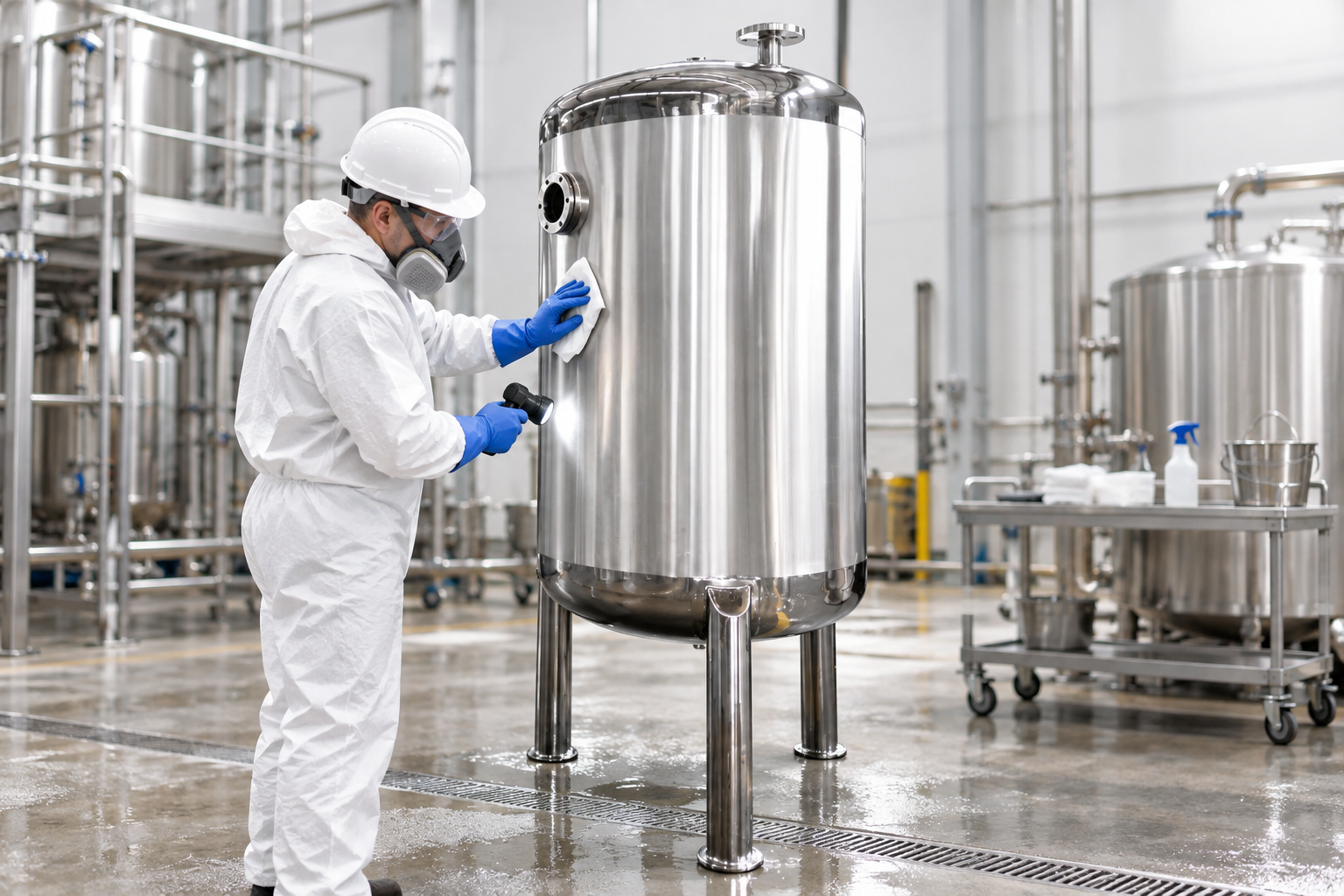
Oil, grease, marker ink, adhesive, polishing compound, shop dust, and process residues can shield the metal from the passivating solution. The procedure should therefore define alkaline or detergent cleaning, water quality, contact method, temperature, rinse endpoints, and inspection before the chemical step. Any cleaner must be compatible with the alloy, welds, gaskets, seals, instruments, and wastewater system. Cleaning agents containing problematic chlorides or other contaminants should not be improvised.
Control tools and handling throughout fabrication. Dedicated stainless brushes, clean abrasives, protected work surfaces, and separation from carbon-steel grinding reduce the contamination burden. If internal surfaces have a specified roughness, treatment must not damage that finish. The existing hygienic tank surface-finish guide explains why an Ra value and the method used to measure it should be agreed separately. A bright surface may still contain free iron, while a correctly passivated surface may not look mirror polished.
Select chemistry from the governing procedure
Nitric-acid and citric-acid treatments are both used in industry, with multiple concentration, temperature, and time combinations. The correct choice depends on the alloy, contamination, specified standard, tank geometry, facilities, safety controls, rinse capability, and waste handling. It is unsafe to copy a chemical recipe from the internet. The processor should issue a written procedure with chemical identity and concentration controls, bath or circulation temperature, exposure time, agitation or circulation method, coverage, rinse sequence, neutralization where applicable, and acceptance tests.
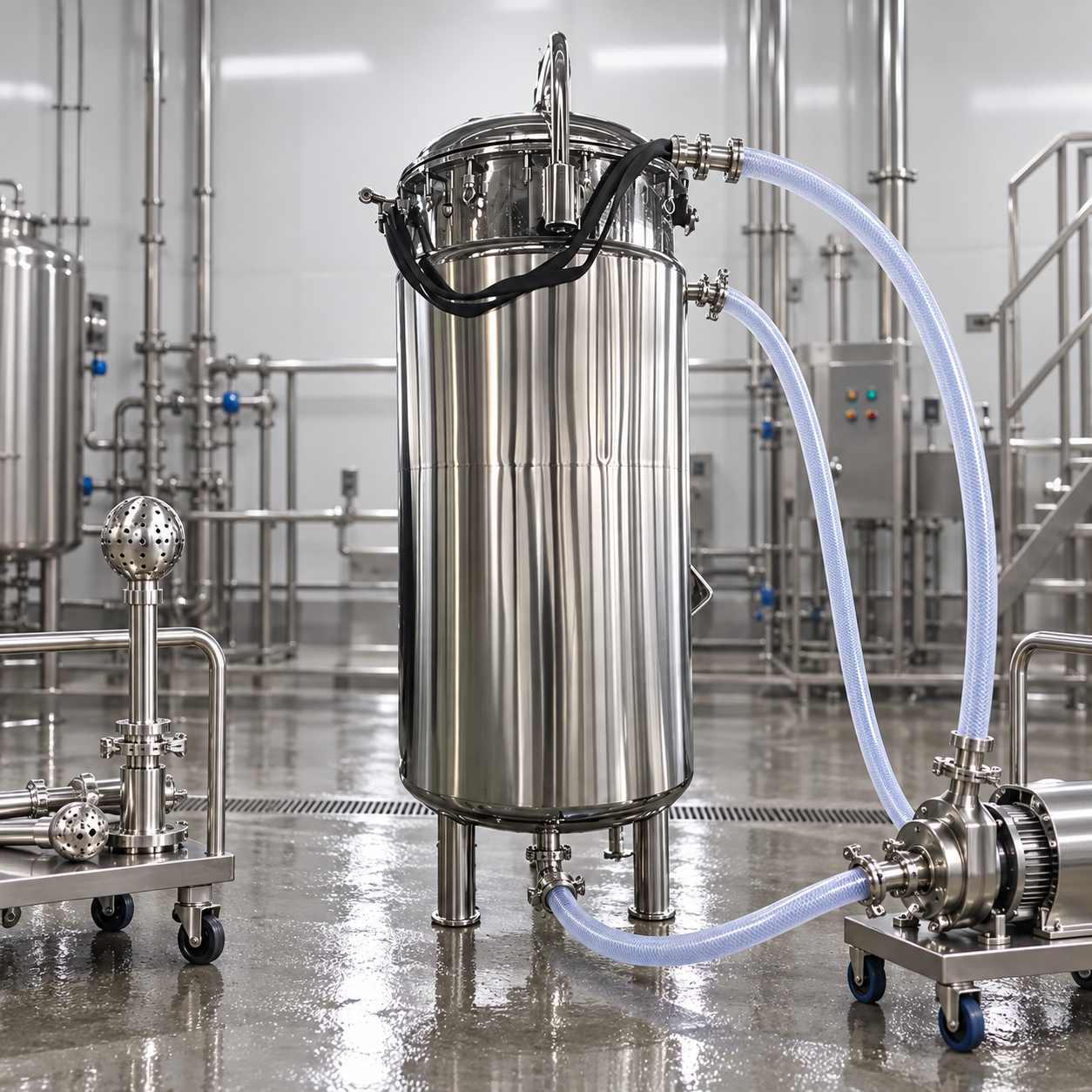
Carpenter Technology’s overview of passivating stainless steel emphasizes cleaning first and discusses how treatment selection varies with stainless type and condition. For a tank, scale adds practical questions: Can solution be circulated through spray devices and low points? Are shadowed areas behind internals reached? Are elastomers installed or removed? How is the tank safely drained, rinsed, ventilated, and sampled? The supplier should show that the complete wetted boundary—not only a convenient coupon—receives the specified treatment.
Protect people, the site, and the product path
Passivation chemicals can be corrosive and may create hazardous fumes or reactions. The owner and contractor must plan chemical receiving, dilution, transfer, ventilation, personal protective equipment, spill containment, emergency washing, wastewater characterization, and lawful disposal. Never mix chemicals without a validated procedure. Confined-space rules may apply to tank entry, and many treatments should be performed by circulation or spray systems that avoid entry. The procedure must define lockout, isolation, atmospheric monitoring, and who is authorized to release the equipment.
For product-contact equipment, rinse quality matters as much as the treatment. Specify water quality, rinse volume or duration, conductivity or other endpoint where justified, and protection against recontamination after drying. Temporary hoses, pumps, spray devices, and sample containers should be clean and compatible. Open connections should be capped after acceptance. If the tank will be stored before installation, define preservation and packaging so that a successfully treated surface is not contaminated in transit.
Specify verification instead of accepting appearance
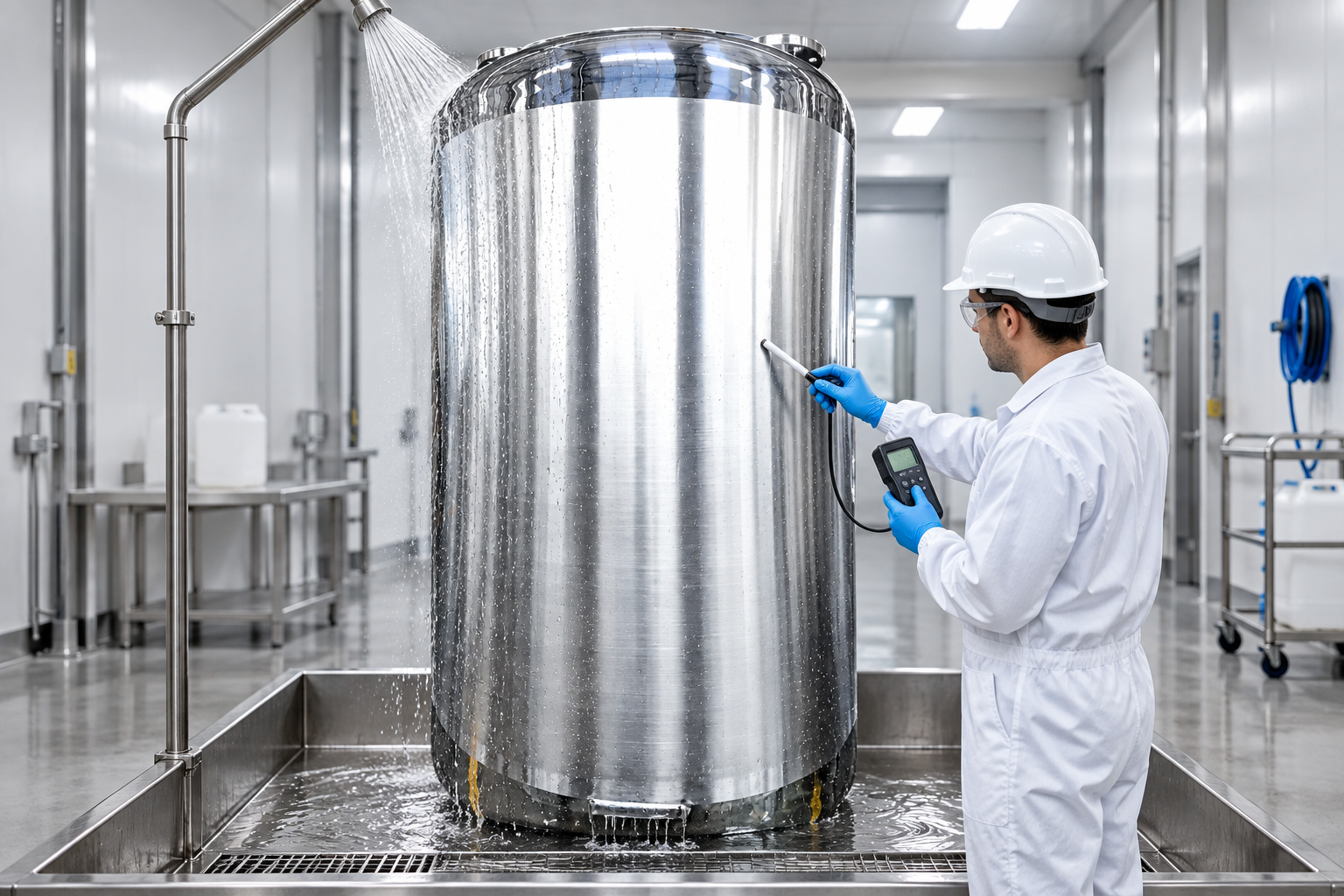
Visual inspection should confirm cleanliness, absence of residues, and acceptable fabrication condition, but appearance alone does not prove removal of free iron. The project specification may call for recognized tests such as water-break evaluation, high-humidity exposure, copper sulfate testing, ferroxyl testing, or other methods allowed by the governing standard. Each method has limits and may be unsuitable for a particular alloy, finish, or service. The qualified procedure should define test locations, sample size, acceptance criteria, retest rules, and restoration after testing.
Use a location map for large tanks. Include weld zones, ground areas, bottom head, low-point outlet, manway, nozzles, and representative shell areas. Witnessing should occur after the final rinse and before the interior is re-exposed to uncontrolled work. If a test result fails, document the affected area, investigation, corrective treatment, and repeat result. A certificate that only states “passivated” without identifying the tank, procedure, dates, chemistry, and verification results is weak evidence.
Passivation RFQ and inspection table
| Item | Buyer should define | Evidence to receive |
|---|---|---|
| Scope | Tank ID, alloy, wetted surfaces, internals, field work | Approved marked-up drawing and responsibility list |
| Preparation | Cleaning, heat-tint removal, finish protection | Cleaning record and pre-treatment inspection |
| Treatment | Standard, chemistry family, controlled variables | Approved procedure and batch/process log |
| Rinsing | Water quality, endpoint, drainage and drying | Rinse measurements and final condition record |
| Verification | Method, locations, acceptance and retest rules | Signed results with tank serial number |
| Preservation | Closure, packaging, storage and installation controls | Release note and preservation checklist |
Coordinate passivation with FAT and site work
Sequence matters. Hydrostatic testing after passivation may introduce water quality or drying concerns; welding after passivation creates a new untreated area; installing incompatible temporary plugs may reintroduce iron. Build a fabrication and test sequence that identifies the last contaminating operation and the final treatment boundary. The mixing tank FAT checklist shows how to turn inspections into hold points and records. A storage-tank project should use the same discipline even when the exact tests differ.
The supplier’s factory scope and the installer’s field scope should meet cleanly. If pipe spools or instruments are added later, decide whether they are treated separately or included in a site circulation. Protect the tank from carbon-steel scaffolding dust and dirty lifting gear. Verify drains and low points before mobilizing chemicals. A dry run with water can reveal dead legs, trapped air, inaccessible surfaces, and inadequate return flow before chemical exposure begins.
Common specification mistakes
The first mistake is using “pickled and passivated” as a cosmetic phrase without identifying surfaces or results. The second is assuming one chemistry suits all alloys and finishes. The third is treating only the visible exterior while ignoring the product-contact interior, nozzles, and weld roots. Other frequent problems include passivating before final welding, failing to control rinse water, relying on a generic certificate, confusing electropolishing with passivation, and asking the tank fabricator to guarantee corrosion resistance without providing the stored fluid and cleaning envelope.
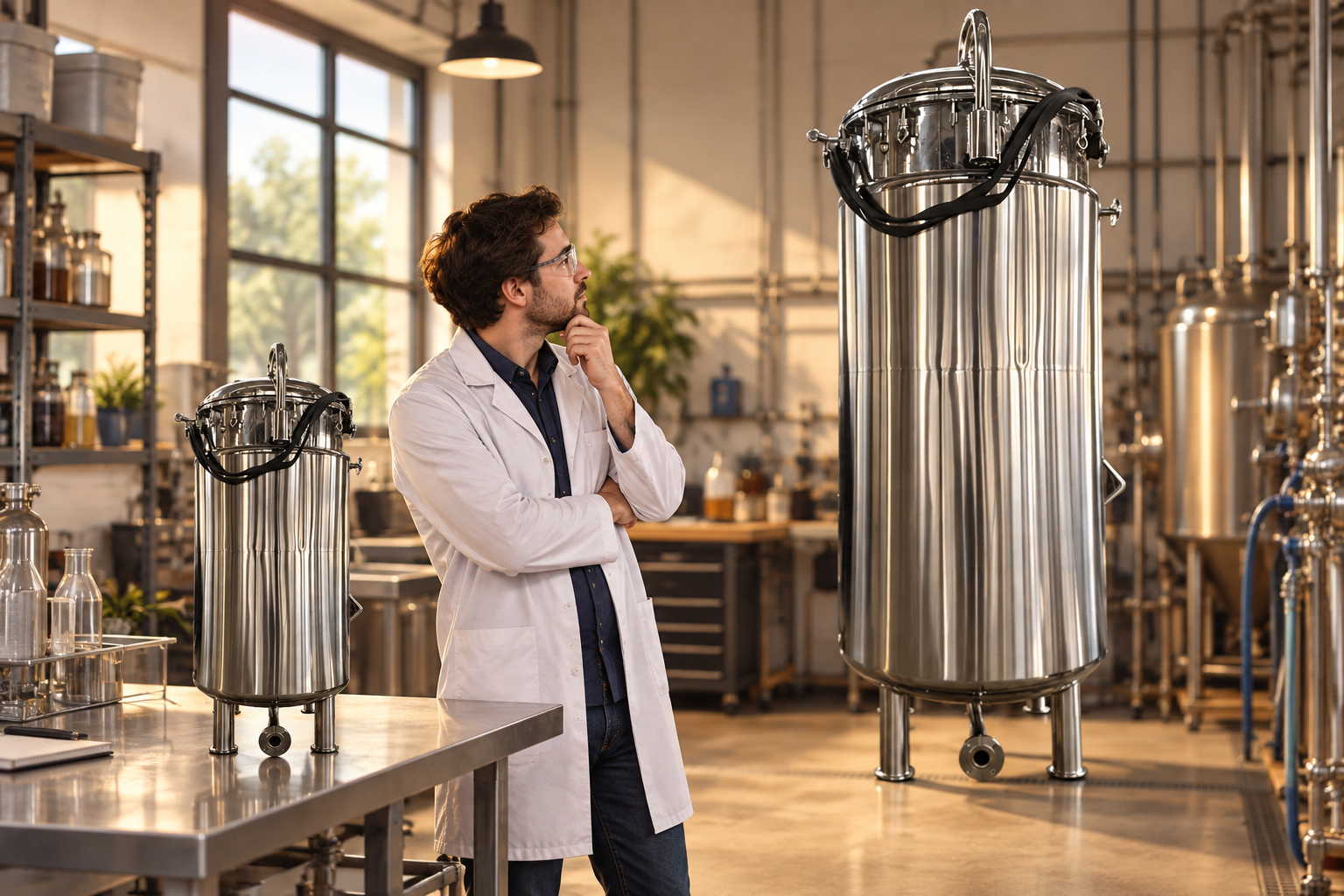
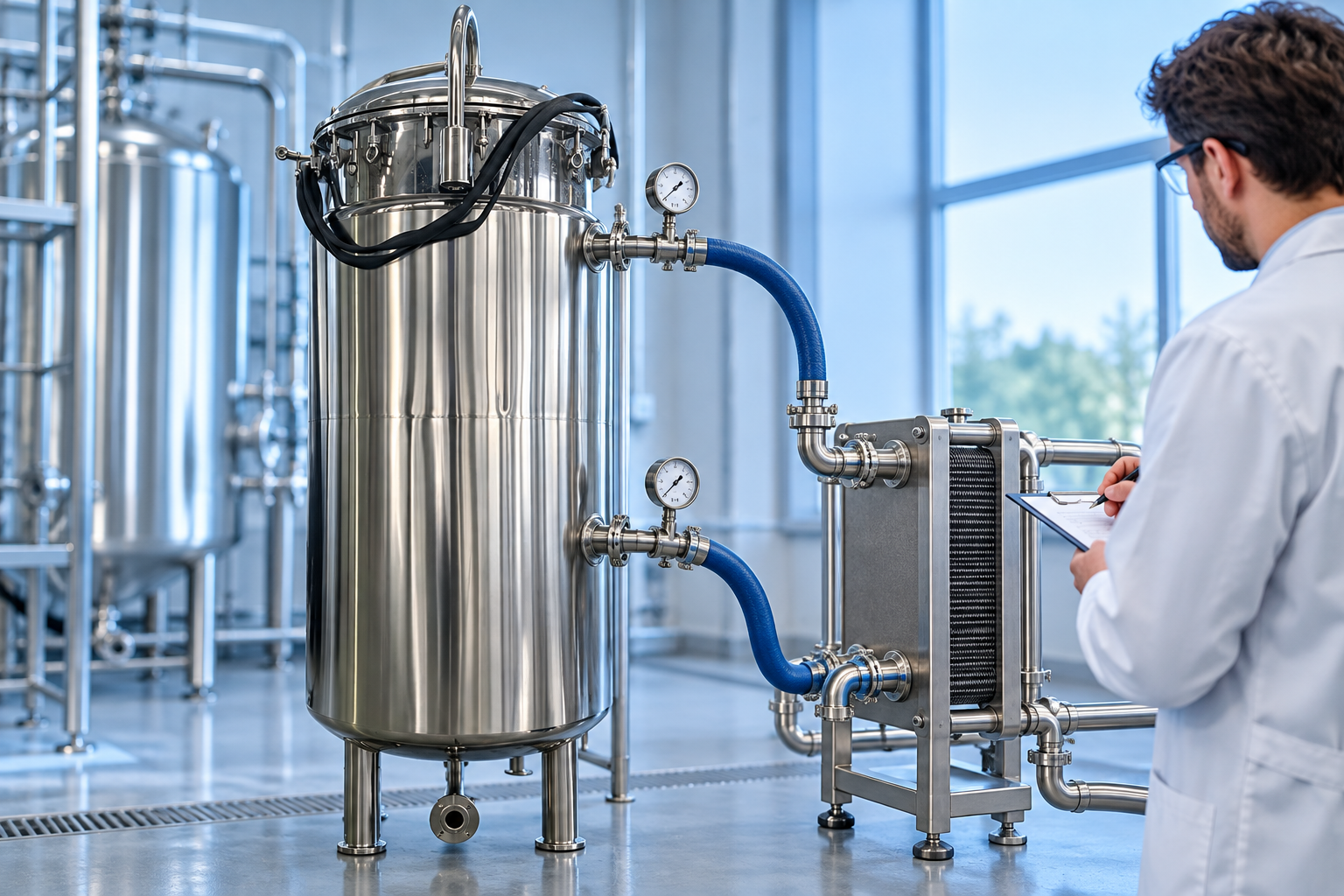
For a 1,000 L stainless receiving tank or a larger vessel from the storage tank range, the correct treatment depends on the ordered configuration and service. The images on this page demonstrate a relevant tank form, not a claim that every standard product includes the illustrated procedure. Put the exact surface-treatment and documentation requirements in the purchase specification and supplier drawing review.
Educational video
The following educational video explains the principle of stainless steel passivation. Use it to understand the concept, not as a substitute for the approved project procedure or chemical safety plan.
View “What is Passivation?” on YouTube. Confirm technical relevance within your company’s approved training system.
Frequently asked questions
Is passivation the same as pickling?
No. Pickling removes oxide scale and heat tint through a more aggressive treatment. Passivation removes free iron and supports formation of the passive surface on already clean stainless steel. A project may need one or both under controlled procedures.
Must every stainless tank be passivated?
Not automatically. The decision depends on fabrication history, contamination risk, service, customer standards, and acceptance requirements. The buyer should make the decision explicitly with qualified materials input.
Can a visual inspection prove successful passivation?
No. Visual inspection is useful for cleanliness and defects, but it does not prove that free iron has been removed. Specify an appropriate verification method and documented locations.