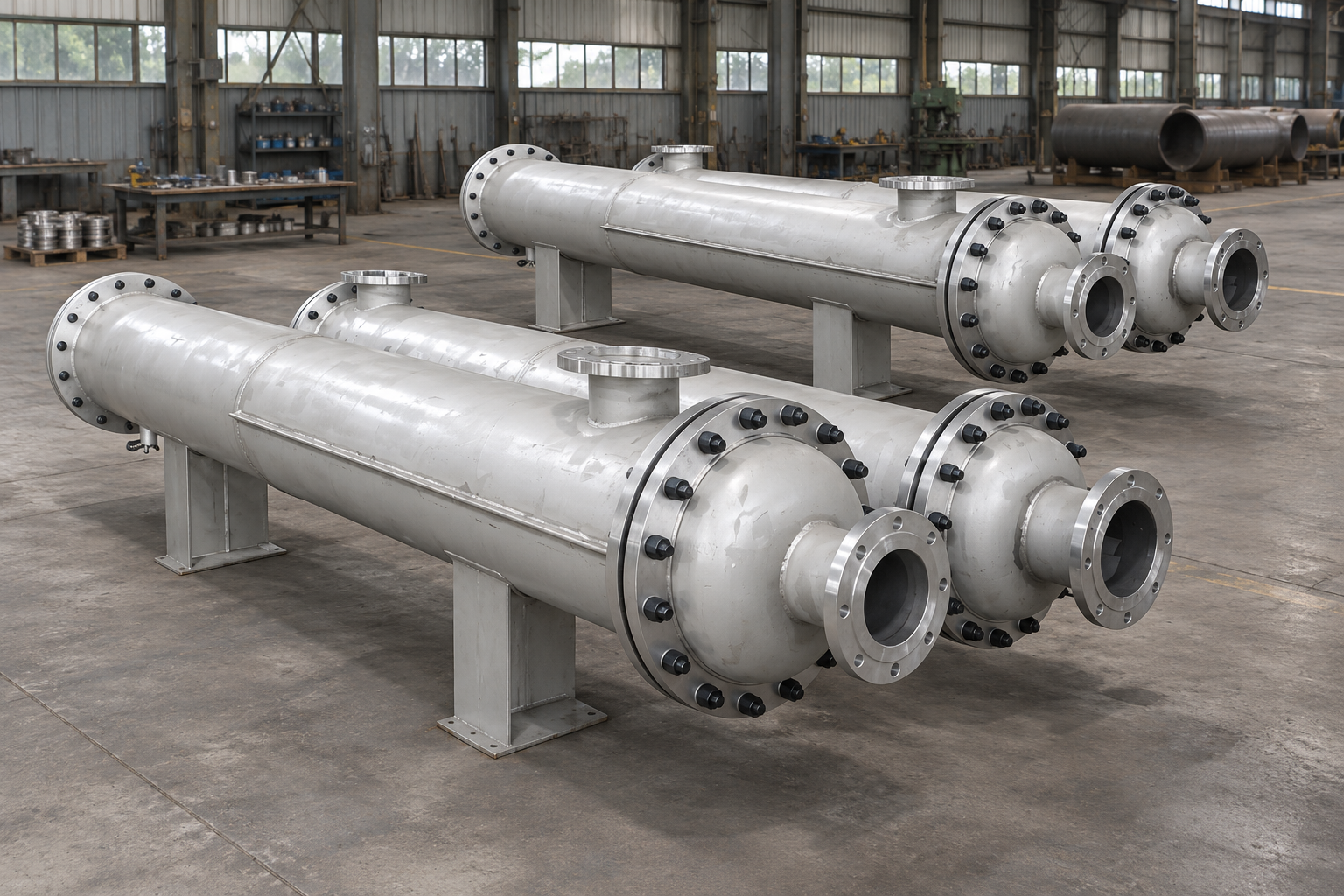
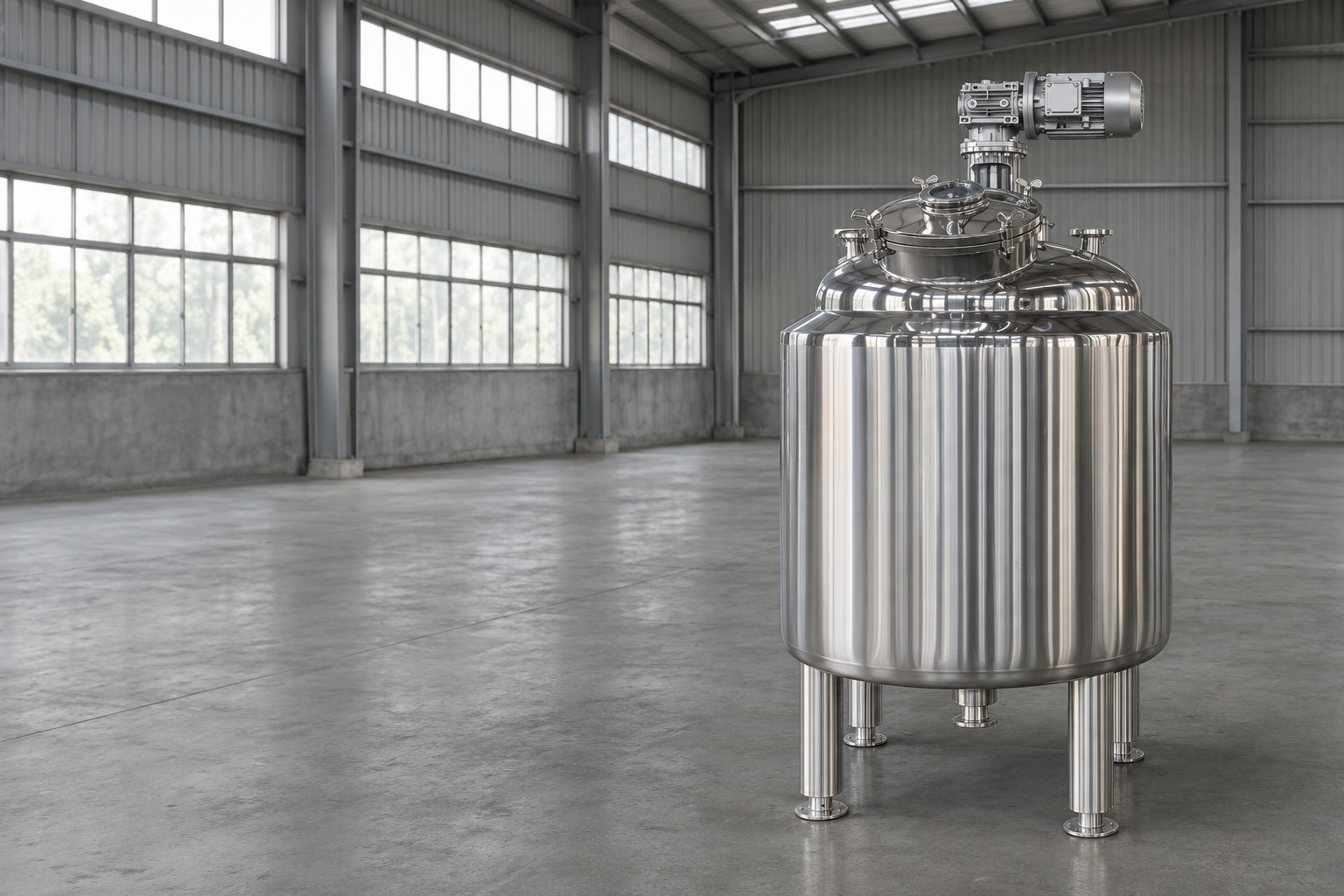
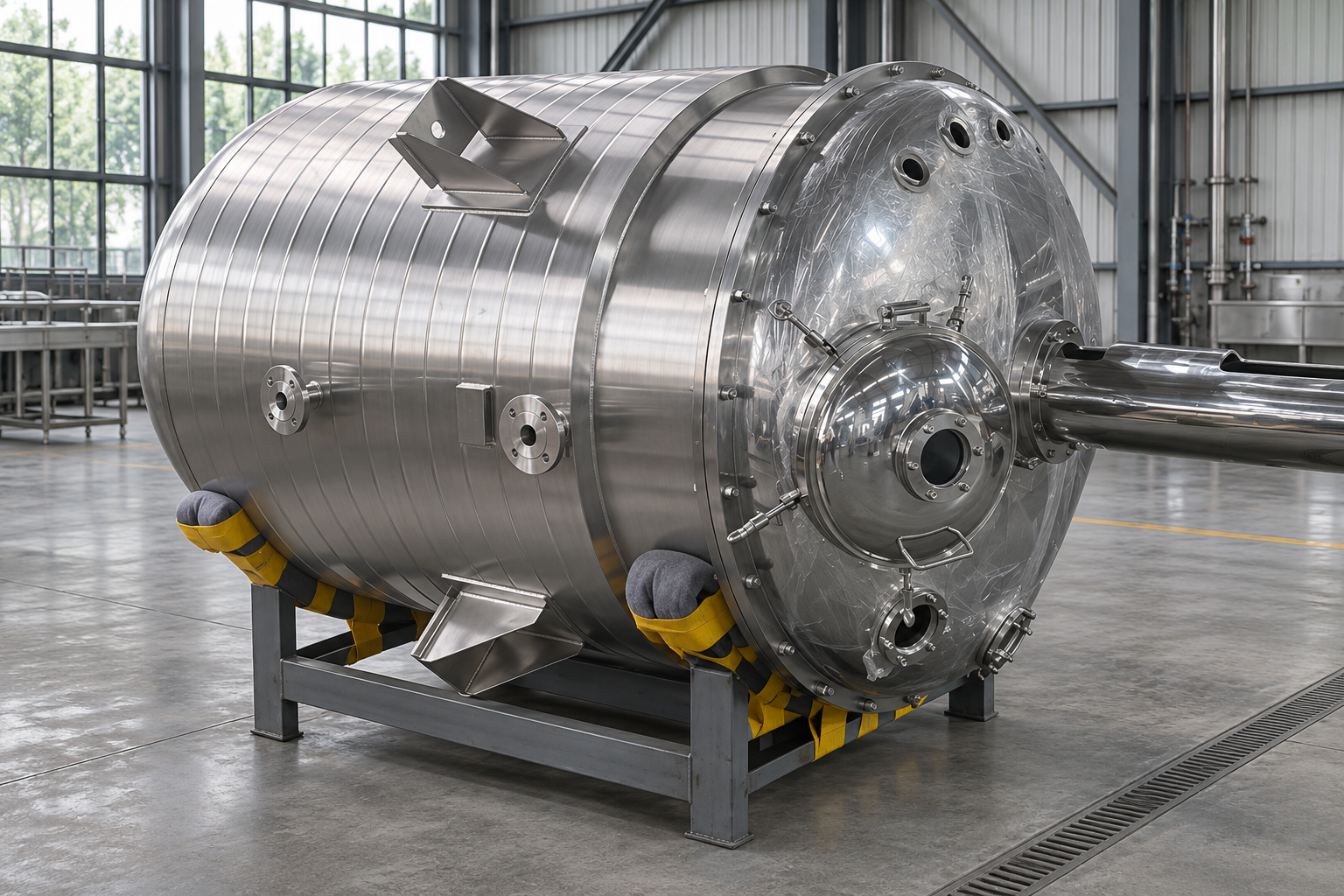
A mixing tank dead leg assessment identifies connections where product, rinse water, or cleaning solution may remain without the exchange achieved in the main vessel. Start with an installed connection list, trace each branch to its actual closure or sealing surface, and compare its geometry and cleaning sequence with the hygienic criteria adopted for the project. A short branch is not automatically cleanable, and a clean-looking tank does not establish that every instrument pocket or capped nozzle has been reached. The useful outcome is a ranked branch register with evidence and an assigned action for every unresolved location.
Separate a branch problem from a mixing problem
Poor bulk circulation and a stagnant branch can occur in the same tank, but they need different investigations. Changing agitator speed may improve the main batch while doing little for an isolated instrument connection. Likewise, shortening a branch will not correct an impeller that is unsuitable for the process. Keep the equipment boundary precise: this guide concerns nozzle branches, valve cavities, sample connections, and instrument installations associated with a tank.
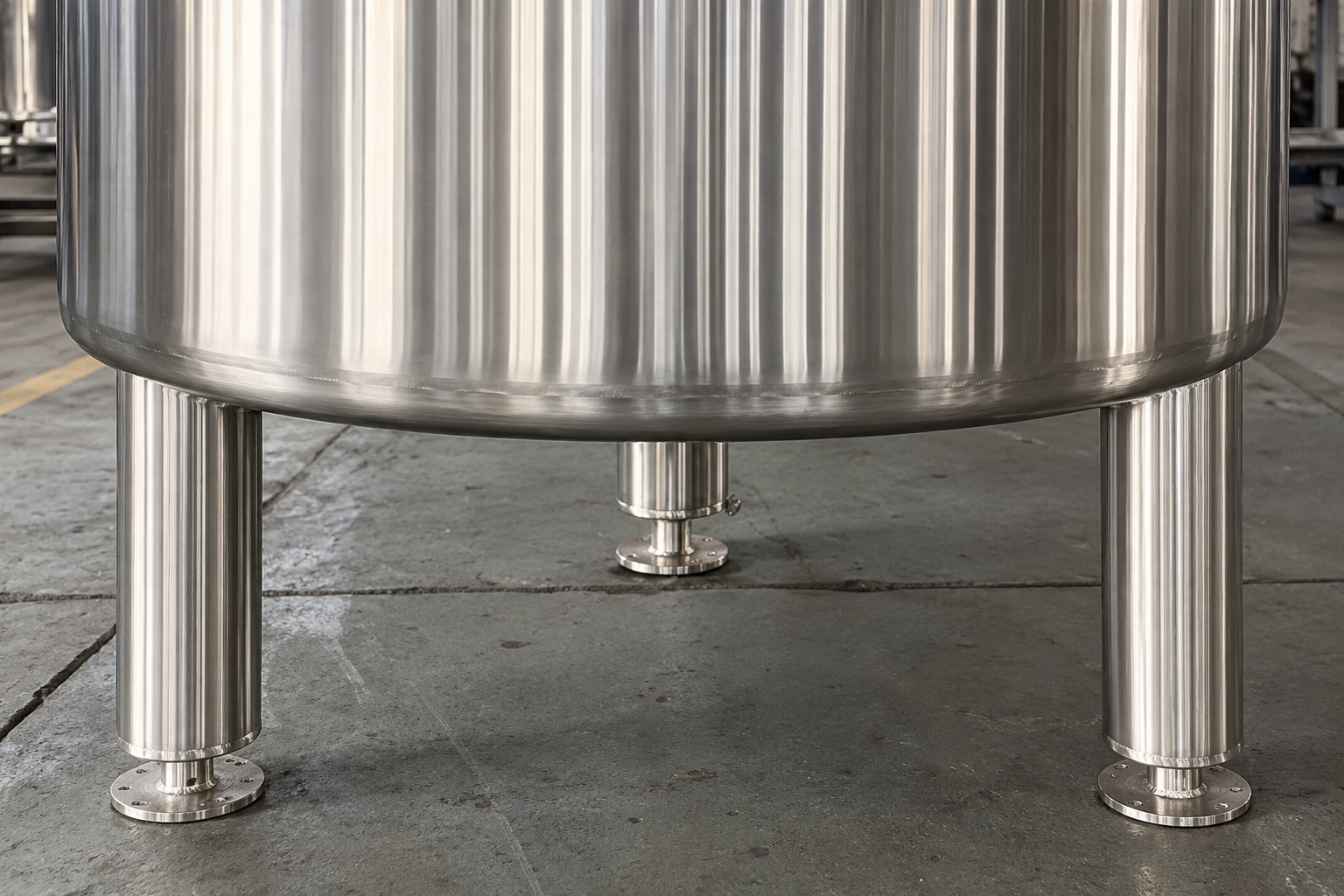
Begin with the stainless mixing tank product context, then obtain the actual nozzle schedule and installed drawings. The website photograph identifies the vessel family; it does not show internal sealing planes or establish hygienic compliance. For the broader cleaning framework, see the food mixing tank cleaning guide. Use this branch review to add specific locations to that framework rather than repeat the entire cleaning procedure.
Build the register from installed connections
Walk the connection list in a consistent direction around the vessel, using permanent nozzle numbers where available. Include normal production connections and rarely used ports. A capped spare, pressure connection, dosing branch, and temporary hose adapter can matter even when the production drawing gives each little attention. Record what is actually installed after commissioning, including extensions added to improve operator access.
For each entry, identify the main flow boundary, branch bore, closure point, orientation, and normal operating state. Note whether the branch is flushed during production, specifically opened during cleaning, or normally closed. Record the valve or instrument model and the drawing revision used to interpret its internal geometry. If the sealing surface cannot be located from the available drawing, leave the dimension unresolved; an external photograph cannot supply that measurement reliably.
Define dimensions before calculating a ratio
Some hygienic design reviews use a branch length-to-diameter relationship. The important first step is agreeing what the length and diameter mean under the selected specification. A distance measured from the outside wall to a valve handle is not a meaningful substitute for the distance to the internal seal. An adapter with a reduced bore can also change which diameter is relevant.
Do not apply a universal numerical limit copied from a different industry. The FORCE Technology discussion of hygienic dead legs explains why definitions and design frameworks matter. Identify the applicable edition and contractual interpretation with the hygienic design reviewer. Put the chosen dimension definition beside the sketch so the next person can reproduce the assessment. Where multiple internal sections exist, include a section view instead of compressing the entire assembly into one convenient number.
Review orientation and the cleaning sequence together
A downward branch can retain material even when its dimensions appear favorable. An upward branch can hold gas and interfere with liquid contact. A horizontal branch can contain pockets created by reducers, gaskets, or installation slope. These observations are reasons to investigate the actual sequence, not proof that a particular arrangement fails.
Ask when the branch communicates with the cleaning circuit. A valve that remains closed throughout cleaning may isolate its downstream face; a valve that cycles may expose additional surfaces, but the cycle needs a defined place in the procedure. Record the source of the cleaning flow, the return path, the expected drainage route, and whether the branch is cleaned in place or removed for a separate method. Avoid assuming that a spray device washes through every connected branch simply because it reaches the vessel wall.
| Location | Evidence to obtain | Question for review |
|---|---|---|
| Capped spare nozzle | Section drawing, internal bore and closure plane | Does cleaning liquid exchange at the closed end? |
| Instrument connection | Sensor insertion drawing and seal location | Is a recess hidden behind the sensing element? |
| Sample valve | Valve cleaning instructions and operating sequence | Which surfaces are exposed during each cleaning step? |
| Dosing branch | Installed valve arrangement and drainage direction | Can residual dose solution remain between isolations? |
| Temporary adapter | As-installed sketch and approved cleaning method | Did the modification introduce a new pocket? |
This table is an evidence checklist, not a specification or an acceptance standard. In US food applications, the FDA food manufacturing framework provides the broader cleanability and sanitation context. Project-specific acceptance still needs the correct equipment and process requirements.
Rank locations by consequence and uncertainty
Prioritize locations where product contact, difficult removal, long holding time, and limited verification occur together. A rarely used ingredient branch carrying a sticky concentrate may deserve attention before an easily removed connection with a documented cleaning method. Consider the product family, allergen or contamination concern, operating temperature, and whether residue can enter a subsequent batch.
Keep consequence separate from evidence confidence. A branch can have a serious possible consequence while its geometry remains uncertain. Mark it for drawing verification rather than assigning a pass or fail from a guess. Conversely, a well-documented long branch may have an approved separate cleaning method. Its acceptance depends on that method and the application, not solely on a visual impression or a single ratio.
Choose verification that answers the branch question
A general tank inspection is insufficient if it never examines the branch of concern. Decide whether the question is liquid contact, residue removal, drainage, or microbiological control. Different evidence may be needed for each. A coverage study can show where a test liquid contacted a surface under defined conditions, but it does not automatically establish removal of the actual product residue.
Use the riboflavin coverage guide when planning a coverage investigation, and the allergen cleaning verification guide when the decision concerns product carryover. Define the branch-specific sampling or observation location before the test. Explain access limits, including surfaces that cannot be viewed without disassembly. Do not convert an inaccessible location into a pass merely because the vessel outlet sample meets a general rinse endpoint.
Compare corrective options without promising an automatic fix
Possible options include eliminating an unnecessary branch, changing the instrument installation, relocating an isolation point, adding an approved cleaning step, or using a removable assembly with a controlled separate cleaning process. The choice should follow the identified mechanism and the site’s change process. Shortening a connection may help geometry while creating maintenance access problems; relocating a sensor may change measurement performance.
Request a revised section drawing showing the affected surfaces and seals. Ask the supplier to state the cleaning method assumed by the design and the access required to service it. Review pressure containment, material compatibility, instrument function, and cleaning requirements together. No branch modification should be improvised on operating equipment. Where inspection requires opening a vessel, use the site’s isolation and access procedures before any work begins.
Prepare a useful procurement handoff
Send a marked nozzle drawing, the branch register, process description, cleaning sequence, and the specific unresolved decisions. Include the existing valve and sensor models, relevant connection dimensions, and the required document format. State whether the inquiry concerns a new tank, a retrofit, or verification of the existing installation. This prevents a supplier from answering a broad “sanitary tank” inquiry when the actual need is one instrument branch.
Ask for explicit exclusions. If the proposal covers the vessel but excludes installed piping, make that boundary visible. If a claim relies on a separate cleaning procedure, request the procedure and the verification responsibility. Keep the approved branch arrangement in the equipment record so later additions do not silently invalidate the assessment. A practical acceptance package links every reviewed location to its drawing, cleaning method, evidence, and final disposition.
Check temporary production arrangements
A branch register should include temporary connections used only during commissioning, trial batches, or maintenance. A hose fitted for one campaign can remain attached long enough to become normal practice without entering the controlled drawing. Record who installs it, when it is removed, and how both exposed mating surfaces are cleaned before the next batch. Review unused connections again after a recipe or ingredient change. A branch that was previously dry or isolated may become product-contact equipment when the operating sequence changes. Assign an owner to update the register after modifications, and retain the previous configuration so historical cleaning evidence can be interpreted against the arrangement that actually existed at the time.
Educational background
The University of Birmingham cleaning-in-place video below explains the broader cleaning process. It supports the discussion of cleaning sequence; it is not evidence that any particular nozzle is hygienically designed or that the illustrated tanks passed a cleaning study.

ChemEng UoB: Cleaning In Place (CIP) – University of Birmingham.
FAQ
Does a small length-to-diameter ratio prove a branch is clean?
No. The dimension definition, installed geometry, orientation, cleaning sequence, product residue, and verification method all matter. Use the criterion adopted for the project and retain evidence of the actual cleaning process.
Should every spare connection be removed?
Not automatically. Identify whether the connection is needed, how its product-contact surfaces are cleaned, and whether its arrangement meets the project requirements. Unnecessary connections are candidates for controlled design review.
What is the most useful first document?
An installed nozzle and branch register linked to section drawings is usually more useful than a general tank photograph. It makes hidden sealing planes, temporary adapters, and unresolved cleaning steps visible to the reviewer.