

A fermenter pH reference buffer certificate and expiry review should connect the actual bottle to its batch documentation, assigned values, temperature information, storage conditions and usable period before the buffer is issued. A familiar label color or a certificate from a previous delivery does not establish that the current bottle is suitable. Separate the unopened product expiry from any instructions that apply after opening, and record which material was actually used. This article provides a receiving and issue checklist for fermentation teams; it does not replace the buffer producer’s instructions or the approved probe calibration method.
Start with the bottle that will reach the calibration bench
A purchasing order can describe an acceptable buffer while the delivered container carries a different product code, package size or batch. Begin by comparing the physical label with the delivery documentation. Record the producer, exact product description, lot identifier and container identity used by your site. Resolve an unreadable or inconsistent identifier before the bottle joins released calibration stock.
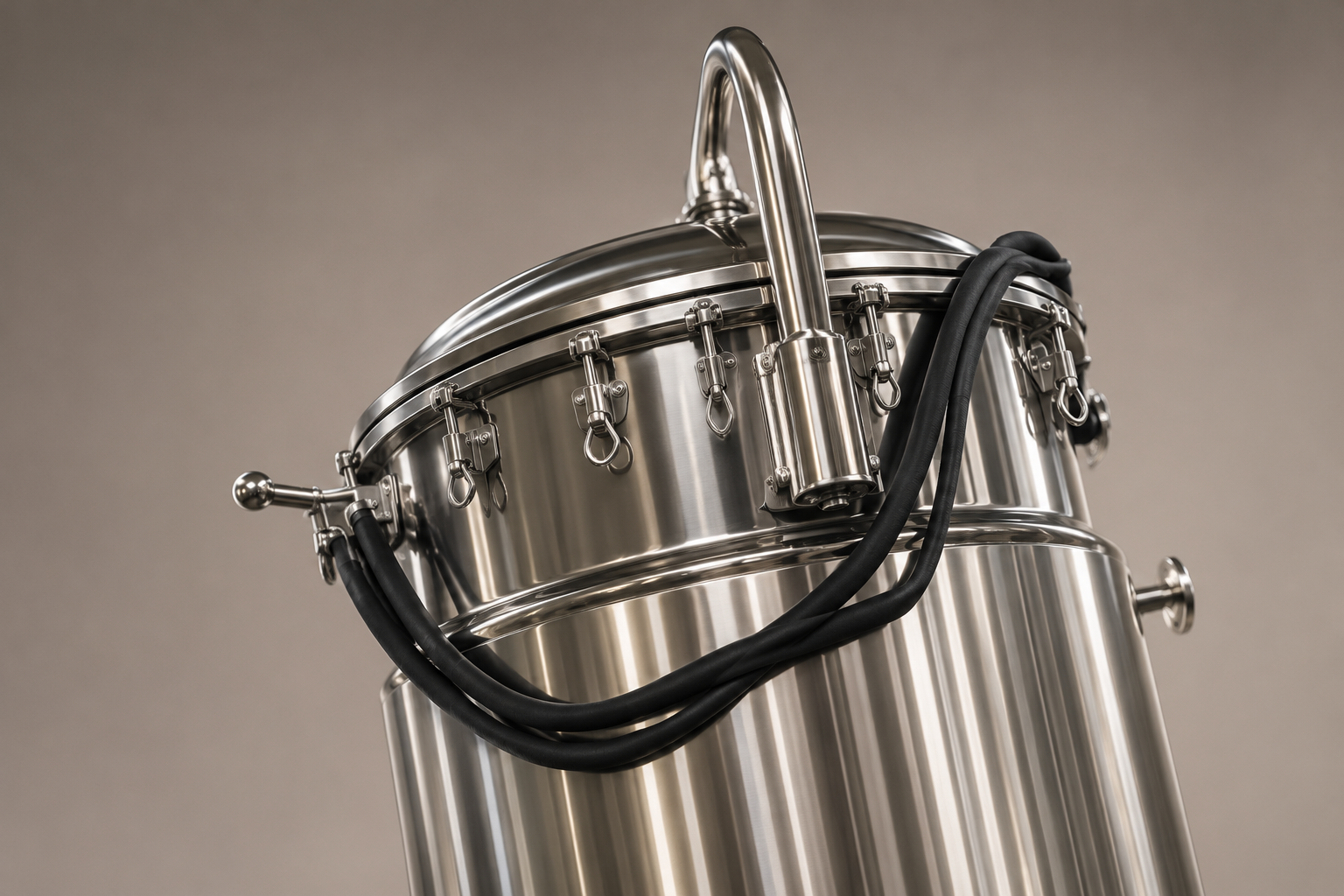
The review belongs alongside the equipment records for a fermenter, but the vessel photograph cannot establish the installed measurement package. Confirm the probe, transmitter and approved procedure from the actual project documents. A suitable reference material is only one element of a defensible measurement system; it cannot compensate for an incompatible probe or an uncontrolled sampling arrangement.
Ask for the document that applies to this material
A general product specification describes the supplied grade. A batch certificate identifies results or assigned values for a particular material. A safety data sheet addresses a different question. Keep these document purposes distinct so that the reviewer does not accept a safety document as evidence of the reference value or reject an otherwise complete package merely because its file name differs from local terminology.
Check the product and lot references inside the certificate, rather than relying on a downloaded file name. Retain the document version and retrieval date in the receiving record. If the supplier provides a portal, save the applicable document in your controlled system so that the link remains useful when the bottle is nearly empty. An unresolved mismatch needs a supplier clarification tied to the delivered batch.
Understand what traceability does and does not establish
NIST’s explanation of metrological traceability places the emphasis on the measurement result and its documented connection to references. A statement about a recognized institute should therefore lead the reviewer to supporting evidence, rather than ending the review. Ask which value is assigned, what uncertainty accompanies it and what conditions define its use.
These general principles do not make every commercially supplied buffer interchangeable. Select material against the approved method and the measurement system’s requirements. If the proposed replacement uses a different reference temperature or value set, have the responsible measurement specialist assess the difference before issue. Do not quietly change the transmitter’s buffer recognition settings to make an unexpected bottle appear compatible.
Read temperature information before comparing the numbers
The same buffer may have different assigned pH values at different temperatures. A nominal value printed prominently on a bottle can therefore be an incomplete description for calibration. Compare the certificate’s temperature table, the procedure and the meter’s recognized buffer set. Record the temperature basis used in the review without inventing a correction from an unrelated formulation.
The USGS pH measurement manual discusses temperature dependence and careful buffer handling in water measurement. Those principles help explain why identity and temperature information matter here; its field method is not presented as a validated fermentation procedure. Your actual calibration sequence and acceptance limits still come from the approved equipment and process documentation.
Review unopened expiry and opening history separately
Use the producer’s stated expiry and conditions for the delivered product. Do not transfer the usable period of a different brand, formulation or package into the stock system. If an opening date triggers additional instructions, establish how the site records and applies them. An unopened bottle within its printed expiry and an opened bottle with an unknown history are different review cases.
Opening history should be readable where the material is issued, rather than hidden in an email exchange. Record the date and the person making the entry under the site’s procedure. If a bottle arrives already open or with a damaged closure, preserve that observation and refer it for assessment. A new label cannot recreate missing evidence about the material’s previous exposure.
Use a receiving and issue review matrix
The following matrix organizes evidence; it does not assign universal shelf lives, numerical tolerances or calibration frequencies. The appropriate disposition depends on the delivered material and the approved method.
| Review item | Evidence to compare | Question before release |
|---|---|---|
| Product and batch | Bottle label, order and batch document | Do all records describe the material actually received? |
| Assigned value | Certificate and recognized buffer set | Is the stated value appropriate for the approved method? |
| Temperature basis | Certificate table and equipment instructions | Will the correct reference information be used at the bench? |
| Usable period | Printed expiry and applicable opening instructions | Can the planned use occur within the documented conditions? |
| Storage history | Receipt condition and stock location record | Is there an unresolved excursion or contamination concern? |
| Issue traceability | Bottle identity and calibration log | Can a later reviewer identify which material was used? |
Keep separate fields for the evidence reviewed, the unanswered question and the final decision. A single green status cell can otherwise hide the fact that the certificate was present but did not match the bottle. Where clarification is pending, prevent the material from being issued through an identifiable hold status and a physical storage arrangement that staff can understand.
Preserve storage and transfer information
Store the bottle according to its own instructions and retain any relevant receipt observations. Avoid assigning a universal storage range from another product’s literature. Where the delivery condition raises concern, document what is known, what is unknown and who will decide suitability. A clean external package alone does not establish the entire shipping history or remove the need for that decision.
If material is transferred to a working container, make the connection to the original lot and bottle explicit. Follow the approved handling method for the container, closure and disposal of used material. Keep stock material protected from returned working solution. The objective is to preserve the reference material’s identity and condition without introducing an informal handling procedure alongside the controlled one.
Connect issued material to the calibration record
At issue, confirm that the selected bottle is still released and that its identity matches the record being entered. A receiving check performed weeks earlier cannot establish the condition of a bottle after intervening use. The calibration log should make it possible to determine the material lot, relevant document version, date of use and associated measurement system without relying on someone’s memory.
For the next stage, use the separate fermenter pH probe calibration guide. Keep this certificate review focused on the reference material, while that guide addresses the probe task. Where a probe is difficult to reach, the sensor calibration access review provides a different planning question: whether the intended work can be performed with suitable access and isolation.
Handle discrepancies without rewriting the history
Suppose a bottle’s lot number differs from the certificate stored with its delivery. Record both identifiers and keep the material on hold while the supplier provides the correct evidence. Do not edit the certificate to match the label. If the material has already been used, identify the affected calibration records and refer the potential impact to the responsible quality and measurement personnel.
The same approach applies when an expiry entry is missing or a later document amendment changes the information available. Preserve the original record and attach a dated clarification. Record the scope of any reassessment, including which uses were reviewed and what remains uncertain. A replacement certificate may resolve a documentation mismatch, but it does not independently prove that past storage and handling were acceptable.
Prepare a useful purchasing and handover package
Before ordering, tell the supplier which approved buffer identity, documentation and remaining usable period your operation needs. Describe the required package information rather than asking only for a generic certificate. Coordinate order quantities with actual consumption and the producer’s conditions, especially where several departments share stock. The cheapest package is not automatically the most practical if a large fraction cannot be used within the applicable period.
For a fermenter inquiry, provide the measurement-system documents available, the intended maintenance arrangement and any unanswered compatibility questions. Use the fermenter pH control overview to distinguish the wider process-control discussion from the narrow reference-material review. Request confirmation of the actual supplied scope rather than inferring calibration accessories or accuracy guarantees from the vessel image.
Further learning: organizing quality evidence
The WHO educational video below introduces its laboratory quality implementation tool. It provides context for organized records and responsibilities; it does not demonstrate fermenter probe calibration or approve a particular buffer. The bottle-specific evidence and the site’s approved method remain the basis for the release decision.

World Health Organization (WHO): WHO: LQSI series – Laboratory Quality Stepwise Implementation Tool tutorial.
FAQ
Does a NIST reference on a label prove this bottle is suitable?
No. Review the actual product, lot documentation, assigned values, temperature basis and condition against the approved method. A traceability statement is part of the evidence, not a substitute for matching it to the delivered material.
Can an opening date extend the printed expiry?
Do not use an opening entry to extend the producer’s expiry. Apply the specific product instructions and any approved site controls, and refer uncertainty about the usable period before issuing the bottle.
Should this review replace the probe calibration procedure?
No. It establishes whether the reference material can be released for the planned task. The probe, transmitter, calibration method and acceptance criteria still require their own approved instructions and records.


