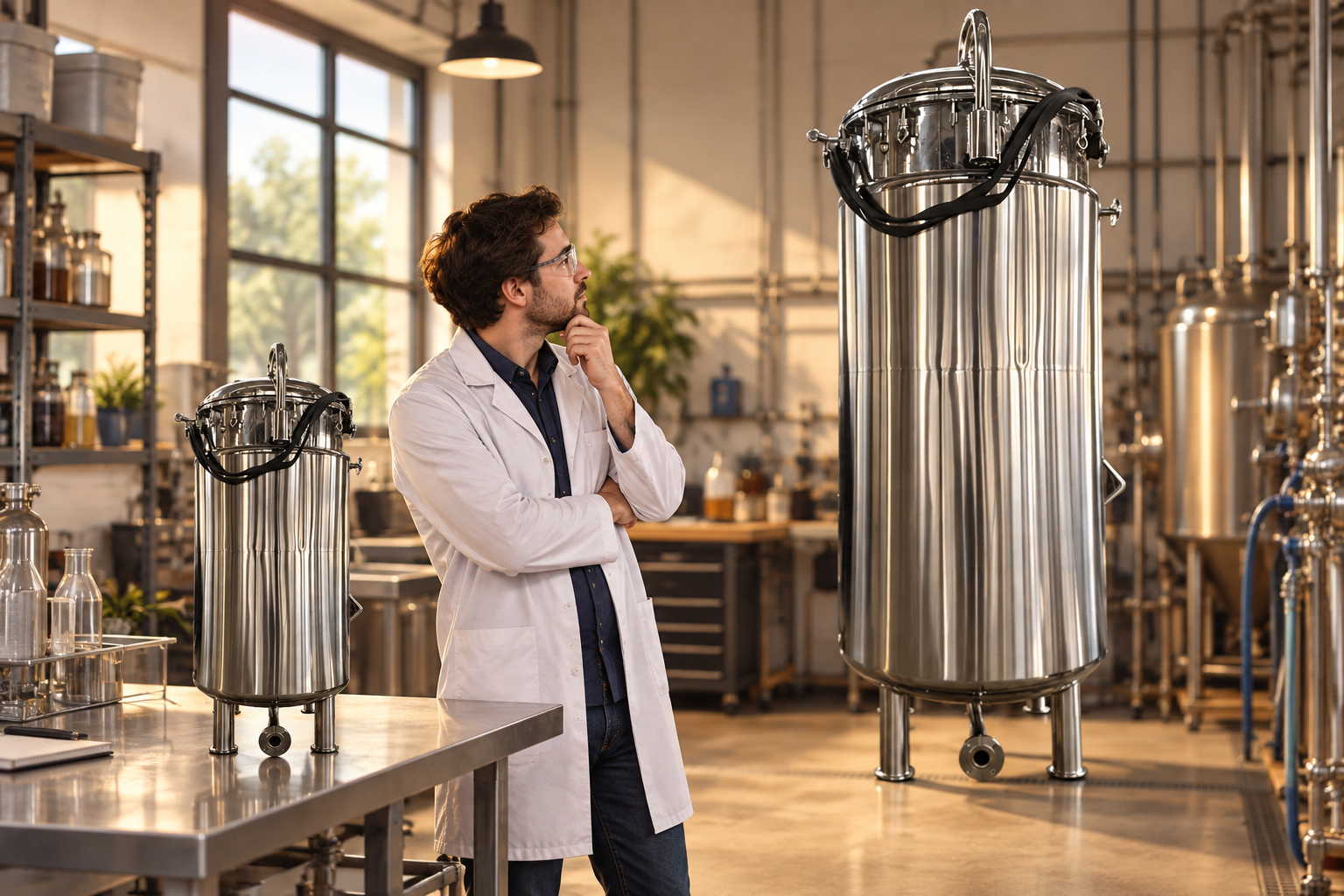
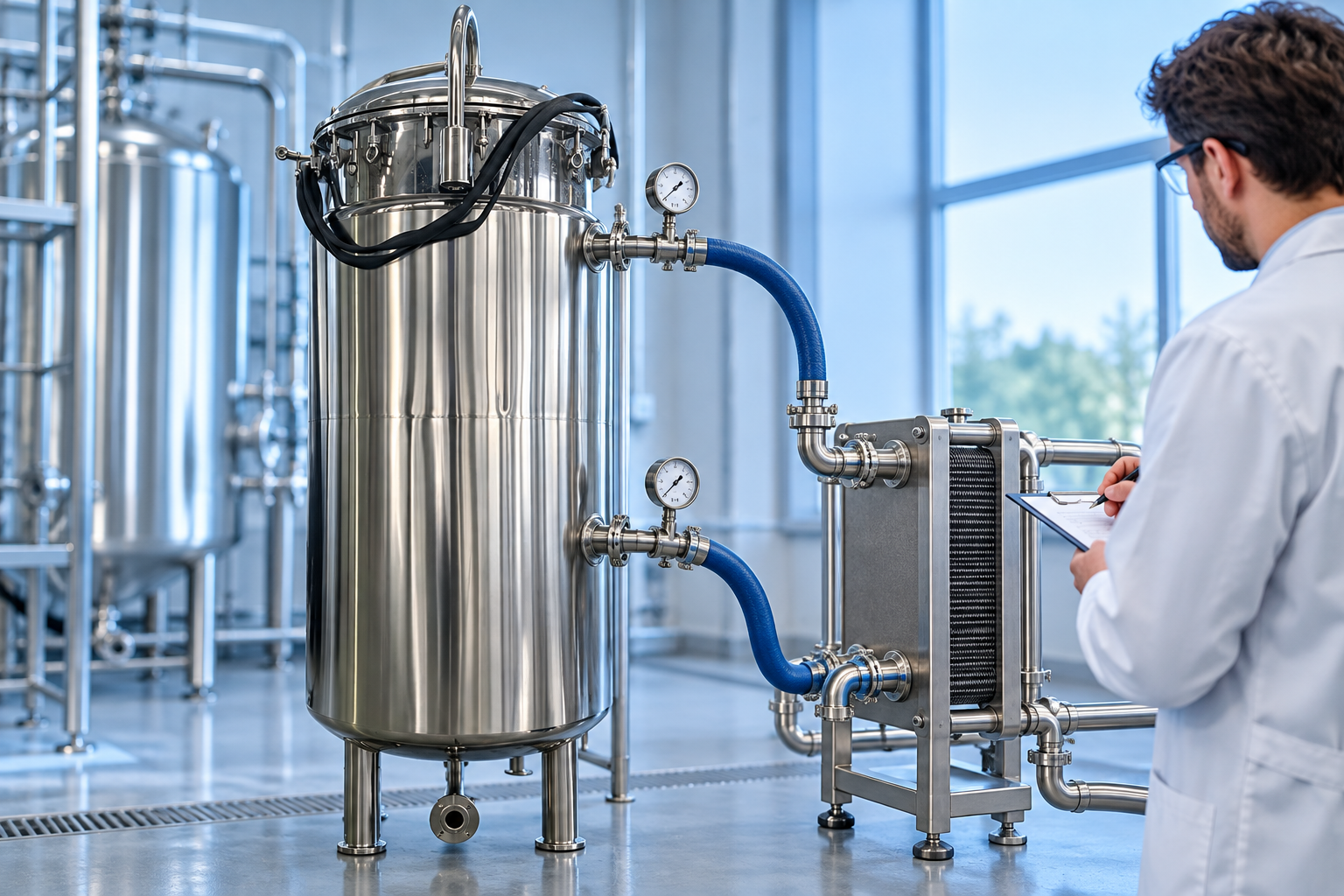
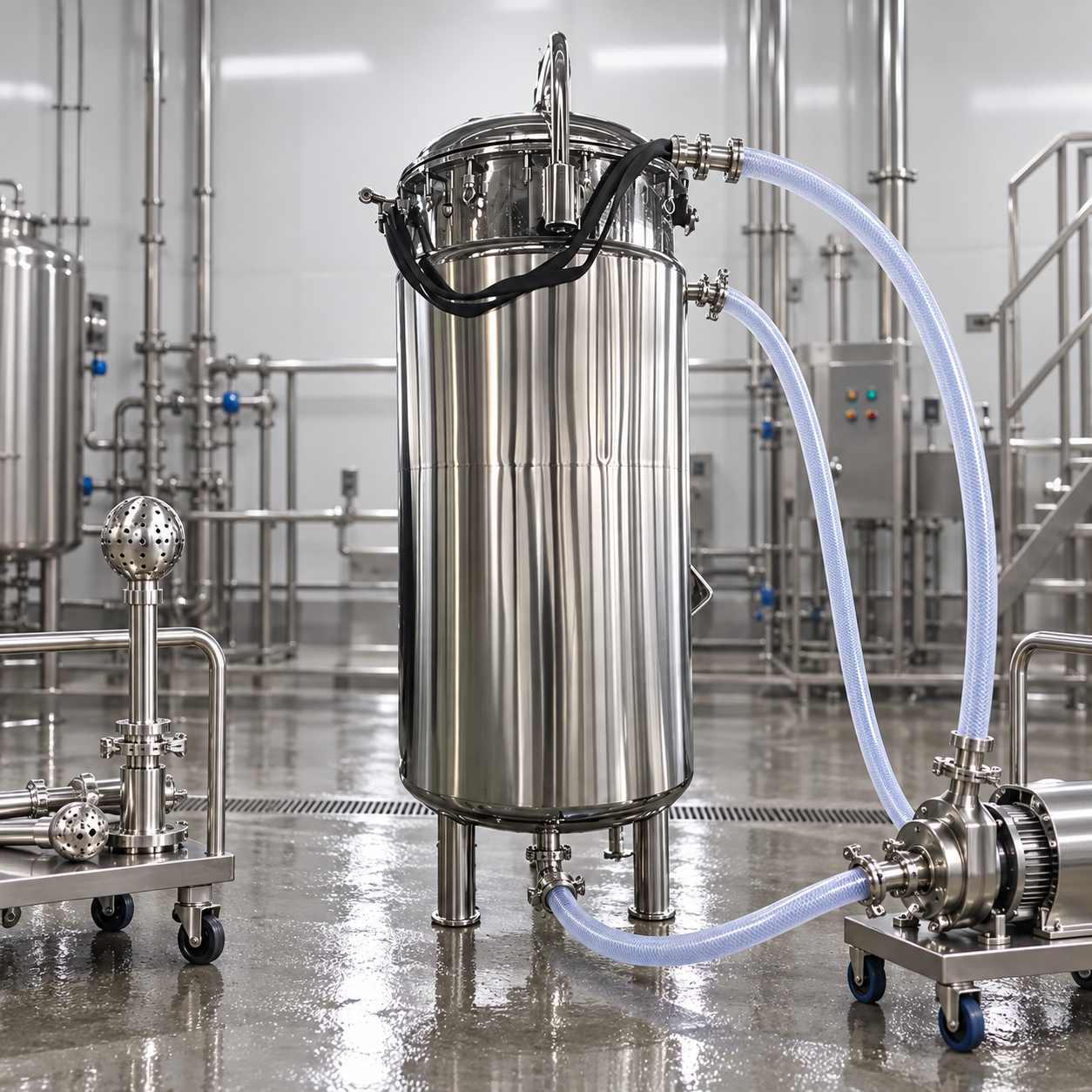
Fermenter foam control should prevent loss of working volume, exhaust-filter wetting and contamination risk without damaging oxygen transfer or product recovery. Foam is generated by gas dispersion and stabilized by proteins, cells, medium components and process additions. Effective control begins with headspace, mixing, gas strategy and reliable detection; antifoam dosing or a mechanical breaker is then selected for the actual broth. The best design does not chase every bubble. It defines an acceptable foam band, a response sequence, maximum additions and evidence that control remains effective at peak biological activity.
Why fermentation foam becomes an equipment problem
Foam occupies headspace and can carry liquid into condensers, exhaust lines and filters. A wetted exhaust filter may create backpressure, while uncontrolled carryover can remove cells or product. Foam can also contaminate pressure instruments and create misleading level signals. The risk depends on broth chemistry, gas rate, agitation, temperature, pressure and growth phase, so a water test alone is rarely representative.
First confirm that the apparent foam problem is not caused by excessive gas velocity, poor sparger distribution, an overfilled vessel, unstable level control or a restricted exhaust. Correcting the underlying condition can reduce chemical use and preserve oxygen transfer. Provide enough freeboard for the expected expansion and upset response.
Foam detection options
Conductivity probes are common because wet foam changes the electrical path, but coating and buildup may cause false signals. Capacitance, optical or other methods can work when properly matched to the broth. Locate the sensor at the action level, not where ordinary splashing will trigger it. The installation must remain cleanable and accessible for inspection.
Use delay, debounce and reset logic to avoid rapid pump cycling. A useful sequence confirms persistent foam, starts a bounded dose, waits for mixing and then reassesses. Alarm when repeated doses fail or when the cumulative addition reaches its limit. Record the raw signal, command, pump run time and batch total.
Antifoam dosing: benefits and tradeoffs
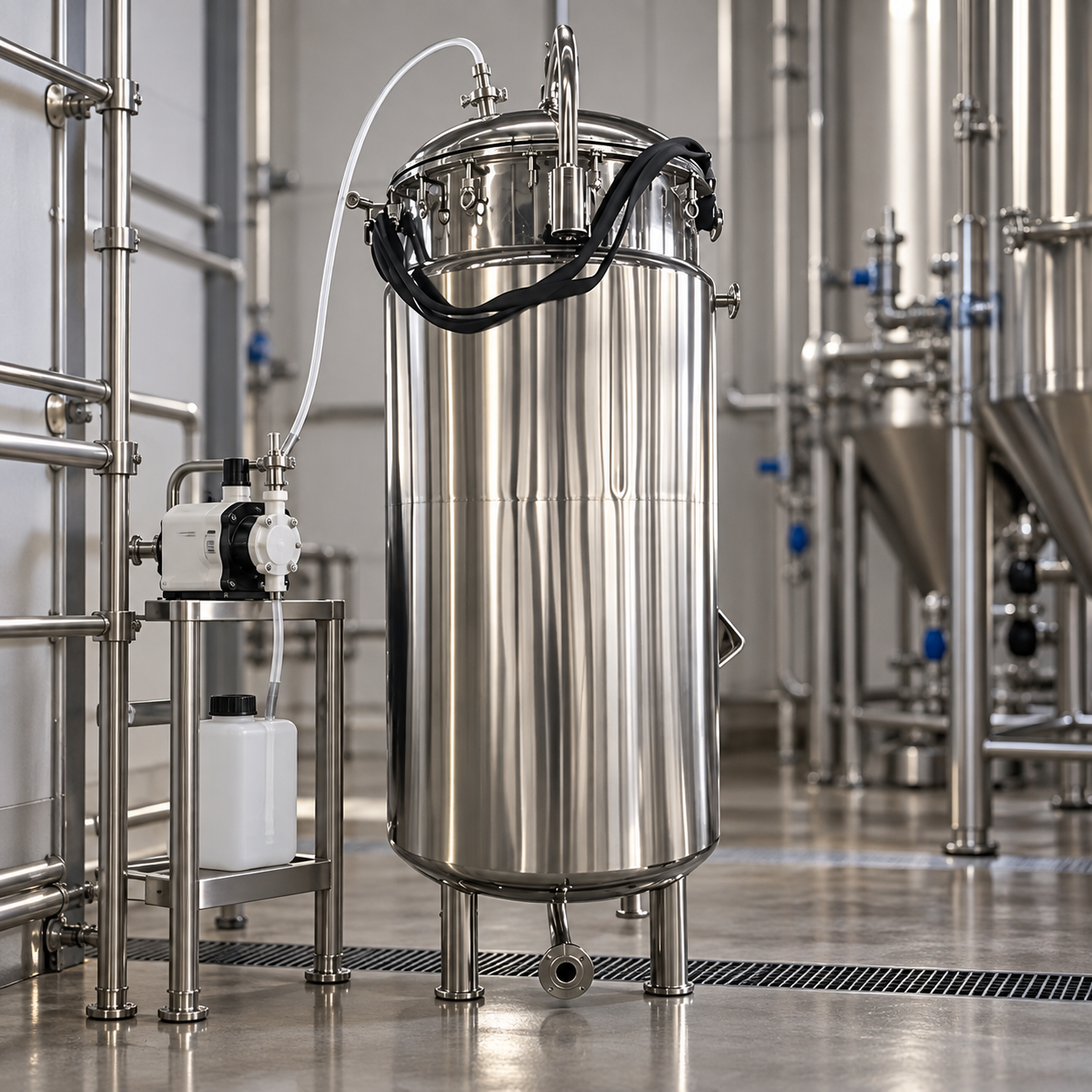
Chemical antifoam can rapidly collapse foam, but excessive addition may alter bubble coalescence, oxygen transfer, downstream separation or product quality. Compatibility and allowable quantity must be established by process development and supplier information. The equipment supplier should not invent a universal dose. The design task is to meter the approved material reproducibly and hygienically.
Size the pump and tubing for the liquid viscosity, required dose range and sterilization strategy. Put the injection point where the material disperses quickly without coating a probe or entering directly into the exhaust path. Prevent siphoning and backflow. If the antifoam container is connected during processing, define how it is prepared, protected and changed without compromising the process boundary.
Mechanical foam breakers
A mechanical breaker uses rotating action in the headspace to disrupt bubbles and return liquid. It can reduce chemical consumption, but adds moving parts, seals, cleaning surfaces and power. Performance depends on foam reaching the device and on speed relative to foam properties. It is not automatically suitable for every organism or containment duty.
Review access, cleanability, sterilization, bearing and seal arrangement, vibration and maintenance. Confirm that the breaker does not create an aerosol or interfere with exhaust flow. For some services, a larger vessel with adequate freeboard and controlled gas input is simpler and more reliable than additional machinery.
| Control method | Main advantage | Main verification point |
|---|---|---|
| Process adjustment | Addresses gas, fill or agitation cause | Impact on oxygen demand and productivity |
| Automatic antifoam | Fast response with modest hardware | Dose accuracy, compatibility and batch total |
| Mechanical breaker | May reduce chemical addition | Capacity, cleanability, seals and aerosol risk |
| Foam trap or separator | Protects downstream exhaust components | Drainage, cleaning and pressure drop |
| Added freeboard | Provides passive tolerance | Usable working volume and vessel size |
Control sequence and failure response
Define the order of action. A common philosophy is detection, confirmation, small dose, mixing delay, reassessment and alarm. An independent high-foam alarm may stop gas escalation or protect the exhaust system. The safe response must reflect the organism, containment level and pressure design; never assume closing an exhaust valve is acceptable.
Test the pump delivery into a graduated receiver before use and verify the controller timing. Simulate the probe signal to prove logic and alarms, but also test wet response where safe. During qualification, document the detection level, dose per pulse, response delay, maximum batch addition and behavior after power loss.
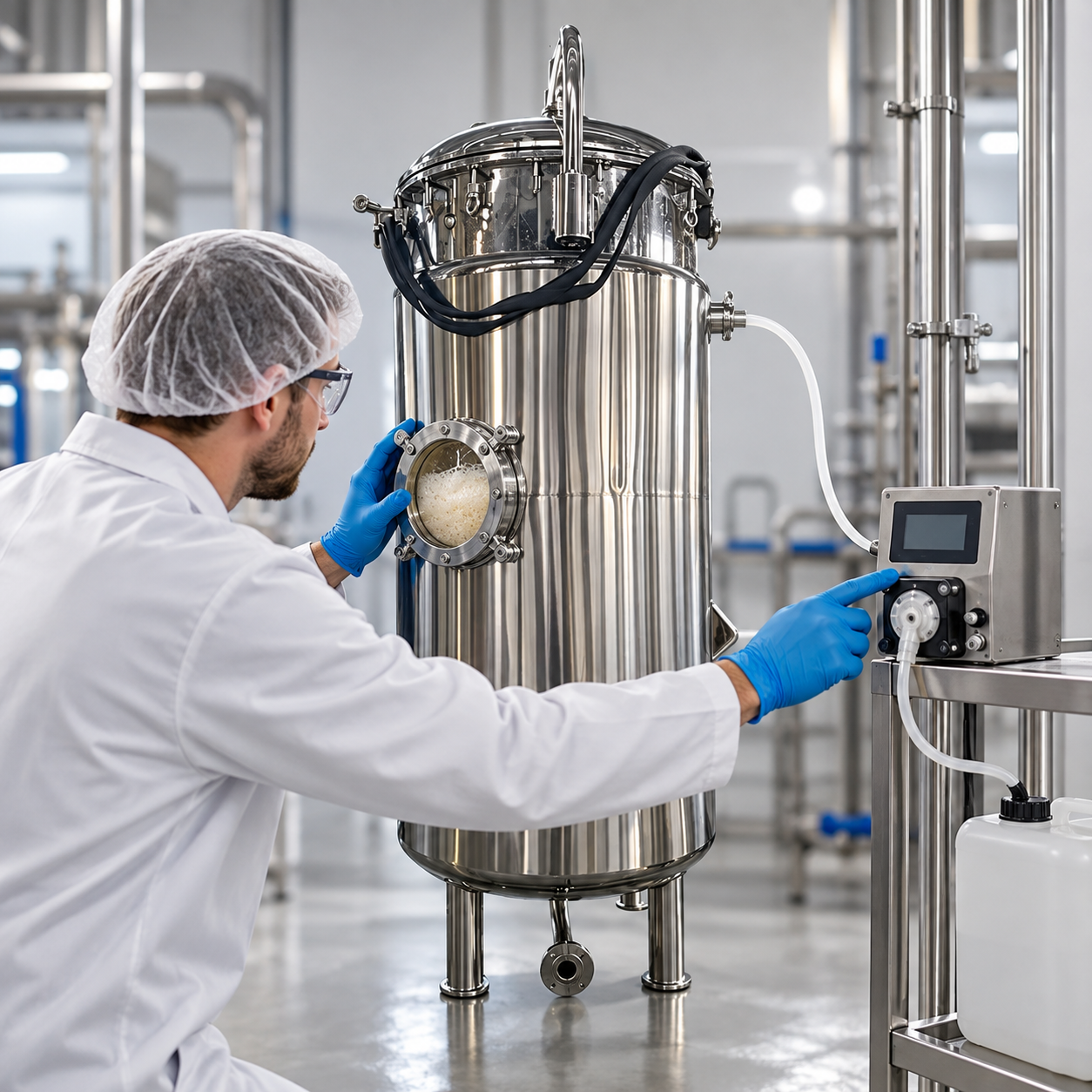
Interaction with oxygen transfer and exhaust handling
Foam and oxygen transfer are linked through gas rate, agitation and surfactant behavior. Adding antifoam may solve carryover while lowering kLa, leading the dissolved-oxygen cascade to demand more gas or speed and potentially create more foam. Trend both systems together. The exhaust condenser, knock-out arrangement and filter should be sized for credible moisture and foam loading without creating excessive backpressure.
Related guidance includes oxygen transfer rate, fermenter airflow control, and fermenter controls and stages. Use the Kanger fermenter product page when defining vessel and nozzle requirements.
Authoritative references
The NCBI biotechnology reference provides process context, the FDA PAT framework supports measurement-based control, and CDC biosafety guidance helps frame containment consequences. Material compatibility and dose limits require project-specific evidence.
How to turn the process requirement into a purchase specification
Start with the organism, working volume, medium properties, operating pressure and temperature, then state the measurable result required from fermenter foam control. Separate process targets from equipment limits. A supplier can select hardware only when the inquiry explains the expected operating window, cleaning method, sterilization method, available utilities and control-system boundary. Avoid prescribing a component before defining the duty it must perform.
Ask the supplier to identify every assumption behind sizing and selection. The review should cover normal operation, startup, shutdown, cleaning, sterilization, sensor calibration and credible upset conditions. Record which values will be verified by document review, shop inspection, water testing or site testing. This approach keeps the acceptance plan connected to the process need instead of turning it into a generic checklist.
Commissioning and lifecycle checks
Commissioning should prove the complete measurement and control path: sensor, installation, transmitter, software scaling, alarm, final element and recorded trend. Test at more than one operating point when the process range is wide. After startup, trend the process variable together with agitation, gas flow, pressure, temperature, additions and batch phase. A gradual change can indicate fouling, calibration drift, filter loading or a changed medium rather than a sudden equipment failure.
Define who reviews trends and what triggers investigation. Calibration intervals and preventive maintenance should be based on service severity, manufacturer guidance and observed drift. Any modification to spargers, impellers, filters, probes, recipes or control logic should receive change review because it may alter mass transfer, mixing or foam behavior. The final equipment file should preserve drawings, instrument lists, calibration records, test results and approved settings.
Factory and site acceptance
A factory test can confirm fabrication, instrument identity, wiring, valve action, software ranges and basic water operation, but it cannot automatically prove performance in a live biological broth. Write separate acceptance criteria for document review, factory testing and site testing. Identify the test liquid, fill volume, temperature, pressure, utilities, instrument tolerances, stabilization time and calculation method. Agree how deviations will be recorded and closed before shipment.
At site, verify utility quality and capacity before blaming the vessel. Confirm gas pressure, steam condition, cooling-water temperature, electrical supply, drain routing and exhaust availability under simultaneous demand. Repeat critical loop checks after final installation because transport, reconnection and site configuration can change instrument zero, valve travel or piping resistance. Preserve raw data as well as summarized results so later troubleshooting has a defensible baseline.
Risk review and operator readiness
Review credible failures such as loss of gas, blocked exhaust, wet filter, stuck valve, failed probe, dosing error, power interruption and unexpected pressure. The required response depends on the process and cannot be copied from another plant. Define alarms, interlocks, manual actions and safe states through the project hazard assessment. Operators should understand both the automatic sequence and the physical reason behind each limit.
Training should cover normal recipes, manual override rules, calibration, inspection, cleaning, sterilization, alarm response and data review. Provide drawings that match the delivered system, not only proposal documents. Stock critical consumables and wear parts before the first campaign. These steps make fermenter foam control repeatable over multiple batches rather than a one-time commissioning demonstration.
Post-batch review
After each campaign, compare the actual operating envelope with the approved design basis and investigate recurring overrides, alarms or manual corrections. Review the timeline rather than one isolated value, and distinguish process demand from instrument or utility problems. Feed verified lessons into procedures, maintenance plans and the next equipment specification without changing approved settings informally. This creates a traceable improvement cycle and helps the engineering team identify whether the next action belongs to process development, equipment maintenance, automation or operator training.
Educational video
This independent educational video provides useful background for the mixing and bioprocess concepts discussed above.

Frequently asked questions
What should a buyer define first?
Define the process duty, operating range, medium, working volume, utilities, cleaning and sterilization method, acceptance test and control-system boundary for fermenter foam control.
Can one operating number guarantee performance?
No. Flow, speed, pressure or dose must be interpreted with vessel geometry, liquid properties, instruments and test conditions.
What should be recorded during commissioning?
Record calibrated inputs, setpoints, actual values, alarms, raw trends, test conditions, deviations and approved settings.