

A fermenter buffer shipping temperature excursion receiving review should keep a questionable pH reference solution out of calibration until its condition has been resolved. Identify the exact buffer, preserve delivery evidence, compare the shipment with its own storage instructions, and obtain an authorized disposition. Do not assume that returning a bottle to room temperature restores its reference value. This guide concerns the receiving decision for calibration supplies used around a fermenter. It does not set a universal shipping temperature, replace the buffer manufacturer’s instructions, or establish that a particular fermentation tank includes a pH measurement system.
Separate delivery condition from certificate validity
An intact certificate answers a different question from a damaged shipment. It may identify a lot and its assigned values under stated conditions, while the receiving team still needs to establish whether the delivered material was handled acceptably. A certificate cannot reconstruct an unrecorded delivery delay or show what happened inside a parcel left outdoors. Keep both questions visible rather than allowing a document check to settle the physical-condition review.
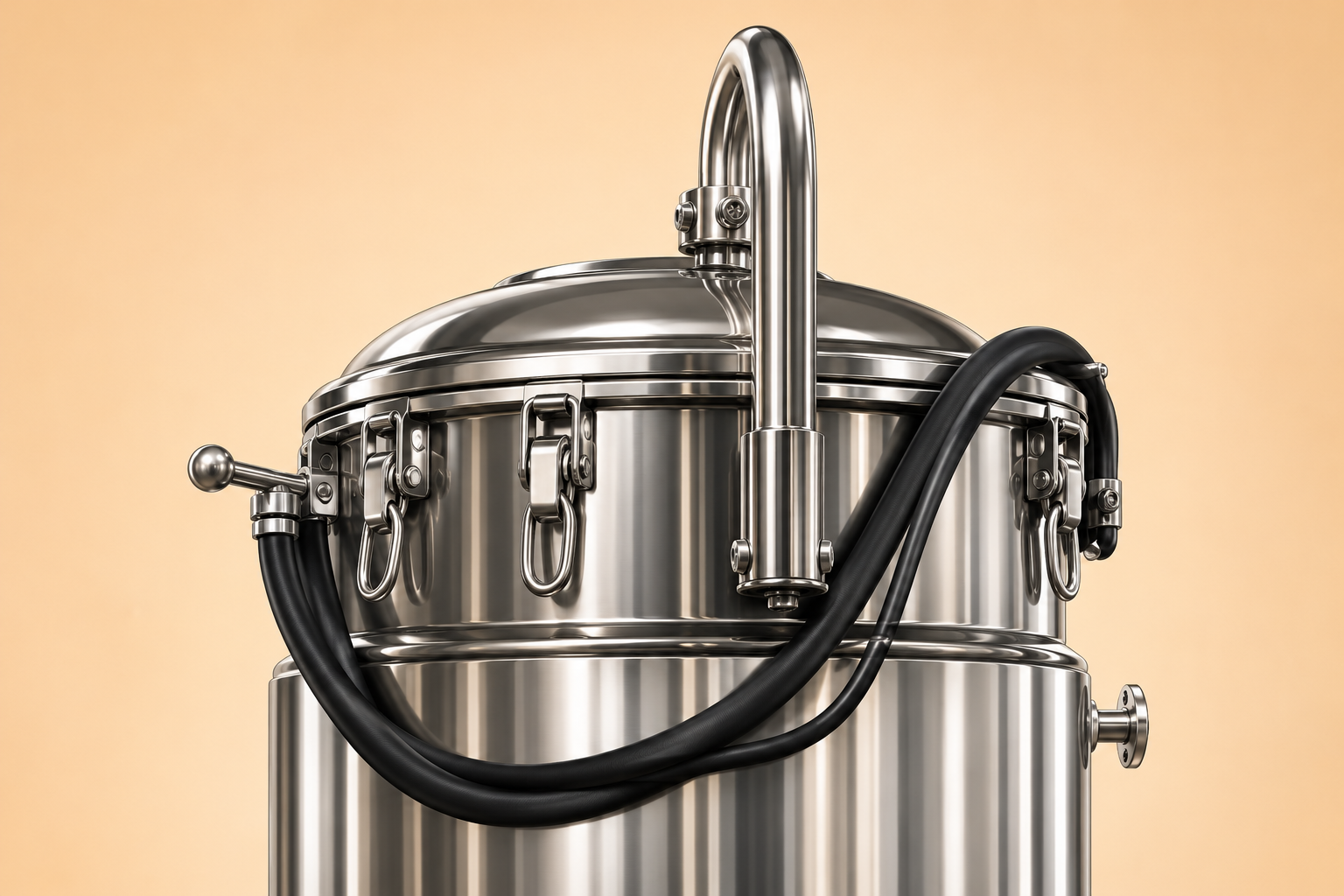
For the equipment context, see the site’s vertical stainless steel fermenter. The product photograph establishes the vessel’s visible external form. It does not establish an installed sensor, a calibration procedure, or a supplied buffer brand. Confirm the actual measurement arrangement from the project records before purchasing consumables. The existing buffer certificate and expiry review addresses routine document checks; this article deals with an exceptional delivery event.
Build a useful account of the shipment
Start with facts that can still be preserved: delivery time, package condition, container labels, lot number, quantity and any available transport-monitor record. Photograph damage before discarding the packaging. Separate a confirmed exposure from a suspicion. A parcel feeling cold is an observation; it is not a measured minimum temperature, proof of freezing, or an exposure duration. Record the observation honestly so the reviewer can judge the remaining uncertainty.
If a logger was supplied, retain its original file and the link between that logger and the relevant parcel. A graph from a different delivery is not evidence for this one. Ask whether the reported temperature represents ambient air, a position inside the pack, or another measurement location. Include time-zone information when comparing carrier events with logger timestamps. Avoid translating incomplete evidence into a reassuring sentence such as “normal transit conditions” without support.
Use the instructions for the delivered formulation
Find the storage and transport information for the exact product and packaging. A label, supplier specification and lot documentation may address different aspects of handling; discrepancies need clarification. Do not borrow a limit from another pH value, another manufacturer, or a different container size simply because both products are called calibration buffer. Where no shipping limit has been stated, ask the supplier to explain how the actual event should be evaluated.
إن USGS field pH manual warns against extreme heat and freezing during buffer transport and storage. It is field-measurement guidance, not a supplier-specific release procedure for fermentation facilities. Its practical implication here is conservative: a return to an ordinary temperature does not establish that a suspect reference solution remains suitable. Follow the applicable laboratory procedure and supplier instructions rather than inventing a time-temperature allowance.
Organize the receiving decision around evidence
The following table is a qualitative review aid. It provides no numerical acceptance limit. Complete the site-specific fields using the delivered product’s instructions and the responsible reviewer’s decision.
| Receiving question | دليل على فعالية | Action when unresolved |
|---|---|---|
| Which material was exposed? | Product code, pH designation, lot and container identity | Segregate unidentified containers |
| What happened in transit? | Delivery events, original logger file and package photographs | State what is unknown and request clarification |
| Which handling instructions apply? | Exact formulation and packaging instructions | Ask supplier for the relevant document |
| Is container integrity acceptable? | Seal, leakage and visible-condition observations | Retain evidence and prevent routine issue |
| Who may determine disposition? | Named laboratory or quality responsibility | Route to the authorized reviewer |
| What happened to each bottle? | Quantity, storage location and final decision | Reconcile stock before closing the event |
A useful receiving record connects evidence to an action. “Supplier contacted” is an intermediate state, not a disposition. Record who was asked, the question submitted, the affected quantity and the next review date. If the material is rejected, ensure the inventory status prevents it being picked for calibration while a replacement is arranged.
Keep quarantine understandable to the next shift
Place questionable material in a designated hold location under the site’s chemical-handling procedure. Retain the original label and lot identity. A separate status label should explain the hold without obscuring safety information. Include a contact or record reference so another shift does not interpret the segregated bottle as an unclaimed spare. Handle leaks or damaged containers according to the safety data and local spill arrangements.
Think through partially accepted deliveries. If only one parcel had an abnormal event, avoid casually releasing or rejecting other parcels without establishing their histories. Conversely, do not limit a confirmed transport problem to the one damaged bottle if the evidence covers the entire package. The receiving record should show the boundary of the decision: specific bottles, one lot in one shipment, or another clearly defined group.
Ask the supplier a question they can answer
Provide the exact product, lot, packaging description and observed event. Attach the original evidence rather than only an interpretation. Ask whether the product remains suitable for its stated reference use under the described conditions, whether replacement is required, and what written basis supports the response. A generic statement about normal shelf life does not answer a question about an abnormal shipment.
Keep the supplier’s reply associated with the affected inventory. If the answer is conditional, check each condition before recording release. For example, a response referring to an intact sealed container cannot settle a leaking-container case. When evidence is insufficient, use the site’s approved decision route; uncertainty does not disappear because production would benefit from an immediate calibration. Record replacement arrangements separately from technical acceptance so commercial settlement does not imply laboratory suitability.
Do not confuse temperature correction with recovery
A buffer’s specified pH may depend on measurement temperature. That ordinary relationship is different from damage, contamination or an unresolved transport excursion. Bringing a usable buffer to a suitable calibration temperature and applying its documented value does not demonstrate recovery of a buffer whose suitability is already in question. A temperature-compensated meter also cannot prove the chemical integrity of the solution used to adjust it.
إن Texas environmental agency pH sampling instructions distinguishes buffer care from the temperature-dependent value used during standardization. This water-monitoring procedure is useful educational context, not a validation method for an industrial fermentation process. Use the buffer manufacturer’s temperature information and your approved calibration method. A plausible reading against the same questionable buffer is circular evidence and should not be treated as independent confirmation of that buffer’s assigned value.
Plan calibration continuity without weakening the decision
A held shipment can affect maintenance timing, but the response should protect the quality of the measurement. Check whether an already accepted, suitable reference is available and whether the approved procedure permits its use for the required range. Verify its own identity, condition and expiry. Do not combine leftover portions from different bottles or relabel another reference to fill the gap. Ask the responsible laboratory person to approve any change to the calibration plan.
Coordinate this with the existing sensor calibration access review. Access and isolation planning remain necessary when work involves the installed vessel, even if the immediate problem is a consumable delivery. Keep material release, calibration execution and equipment release as separate decisions. This prevents a resolved shipping complaint from being mistaken for evidence that an installed pH loop has been checked and returned to service.
Close the event with quantities and consequences reconciled
At closure, account for the delivered quantity, held quantity, accepted quantity, rejected quantity and any replacement received. Record the final storage location and attach the technical decision. Check that a temporary inventory hold has not been removed from bottles outside the decision scope. Preserve the initial observations even if the supplier later provides more complete information; the later conclusion should supplement the original record.
If questionable buffer was already used, identify the associated calibration records and refer the potential impact to the responsible quality or measurement reviewer. Do not erase the calibration or assume every process result is invalid. Determine the actual scope through the approved investigation. The site’s sample container traceability guide offers related record-identity context, while the shipping event requires its own documented resolution.
Further learning: measurement context
The WHO educational video below introduces its laboratory quality improvement tool. It supports the quality-system context for assigning responsibilities and controlling laboratory records; it is not a demonstration of buffer shipping acceptance. The written receiving steps above remain independently usable and the video does not establish a sensor package supplied with the vessel.

World Health Organization (WHO): WHO: LQSI series – Laboratory Quality Stepwise Implementation Tool tutorial.
الأسئلة الشائعة
Can I release a buffer simply because it is back at room temperature?
No. Its current temperature does not establish its earlier exposure or continued suitability. Compare the event with the exact product instructions and follow the authorized laboratory disposition process before using the material as a calibration reference.
Does an unexpired certificate settle a shipping excursion?
No. Certificate validity and delivered condition are separate checks. Retain the lot certificate, document the shipment event and determine whether the actual handling was compatible with the reference material’s instructions.
What should I include in an inquiry about replacement buffers?
Include the product code, lot, quantity, packaging, delivery observations, available temperature record and required calibration use. Ask for a written disposition specific to that evidence, while keeping suspect bottles on hold and maintaining their original identities.


