

Storage tank cleaning waste transfer record reconciliation connects the material removed from a tank with its description, collection records and intended receiving route. Before closing the job, check that the tank identity, cleaning scope, waste descriptions, quantities, carrier and recipient information tell a consistent story. A cleaning completion certificate alone does not explain where the removed residue went. This guide presents a practical document review for industrial tank owners. England and Wales duty-of-care guidance provides the regulatory example; other jurisdictions require their own review. The worksheet does not classify an unknown waste or authorize disposal.
Separate tank cleaning acceptance from waste documentation
A tank can appear clean while its waste paperwork remains incomplete. Conversely, complete transfer documentation does not prove that the vessel meets the next process’s cleanliness requirements. Give the two decisions separate owners and connect them through the same equipment and work-order references. This prevents a signed cleaning invoice from silently closing unrelated environmental and equipment acceptance questions.
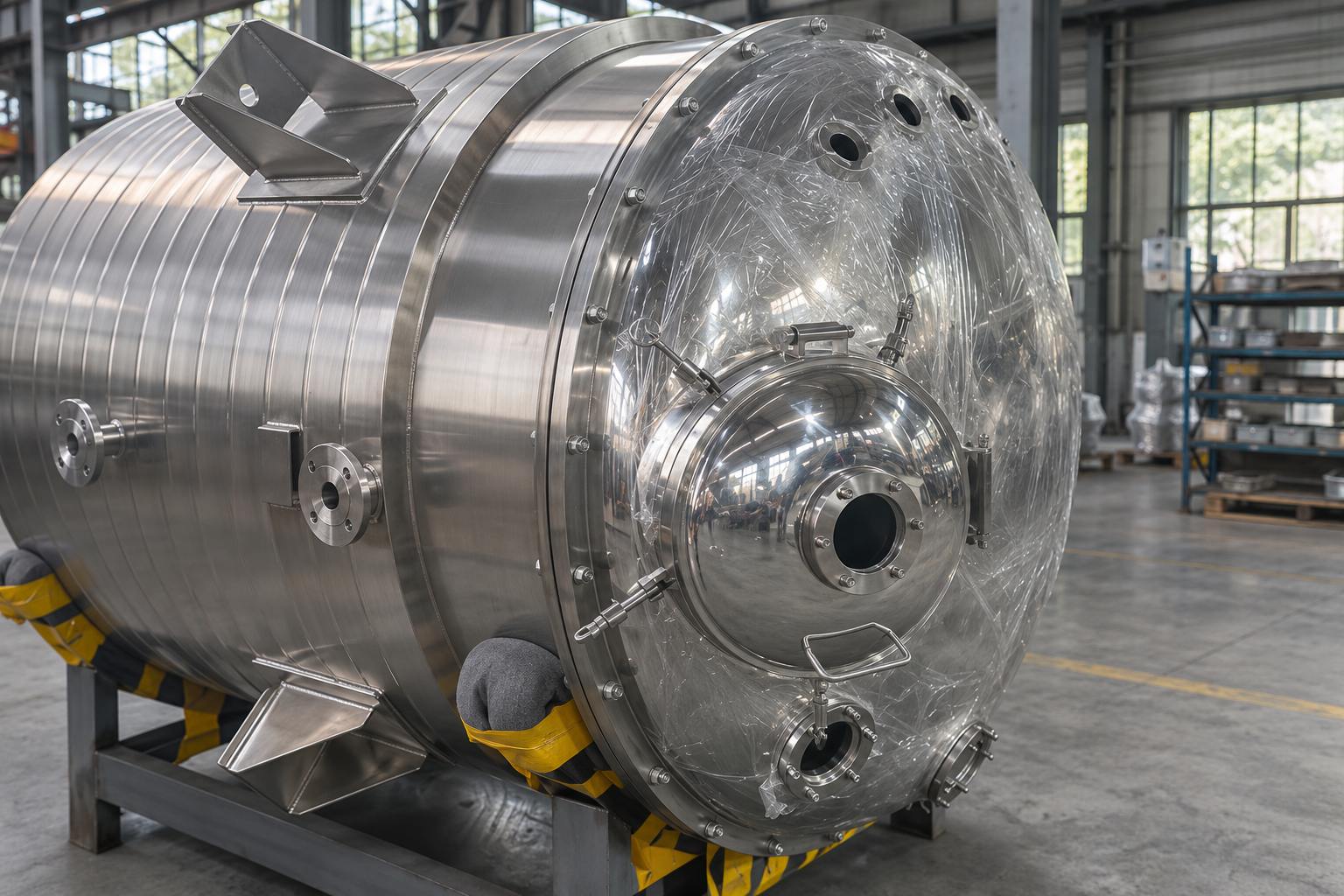
The site’s storage tank product example shows the equipment category used for this discussion. Its photograph does not establish compatibility with a particular waste or a permitted waste-storage application. Use the actual equipment specification, previous contents and proposed cleaning process to plan the job. The broader storage tank decommissioning and changeover guide provides the upper-level project context.
For a recurring cleaning service, define the paperwork deliverables in the quotation request. State who identifies and describes the waste, checks the proposed carrier and destination, reconciles collection evidence and retains the final package. Outsourcing the work should not leave those responsibilities implicit. Confirm the arrangements before removal begins, while missing information can still be resolved without guessing.
Establish the source and expected material streams
Identify the tank by its actual site reference and connect it to the cleaning order. Record the previous contents and the information supplied to the cleaning contractor. Distinguish residue already in the vessel from cleaning liquids, absorbents or other materials introduced during the job. These streams may require different descriptions and management routes; do not assume that everything collected belongs under one convenient label.
Ask the qualified waste adviser what evidence is needed to characterize the material. Product safety information can contribute context, but it does not automatically classify a mixed cleaning residue. Unexpected contamination or a changed cleaning chemical may alter the assessment. Keep such changes visible in the work record and resolve them through the responsible environmental process before relying on an earlier description.
Describe uncertainty honestly. An initial volume estimate is a planning value, not a measured collection result. Record its basis and units, then retain the later collection evidence separately. This makes it possible to explain differences without rewriting the original estimate to match the final invoice. No universal quantity tolerance is proposed here; use an agreed, technically justified review approach.
Build a transfer reconciliation worksheet
Use one row for each identifiable collection or material stream. The table below is a suggested review structure, not a replacement for the documentation legally required for the actual waste. A site can add fields to accommodate its permit, contract or local requirements.
| Check | Connect these records | Practical question | Action if unresolved |
|---|---|---|---|
| Source identity | Tank register, cleaning order, collection reference | Can this load be tied to this cleaning job? | Obtain the missing cross-reference |
| Waste description | Prior contents, cleaning materials, assessed waste information | Does the description fit what was removed? | Seek competent classification advice |
| Quantity | Estimate, collection evidence, receipt or weight record | Are units and measurement bases comparable? | Explain differences without inventing conversion factors |
| Carrier | Collection record and registration check | Is the named organization the actual carrier? | Verify identity and relevant authorization |
| Recipient | Destination information and acceptance evidence | Does the planned recipient have authority for this material? | Resolve before accepting the route as complete |
| Closeout | Signed documents and discrepancy record | Are required documents present and open issues assigned? | Keep the affected item open |
The waste duty-of-care code explains the England and Wales framework. Use the applicable documentation for the waste involved. The workflow above adds a project-level cross-check so a tank owner can locate the evidence associated with a particular cleaning job.
Compare quantities on the same basis
Start with units and measurement methods. A contractor’s estimated liquid volume, a vehicle weight and an invoice line may describe different things. A mass-to-volume conversion requires a justified density for the actual material and conditions; a generic water assumption can create false precision for sludge or mixed residues. Ask for the original measurement basis instead of forcing the numbers to agree.
Consider a hypothetical job with an initial residue estimate, additional wash water and more than one collection. A higher final collected volume is not, by itself, proof of an error. Trace the introduced liquid, collection boundaries and any remaining material. Equally, an apparently close match does not prove the material reached the intended recipient. Quantity reconciliation and destination evidence answer different questions.
Record the explanation alongside its evidence and identify who assessed it. If the discrepancy cannot be explained, assign a follow-up action rather than entering an unsupported balancing figure. Avoid presenting a mathematically neat total as a verified waste balance when the inputs are estimates or have different boundaries. The reviewer should be able to reproduce the reasoning from retained records.
Check the organizations involved
Match the company named in the service quotation with the organizations actually collecting, brokering and receiving the waste. Similar trading names are not sufficient identification. Use the relevant official registers and permit information for the jurisdiction, retaining the date and details of the checks. Where the contractor changes the proposed route, review that change through the agreed process.
A carrier registration and a receiving site’s permission answer different questions. Do not treat one as proof of the other. Ask whether the destination can accept the specific material described, and whether any restrictions affect the proposed transfer. If the paperwork names an intermediate organization, understand its role so the record does not stop at an unexplained handoff.
The Environment Agency educational video below introduces waste carriers. It supports this identity-checking discussion, rather than certifying a particular contractor or disposal route. Current official records and the actual transfer documents remain necessary for the job being reviewed.

Environment Agency: What is a Waste Carrier?.
Use the correct documentation route
Determine the waste status before selecting the paperwork. The government overview of waste transfer notes provides the non-hazardous business-waste example, while the hazardous waste overview points to a different process. Confirm the applicable requirements with the responsible specialist. A familiar form from an earlier job may be unsuitable for a changed material or jurisdiction.
Do not use a generic “disposed correctly” statement as a substitute for identifiable supporting records. Ask which load, description, date and organizations the statement covers. If an invoice is used to carry required information, check its actual contents rather than assuming the document title settles the question. Keep supplementary information linked to the same transfer reference.
Retention arrangements should preserve a readable package for the applicable period. Assign a location and an owner, restrict uncontrolled alteration and test that the records can be found using the tank or work-order reference. A contractor’s promise to retain its own copy does not establish that the site can retrieve the evidence when needed.
Resolve discrepancies without obscuring the original record
Typical problems include an inconsistent tank reference, a missing collection date, an unexplained change in waste description or a recipient named differently on separate documents. Give each discrepancy a clear description, the records affected, a responsible person and the evidence needed for closure. This creates an actionable review rather than a list of vague concerns.
Request corrections from the responsible party through the proper process. Retain the superseded document and the reason for the corrected version where the site’s record procedure requires it. Do not silently edit a contractor’s signed document or add an invented signature to make the package appear complete. The final file should show how the inconsistency was resolved.
Some missing evidence can be obtained after the cleaning work, but that does not retrospectively justify an unverified disposal route. Escalate significant concerns promptly through the environmental management arrangements. Keep the document review separate from decisions about whether the tank is mechanically safe, adequately cleaned or ready for its next product.
Make the next cleaning inquiry easier to evaluate
Send potential service providers an accurate tank reference, available drawings, previous contents information, proposed cleaning scope and site access constraints. Ask for their proposed waste assessment and documentation responsibilities, collection arrangements and named receiving route. Request clarification of exclusions and of how unexpected material will be handled. These are planning questions, not authorization to enter a tank or begin cleaning.
For equipment selection, discuss openings, drainage and access with the manufacturer using the actual process requirements. The food-grade tank cleaning validation guide covers a different acceptance objective, while the maintenance contractor handover guide helps define broader work boundaries. Together they support a clearer inquiry without merging waste documentation, cleanliness validation and maintenance release into one unchecked signature.
FAQ
Does a cleaning completion certificate prove the waste route is complete?
No. Connect the cleaning job to its waste description, collection evidence and relevant carrier and recipient records. A completion certificate may be part of the package but does not automatically answer those questions.
Can sludge volume be calculated from vehicle weight using water density?
Do not assume that conversion is valid. Establish the actual material, measurement boundary and a justified density if conversion is necessary. Preserve original units and explain limitations when the available evidence is insufficient.
Does this worksheet apply as law outside England and Wales?
No. The regulatory example has that stated scope. The document-matching approach can assist planning elsewhere, but local requirements, waste classification and authorized routes must be established for the actual location and material.


