A fermenter spare gasket supplier substitution needs evidence that the delivered part meets the approved geometry, compound requirements, intended contact conditions and traceability expectations for its exact location. A matching nominal size or a general food-grade description is not enough. Keep the proposed supplier’s part separate from released spares until maintenance, engineering and the relevant quality reviewer have accepted the change. This guide organizes that approval file; it does not specify a universal gasket material, certify a supplier, or provide instructions for opening and resealing a fermenter.
Define the gasket location before comparing suppliers
A fermenter can have several different sealing locations. A closure, sample connection and instrument fitting may have different shapes and operating demands. Start with the asset tag, equipment reference, assembly drawing, part number and approved revision for the particular location. Avoid making a plant-wide substitution decision from one gasket found in a drawer.
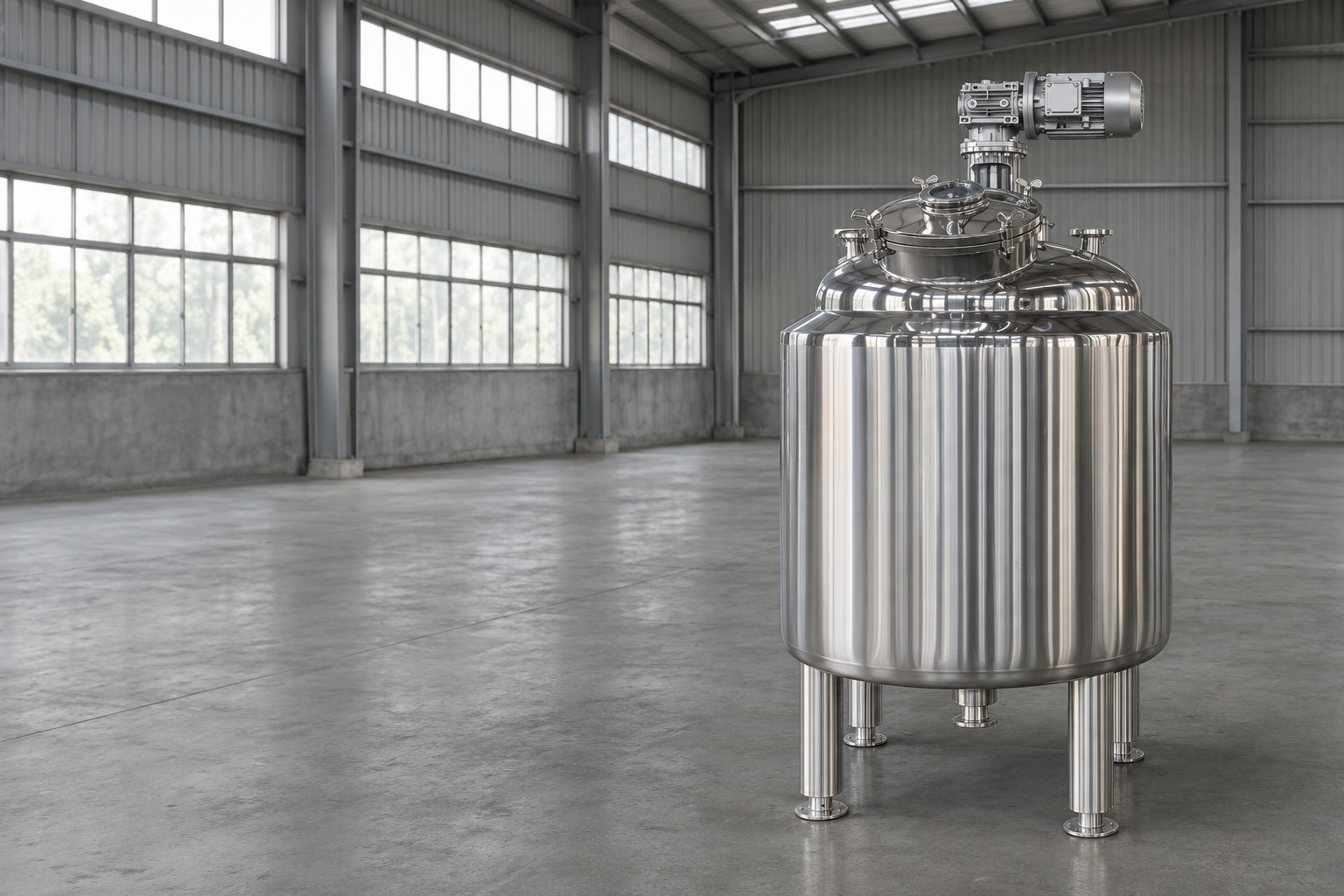
The YIYI fermenter product page provides the equipment context. Its product photograph does not establish the compound, certification or replacement part requirements for every seal. Obtain the applicable parts information from the equipment documentation or responsible supplier. Photographs may help communicate location, but they should not replace a controlled part description.
Connect the review with the site’s existing gasket chemical compatibility assessment. That assessment concerns service conditions and material suitability. The present file concerns a change of supplier and the evidence supporting the specific alternative. Reuse relevant approved requirements while keeping the new supplier decision identifiable.

Distinguish a supplier change from an identical part purchase
The first question is what actually changes. A distributor may offer the same manufacturer’s part under a different commercial reference, or a new manufacturer may produce a visually similar gasket using a different compound. These situations need different evidence. Ask the seller to identify the manufacturer, full part designation, compound designation and the relationship between its reference and the approved reference.
Do not translate a broad polymer name into a claim that formulations are interchangeable. A family name does not describe every additive, curing system, finish or production control. Similarly, color alone does not establish identity. Record which attributes are controlled by the approved specification and which remain unsupported by the proposed supplier’s documents.
If the supplier calls the part equivalent, ask for a comparison against the actual requirement. A commercial cross-reference helps locate a candidate; it does not automatically approve that candidate. Preserve qualifications in the response. A statement limited to dimensions should not be summarized as full equivalence for chemical exposure, cleaning and product contact.
Build a supplier substitution evidence matrix
The following matrix is a suggested review structure. It supplies no numerical tolerances or universal test requirements. Acceptance criteria must come from the approved equipment and site requirements, with additional assessment where the change creates a new question.
| Review area | Evidence to request | Unresolved condition to record |
|---|---|---|
| Part identity | Approved drawing or part reference and proposed reference | Similar catalogue name without a controlled cross-reference |
| Geometry | Applicable dimensional specification and conformity evidence | Nominal size only, with profile or tolerance unclear |
| Compound | Manufacturer and compound designation | Polymer family or color is the only identifier |
| Intended service | Documented product, cleaning and temperature conditions | Suitability statement covers different conditions |
| Contact compliance | Relevant declaration linked to the exact article | General food-grade claim without scope |
| Traceability | Lot identification and records linked to the delivered pack | Certificate cannot be connected to the supplied parts |
| Change notification | Agreed notice process for controlled attributes | Future formulation changes can occur without review |
| Release | Named reviewers, decision and any conditions | Purchase approval is the only authorization |
Attach evidence rather than copying unsupported values into the matrix. Where a supplier protects proprietary formulation details, the reviewer can request an appropriate declaration or other acceptable evidence without demanding confidential recipes. If the available evidence cannot demonstrate conformity, leave that requirement unresolved and retain the hold.
Review food-contact evidence for the intended use
The FDA guidance on determining food-contact regulatory status explains that status depends on the substances, specifications and use conditions. It also identifies manufacturer-specific limits on reliance on food-contact notifications. A purchaser should therefore request evidence that applies to the proposed article and its actual use, rather than treating a familiar regulatory reference as a blanket product approval.
The FDA overview of how food-contact substances are regulated provides further context for intended-use authorization. These U.S. resources do not establish compliance in every destination market or certify a fermenter assembly. Ask the responsible quality or regulatory specialist which evidence is needed for the plant’s market and process.
Keep the resulting scope statement concise: identify the exact gasket, the supplier evidence reviewed, the intended contact application and any limitations. Avoid rewriting a supplier’s qualified declaration as an unrestricted claim. If the process or cleaning regime changes later, reassess whether the original acceptance still covers the new conditions.
Keep service suitability separate from regulatory wording
A compliance declaration and mechanical suitability answer different questions. Even well-documented material needs the correct profile and assembly requirements for its location. Conversely, a part that fits does not automatically provide the documentation required for product contact. Organize the file so that neither result is used to fill a gap in the other.
List the conditions that matter to the gasket review from approved process and cleaning records. Use actual chemicals, concentrations, temperatures and exposure patterns where the responsible reviewer needs them; do not invent values from a general article. Where a condition is not known, identify its owner and obtain the controlling document before asking the supplier for a meaningful suitability statement.
This is a document and approval exercise. It does not authorize installing an unapproved part for an informal trial in production. If a controlled evaluation is necessary, the site must define the objective, safe arrangements, acceptance criteria and disposition of affected material. Record the approved evaluation reference rather than describing an improvised test as validation.
Trace the first delivery to the approved evidence
Once a candidate is accepted, write the purchase description so stores can distinguish it from similar parts. Include the approved manufacturer or permitted source, part and compound references, documentation requirements and any agreed packaging or lot requirements. A vague order description creates uncertainty even when the technical review was thorough.
At receipt, compare the delivered labels with the order and approval file before opening or dividing packs. Confirm that certificates refer to the supplied item and lot using the site’s acceptance process. If the certificate names a different compound or the supplier changes the part suffix, stop the release and resolve the difference. Do not assume a suffix is merely administrative.
Retain traceability when parts move into smaller containers. A receiving record that was complete at the warehouse can become useless if loose gaskets lose their identifiers in the maintenance shop. Keep the stock issue connected to the equipment job so a later question can identify which delivered lot was used where.
The existing gasket spare shelf-life control guide addresses storage evidence after receipt. Supplier approval does not establish unlimited shelf life, and a valid storage record does not prove that a different supplier’s part was approved. Keep both controls linked to the same part identity.
Define change notification before the next order
A supplier approval should state which changes need notification or reassessment. Relevant examples may include manufacturer, compound designation, production source, profile or documentation basis, depending on the approved specification. The parties need an agreed mechanism; a purchase history alone does not guarantee that future deliveries remain identical.
Assign an owner for incoming supplier notices. Route notices to the reviewer who can decide whether the approved requirement remains met, and retain the decision with the active stock reference. When a notice affects existing inventory, identify the relevant lots before deciding their disposition. Do not discard useful history by replacing the previous certificate with a new one under the same filename.
Where the proposal also changes the cleaning process, link the fermenter cleaning chemical change review and reconcile both decisions. Acceptance of a spare gasket should not silently approve a different cleaning regime.
A repeated order can use the existing approval only within its defined scope. A new application, different cleaning chemistry or a changed closure assembly may require a separate review even when the gasket supplier is unchanged. Make the boundaries visible to purchasing so that the approved source list does not become an unrestricted catalogue.
Prepare the handover and maintenance release
The handover package should allow a person who did not conduct the review to understand what was accepted. Include the original requirement, comparison matrix, supplier responses, approval decision, conditions, receiving evidence and stock reference. Record rejected alternatives separately so they are not accidentally reordered when a familiar quotation is found later.
Before maintenance starts, confirm the work pack references the released part and current assembly instructions. Actual opening, isolation, cleaning and resealing require the installation’s authorized procedures and competent personnel. A supplier substitution record should not become an unofficial torque guide or a substitute for equipment-specific safety controls.
For help identifying the original part, send YIYI the tank order reference, asset information, gasket location, existing part or drawing number and clear photographs taken under safe conditions. Ask for the applicable replacement specification and documentation scope. Avoid requesting equivalence from an unlabelled photograph alone; providing the known reference makes the response more useful.
Further learning: quality systems and controlled records
The WHO laboratory quality education tutorial below offers broader context for organized quality records and responsibilities. It does not approve an industrial gasket or establish a plant’s supplier qualification procedure. Use it as supporting education while the written part-specific decision remains the release evidence.

World Health Organization (WHO): WHO: LQSI series – Laboratory Quality Stepwise Implementation Tool tutorial.
FAQ
Is a gasket with the same size and color an acceptable substitute?
Those observations identify a possible candidate, not an approved replacement. Confirm the controlled profile, compound, intended service, documentation and traceability for the specific location before the responsible reviewers release it.
Does a general food-grade certificate cover every fermenter application?
No. The evidence needs to apply to the exact article and intended contact conditions, with the relevant market requirements considered. A qualified reviewer should check its scope alongside mechanical and chemical suitability.
What if the first delivery differs from the approved supplier documents?
Keep it separate from released spares and record the discrepancy. Obtain corrected, traceable evidence or a new approval decision before issue. Do not change the receiving record to make an unexplained part or compound difference disappear.