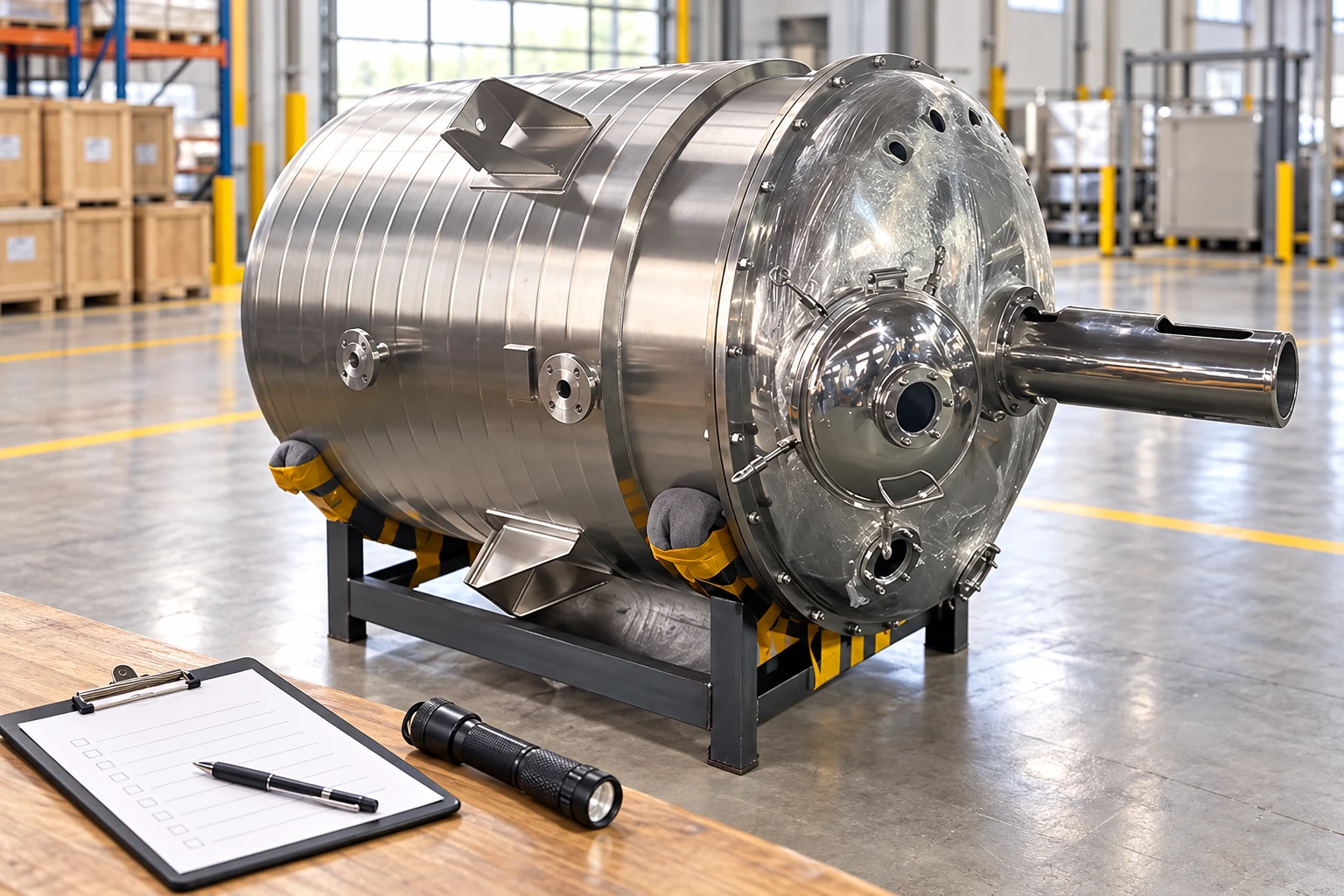
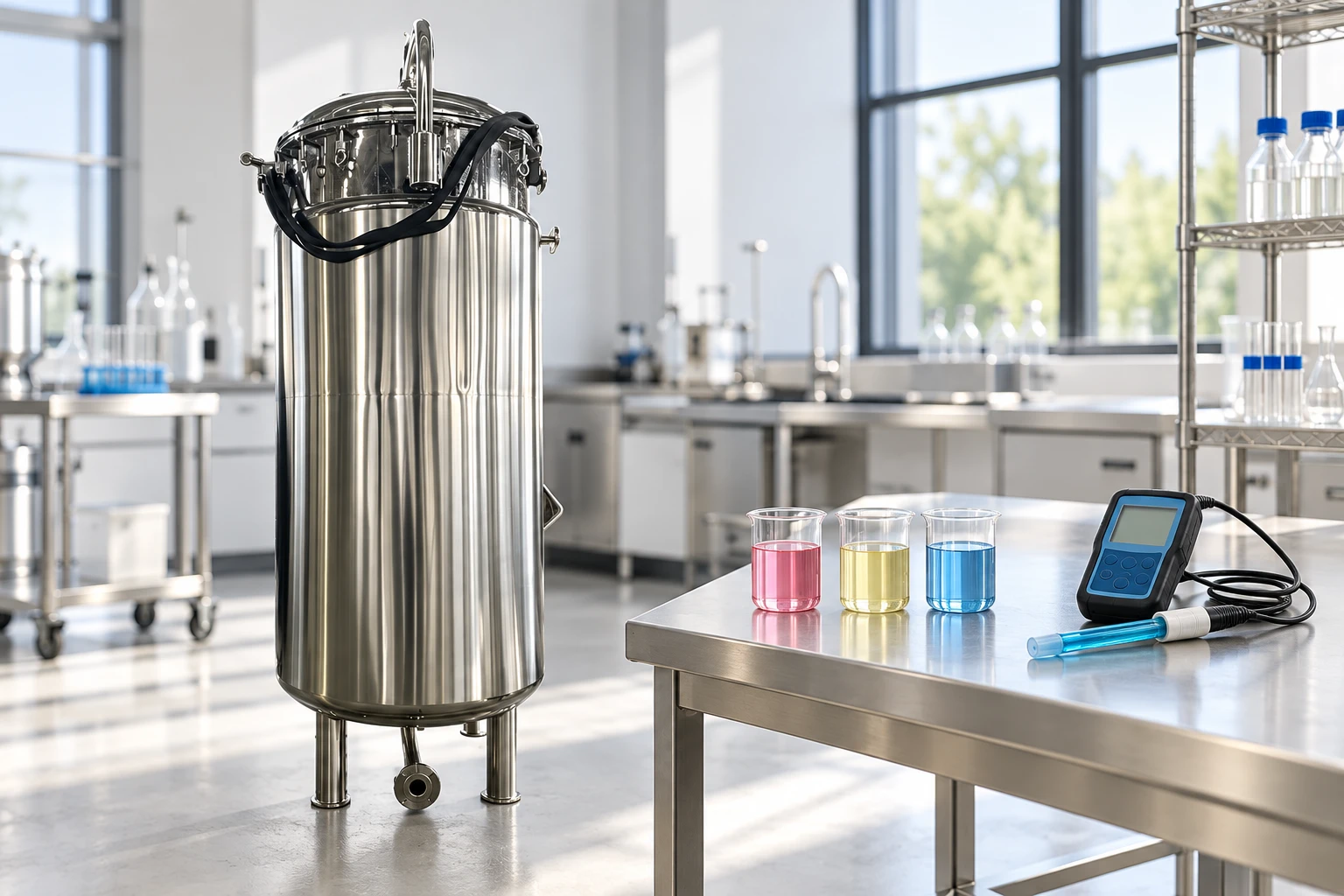
A sanitary filter housing should support cleanable product-contact surfaces, compatible materials and seals, controlled drainage, secure element seating, and a documented cleaning process. Stainless steel and clamp connections alone do not establish hygienic performance. Review the installed product path, internal details, access, operating envelope, and verification evidence before selecting a housing for food or pharmaceutical processing. Sterile filtration requires an additional validated system and cannot be inferred from a sanitary-looking vessel. This guide provides a purchasing framework; illustrations reference YIYI’s titanium-rod filter housing to discuss visible construction, without claiming that the pictured configuration holds sanitary certification or is suitable for every regulated process.
Define the hygienic duty and its boundaries
Identify the product, process stage, quality risks, and applicable site requirements. A housing used to remove particles before another treatment step has a different responsibility from a final validated microbial barrier. Describe allergens, residue behavior, product sensitivity, and the consequences of contamination. Let the responsible process and quality teams define the acceptance basis before evaluating equipment.
For US food facilities, 21 CFR 117.40 addresses adequately cleanable equipment, maintenance, and food-contact material suitability. For drug manufacturing, 21 CFR 211.63 addresses suitable equipment design, size, and location for operation, cleaning, and maintenance. These references frame questions for the relevant application; they are not product certificates and do not establish compliance of a pictured unit.
Document whether the housing is cleaned in place, cleaned after disassembly, or serviced through another approved method. Identify who removes elements, how exposed components are protected, and how the assembly is released back to production. The cleaning strategy influences geometry, installation space, connections, and the evidence required from the supplier.
Map every product-contact surface
Use a sectional drawing to identify the inlet, outlet, dirty side, clean side, element seats, seals, closure, drains, vents, and instrument connections. An external photograph cannot reveal all product-contact surfaces. Request details for internal transitions and places where liquid can remain after draining. Follow the actual flow path rather than assuming that every polished surface receives cleaning fluid.
For multi-element arrangements, examine how flow reaches each element and how the clean side is protected from bypass. A housing may have generous outer dimensions while individual seats or passages create difficult-to-clean regions. Ask the supplier to describe these features and provide the relevant inspection and assembly instructions. Do not invent an acceptable dead-leg ratio or surface-finish value without the project’s standard and measurement method.
The YIYI titanium-rod filter page provides a real equipment reference for discussion. The visible shell and closure can help identify questions about access, but hidden flow distribution, drainability, and hygienic suitability need drawings and validation. Use the filter-tank overview for general construction context and keep the sanitary acceptance criteria separately documented.
Specify materials and seal compatibility
Request the proposed materials for the housing, product-contact internals, elements, and seals. Evaluate them against the product and cleaning conditions, including temperature, concentration, contact time, and any relevant corrosion risks. A stainless-steel grade alone cannot describe the compatibility of every component. Elastomers and other nonmetallic parts may have different limits.
Ask what documentation is required for traceability and contact suitability in the intended market. Require the supplier to identify the exact supplied formulation or component where the acceptance depends on it. A generic statement such as “food grade” is difficult to assess when the substance, intended exposure, and supporting document are unclear.
Define inspection and replacement criteria for seals. Repeated opening, cleaning, and temperature cycling can affect their condition and seating. Include spare-part identification and assembly instructions in the maintenance package. Avoid approving an alternative seal solely because its dimensions match; compatibility and performance also matter.
Evaluate closure design and service access
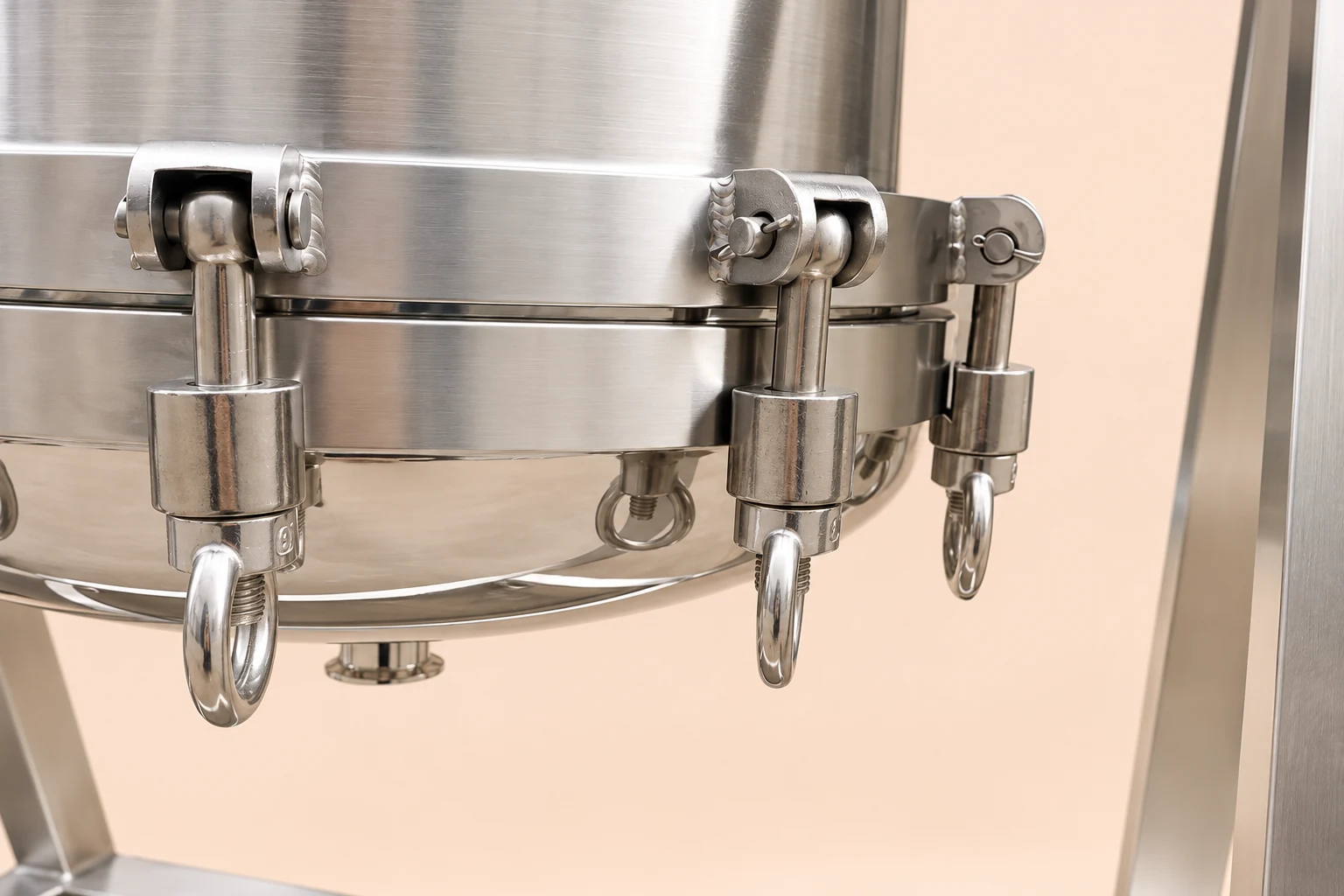
Review the closure’s pressure rating and operating instructions separately from its cleanability. A clamp or bolted connection must be suitable for the actual pressure and temperature envelope. The method of opening and closing should be defined for competent personnel after the approved isolation and depressurization steps. Appearance does not prove mechanical or hygienic suitability.
Check whether personnel can inspect sealing surfaces, remove elements, and clean relevant components without introducing damage or contamination. Provide adequate space for lifting and handling where required. A housing installed beneath a low ceiling may be difficult to service even when it is perfectly accessible in a catalogue photograph.
Consider the external surfaces and supporting frame as well. Cleaning around the equipment, control of lubricants, and protection from splashes can matter to the facility. Specify how adjacent surfaces and service tools are managed. Internal hygienic design should be evaluated within the actual installation rather than as an isolated object.
Verify drainage in the installed orientation
Ask for a drainage assessment that matches the intended orientation and connection arrangement. The location of a drain on a drawing does not demonstrate that all relevant regions empty through it. Internal ledges, element seats, fittings, and pipe slopes can affect retained liquid. Establish the inspection or test method and the acceptable residual condition for the product.
Identify whether vents are needed for filling, cleaning, or drainage and how they are operated without compromising the process. A trapped gas pocket may prevent a surface from receiving the intended cleaning liquid. Conversely, an open connection can become a contamination route. These questions require a controlled arrangement rather than a universal instruction to add more valves.
For CIP systems, connect the housing to the approved cleaning circuit and operating sequence. The sanitary heat-exchanger CIP guide explains related circuit, flow, and drainability questions. Its equipment-specific geometry differs from a filter, so use the shared planning principles without transferring exchanger velocities or acceptance conditions to the housing.
Use a hygienic design review table
The following review reflects the cleanability and suitable-design principles of the cited food and drug requirements. Project limits and validation methods must be agreed for the actual service.
| Design question | Evidence to request | What the evidence should establish |
|---|---|---|
| Product path | Sectional drawing and assembly definition | Dirty and clean boundaries and all contact surfaces |
| Materials | Component specifications and required records | Compatibility with product and cleaning conditions |
| Seals and seats | Detailed geometry and assembly procedure | Controlled seating, access and bypass prevention |
| Surface condition | Specified inspection method and records | Compliance with the agreed finish and construction criteria |
| Drainage | Installed-orientation assessment or test | Relevant retained-liquid condition |
| Cleaning coverage | Validated procedure and measurement plan | Effective cleaning of the intended surfaces |
| Service access | Maintenance envelope and handling instructions | Practical inspection and element removal |
| Release | Quality checks and controlled records | Documented readiness for the next production use |
Distinguish cleaning, sanitation and sterilization
These activities answer different questions. Cleaning removes unwanted residue according to an agreed method. Sanitation and sterilization involve additional microbial objectives and validated conditions appropriate to the process. A successful rinse or shiny interior does not by itself establish those objectives. The facility must define the required outcome and its verification.
Porous elements can require particular attention because contamination may be retained within their structure. A housing cleaned in place does not automatically mean that its installed media have been effectively cleaned or restored. Request element-specific procedures and acceptance evidence. The food-grade tank cleaning-validation guide explains related acceptance planning, while porous elements require their own validated method.
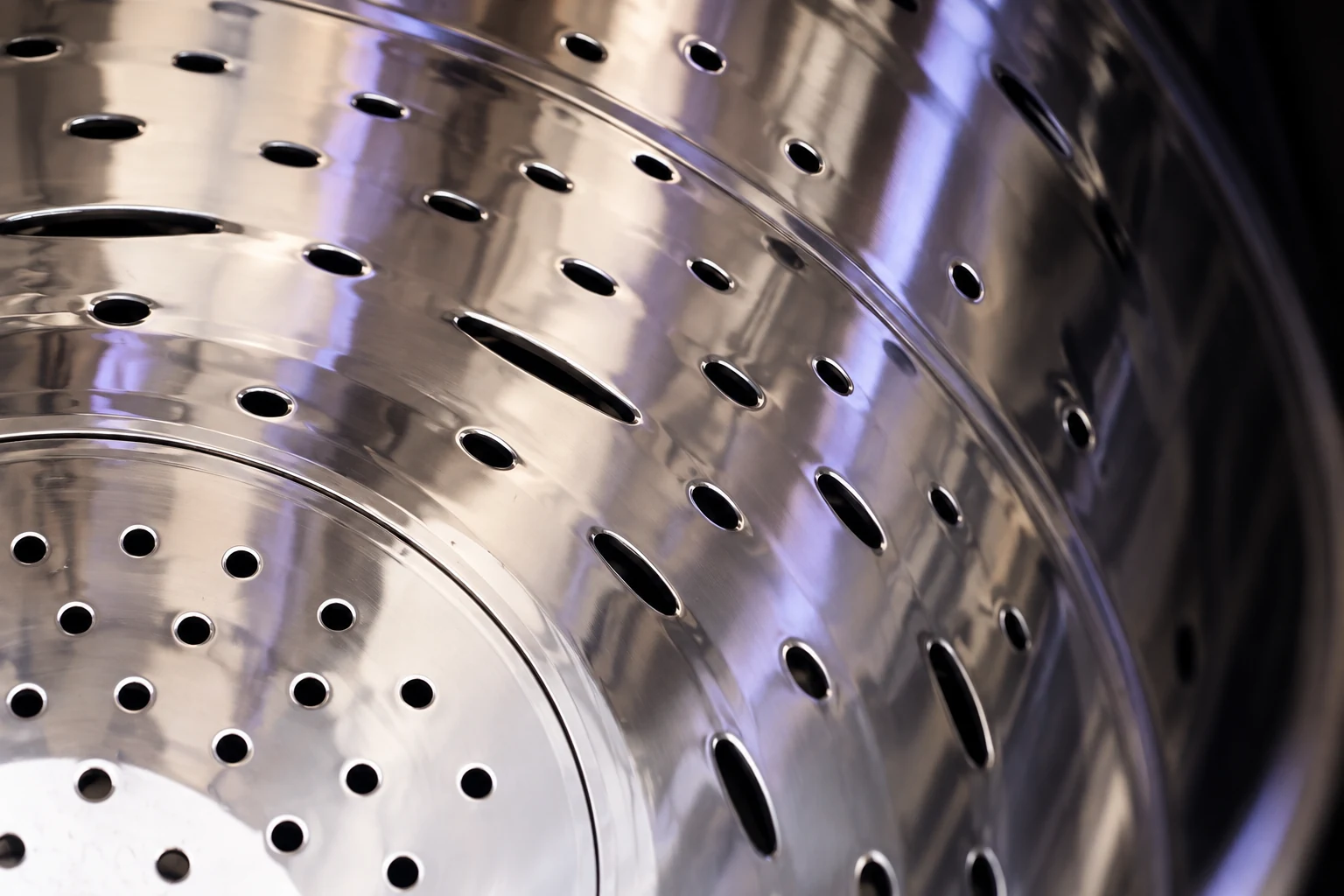
Validate the procedure against credible difficult conditions, including the relevant product residue and operating history. Identify the measurements needed to confirm cleaning completion and the actions required when a check fails. Do not use a generic time, temperature, or chemical concentration as a substitute for this assessment. Preserve records that connect the procedure to the exact equipment configuration.
Treat sterile filtration as a separate validated system
The FDA aseptic-processing guidance discusses validation of sterile drug filtration and integrity testing in its relevant scope. A particulate filter’s micron label and a stainless housing are not enough to establish a sterile barrier. The actual media, process conditions, integrity method, upstream burden, and downstream handling must be addressed by qualified specialists.
The micron-rating selection guide explains why rating definitions and retention evidence matter. Keep that discussion separate from a claim of sterile performance. Neither reusable titanium elements nor another material should be assigned microbial efficacy without supporting validation for the required duty.
Specify any integrity-test connections, sterilization requirements, and operating restrictions during design review. Retrofitting them after delivery may be difficult or may change the accepted configuration. Ask the supplier to identify which features are included, which are optional, and which claims require application-specific proof.
Further learning: the physical filtration function
NPTEL’s IIT Madras lecture explains filtration principles and provides context for the housing’s physical task. It is educational background, not training in sterile-process validation or proof of sanitary compliance. The design and quality records described above remain necessary for the actual installation.

Watch Lecture 13 Filtration by nptelhrd
Prepare a sanitary housing specification
Provide the product identity, process position, normal and peak flow, temperature and pressure conditions, particle-removal requirement, microbial objective where applicable, materials, cleaning strategy, inspection criteria, and maintenance space. Request a proposal that includes sectional drawings, component records, assembly instructions, cleaning evidence, and an acceptance plan. State whether sterile filtration is part of the duty so that it is not assumed from the word “sanitary.”
During comparison, ask each supplier to identify its limitations and unverified assumptions. A clear statement that an application needs further validation is more useful than an unsupported claim covering every food and pharmaceutical process. Release the equipment for production only through the facility’s approved acceptance and quality process.
Frequently asked questions
Does stainless steel automatically make a housing sanitary?
No. Geometry, surface condition, seals, access, drainage, installation, and cleaning verification all matter. Material selection is only one part of the assessment.
Can a sanitary housing guarantee sterile filtrate?
No. Sterile filtration requires a validated media and system, suitable operating conditions, and appropriate integrity and quality controls. Housing appearance does not establish that performance.
Is CIP always better than disassembly?
Choose the method that can reliably achieve and verify the required clean condition for the actual housing and media. Either approach needs appropriate design, access, procedures, and evidence.