Seed fermenter sizing begins with the viable culture needed to inoculate the production vessel at the planned time, then works backward through working volume, cell concentration, transfer recovery and scheduling. The seed tank must support healthy growth and a closed, cleanable transfer path; nominal vessel capacity alone does not establish that it can fill the next stage. A sound strategy defines the required inoculum on a biological basis, verifies the usable harvest volume, plans any intermediate stages, and checks that the transfer can be completed without losing viability or contaminating the production batch. There is no universal seed-to-production volume percentage that fits every organism and process.
Start with inoculum quality, not tank diameter
Process development should specify the target inoculum state: viable cell concentration, growth phase, purity, genetic or product stability where relevant, and the maximum acceptable transfer delay. Two seed broths of equal volume can have very different biological value. A production vessel receiving weak or late inoculum may show a long lag even when its mechanical equipment is correctly sized.
Define the production working volume at inoculation. Some processes begin at a lower fill and add feeds later. A percentage applied to final working volume can therefore overstate the initial inoculum need. State the basis for any percentage, cell-mass or viable-cell target. Check the receiving vessel’s minimum mixing, probe immersion and gas distribution at its actual starting volume.
Calculate the seed volume required at transfer
For a volume-based rule, Vtransfer = f × Vproduction,start, where f is the process-approved inoculum fraction and the production volume is the broth volume at inoculation. For example, if a validated process requires 5% of a 2,000 L starting volume, the receiving vessel needs 100 L of transferable seed broth. The 5% is illustrative, not a recommended setting for Kanger equipment or any organism.
The required seed working volume is larger if liquid remains in the seed tank, filter, pump or transfer line, or if a quality sample must be retained. In an illustrative case where only 80% of seed working volume can be delivered, 100 L transferred requires 100 ÷ 0.80 = 125 L in the seed vessel at harvest. The 80% recovery is a teaching assumption and should be replaced with measured residuals, line hold-up and operational constraints. Total vessel volume will exceed working volume to allow gas headspace, foam management and mixing, but the needed ratio is process-specific.
For a cell-mass basis, calculate the total viable cells needed in production and divide by the measured viable-cell concentration of the seed broth. Then account for transfer recovery and any required reserve. This is more informative than a fixed volume fraction when seed density varies. Use consistent units and make clear whether the assay counts total cells, viable cells or another measure of activity.
| Input | Unit or form | Decision it supports | How to verify |
|---|---|---|---|
| Production starting volume | L | Inoculum quantity and mixing at startup | Approved batch recipe |
| Required inoculum | Fraction or viable cells | Biological transfer target | Process-development data |
| Seed concentration and viability | Cells/mL or approved assay | Volume needed at harvest | Representative sampling |
| Transfer recovery | Fraction or residual L | Seed working-volume allowance | Drain and line hold-up test |
| Available seed working range | L | Agitation, aeration and probe immersion | Equipment drawing and water trial |
Decide whether an intermediate seed stage is needed
A single jump from flask to production may exceed the biology’s growth or transfer limits. Map the sequence from working cell bank or starter culture through each vessel. For every stage, write the starting and ending volume, expected growth time, target viability, contamination checks and next-stage transfer window. An intermediate stage is useful when it allows controlled expansion and reproducible inoculation; it also adds equipment, cleaning, sterilization and scheduling work.
Do not assume a fixed tenfold step is always appropriate. Published case studies use particular stage ratios for their organisms and economics, but the chosen process may require a different ratio. A seed fermenter that is oversized can be difficult to mix or measure at its minimum fill. A vessel that is too small may force a transfer before sufficient biomass develops. The working-volume range is therefore as important as nominal capacity.
Design a closed and verifiable transfer route
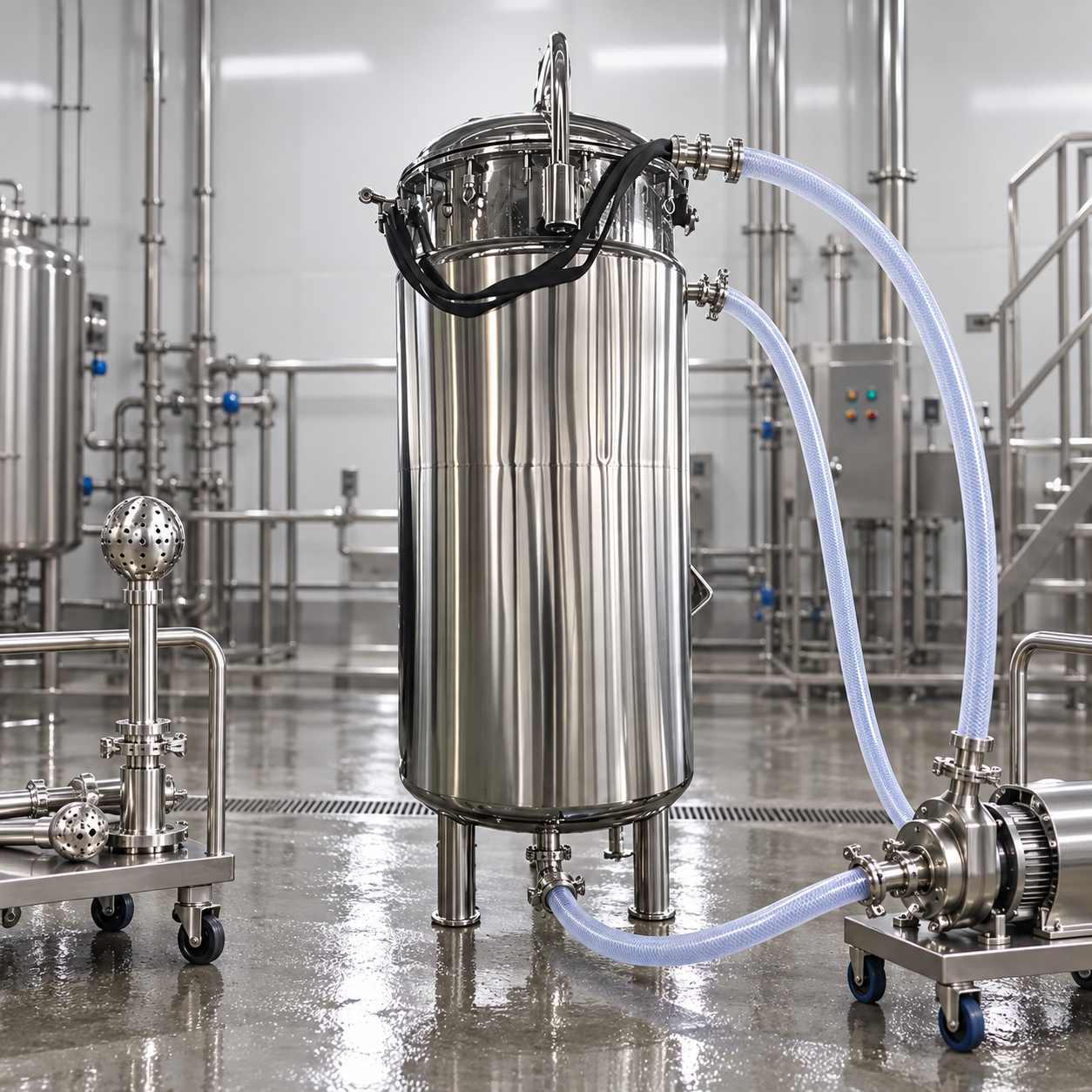
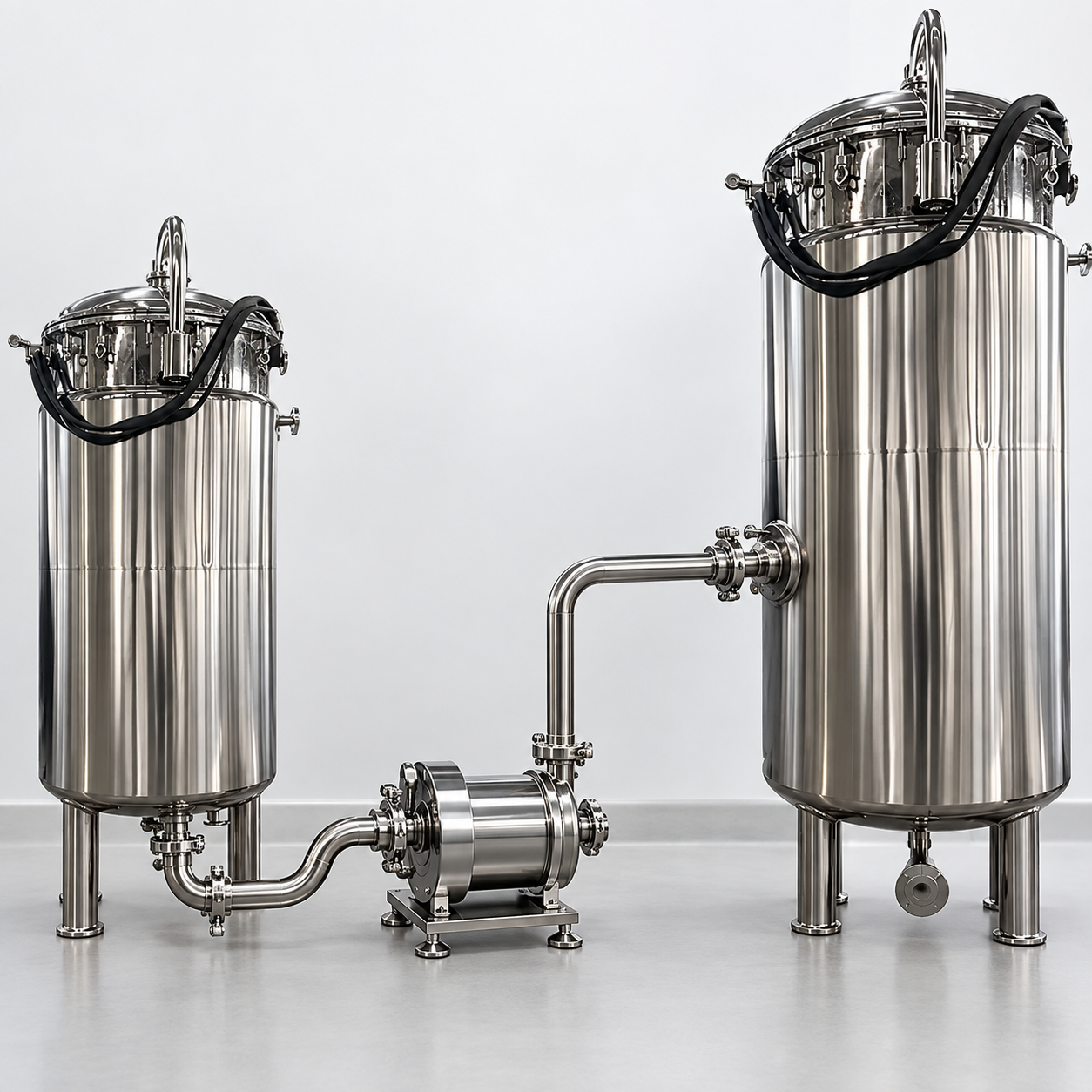
Locate the seed vessel relative to the production tank and determine whether gravity, pressure or a sanitary pump will move the broth. Check line length, elevation, pressure drop, shear sensitivity, hold-up and drainability. The route should be compatible with cleaning and sterilization, have defined valve sequencing, and prevent backflow into the seed tank. All connections within a sterile process must follow the site’s contamination-control strategy.
A transfer pump should cover the required flow while remaining gentle enough for the organism and controllable at the final small volume. A higher flow is not automatically better: it may create foam, shear or pressure spikes. A very slow transfer can expose cells to a long delay or hold period. Agree on a time window and verify it under the actual fluid properties. A flow totalizer or vessel mass balance can confirm delivered volume, but sensor accuracy and residual liquid still need assessment.
Provide sampling points and a decision gate before inoculation. The team should know which quality results are required, how long they take and what happens if the seed is out of specification. A transfer should not begin merely because a production slot is open. Conversely, a seed batch that is ready too early can age while waiting for production equipment. Scheduling is part of the sizing calculation.
Coordinate two vessels and the production calendar
Draw a timeline for seed growth, production-vessel cleaning and sterilization, cooling, media charging, inoculation, fermentation and turnaround. If several production vessels share one seed tank, test the overlap of their schedules rather than simply multiplying a single-batch volume. The seed vessel may be occupied during cleaning and preparation even after its culture has been transferred. Include contingency time for failed sterility checks, utility interruptions and maintenance without assuming a seed batch can wait indefinitely.
At the minimum seed fill, verify impeller coverage, temperature control, gas distribution, pH and dissolved-oxygen probe immersion. At maximum fill, check headspace, foam, exhaust capacity and cooling duty. The size chosen on a volume spreadsheet may fail one of these operating tests. Ask the supplier to state the minimum and maximum validated working volumes and what evidence supports them.
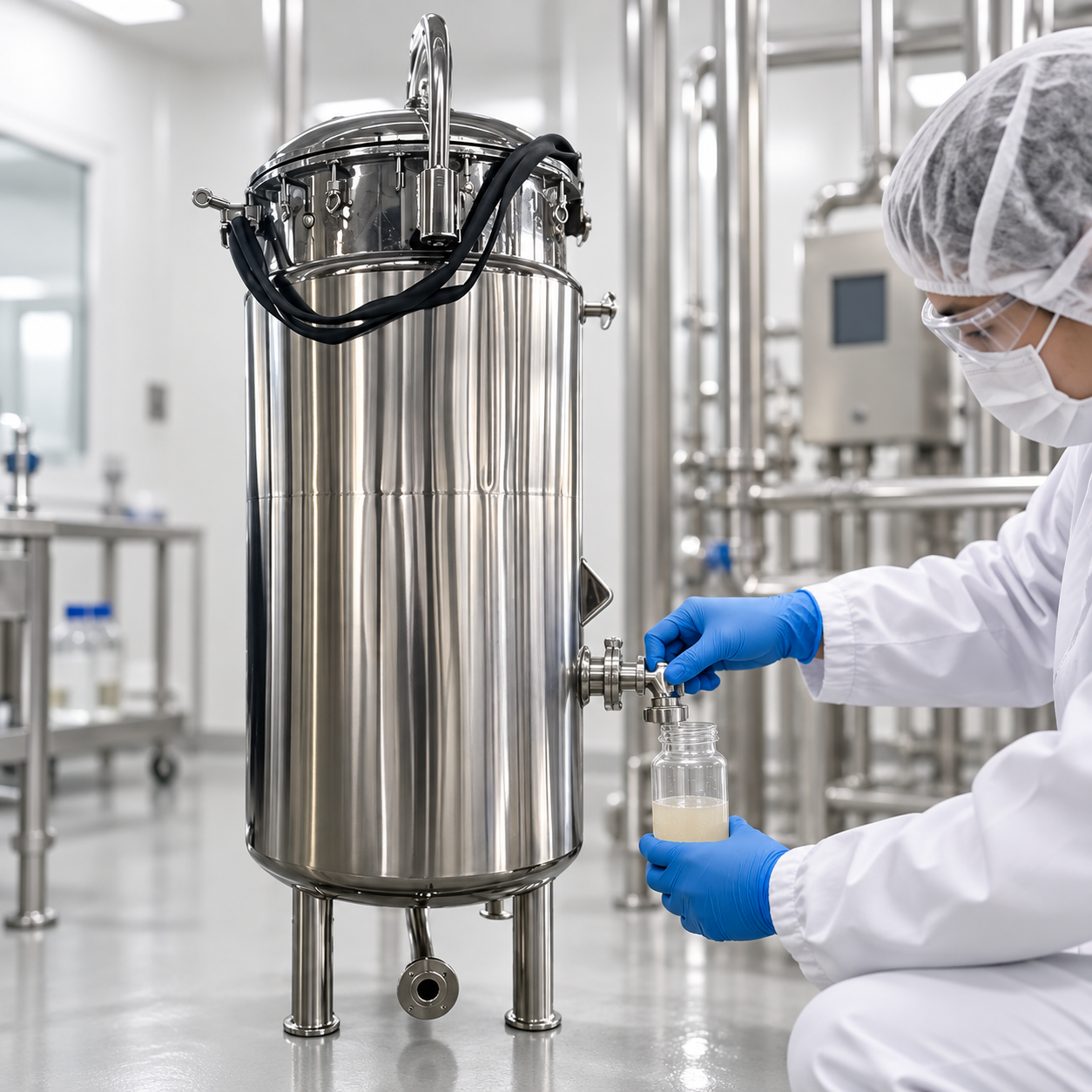
What to include in the buyer’s request
Provide production starting volume, inoculation target, seed concentration, approved growth time, planned stage count, medium properties, transfer temperature and pressure, acceptable transfer duration, recovery allowance and batch cadence. Specify whether the process requires sterile connections, SIP, CIP, containment, sampling or special segregation. Ask for vessel drawings, usable-volume range, agitator and sparger details, cooling capacity, transfer-line layout, pump data and a test protocol.
The fermenter scale-up guide covers mixing and gas-transfer changes between stages. See airflow control and SIP boundary planning for supporting systems. The Kanger fermenter product page is the equipment reference for an inquiry.
Verify the delivered inoculum with a material balance
Before transfer, record the seed vessel’s actual working volume and the quality sample removed. During transfer, measure the receiving-vessel volume or mass change and compare it with the seed-vessel decrease. The difference may be line hold-up, pump residual, sampling loss or measurement uncertainty. Do not silently treat every litre leaving the seed vessel as a litre of viable inoculum reaching production. A balance is especially helpful when a long transfer line or multiple valve branches are involved.
Establish the condition under which transfer is considered complete. If the process requires a final chase fluid, define its composition and whether it counts as inoculum or dilution. A chase may help recover cells but could disturb the receiving vessel’s starting concentration. When the line is disconnected or isolated, verify that both vessels and the line remain within their intended containment and sterilization boundaries. The final valve state should be part of the batch record, not an assumption.
Plan for a failed seed batch without improvisation
Decide how the production schedule responds if viability, purity or growth rate misses the approved gate. Options may include a new seed batch, a justified hold within a validated window, or postponing the production charge. The allowable choice depends on the organism and quality system. Do not make the seed vessel larger solely to compensate for an unreliable biological process; investigate variability in cell bank, medium, aeration, sampling and timing first.
Keep the same decision logic for scale changes. If a new production vessel has a different starting volume or transfer route, recalculate the inoculum requirement and confirm the seed vessel’s usable range. Reuse of an old volume percentage without checking viable-cell demand and recovery can create an avoidable lag phase. A documented calculation and a short transfer trial give the operations team a stronger basis than nominal tank capacities.
Sources and learning video
A peer-reviewed seed-train process model shows how stage volumes can be defined for one particular production system; its ratios are not universal rules. Seed-train research describes controlled expansion and the effect of process choices on time to inoculation. The FDA Biotechnology Inspection Guide discusses scale-up, process validation and control considerations.
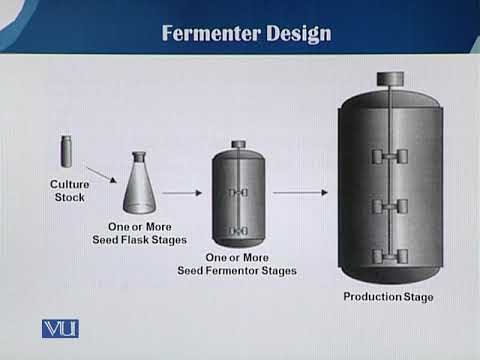
Watch the university fermenter-design lecture for background on vessel design.
Frequently asked questions
Is a fixed seed-tank-to-production ratio sufficient?
No. Start from the approved inoculum requirement, seed quality and transferable working volume, then include recovery and scheduling.
Why can a larger seed tank still fail?
Its minimum-fill mixing, probe immersion, cooling, foam headspace or transfer route may not meet the process needs.
Should the transfer line be part of qualification?
Yes. Verify valve sequence, sterility boundary, pressure, hold-up, flow and delivered volume under the intended conditions.