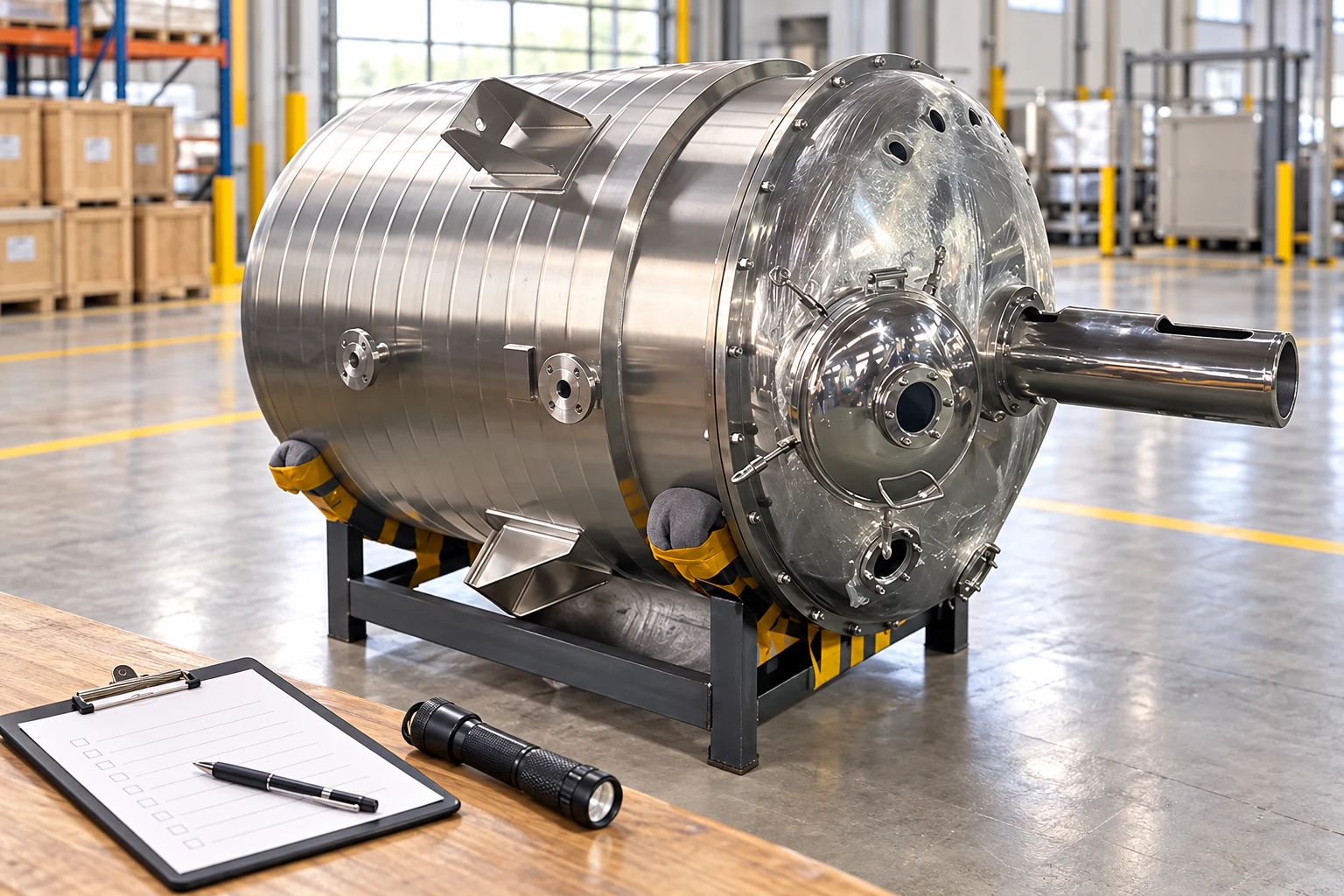
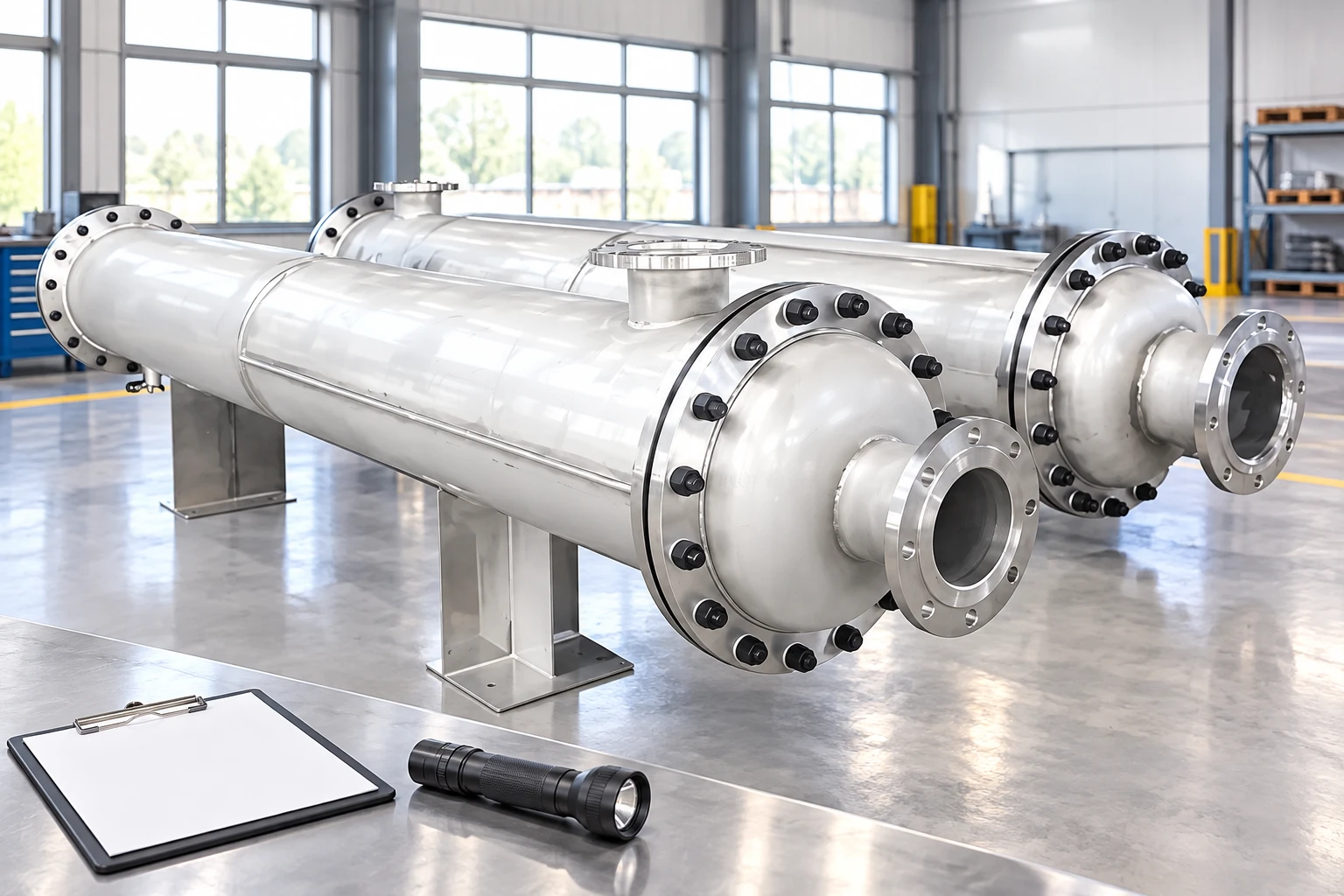
An epoxy resin reactor purchase decision starts with the batch path, not with a vessel photograph or a nominal volume. Map the raw-material additions, the known heat-release evidence, temperature limits, utility envelope, mixing behaviour, and the point at which product must leave the vessel. That record gives a supplier something reviewable while leaving reaction-safety ownership with the responsible engineering team.
For the wider equipment context, see the reactor range and the related resin reaction vessel guide.

Part 1. What Changes in an Epoxy Reactor Inquiry?
Epoxy work often contains stages that do not behave alike. Early additions may be easy to pump, while later stages may require different temperature control, agitation attention, or transfer planning. A useful inquiry therefore names the stage boundaries instead of presenting one averaged viscosity, one averaged temperature, and one generic reaction label.
The equipment discussion should also distinguish known data from assumptions. List what has been measured, what comes from a formulation owner, and what still needs review. This makes quotation exceptions visible before a purchase comparison turns into an operating surprise.
Part 2. Capture the Reaction Sequence Before Equipment Labels
Put the process sequence into a controlled sheet before asking for a jacket, agitator, or control cabinet. A supplier can then identify the information needed to discuss connections, mechanical arrangement, and instrumentation without inferring a thermal design from the word “epoxy.”
| Stage | Buyer should provide | Why the supplier needs it |
|---|---|---|
| Charging | material identity, starting temperature, order, and addition duration | identifies feed and port assumptions |
| Reaction | known heat-release data, target temperature band, and hold sequence | defines the review boundary for thermal utilities |
| Viscosity change | expected range and the point at which mixing changes | frames agitation and motor discussions |
| Transfer | discharge temperature, maximum hold-up, destination, and route | connects vessel outlet planning to the downstream system |
Important: A jacketed vessel is not, by itself, evidence that an epoxy reaction has adequate control or protection. The applicable reaction-hazard review, safeguards, and operating limits must be set by the responsible project team; see CCPS for process-safety context.
Part 3. Compare the Heat-Removal Boundary, Not a Jacket Name
“Jacketed” is an equipment description, not a complete thermal scope. Two proposals can look similar while relying on different jacket utility temperatures, flow assumptions, control logic, fouling allowances, or limits on what the vendor has been asked to evaluate. Put those assumptions in writing before comparing price.
| Review item | Record for a comparable discussion | Do not assume |
|---|---|---|
| Utility | type, supply range, return restriction, and availability | that a site utility is continuously available |
| Temperature | setpoint range, allowable deviation, and upset response ownership | that a controller proves safe reaction control |
| Heat evidence | source, scenario, uncertainty, and reviewer | that a supplier can recreate missing calorimetry |
| Mechanical boundary | requested material, connections, instruments, and supports | that an illustration defines the final configuration |
The chemical reactor product page is useful for establishing a configuration conversation. It is not a substitute for a project heat-and-safety review.
Part 4. Give Discharge Its Own Operating Window
Finished resin can be harder to move than the initial charge. Treat discharge as a timed operating stage with its own temperature, viscosity, line route, valve arrangement, cleaning requirement, and destination condition. That approach also exposes whether a pump, hose, filter, receiver, or operator step belongs to the supplier scope or the plant scope.

Ask the formulation owner to state the latest acceptable transfer point, the agitation window, and any hold-up limit. The equipment supplier can respond with an interface proposal, but cannot validate product quality after an undisclosed residence time or temperature excursion.
Part 5. Keep Proposal Assumptions Visible
Bid comparisons are more reliable when every supplier answers the same process sheet. Avoid comparing a detailed configuration against a quotation built from broad words such as “heated reactor” or “resin vessel.” A short exception register makes omissions easier to resolve before release.
| Comparison field | Buyer should define | Supplier should clarify |
|---|---|---|
| Batch path | named stages and feed sequence | assumptions behind ports and access |
| Thermal boundary | available utility and reviewed process limits | proposed equipment boundary and exclusions |
| Mixing | operating range and product behaviour | drive, impeller, and control assumptions |
| Discharge | temperature window and transfer route | outlet, valve, and cleanout interface |
| Documents | drawings, tests, and review milestones | deliverables and exceptions |
Part 6. Use a Reactor Discussion to Close Information Gaps
Use a chemical reactor discussion after the process owner has assembled the input package. YIYI can discuss configurable equipment around the stated vessel duty, connection needs, and documentation request. For a project conversation, send the controlled process data rather than an unqualified reactor size.
- Identify each material, the material compatibility question, and the sequence in which it enters the batch.
- Provide available heat-release evidence, temperature limits, utilities, and the responsible engineering review owner.
- Describe the viscosity trajectory, mixing expectation, discharge window, transfer destination, and cleaning boundary.
- State requested drawings, inspection points, documentation, site interfaces, and exclusions.

FAQs
What is an epoxy resin reactor?
It is a reactor configuration considered for an epoxy-related batch process. The final vessel, agitation, utility, materials, controls, and transfer equipment depend on the documented process envelope rather than the phrase alone.
Does a jacket make an epoxy batch safe?
No. A jacket can be one equipment feature, but it does not prove reaction control, relief capacity, safeguards, or an approved operating procedure. Those decisions require responsible project review.
What heat data should be shared?
Share the origin of the data, reaction stage, temperature conditions, uncertainty, feed sequence, limits, and the person responsible for interpreting it. Do not replace missing evidence with a generic cooling claim.
Why can discharge become a separate concern?
Viscosity, temperature, residence time, piping route, and downstream readiness may change after the reaction stage. Recording that window prevents the outlet from being treated as an afterthought.
Can a supplier select the agitator from batch volume alone?
No. Volume is only one input. Product behaviour, viscosity range, mixing objective, geometry, temperature, and operating stages need to be identified before a configuration discussion.
What should a buyer compare in two quotations?
Compare process assumptions, utility boundary, agitation basis, discharge interface, materials, instruments, documentation, exclusions, and project responsibilities on the same worksheet.
References
- CCPS at AIChE — public process-safety context; project applicability and final decisions remain with the responsible engineering team.