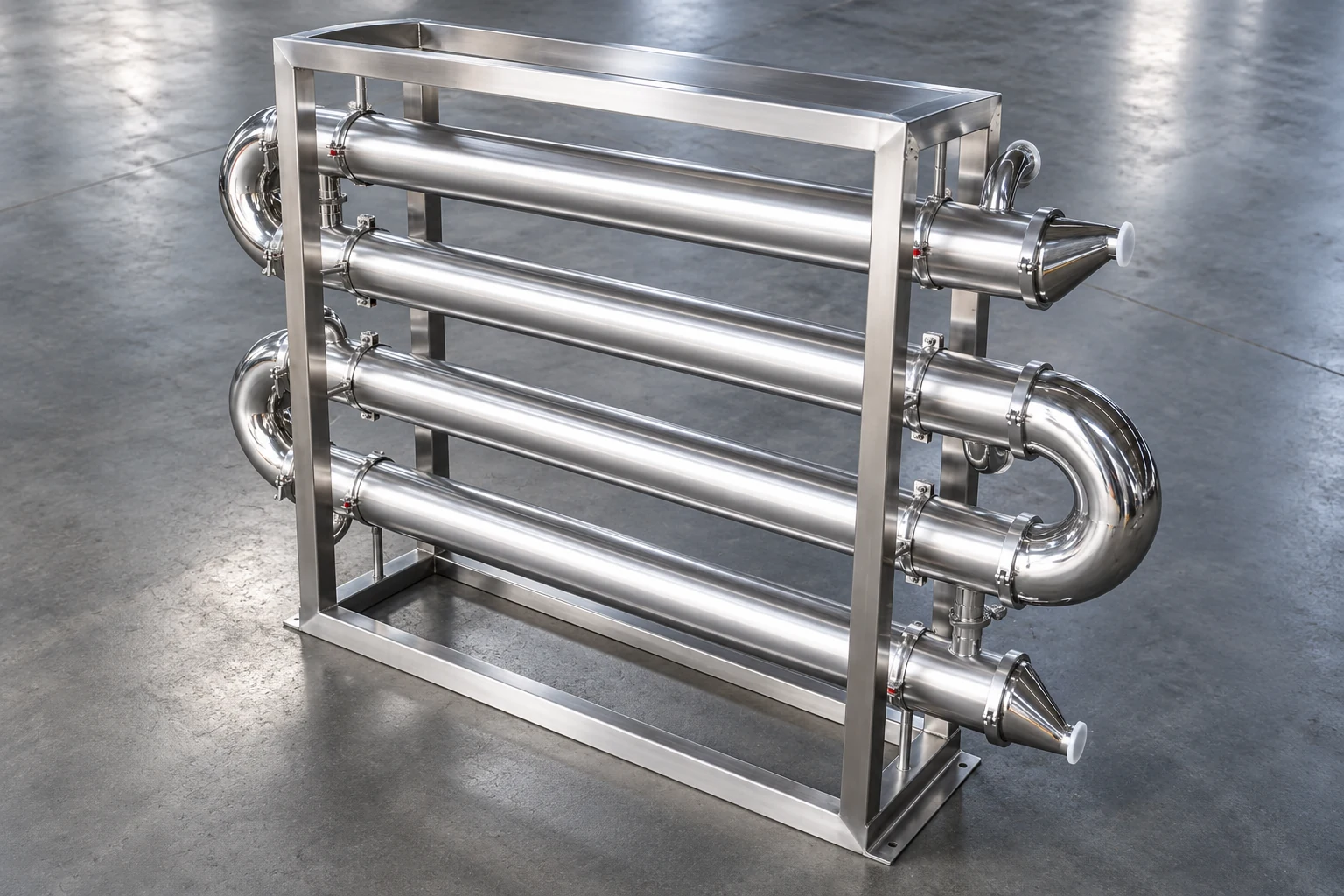
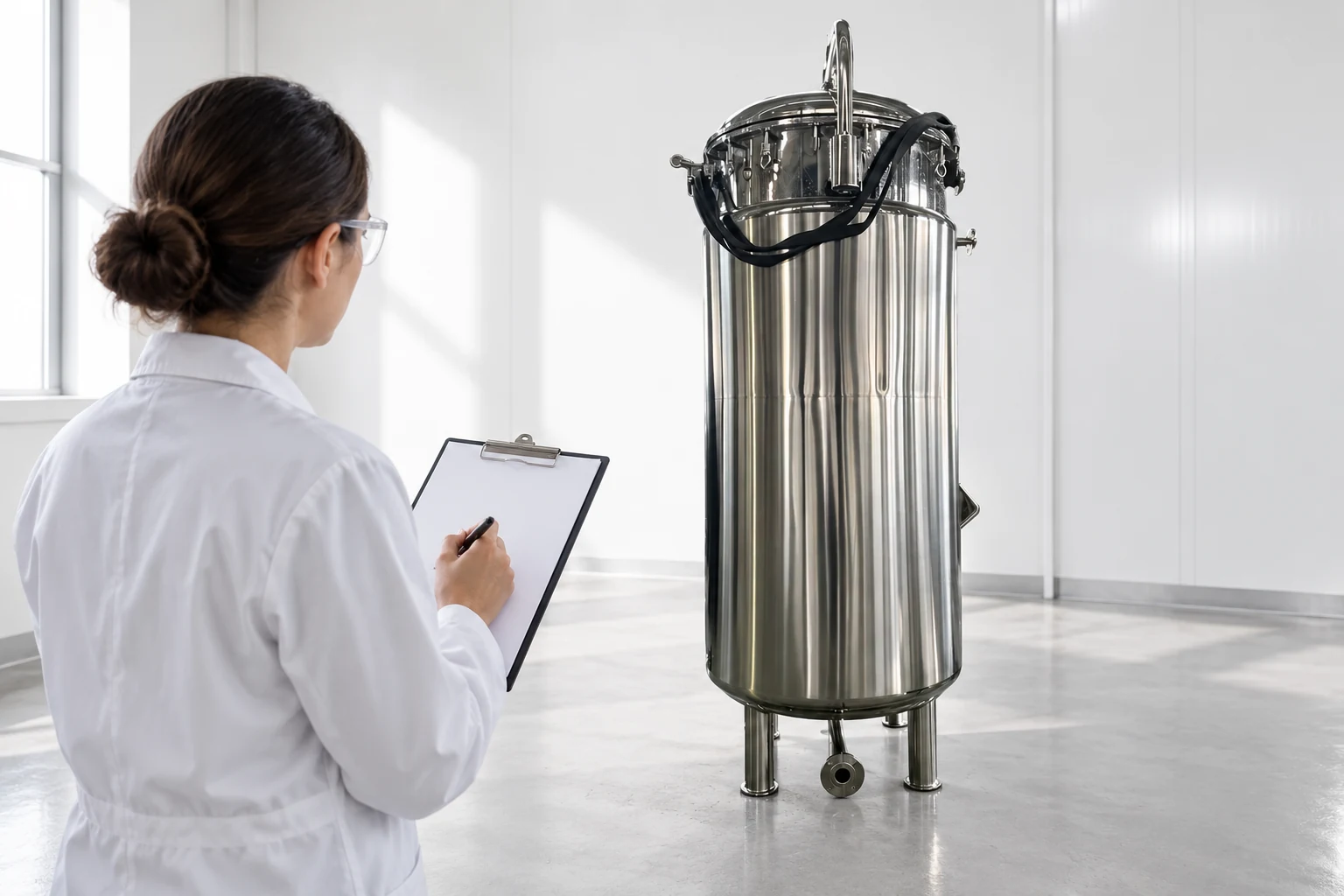
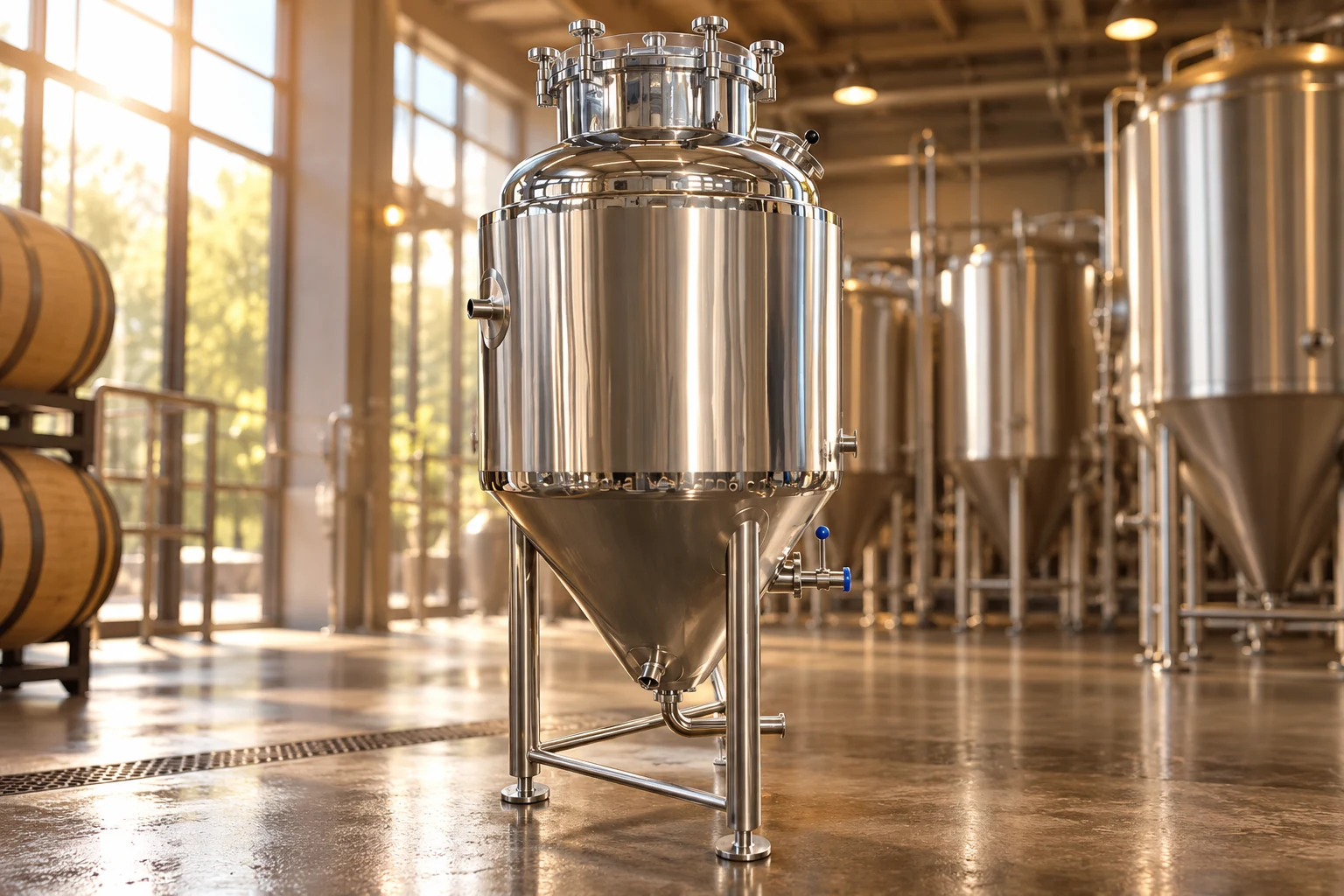
A stainless steel mixing tank is an essential process vessel for manufacturers that need reliable blending, dissolving, emulsifying, heating, cooling, or sanitary preparation of liquid and semi-liquid materials. It is widely used in chemical processing, food and beverage production, pharmaceutical preparation, cosmetics manufacturing, dairy processing, biological fermentation, and fine chemical applications.
For B2B buyers, selecting the right tank is not only about capacity or price. Material grade, agitator design, welding quality, surface finish, sealing method, jacket structure, cleaning design, and automation level can all influence production stability, hygiene, maintenance cost, and long-term service life. A tank suitable for low-viscosity beverage blending may not be suitable for high-viscosity cosmetics, corrosive chemicals, or sanitary pharmaceutical liquids.
According to the Food and Agriculture Organization of the United Nations, modern food systems increasingly rely on safer processing infrastructure, hygienic production, and efficient resource use. This trend supports growing demand for stainless steel sanitary mixing tanks in food, beverage, dairy, sauce, ingredient preparation, and fermentation facilities.
This article explains how stainless steel mixing tanks are designed, fabricated, customized, tested, and evaluated, helping procurement managers, plant engineers, OEM buyers, and international importers make more informed purchasing decisions.
The growing focus on hygienic processing is especially relevant for manufacturers handling food, beverages, dairy products, seasonings, pharmaceutical liquids, and biological fermentation media. In these applications, stainless steel sanitary mixing tanks are valued not only for corrosion resistance, but also for cleanability, smooth internal surfaces, sanitary fittings, and compatibility with CIP cleaning systems. For buyers, this means the tank should be evaluated as part of the full production process rather than as an isolated vessel.
Understanding the Role of a Stainless Steel Mixing Tank in Modern Manufacturing
A stainless steel mixing tank is widely used for blending, dissolving, dispersing, emulsifying, heating, cooling, temporary storage, and process preparation. Depending on the industry, the tank may handle low-viscosity liquids, high-viscosity creams, chemical solutions, dairy beverages, cosmetic emulsions, pharmaceutical liquids, fermentation media, seasoning products, or fine chemical formulations.
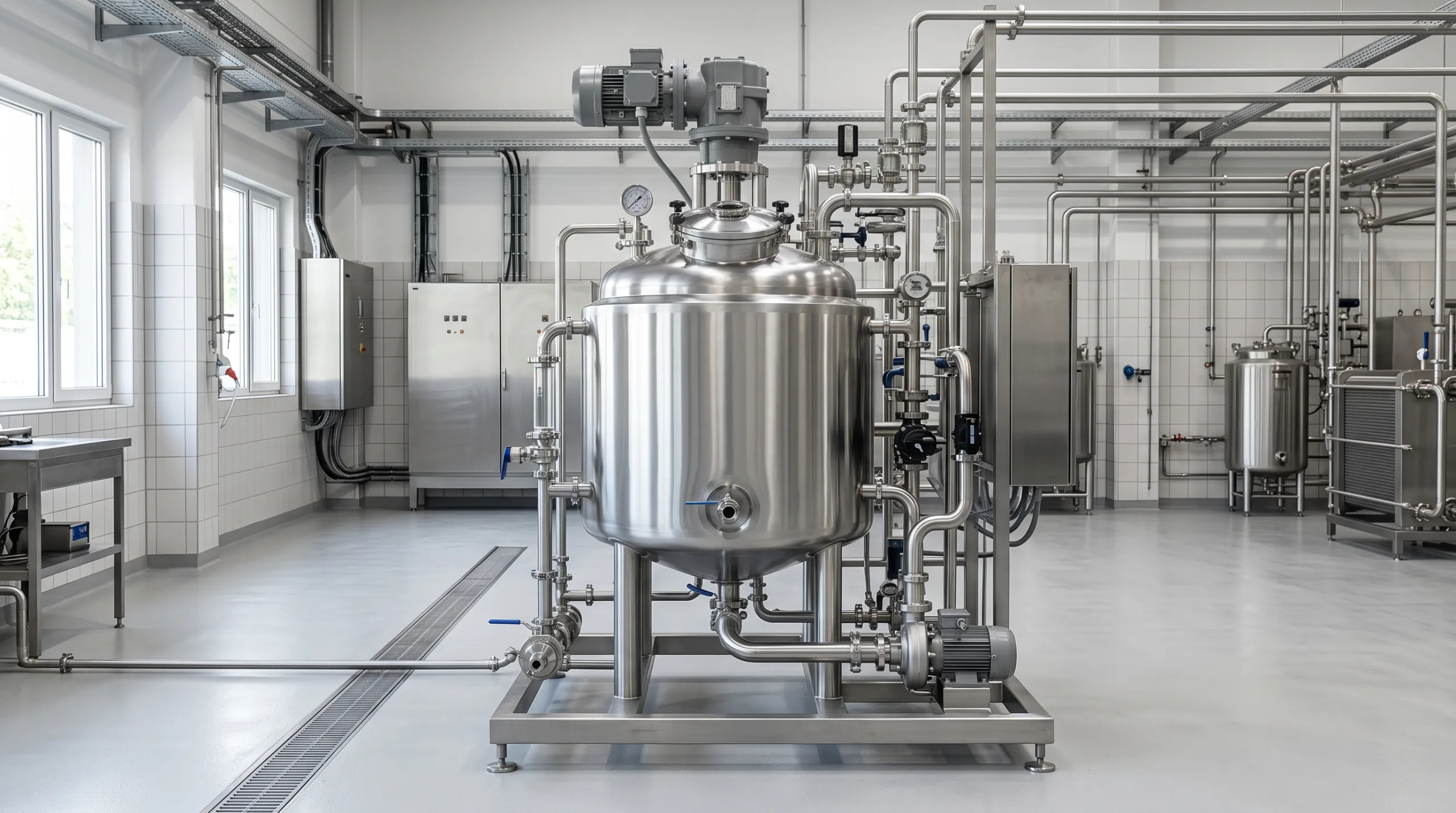
In modern production environments, a mixing tank stainless steel system must do more than hold materials. It should support controlled mixing, reduce dead zones, maintain product uniformity, improve cleaning efficiency, and withstand repeated production cycles. For sanitary applications, smooth internal surfaces, proper drainage, sanitary fittings, tri-clamp fittings, CIP cleaning design, and SS316L material may be important. For chemical applications, corrosion resistance, mechanical seal performance, jacket design, and pressure testing may become key concerns.
A typical stainless steel mixing tank may include the tank body, agitator, motor, reducer, shaft, stainless steel tank mixer, mechanical seal, manway, inlet and outlet ports, sanitary fittings, heating or cooling jacket, insulation layer, CIP device, temperature sensor, VFD, PLC, or HMI control system.
The exact configuration depends on whether the buyer needs an industrial mixing tank, sanitary mixing tank, chemical mixing tank, jacketed mixing tank, mixing tank with agitator, or a fully customized stainless steel mixing system.
From Material Selection to Tank Design: The First Step in Fabrication
Professional stainless steel mixing tank fabrication starts with process evaluation. Before production drawings are confirmed, engineers usually need to understand the material to be processed, including viscosity, density, corrosiveness, solid content, foaming tendency, temperature sensitivity, batch size, pressure or vacuum conditions, and cleaning method. These details help determine the stainless steel grade, wall thickness, tank geometry, agitator structure, sealing method, and surface treatment.
For general industrial or food-related liquid processing, SS304 is often suitable. It provides good corrosion resistance for many water-based and mildly corrosive materials. For more demanding sanitary, pharmaceutical, cosmetic, acidic, salty, or chloride-containing applications, SS316L is often preferred because of its improved corrosion resistance and cleanability. In some special chemical environments, duplex stainless steel may be considered when higher strength or stronger corrosion resistance is required.
Design considerations may include tank volume, diameter-to-height ratio, wall thickness, bottom shape, manway position, nozzle layout, agitator mounting method, support legs, load-bearing structure, heating or cooling jacket, and control system integration. For sanitary tanks, buyers may also specify internal surface finish requirements, such as polished or mirror-polished surfaces, depending on hygiene level, cleaning method, and product sensitivity.
Depending on the application and destination market, buyers may also request references to ASME pressure vessel rules, ISO 9001 quality management practices, FDA cGMP expectations, GMP-oriented documentation, EHEDG hygienic design concepts, CE electrical requirements, or project-specific inspection records.
Table 1: Common Stainless Steel Grades for Mixing Tank Applications
| Stainless Steel Grade | Typical Application | Key Advantage | Buyer Consideration |
|---|---|---|---|
| SS304 | General industrial mixing, food ingredients, water-based liquids | Cost-effective and widely available | Suitable for non-corrosive or mildly corrosive materials |
| SS316L | Chemical processing, sanitary production, pharmaceutical liquids, cosmetics | Better corrosion resistance and cleanability | Recommended for acidic, salty, chloride-containing, or hygiene-sensitive products |
| Duplex Stainless Steel | More aggressive chemical environments | Higher strength and corrosion resistance | Usually selected for special chemical applications and higher-budget projects |
Note: The selection between SS304 and SS316L should be based on the actual process medium, chloride concentration, cleaning chemicals, operating temperature, and regulatory requirements. SS316L is not required for every project, but it is often preferred when corrosion resistance, sanitary cleaning, or long-term chemical compatibility is a priority.
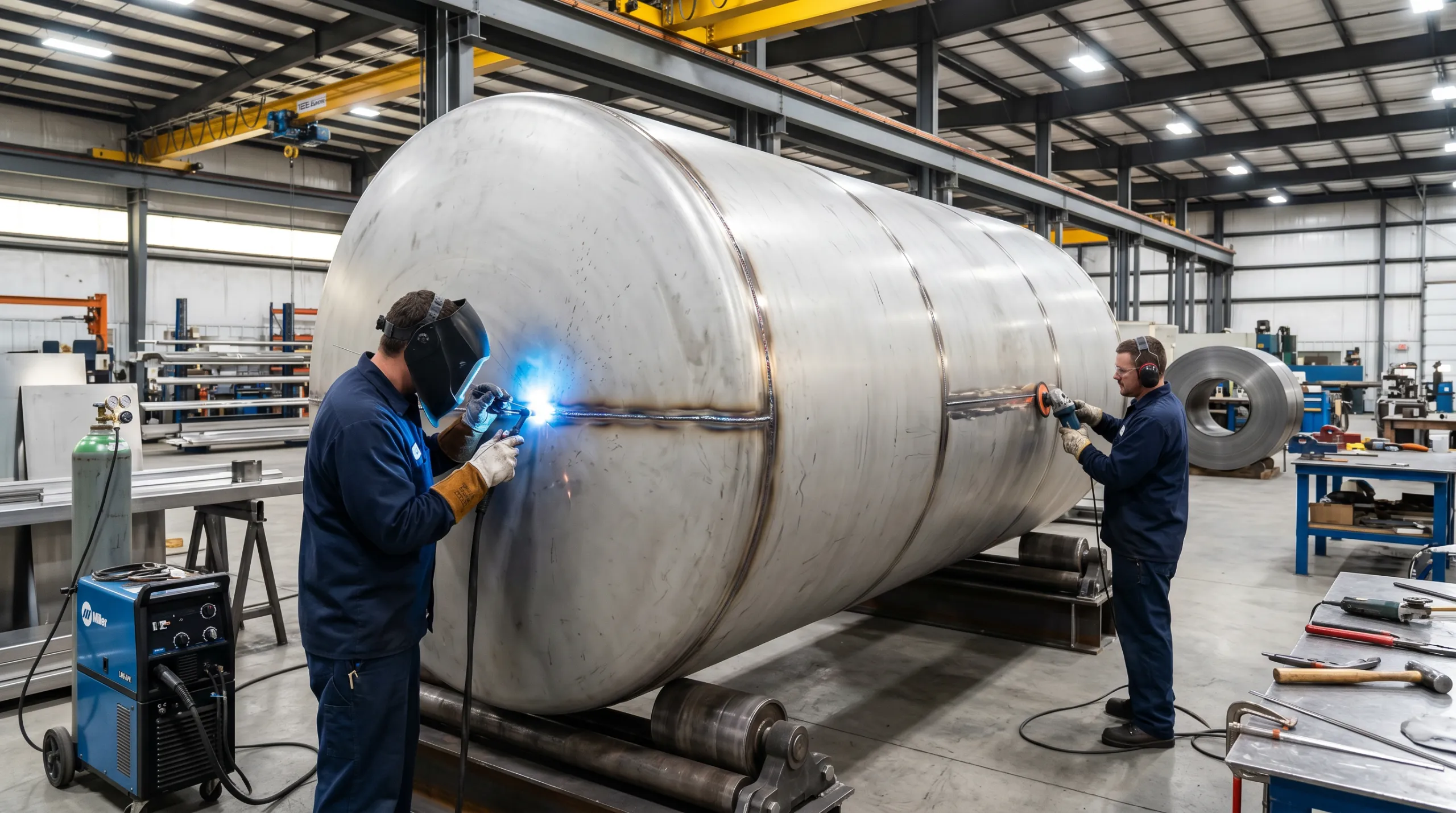
Key Manufacturing Processes in Stainless Steel Mixing Tank Fabrication
The fabrication quality of a stainless steel mixing tank directly affects its service life, cleaning performance, pressure resistance, and process reliability. A well-controlled manufacturing process normally starts from stainless steel sheet inspection and material certificate review. After the material is confirmed, cutting, forming, welding, polishing, assembly, and final testing are carried out according to approved drawings.
For sanitary stainless steel equipment, internal weld quality and surface finish are especially important. Poor welding transitions may create cleaning blind spots, while rough internal surfaces can increase contamination risk in food, beverage, dairy, cosmetic, and pharmaceutical applications. For jacketed mixing tanks, jacket fabrication and pressure testing must also be carefully controlled to ensure heating or cooling stability.
The fabrication process can generally be divided into three controlled stages:
- Material preparation and forming — stainless steel sheet inspection, certificate review, laser cutting, CNC bending, rolling, shell forming, and head forming.
- Welding and surface treatment — TIG welding, sanitary welding, nozzle installation, grinding, mechanical polishing, mirror polishing, pickling, and passivation when required.
- Assembly and final testing — jacket fabrication, insulation, agitator assembly, motor and reducer installation, mechanical seal assembly, leakage testing, pressure testing, and trial operation.
For buyers comparing different stainless steel mixing tank manufacturers, these manufacturing details are often more meaningful than a simple equipment photo. They show whether the supplier understands both mechanical fabrication and process application requirements.
Common Specifications Buyers Should Review Before Ordering
When reviewing stainless steel mixing tank specifications, buyers should avoid focusing only on capacity. A 1,000L tank for low-viscosity beverage preparation and a 1,000L tank for high-viscosity cosmetic cream may require very different motor power, agitator design, shaft strength, speed range, and heat transfer structure. Similarly, a chemical mixing tank may prioritize corrosion resistance and sealing, while a sanitary mixing tank may prioritize cleanability, mirror polishing, CIP, SIP compatibility, and sanitary fittings.
The following table provides a practical reference for common specification items.
Table 2: Key Stainless Steel Mixing Tank Specifications
| Specification Item | Common Options | Buyer Consideration |
|---|---|---|
| Tank Capacity | 50L–50,000L or customized | Based on batch size and production planning |
| Material Grade | SS304, SS316L | SS316L is preferred for corrosive or sanitary applications |
| Wall Thickness | Customized by volume and pressure | Should match working conditions and safety requirements |
| Agitator Type | Propeller, paddle, anchor, turbine, high-shear | Depends on viscosity and mixing purpose |
| Motor Power | Customized | Related to viscosity, speed, and tank volume |
| Speed Control | Fixed speed, VFD, PLC control | Helps optimize different production recipes |
| Surface Finish | Matte, polished, mirror polished, passivated | Important for hygiene and corrosion resistance |
| Heating/Cooling | Jacket, coil, insulation | Required for temperature-controlled processing |
| Sealing Method | Mechanical seal, packing seal, sanitary seal | Depends on pressure, leakage control, and hygiene needs |
| Cleaning Design | CIP spray ball, removable cover, sanitary fittings | Important for food, beverage, and pharma production |
| Control System | Manual, VFD, PLC, HMI | Supports repeatability and automation |
| Installation Type | Fixed, mobile, skid-mounted | Depends on factory layout and process flow |
Heating and cooling structures should also be reviewed carefully. A dimple jacket is often used for moderate heating or cooling requirements, while a coil or half-pipe jacket may be considered for more demanding heat transfer or pressure-related working conditions. The final choice should be based on heating medium, cooling medium, working pressure, temperature range, and production cycle.
A clear specification discussion helps reduce design mismatch. It also allows the OEM mixing tank supplier to recommend a standard tank, sanitary mixing tank, stainless steel chemical mixing tank, or custom stainless steel mixing tank based on actual production needs.
Agitator and Mixer Selection: Matching the Tank to the Process
The agitator is one of the most important parts of a stainless steel mixing tank. It affects mixing time, batch uniformity, heat transfer, powder wetting, foam generation, air entrainment, and product texture. In many projects, the tank body may look similar, but the internal mixing performance can be completely different due to agitator structure, blade angle, motor power, shaft length, baffle design, and speed control.
A propeller agitator is commonly used for low-viscosity liquids that need circulation and fast blending. Paddle and turbine agitators are often selected for medium-viscosity liquids, detergents, additives, and general industrial mixing. Anchor agitators with scrapers are more suitable for high-viscosity creams, sauces, gels, adhesives, and cosmetic products that require wall scraping and improved heat transfer. High-shear mixers are often used for emulsification, dispersion, powder-liquid mixing, and particle size reduction.
Table 3: Agitator Selection Based on Material Characteristics
| Material Type | Common Examples | Recommended Mixer Type | Practical Buying Tip |
|---|---|---|---|
| Low-viscosity liquid | Water-based solutions, light chemicals, beverages | Propeller or turbine agitator | Focus on circulation efficiency and mixing speed |
| Medium-viscosity liquid | Syrups, detergents, liquid additives | Paddle or turbine agitator | Check motor power and flow pattern |
| High-viscosity material | Creams, gels, sauces, adhesives | Anchor agitator with scraper | Confirm wall scraping, heat transfer, and torque requirements |
| Emulsion or dispersion | Cosmetic creams, suspensions, specialty chemicals | High-shear mixer | Review shear rate, rotor-stator design, and particle size target |
| Powder-liquid mixing | Ingredients, additives, powders into liquid | High-shear or combined mixer system | Consider dust control, feeding method, and wetting efficiency |
Technical Note: Viscosity has a direct influence on motor power, impeller diameter, shaft design, and mixing time. Buyers should avoid selecting a mixing tank only by volume. A 1,000L tank for low-viscosity liquid and a 1,000L tank for high-viscosity paste may require very different agitator structures and motor configurations.
OEM and Custom Options for Different Industrial Applications
Custom stainless steel mixing tanks are often required when standard equipment cannot fully match production conditions. OEM customization may involve tank capacity, stainless steel grade, diameter and height, single-layer or multi-layer structure, heating or cooling jacket, insulation, vacuum design, pressure design, explosion-proof motor, CIP cleaning, SIP sterilization support, sanitary manway, tri-clamp fittings, load cells, sensors, PLC control, HMI interface, or skid-mounted integration.
For chemical processing, customization often focuses on corrosion resistance, sealing reliability, jacket structure, and safe operation. For food and beverage production, buyers usually care about SS304 or SS316L material, sanitary welding, internal polishing, CIP cleaning, and hygienic drainage. For cosmetics, emulsification tanks may require high-shear mixing, scraper agitation, vacuum deaeration, heating, cooling, and smooth surface treatment. For pharmaceutical or biological fermentation applications, documentation, cleanability, passivation, and GMP-oriented design become more important.
Fujian Yiyi Intelligent Control Co., Ltd. provides sanitary stainless steel equipment and turnkey process equipment support for industries such as pharmaceutical extraction and concentration, fine chemicals, dairy beverages, beer fermentation, biological fermentation, and high-precision fluid equipment. In practical OEM projects, the more useful approach is not to select equipment from a simple model list, but to connect tank design with material properties, production capacity, cleaning requirements, and factory layout. This helps ensure that the selected configuration supports the buyer’s actual production goal.
A Practical Application Case: Upgrading Beverage Ingredient Mixing
In a recent overseas beverage ingredient project, the buyer planned to replace open-top manual blending with a more consistent stainless steel sanitary mixing tank system. The main concerns were batch uniformity, easier cleaning, reduced manual operation, and compatibility with future process expansion. The original process used open containers and manual transfer, which made cleaning less efficient and made batch control more difficult.
After reviewing the product viscosity, batch volume, cleaning method, installation space, and heating requirements, the recommended solution used an SS316L jacketed mixing tank with a sanitary agitator, CIP spray ball, tri-clamp fittings, temperature monitoring, and VFD speed control. The jacket allowed controlled heating during preparation, while the polished internal surface and sanitary fittings helped simplify cleaning. The control system was kept practical for the current production stage, while leaving room for future PLC integration if the buyer expanded automation later.
This case shows why a stainless steel mixing tank should be selected according to process conditions rather than only tank capacity. A practical configuration can improve production consistency while avoiding unnecessary cost from features that the buyer does not currently need.
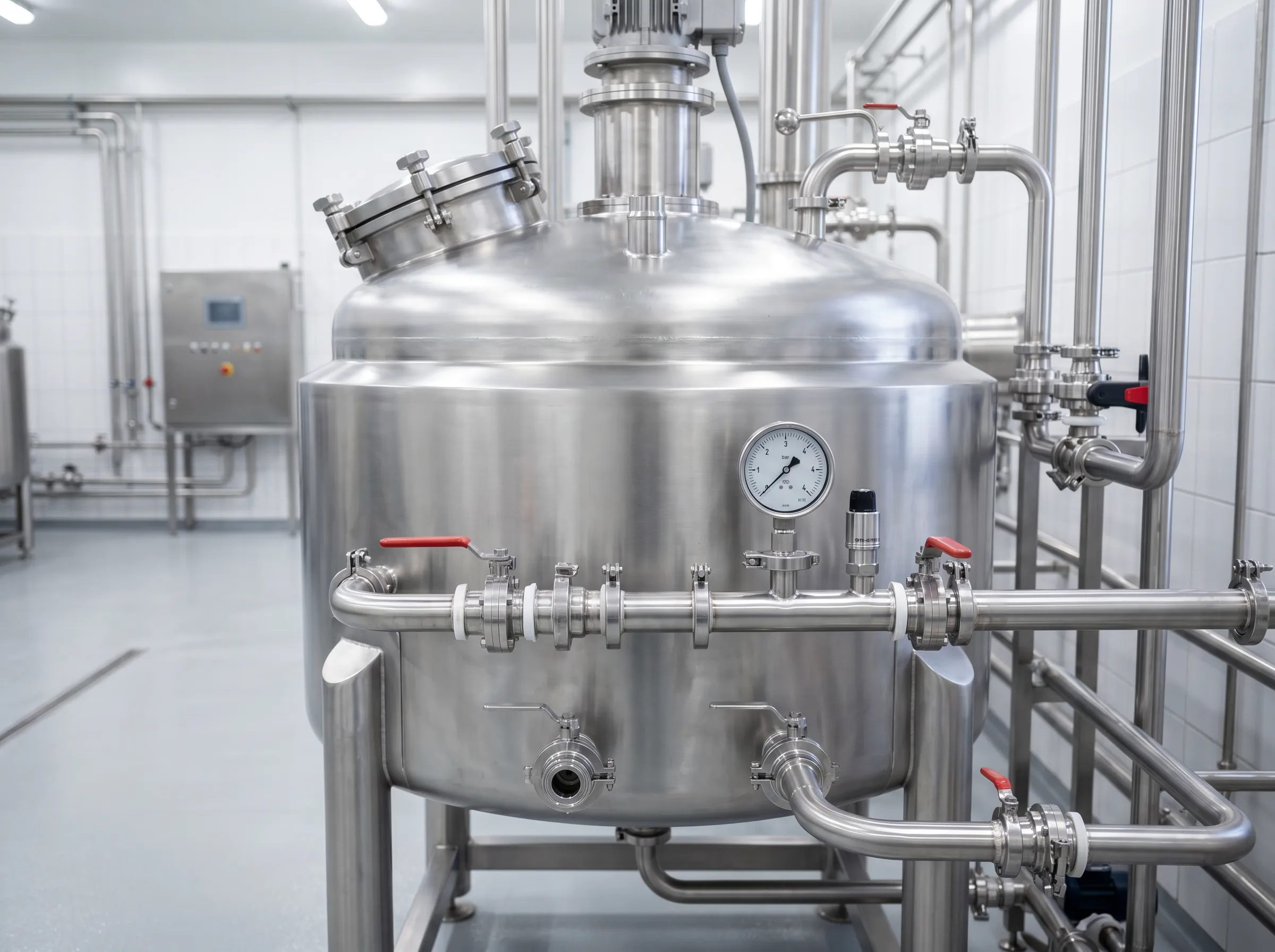
Quality Assurance During Stainless Steel Mixing Tank Production
Quality assurance is essential for stainless steel mixing tank fabrication because defects may not always be visible after installation. Material mismatch, poor welding, insufficient polishing, inaccurate nozzle position, weak sealing, jacket leakage, or unstable agitator operation can create production problems later. A reliable quality process should be built into each manufacturing stage instead of relying only on final inspection.
The importance of quality management in equipment manufacturing is reflected in ISO 9001, which emphasizes process control, traceability, documented inspection, and continual improvement. For stainless steel mixing tank production, these principles can be applied through material verification, dimensional inspection, welding checks, surface finish inspection, leakage testing, pressure testing, trial operation, and documentation review before shipment.
For sanitary applications, internal surface condition, weld smoothness, drainage structure, and cleaning accessibility are particularly important. For jacketed tanks, the jacket should be checked for leakage and pressure performance. For tanks with agitators, motor rotation, shaft alignment, vibration, noise, and mechanical seal condition should be reviewed before packaging. Export projects may also require material certificates, inspection reports, drawings, manuals, packing lists, and photos or videos for buyer confirmation.
YIYI Intelligent typically supports technical communication through drawings, process discussion, fabrication review, and shipment preparation documents. For international buyers, this type of documentation can help confirm that the delivered stainless steel mixing tank matches the agreed specification before installation.
How Buyers Can Evaluate a Stainless Steel Mixing Tank Manufacturer
When evaluating a stainless steel mixing tank manufacturer, buyers should consider technical communication as much as production capability. A capable supplier should ask about material properties, viscosity, batch volume, heating or cooling needs, cleaning method, pressure or vacuum requirements, and industry application before recommending a tank. If the supplier only quotes by tank volume, the risk of design mismatch may be higher.
Buyers may also review whether the manufacturer can provide engineering drawings, explain agitator selection, support SS304 and SS316L material options, show welding and polishing processes, provide material certificates, conduct pressure testing, and support OEM customization. For international importers, export packaging, spare parts communication, and after-sales technical support are also important.
Fujian Yiyi Intelligent Control Co., Ltd. has developed its manufacturing capability through long-term experience in sanitary stainless steel equipment, with services covering design, development, production, installation, commissioning, and after-sales support. Its website also presents turnkey project implementation, OEM/ODM customization, production process images, company environment, and equipment displays. For buyers reviewing suppliers online, these supporting pages can help verify whether the company has actual production capability, engineering support, and experience with customized stainless steel process equipment.
Practical Buying Guidance: Information to Prepare Before Requesting a Quotation
Before requesting a quotation for a stainless steel mixing tank, buyers can prepare three groups of information:
- Material and process data: product type, viscosity, density, corrosiveness, solid content, foaming tendency, and temperature sensitivity.
- Production requirements: batch volume, mixing purpose, working temperature, pressure or vacuum requirement, heating or cooling needs, and cleaning method.
- Project conditions: installation space, voltage, automation level, documentation needs, destination country, import standards, and expected delivery schedule.
If some details are not yet confirmed, buyers can still share product samples, current production challenges, or target output. A technical discussion can help determine whether a standard industrial mixing tank, stainless steel sanitary mixing tank, stainless steel chemical mixing tank, jacketed mixing tank, or fully custom stainless steel mixing tank is more suitable.
For projects involving sanitary processing, corrosive liquids, heating or cooling, vacuum operation, or high-viscosity materials, an early specification review is especially useful. It allows engineers to check whether the agitator, motor power, sealing method, jacket structure, and cleaning design match the actual process before production begins.
Conclusion: Choosing the Right Stainless Steel Mixing Tank for Long-Term Production Value
A stainless steel mixing tank is a process investment that affects production efficiency, product consistency, hygiene, safety, maintenance, and long-term operating cost. The right choice should be based on stainless steel grade, tank capacity, wall thickness, agitator design, sealing method, surface finish, jacket structure, cleaning design, automation level, OEM customization, and quality testing.
For buyers in chemical, food, beverage, pharmaceutical, cosmetic, dairy, fermentation, and fine chemical industries, the most practical way to reduce purchasing risk is to communicate process requirements clearly before confirming the order. A reliable manufacturer should be able to connect technical design with real production conditions, rather than simply offering a standard tank size.
Whether the project requires SS304 general industrial equipment, SS316L sanitary processing equipment, a jacketed mixing tank with agitator, or a complete turnkey stainless steel mixing system, early specification review can help buyers avoid unnecessary cost and improve long-term production reliability.
Planning a new mixing project? Prepare your material type, viscosity, batch volume, heating or cooling requirements, and cleaning method before contacting an engineering support team. This will make the quotation and technical proposal more accurate from the beginning.
FAQ
What is a stainless steel mixing tank used for?
A stainless steel mixing tank is used for blending, dissolving, dispersing, emulsifying, heating, cooling, or storing liquid and semi-liquid materials. It is widely used in chemical processing, food and beverage production, pharmaceutical manufacturing, cosmetics, dairy, coatings, adhesives, water treatment, and fermentation industries.
Which stainless steel grade is better for mixing tanks, SS304 or SS316L?
SS304 is suitable for many general industrial and food-related applications with mild corrosion conditions. SS316L offers better corrosion resistance and is often preferred for acidic, salty, chloride-containing, sanitary, pharmaceutical, cosmetic, or more demanding chemical applications. The final choice should depend on the process medium and cleaning conditions.
How do I choose the right agitator for a stainless steel mixing tank?
The agitator should be selected according to viscosity, density, mixing purpose, batch volume, and material behavior. Propeller agitators are common for low-viscosity liquids, anchor agitators with scrapers are suitable for high-viscosity products, and high-shear mixers are used for emulsification, dispersion, and powder-liquid mixing.
Can stainless steel mixing tanks be customized for OEM projects?
Yes. Custom stainless steel mixing tanks can be designed with specific capacity, material grade, dimensions, agitator type, motor power, jacket structure, vacuum or pressure design, CIP system, sanitary fittings, sensors, load cells, PLC control, and skid-mounted integration.
What information should buyers provide before requesting a quotation?
Buyers should provide product type, viscosity, density, batch volume, working temperature, pressure or vacuum requirements, mixing purpose, cleaning method, preferred stainless steel grade, installation space, voltage, automation needs, and destination country requirements.
What quality tests are commonly performed before shipment?
Common quality checks include material verification, dimensional inspection, welding inspection, surface finish inspection, leakage testing, jacket pressure testing, agitator trial operation, motor testing, sealing inspection, and documentation review.
Are stainless steel mixing tanks suitable for sanitary production?
Yes. Stainless steel sanitary mixing tanks can be designed with SS316L material, mirror polishing, sanitary valves, tri-clamp fittings, CIP spray balls, smooth welding, hygienic drainage, and sanitary seals. These features are commonly used in food, beverage, dairy, pharmaceutical, and cosmetic production.
What affects the price of a stainless steel mixing tank?
The price is affected by tank capacity, stainless steel grade, wall thickness, agitator type, motor power, surface finish, jacket structure, sealing method, control system, sanitary requirements, testing standards, and customization level. A lower initial price may not always mean better long-term value if the tank does not match the production process.
Technical References
- ISO 9001:2015 — Quality Management Systems Requirements
Official page: https://www.iso.org/standard/62085.html - ASME Boiler and Pressure Vessel Code, Section VIII
Official standards page: https://www.asme.org/codes-standards/find-codes-standards/bpvc-viii-bpvc-section-viii-rules-construction-pressure-vessels - FDA Current Good Manufacturing Practice Regulations
Official page: https://www.fda.gov/drugs/pharmaceutical-quality-resources/current-good-manufacturing-practice-cgmp-regulations - EHEDG Hygienic Design Guidelines
Official guidelines page: https://www.ehedg.org/guidelines - FAO — Food Systems and Food Safety Resources
Official page: https://www.fao.org/food-safety/en/