CIP rinse conductivity can help track changes in the ionic content of a rinse stream, but it does not identify every residue or prove that equipment is clean. A useful endpoint needs a suitable water baseline, a defined temperature convention, an appropriate sensor location and a product-specific acceptance basis. Compare like conditions and retain the relevant cleaning record rather than treating one low displayed value as a universal release test. This guide explains how to interpret the measurement and its limitations. It does not prescribe a cleaning recipe, a rinse duration or an acceptable conductivity difference for every tank and formulation.
Define what conductivity is expected to indicate
Start with the cleaning question. The measurement may help observe removal of an ionic cleaning solution from a particular return stream. It may also support process trending or distinguish stages in a controlled sequence. Those uses do not automatically make conductivity a direct test for every product residue, allergen or microbial condition.
State what the signal can reasonably indicate for the actual materials and method. If an important residue does not produce a suitable conductivity response, another assessment may be needed. Do not describe a sensor as detecting a particular chemical simply because a reading changes during rinsing. The relationship between the signal and the cleaning decision needs a justified basis, including relevant limitations and any complementary evidence used by the responsible process or quality team.
Establish the incoming-water baseline
The water used for rinsing contributes to the measured signal. Its condition can vary with source, treatment and operating circumstances. Record a suitable baseline through a defined method rather than assuming all clean water has the same conductivity. Identify where and when the baseline is measured and whether it represents the water entering the relevant cleaning step.
Do not compare an old laboratory water result with a current return-stream measurement without reviewing their compatibility. A baseline should support the actual decision, not merely provide a convenient number for subtraction. Preserve changes and unusual observations. If the incoming water changes, the interpretation of the rinse trend may change even when the equipment and cleaning sequence remain otherwise similar.
Keep the temperature convention explicit
Conductivity depends on temperature as well as the solution. An instrument may report an uncompensated measurement or a value adjusted according to a configured convention. Identify which value is being used, the relevant setting and the actual measurement conditions. Two values with the same unit can still be unsuitable for direct comparison if their temperature treatment differs.
Эт USGS chapter on specific conductance describes measurement, calibration and reporting in its water-quality context. It is not a CIP endpoint specification. Its practical relevance is the need to document the measurement conditions and method. Do not assume that a compensation function designed or configured for one solution is automatically accurate for every cleaning mixture and product residue.
Choose a location that represents the intended stream
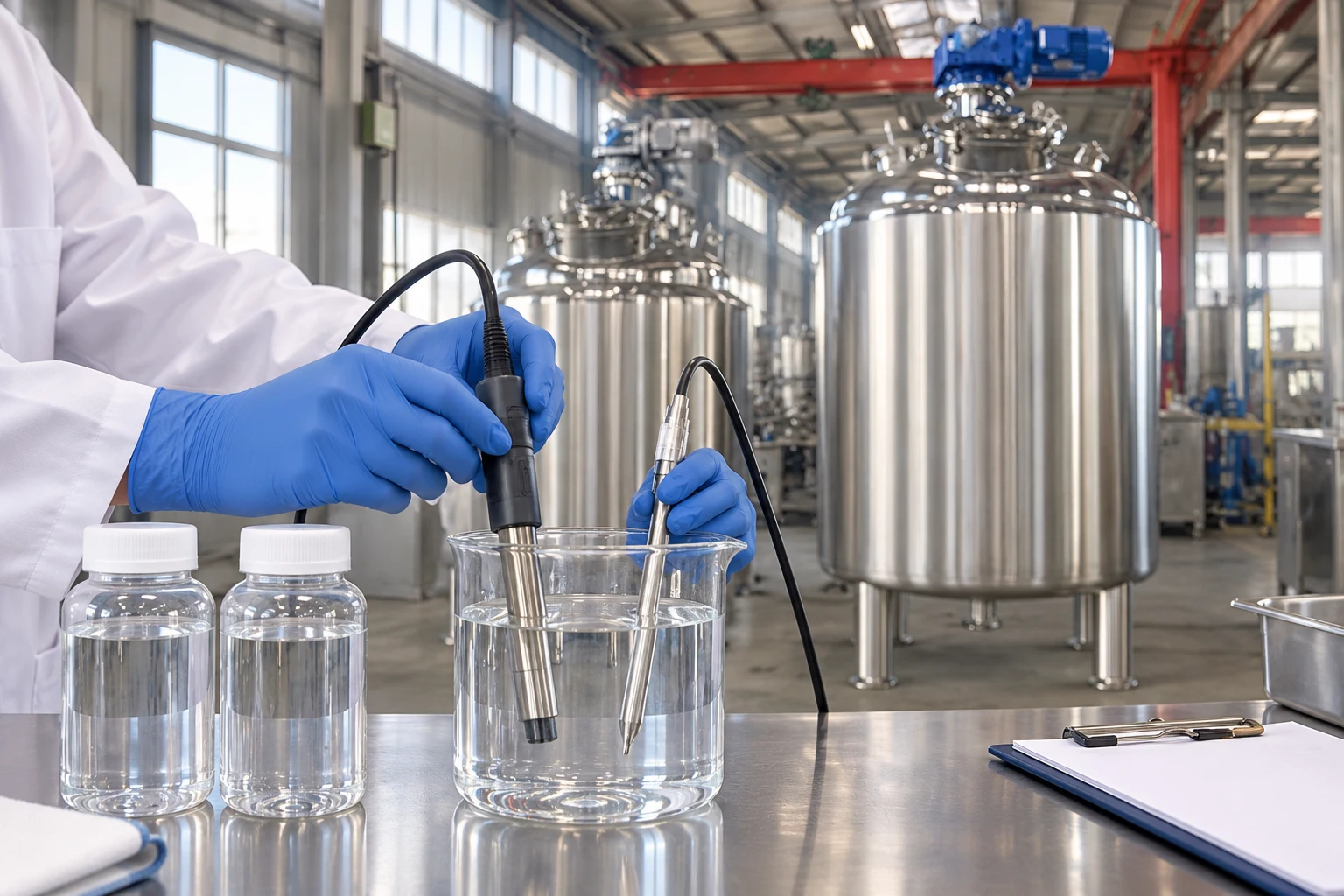
A return-line measurement, a vessel sample and a final point-of-use sample may answer different questions. Identify the actual hydraulic path and the cleaning boundary. A favorable measurement at one return location cannot silently establish that every branch, valve cavity or surface experienced the same rinse condition.
Review whether the sensor can encounter intermittent flow, incomplete wetting, gas or retained material that affects interpretation. The appropriate installation must follow the instrument and system requirements. Do not install a probe in an improvised connection or infer a suitable measurement point from a vessel photograph. Where the existing arrangement cannot represent the intended question, document the limitation and develop an appropriate assessment before relying on the signal for release.
Interpret a baseline difference carefully
A simple difference can be useful for a defined comparison: subtract the relevant baseline conductivity from the rinse conductivity, using compatible units and the same measurement convention. The result is an indicator difference, not automatically a cleaning-chemical concentration or a cleanliness verdict. A validated relationship would be needed for a more specific interpretation.
For a hypothetical arithmetic example, a rinse indication of 150 microsiemens per centimetre and a compatible baseline of 130 microsiemens per centimetre differ by 20 microsiemens per centimetre. The same values are 0.150 and 0.130 millisiemens per centimetre, with a difference of 0.020 millisiemens per centimetre. These invented demonstration values are not plant data or recommended limits. The calculation alone does not establish whether a particular rinse is acceptable.
| Элемент сравнения | Что документировать | A misleading shortcut |
|---|---|---|
| Incoming-water baseline | Source, location, time and measurement convention | Assuming every supply has a fixed clean-water value |
| Rinse-stream reading | Actual point, cleaning stage and relevant flow condition | Extending one location to every equipment surface |
| Temperature treatment | Actual conditions and instrument configuration | Comparing compensated and uncompensated values without review |
| Units | Full unit and any conversion | Treating millisiemens and microsiemens as interchangeable |
| Baseline difference | Compatible measurements and its intended role | Calling the difference a chemical concentration without a method |
| Release decision | Product-specific criteria and complementary evidence | Treating a low number as proof of every cleanliness attribute |
The table defines interpretation checks, not an automatic cleaning recipe or release threshold.
Review sensor suitability and condition
Confirm that the sensor and associated installation are appropriate for the intended fluids and operating envelope. Identify the actual measuring system, relevant range and configured method. Deposits, damage or an unsuitable arrangement may affect readings. Follow the manufacturer’s approved inspection, cleaning, calibration and storage instructions rather than improvising maintenance.
Record reference checks and instrument status with the cleaning data. A functioning instrument is necessary, but it does not prove that the sampling location represents the cleaning boundary. Similarly, a convenient reference solution does not validate the sensor’s response to every process mixture. Keep instrument verification and process-method qualification as separate activities with clear purposes and records.
Use trends with the corresponding process events
A rinse trend is more useful when it is aligned with the actual cleaning stage, water supply and operating events. Record relevant valve or pump transitions and any interruption. A change in flow path or source water can produce a signal change that should not automatically be interpreted as residue removal.
Do not select a favorable section of the trend while omitting the preceding instability. If the method requires a stable condition, define stability appropriately for the actual purpose rather than inventing a universal observation time. Preserve data gaps and instrument faults. A smooth display may reflect filtering; a rapidly changing display may reveal a process change or a measurement issue. The interpretation needs both the signal and its context.

Recognize what a final rinse sample can miss
A collected rinse sample represents material recovered through its particular path and timing. Dilution, inaccessible areas or residues that contribute little to conductivity can limit its meaning. A clear-looking sample does not establish chemical or microbiological cleanliness. Conversely, a changed reading does not identify which material caused the change without suitable additional evidence.
Эт FDA inspection reference on cleaning-process validation discusses analytical and sampling issues in a pharmaceutical setting. It does not create a universal food-tank cleaning procedure or endpoint. Its relevance here is to assess whether a sample and method answer the actual cleaning question, rather than assuming that an easily measured rinse property proves removal of every relevant residue.
Define a response to an unexpected result
Specify who reviews a failed, unstable or inconclusive measurement and how the equipment’s status is controlled while the issue is investigated. The response may require a check of water conditions, sensor status, process records or the approved cleaning method. The responsible team must determine the appropriate action for the actual service.
Do not continue retesting until a favorable reading appears and discard earlier results. Preserve the original finding, investigation and any authorized corrective action. Likewise, do not add more water, chemical or processing time solely to make a number match an assumed target. An intervention changes the process and should be justified through the approved procedure, with evidence that the relevant requirement has actually been met.
Qualify the endpoint against the intended risk
An endpoint used for a release decision needs evidence that it is suitable for the relevant materials, equipment and operating range. Identify the conditions under which the method was established and which changes require review. A new formulation, cleaning agent, water source or flow arrangement may alter the relationship between conductivity and the cleaning objective.
Keep any supporting study and routine monitoring records connected. A prior study does not demonstrate that the current cycle was executed as intended, while a routine favorable indication does not by itself qualify an entirely new process. Define the complementary inspection or testing needed for the actual risk. Avoid turning a useful indirect indicator into an unsupported claim that all residues, allergens or microorganisms are absent.
Include measurement interfaces in a tank enquiry
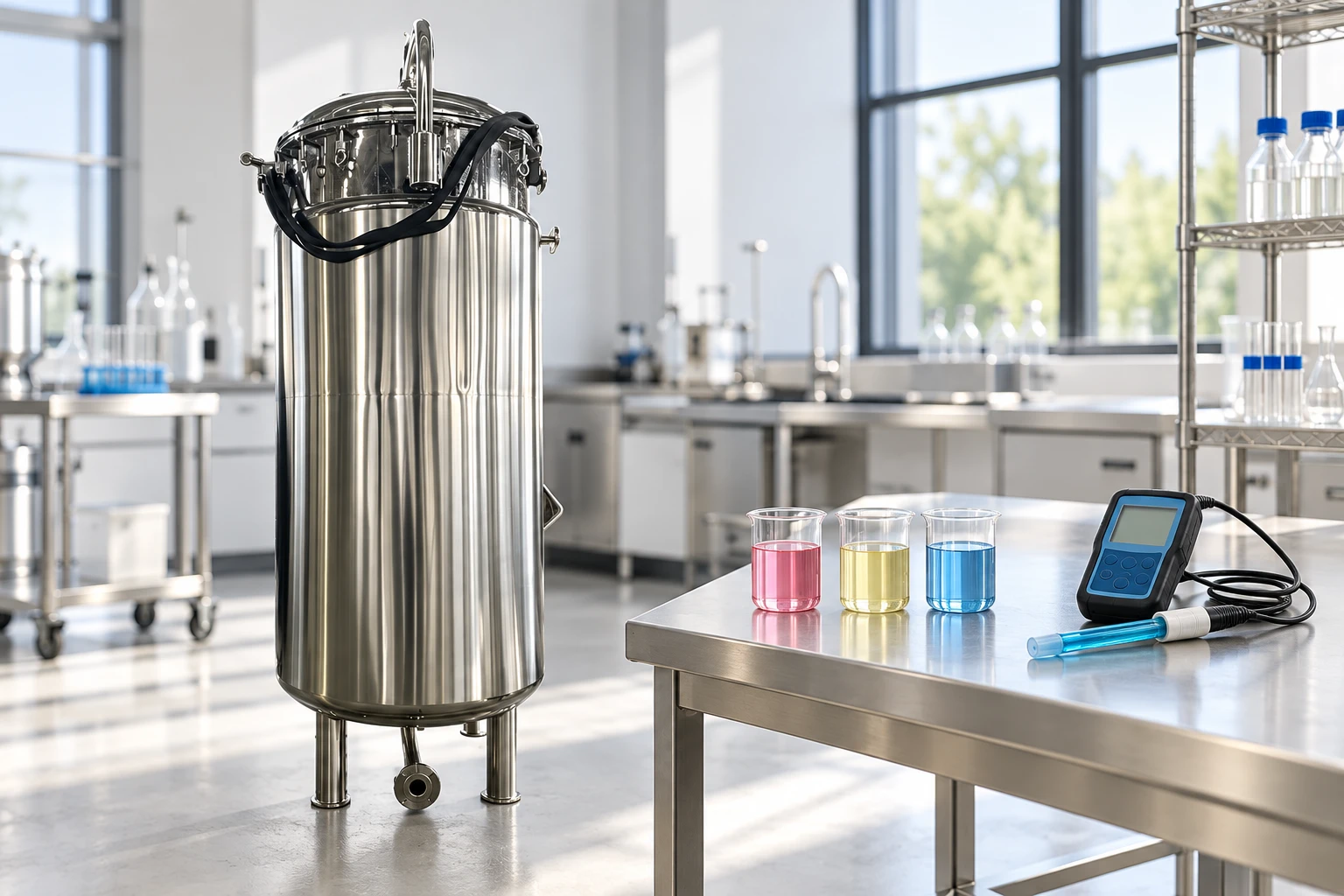
Для YIYI mixing tank, describe the intended cleaning boundary, fluids, operating conditions, sampling needs and the role of any conductivity measurement. Ask the supplier to identify the actual proposed connections and what instrumentation is included. The illustrations show separate training measurements beside the reference vessels; they do not establish a supplied CIP package or validated rinse endpoint.
Используйте food-mixing tank sanitation guide for the broader cleaning workflow, the cleaning-validation guide for study planning and the allergen-verification guide for the distinct question of targeted allergenic residues. Conductivity can support an appropriate measurement strategy without replacing the evidence required for those other decisions.
Educational reference: using a conductivity meter
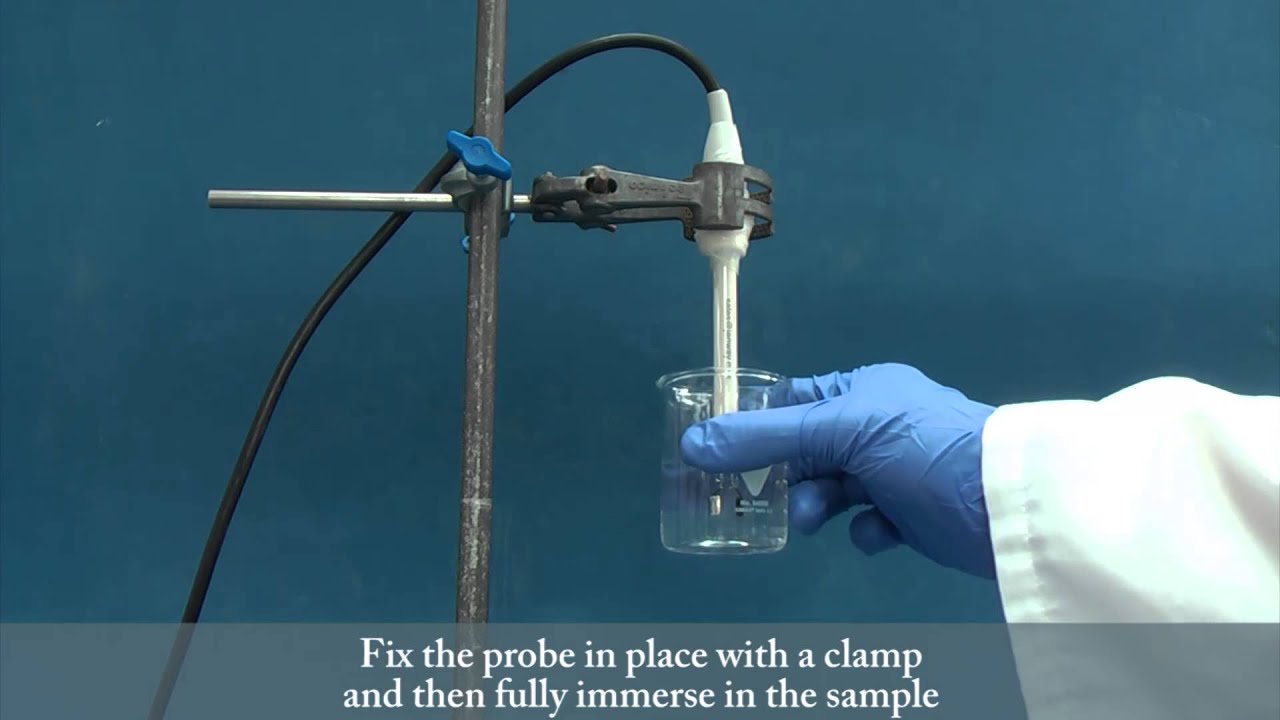
Watch Using a Conductivity meter by Chemistry Teaching Labs – University of York
The educational demonstration explains measurement principles. It is not a CIP recipe, an instrument qualification for an unknown mixture or a release threshold for the illustrated equipment.
Часто задаваемые вопросы
Does a rinse reading close to the water baseline prove the tank is clean?
Not by itself. The method, sampling location, relevant residues and other required evidence determine what the result can establish. A conductivity similarity is not a universal cleanliness test.
Can conductivity be converted directly into any cleaning chemical concentration?
Only where a suitable, justified relationship exists for the actual solution and conditions. A baseline subtraction alone does not provide that relationship.
Can conductivity replace allergen-specific verification?
It should not automatically be treated as a specific allergen measurement. Select methods appropriate to the actual residue and decision through the facility’s qualified food-safety and quality process.