

A fermenter cleaning chemical change control review checks whether a proposed detergent or formulation change can be introduced without leaving unresolved equipment, worker-safety or product-quality questions. Identify exactly what is changing, compare the current and proposed documents, assess the actual cleaning task and define the evidence needed before release. A new safety data sheet alone does not establish cleaning performance or equipment compatibility. Keep the replacement chemical out of routine use until the responsible people have approved the intended application. This guide organizes that decision; it does not prescribe a chemical recipe, concentration, temperature or cleaning cycle.
Define the change more precisely than the trade name
Start with the current product identification, supplier, formulation reference where available and approved use. Then record the same details for the proposed product. A familiar trade name can remain while a formulation or instruction changes, and a different product can be marketed with a similar description. Ask the supplier to explain the actual difference.
Describe why the change is proposed. Availability, price, cleaning performance, handling concerns and a supplier reformulation create different review questions. Include the intended first-use date and affected equipment. Avoid presenting an emergency shortage as a reason to skip the technical review.
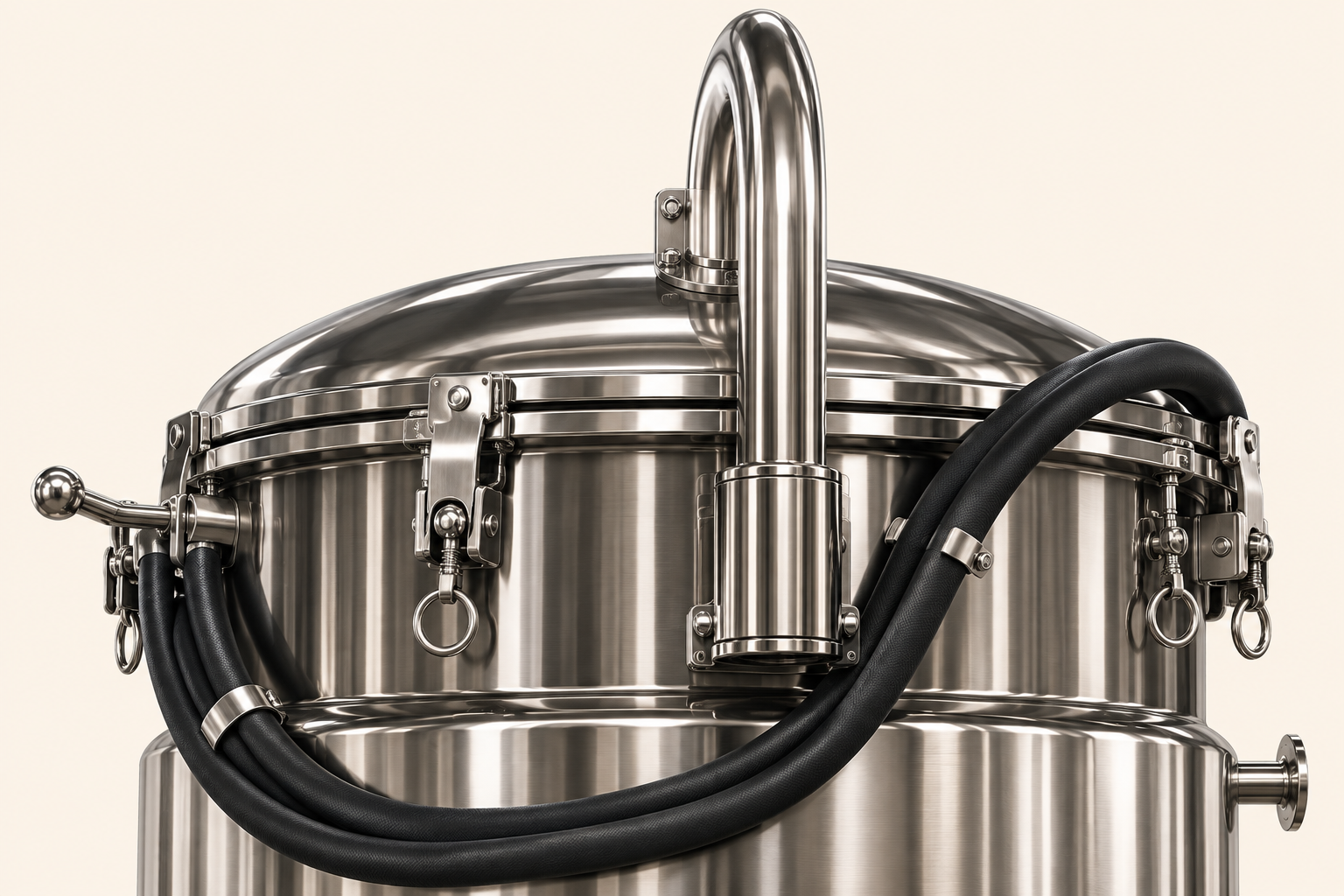
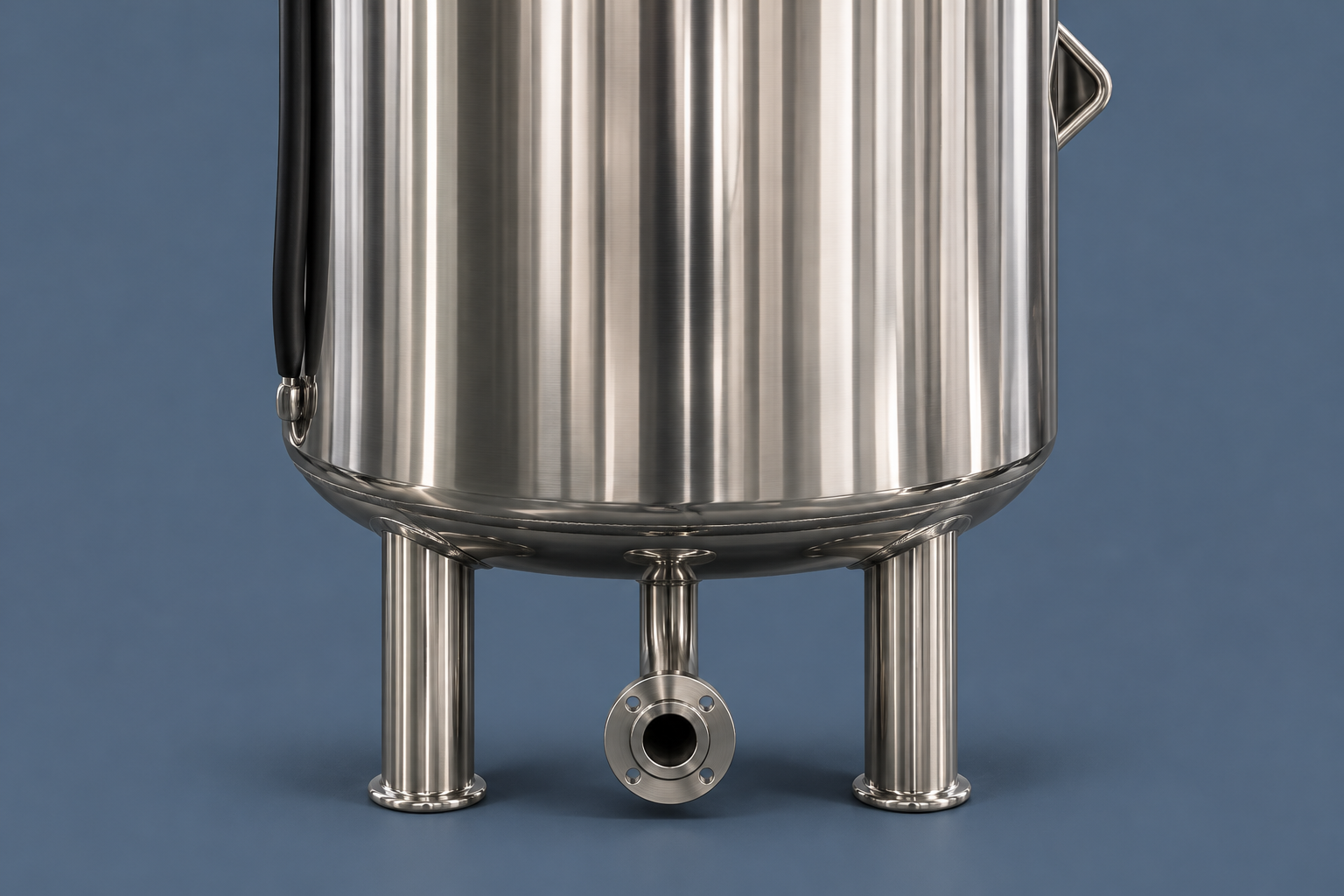
For the website’s fermentador vertical de aço inoxidável, the product listing provides equipment context. It does not identify every wetted material or establish a universal cleaning recipe. Obtain the records for the actual vessel and installed accessories before asking a supplier to confirm suitability.
Place the change in the wider equipment context using the guia de seleção de fermentadores cónicos. Its procurement questions help identify the actual application; they do not approve a chemical or substitute for an assessment of installed materials.
Separate receiving an approved chemical from changing it
Routine receiving checks ask whether a delivery matches an existing approval. Change review asks whether the approval itself needs to be revised. These are related but different decisions. A delivery can have intact packaging and correct paperwork while still containing a newly proposed product that has not been accepted for the application.
Keep proposed stock clearly distinguished from approved stock under the site’s arrangements. Record where it is held and who may release it. Purchasing, stores and cleaning personnel should use the same identification so an alternative does not enter use simply because its container was placed in the usual location.
Utilize o guia existente cleaning chemical receiving checks for incoming identity and condition. Link that record to the change approval if the delivery is the first supply of a replacement. Do not mark the change complete merely because the receiving checklist has been signed.
Compare documents with a clear scope
Obtain the current safety data sheet, technical application instructions, product label and any relevant compatibility statement for the proposed chemical. Preserve the versions that were actually reviewed. If a supplier sends a newer issue while the assessment is underway, check whether it changes the decision rather than replacing the file without explanation.
Leia o HSE guidance on chemical safety data sheets within its scope: the sheet supplies hazard and handling information that helps inform the user’s assessment. It does not replace assessment of the actual workplace task. Likewise, it should not be treated as a cleaning-performance certificate.
Ask the supplier questions that the documents do not answer. Request written clarification tied to the precise product and intended application. A generic statement about stainless steel is not enough to resolve questions about the complete wetted system, seals or instrument materials. Record uncertainty explicitly instead of interpreting silence as confirmation.
Map the equipment and process contact boundary
List the parts exposed during the proposed cleaning operation. Depending on the actual installation, this may include the vessel, associated piping, valves, pumps, seals and instruments. Include only components actually present, and verify materials from records rather than assigning them from appearance.
Describe the operating conditions that the responsible reviewer needs to assess. These can include the proposed application method, exposure conditions, rinse arrangement and interfaces with other cleaning steps. The chemical supplier and equipment owner need a common description of the task; otherwise their compatibility discussions may refer to different uses.
Keep physical compatibility separate from cleaning effectiveness. A product might be acceptable for a documented material yet fail to remove the relevant soil under the intended process. Conversely, a promising cleaning result does not settle long-term material or worker-exposure questions. Give each issue a distinct acceptance basis and owner.
Review the task as people actually perform it
Walk through receipt, storage, transfer, preparation, application, rinsing and waste handling with the people responsible for those activities. Identify where the proposed change affects equipment, instructions or exposure. A different container, dispensing arrangement or handling instruction may create work that is not visible in the cleaning cycle description.
O HSE COSHH assessment guidance describes assessment of workplace exposure and review when substances or processes change. Apply the relevant local requirements and site arrangements. Do not copy a generic risk assessment and call it a completed evaluation of this fermenter task.
Include contractors and maintenance activities in the discussion where relevant. An unfamiliar product can affect the information needed before opening equipment or handling residues. Have the competent reviewer decide what controls and training are required. Never improvise chemical mixing or neutralization instructions from a general article.
Use a change review matrix
The matrix below is a suggested planning aid. It defines questions and evidence, not universal limits or a validation protocol.
| Área de análise | Evidence to gather | Decision needed before routine use |
|---|---|---|
| Identificação do produto | Current and proposed product references and document versions | Is the exact change understood? |
| Equipment compatibility | Actual wetted materials and applicable supplier statements | Are material questions resolved for the intended conditions? |
| Cleaning performance | Defined soils, process requirements and approved evaluation plan | What demonstrates acceptable cleaning? |
| Residue and rinse control | Product instructions and site acceptance basis | How will unacceptable carryover be prevented and checked? |
| Worker safety | Task assessment, handling requirements and training needs | Are controls ready for every affected activity? |
| Waste and interfaces | Existing collection route and responsible review | Is the changed waste stream acceptable to the actual route? |
| Release and records | Named approvers, evidence and implementation date | Who authorizes the change and confirms completion? |
Use a separate line for an unresolved question rather than hiding it in a broad “acceptable” entry. Record the evidence that will close it. Where the change is rejected, retain the reason so the same unsupported substitution is not repeatedly proposed.
Plan evaluation before anyone starts a trial
Define the purpose and limits of any evaluation in advance. State which equipment and conditions it covers, what observations or measurements will be collected, who will review them and what would cause the activity to stop. The responsible quality and engineering personnel should approve the plan appropriate to the facility.
Do not let a successful visual inspection answer every question. Cleaning, chemical residues, microbiological requirements and material effects may require different evidence depending on the application. This guide does not specify the analytical method or acceptance threshold; the site must establish an appropriate basis rather than borrow an unrelated limit.
Document a failed or inconclusive evaluation as clearly as a successful one. Retain the actual observations and explain any approved repeat. A second trial with changed conditions is a new piece of evidence, not a reason to remove the first result. The change history should show how the final decision was reached.
Control implementation across documents and stock
Once the change is approved, identify the effective date, affected procedures and remaining stock. Decide how the previous chemical will be handled under the site’s arrangements. Cleaning staff should not have to guess which instruction applies to which container, and stores should know whether future purchases of the old product remain permitted.
Update task instructions, approved product lists, training and any affected records together. Keep supplier instructions available at the point where they are needed. If dosing or monitoring arrangements change, include the relevant equipment checks and authorized settings in the implementation plan rather than leaving them to informal adjustment.
Connect monitoring questions to the actual instruments. The fermenter sensor calibration access guide addresses maintainability of installed sensors; it does not establish that a sensor reading alone proves successful cleaning. State what each measurement is intended to demonstrate and what it cannot establish.
Arrange a controlled return to the previous method
Before first use, consider what happens if the alternative is unavailable, the evaluation is inconclusive or an unexpected issue occurs. Identify who can decide whether to stop, investigate or return to the previous approved method. Returning is itself a controlled decision when equipment state, residues or instructions have changed.
Avoid maintaining two conflicting sets of operating instructions without a clear selection rule. If both products remain approved for different purposes, define those purposes and keep identification unambiguous. A broad note saying “use either cleaner” is insufficient when their instructions or application boundaries differ.
Record observations after implementation at the intervals chosen by the responsible team. Ask whether the approved conditions are being followed and whether unexpected effects have appeared. These follow-up findings should feed the change record, rather than remaining in an operator’s notebook where the next reviewer cannot find them.
Make the next supplier discussion specific
When requesting fermenter or cleaning-system advice, provide the equipment identity, relevant material records, intended service and the exact proposed chemical documentation. Ask the equipment and chemical suppliers to address their respective scopes. Neither should be asked to guarantee an undefined cleaning process from a product name alone.
The neutral laboratory-quality tutorial below introduces the value of organized quality systems and records. It is background for controlled assessment and documented decisions, not a fermenter cleaning procedure or proof that a changed chemical has been validated. The article’s review questions remain applicable without relying on the video.
World Health Organization (WHO): WHO: LQSI series – Laboratory Quality Stepwise Implementation Tool tutorial.
FAQ
Does an updated safety data sheet automatically approve a cleaning chemical change?
No. It provides information for the review. The actual task, equipment compatibility, performance requirements and implementation controls still need an appropriate decision by the responsible people.
Can a cleaner approved for stainless steel be used on every fermenter component?
Do not assume so. Identify the actual exposed materials and obtain application-specific information for the complete system and intended conditions.
When is the change record complete?
It is complete when the required evidence has been reviewed, open questions resolved, approvals recorded and implementation verified. Proposed stock, an unfinished trial or a draft procedure does not establish completion.


