

Mixing tank electrical maintenance isolation point identification starts by matching the actual equipment, the proposed task and every energy source that can affect that task. A stopped mixer does not establish isolation. The planner needs current electrical and process information, identifiable isolation devices, a clear boundary around connected equipment, and competent people who can develop and verify the site procedure. This guide explains how to assemble that information before maintenance is authorized. It does not prescribe a switching sequence, electrical test method or permission to enter a vessel.
The practical problem is often an incomplete equipment package: a motor drawing is available, but the installed pump connection or cleaning supply appears only on another drawing. Identifying these gaps early prevents a quotation or work instruction from assuming that the motor supply is the entire work boundary.
For the broader equipment family, start with what a stainless steel mixing tank is, then narrow the maintenance package to the supplied installation.
Define the task before listing switches
Record what the technician will actually touch. Inspecting an external gearbox, replacing a motor, removing an agitator assembly and opening a product connection have different interfaces. A work order that only says “service mixing tank” leaves too much for the maintenance team to infer on arrival.
Use the equipment tag and location together. Attach a current overall photograph and identify the specific assembly without requiring anyone to remove a guard or open an enclosure for planning. Include the proposed access equipment and any neighboring operation that may affect the work area. The task description should identify uncertain information rather than quietly treating it as confirmed.
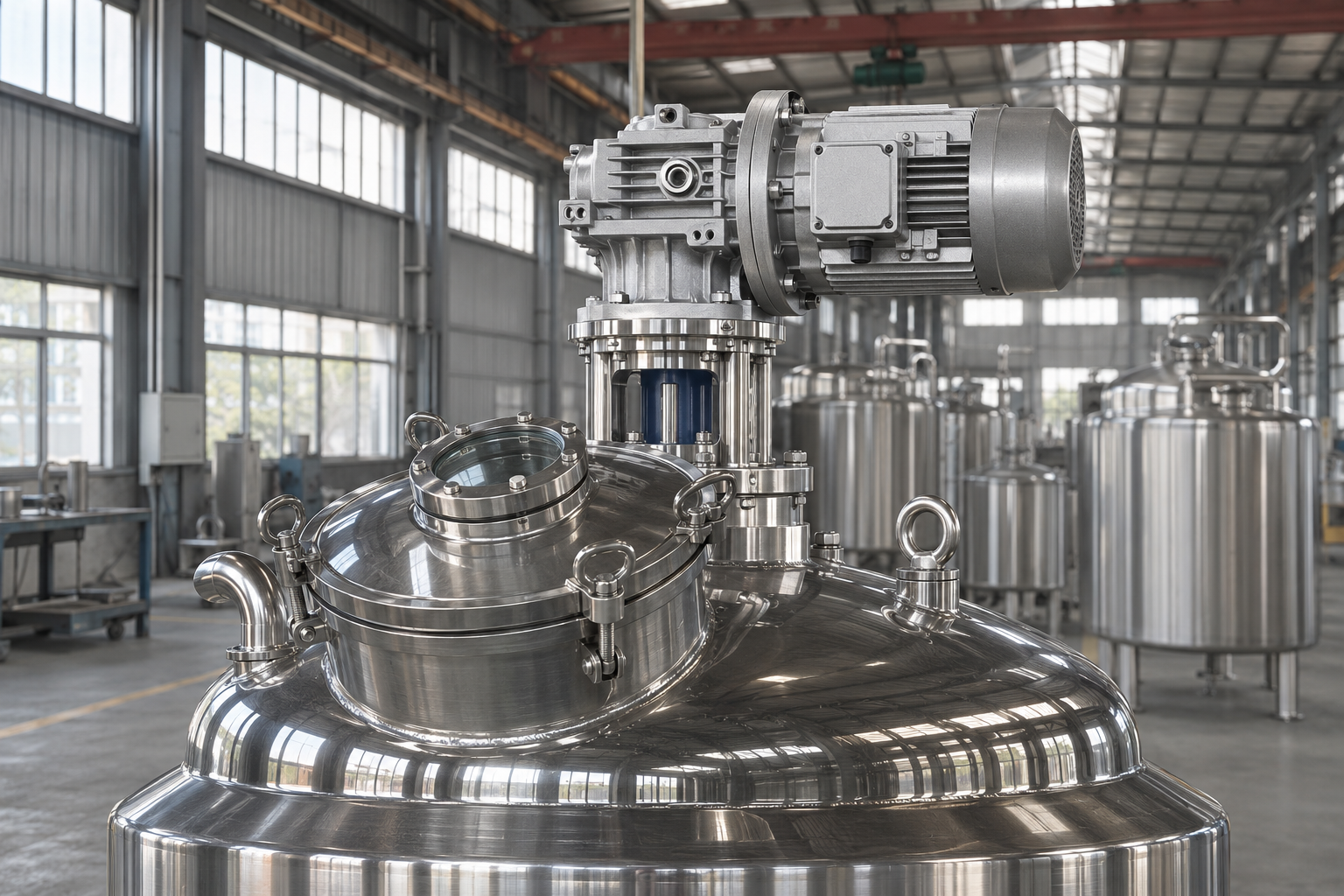
For equipment context, the website’s halaman produk tangki pencampur shows stainless vessels with external drives. That photograph helps identify the equipment family. It does not establish the installed electrical circuit, a pressure rating, an isolation device or any particular safety function. Obtain the records for the supplied configuration and reconcile subsequent site changes.
Build an energy inventory around the work boundary
The electrical drive is a starting point, not a complete inventory. Review adjacent equipment and utilities that could affect the task, including feed systems and cleaning connections where fitted. Keep each proposed energy source tied to evidence: an installed drawing, a manufacturer’s instruction, a service record or a competent site survey.
WorkSafe Victoria’s plant isolation guidance describes identifying energy sources and isolation points, using installation information where possible, and avoiding reliance on emergency stopping devices as isolation points. This is Victorian guidance; it is useful as an engineering planning reference without replacing the rules applicable to another jurisdiction.
Distinguish three questions in the planning record. What can supply energy? Where is the appropriate isolation boundary? What energy may remain after the supply is disconnected? Combining all three into a single “power off” tick box hides unresolved issues. The responsible specialists should decide the necessary controls and verification for the actual task.
Reconcile drawings with the installed equipment
Start with the latest controlled electrical information, equipment arrangement, process connections and maintenance instructions. Check revision numbers and equipment identifiers before using a document. An original drawing can be valuable while still missing a later modification; a recent file date alone also does not prove that a drawing matches the installation.
Ask the site representative to record discrepancies explicitly. A device label that differs from the drawing, an unidentified cable, a changed valve arrangement or a shared service connection should become an action with an owner. Do not ask an unqualified planner to discover the answer through experimental switching.
The useful deliverable is a reconciled document package. It should show which information is verified, which remains provisional, and who is qualified to resolve each gap. If the task changes during quotation or inspection, review the boundary again. Removing an additional assembly may introduce an interface absent from the first scope.
Keep control devices and isolation devices distinct
A push button may stop motion during normal operation while leaving energy available. A control screen may show a stopped state without establishing a secure disconnection. These are reasons to ask how the installed safety arrangements work, rather than judging a device by its appearance or label.
HSE’s maintenance guidance emphasizes planning, competent maintenance, safe isolation and control of stored energy. It addresses Great Britain work equipment responsibilities. Its relevance here is the need to make maintenance safe; it does not certify an individual mixing tank installation or supply a universal electrical procedure.
In the planning file, name the specialist responsible for confirming each proposed isolation device. Record its location, identifier and relevant drawing reference. Do not describe an emergency stop as the maintenance isolator merely because it is the most visible red device. When information cannot be reconciled, keep that interface unresolved and escalate before releasing work.
Use a task-specific evidence table
The table below is an original planning aid, informed by the regulator guidance linked above. It is a document review framework, not an instruction to operate devices. Add or remove rows to match the real installation; the examples do not imply that every mixing tank has these utilities.
| Interface to review | Bukti yang harus dikumpulkan | Question for the competent reviewer | Record to leave |
|---|---|---|---|
| Agitator drive supply | Equipment circuit reference and current drive information | Does the proposed boundary cover the actual motor task and all relevant supplies? | Approved device identification and drawing revision |
| Connected feed or discharge equipment | Current process arrangement and task location | Could connected equipment introduce material or movement into the work area? | Interface owner and agreed work boundary |
| Heating or cleaning utilities, if fitted | Utility connection information and equipment instructions | Which supplies and retained conditions can affect this task? | Applicable controls referenced to the site procedure |
| Stored mechanical or other energy | Assembly information and maintenance method | Could movement, retained load or residual energy remain after disconnection? | Specialist assessment and verification responsibility |
| Shared services or adjacent operations | Installation survey and operating plan | Can another activity change the conditions during maintenance? | Coordination actions and affected equipment list |
| Unmatched label or drawing | Photograph, observed identifier and conflicting records | What evidence resolves the discrepancy before work? | Named action owner and closure evidence |
A good table allows another reviewer to trace an answer back to a source. “Checked” is weak evidence when the record does not identify who checked, what was compared or which revision was used. Avoid filling cells from memory just to complete the form.
Separate planning from verification at the job
A complete planning package helps the competent team develop the safe system of work. It does not mean isolation has already been applied or verified. Preserve that distinction in the work order, permit and maintenance report so the office review cannot be mistaken for a site safety release.
SafeWork NSW’s energy isolation guidelines provide additional context on coordinating isolation, stored energy and verification. They apply in their own regulatory setting. The site must determine who is authorized, how the actual procedure is verified, and what happens if energy can return or conditions change.
For a planned shutdown, make the open actions visible before allocating labor. A missing drawing may require a competent survey. An unidentified shared supply may require coordination with another department. Those activities need time and access; they should not be concealed within a routine service allowance or left for a technician to improvise.
Coordinate contractors without losing equipment detail
The equipment owner and contractor need a common description of the work boundary. A contractor may know the motor model but not the site’s process connections. The site may know the operating routine but not the contractor’s proposed dismantling method. Review both sets of information together and record questions requiring specialist input.
Yang terkait maintenance contractor competence guide addresses who can do the work. This article addresses the equipment information those people need. Both are necessary, but neither replaces the other. A competent contractor still needs accurate site information, while an accurate drawing does not establish the competence of the appointed team.
Use the existing maintenance handover checklist to carry approved records into the maintenance package. At completion, record changes affecting identification and future maintenance. Do not allow a temporary handwritten correction to become the only description of an altered installation.
Watch a regulator explanation of simple isolation
SafeWork NSW’s video below introduces machine isolation. It supports discussion of the difference between stopping and isolating. A connected mixing installation may require a more complex arrangement, so the example is not a complete procedure for this equipment or an authorization to carry out electrical work.

SafeWork NSW: Isolasi sederhana.
Prepare an inquiry that can be answered
When asking a supplier about maintenance documentation, provide the equipment identifier, supplied model information, relevant assembly photographs and the exact task under consideration. Request available instructions and drawings for that configuration, and identify later site modifications separately. Ask what the supplier can confirm from its records and what requires an on-site review.
Separate document availability from engineering approval in the quotation. For example, supplying a motor instruction manual is different from reconciling a changed site circuit. State the expected deliverable and responsible reviewer for each. This makes the response useful for planning and prevents an incomplete document set from being interpreted as a ready-to-execute maintenance method.
Before closing the planning stage, review unresolved interfaces with the person responsible for the site procedure. The next step is an equipment-specific, competent review with clear ownership of remaining actions. Do not schedule intrusive work on the assumption that an unidentified connection will be harmless or that production staff can resolve every technical issue during the shutdown.
FAQ
Bisakah motor yang berhenti diperlakukan sebagai terisolasi?
No. A keadaan berhenti tidak menetapkan isolasi aman atau pengendalian energi yang tersimpan. Tim yang kompeten harus mengidentifikasi sumber yang relevan, menerapkan prosedur lokasi dan memverifikasi kondisi yang diperlukan untuk tugas pemeliharaan yang sebenarnya.
Bagaimana jika gambar tidak cocok dengan label yang terpasang?
Catat ketidaksesuaian tersebut dan dapatkan rekonsiliasi dari pihak yang kompeten sebelum mengandalkan identifikasi tersebut. Simpan gambar teknik dan foto yang saling bertentangan sebagai bukti. Jangan menyelesaikan perbedaan tersebut dengan menebak perangkat mana yang harus dioperasikan.
Apakah foto produk menampilkan semua titik isolasi?
Tidak. Foto produk hanya menunjukkan konteks peralatan yang terlihat. Perlengkapan yang terpasang, utilitas yang terhubung, modifikasi selanjutnya, dan fungsi keselamatan harus ditentukan berdasarkan dokumen yang berlaku serta pemeriksaan lokasi oleh personel yang kompeten.


