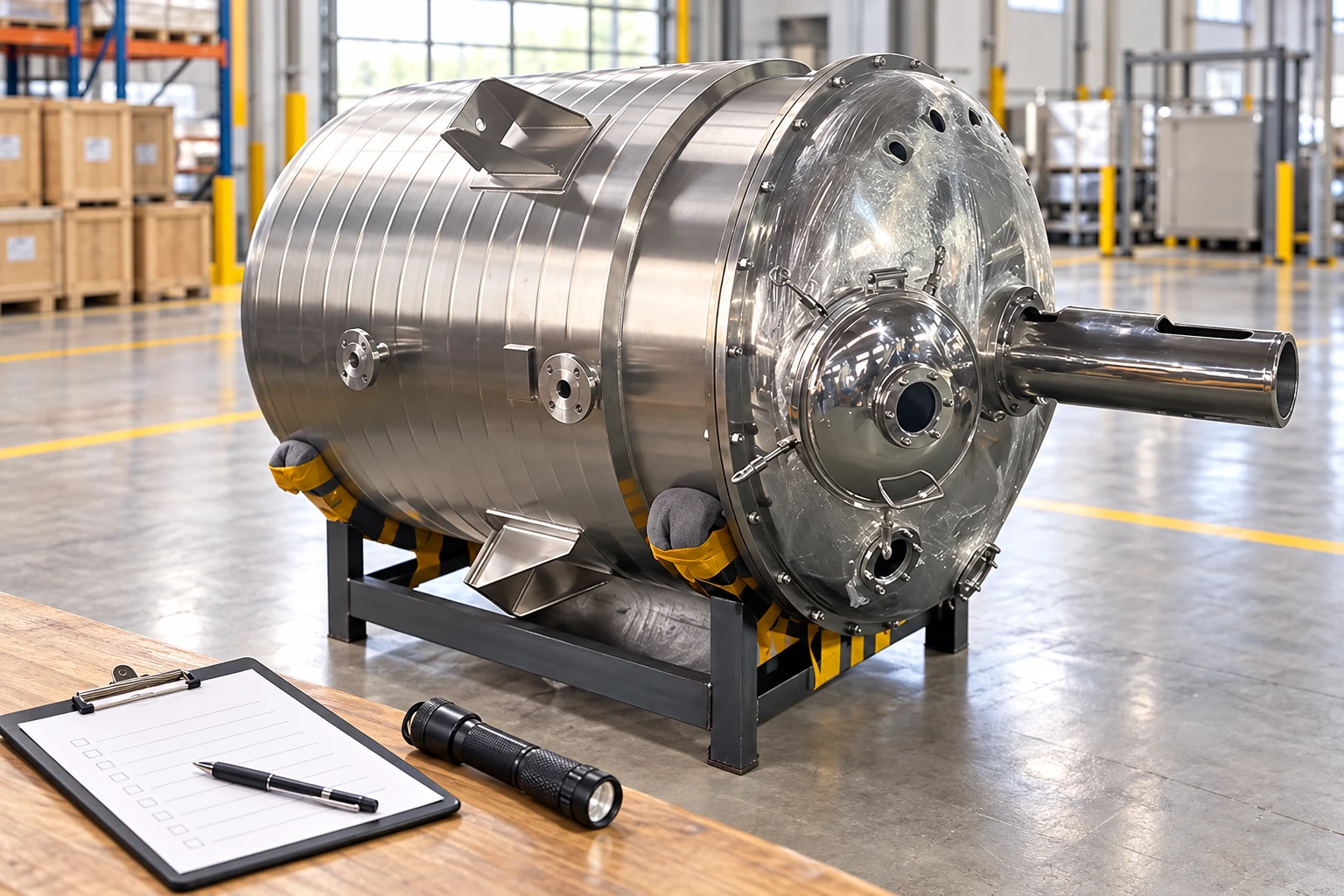
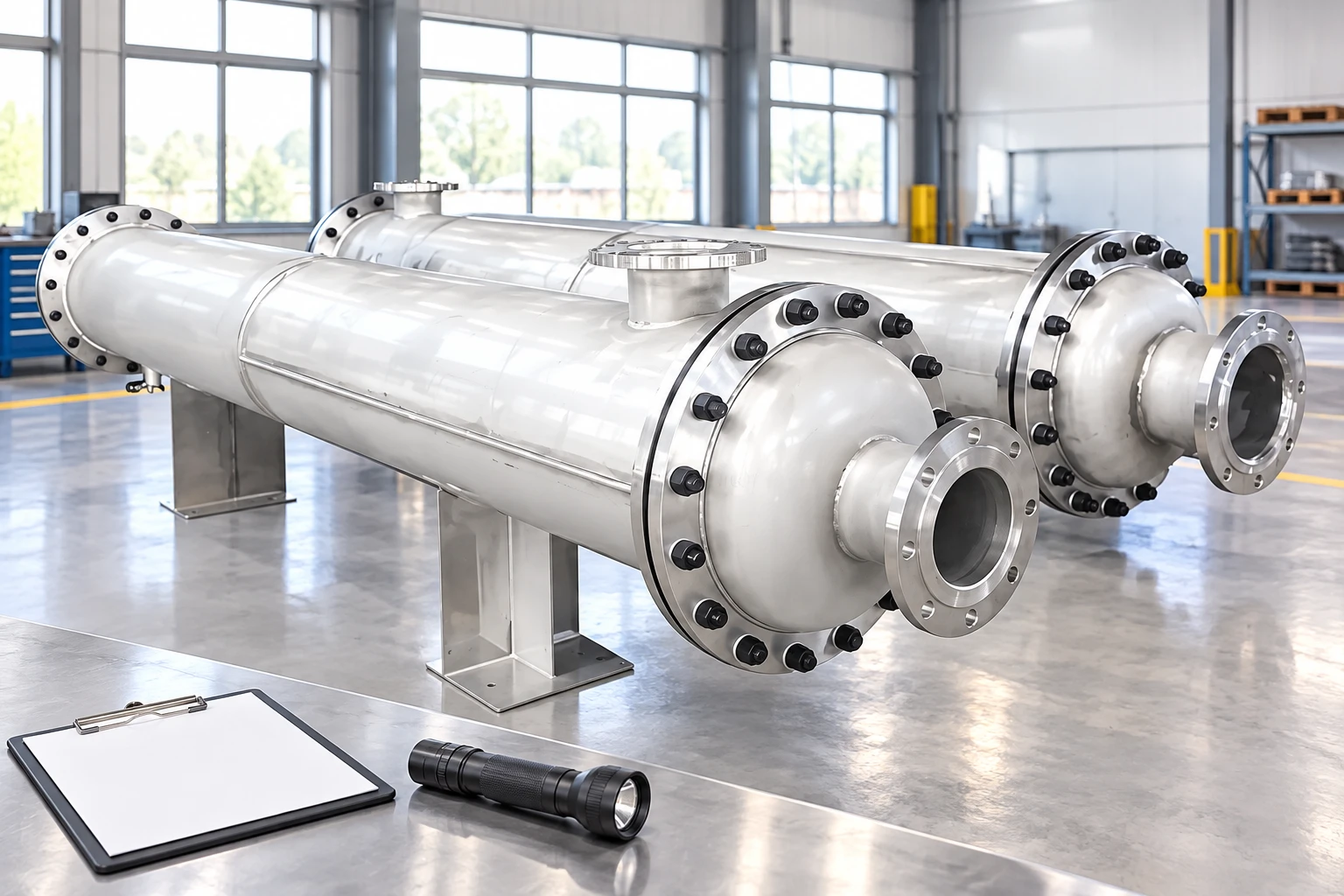
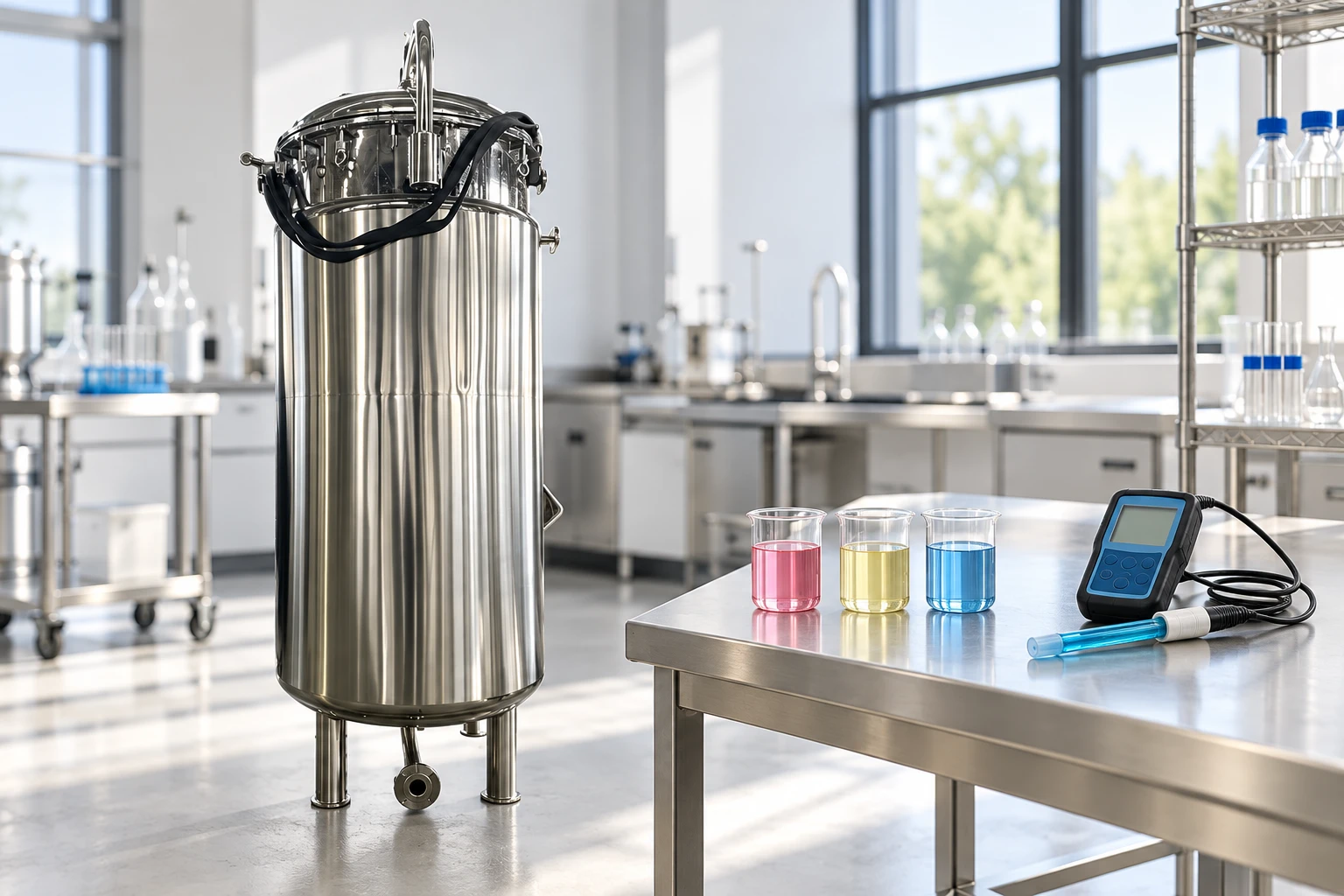
Food tank allergen cleaning verification should test whether the approved cleaning process has been carried out effectively for the relevant allergenic residue and equipment arrangement. A visibly clean tank or a satisfactory general-hygiene reading does not automatically establish that a specific allergen has been removed. Begin with the product transition, identify difficult-to-clean locations and select methods that are suitable for the residue and surface. This guide explains the planning and documentation questions for a food-processing vessel. It does not set a universal allergen threshold, replace a facility’s food-safety plan or certify that a pictured tank is allergen-free.
Define the product transition that creates the risk
List the allergenic ingredients present in the outgoing product and compare them with the next intended product. Include ingredients introduced through rework, compound ingredients and shared upstream or downstream equipment. A vessel changeover cannot be evaluated properly if the review stops at the main recipe while ignoring a hose, pump or receiving line that remains in the transfer path.
Describe the actual cleaning boundary. Identify which components are cleaned in place, which require an approved dismantling procedure and which are outside the tank supplier’s scope. Record the order in which equipment is returned to service. The purpose is to prevent an unexamined interface from reintroducing residue after the tank itself has been cleaned. The responsible food-safety team should establish the risk assessment and the applicable release decision.
Keep validation, monitoring and verification distinct
Validation asks whether a defined cleaning approach is capable of controlling the relevant residue under justified conditions. Monitoring records whether the specified process steps and conditions occurred. Verification checks whether the system is being implemented and remains effective through appropriate review, inspection or testing. These activities support one another but answer different questions.
Do not use a routine swab result as the only evidence that an entirely new cleaning procedure has been established. Likewise, a prior validation study does not show that today’s procedure was followed correctly. Define which evidence belongs in each activity and who reviews it. If the plant changes an ingredient, equipment configuration or cleaning method, assess whether the original basis remains applicable instead of carrying forward an old approval without review.
Identify residues and locations that challenge cleaning
The most relevant locations may include seals, valve cavities, poorly drained sections, connections and other areas identified from the actual design. Their significance depends on the product and cleaning arrangement. Do not produce a universal swab map from a generic vessel photograph. Obtain drawings, access information and the approved cleaning procedure, and review observations from real changeovers.
Consider whether the residue is difficult to dissolve, tends to adhere, dries during a hold or is carried into a separate circuit. Include the condition before cleaning, not just the vessel’s condition immediately after processing. A cleaning trial on a fresh, easy-to-remove residue may not represent a longer production hold. The plant’s qualified team should justify the challenge conditions without deliberately introducing an unsafe situation into production.
Choose an analytical method for the actual question
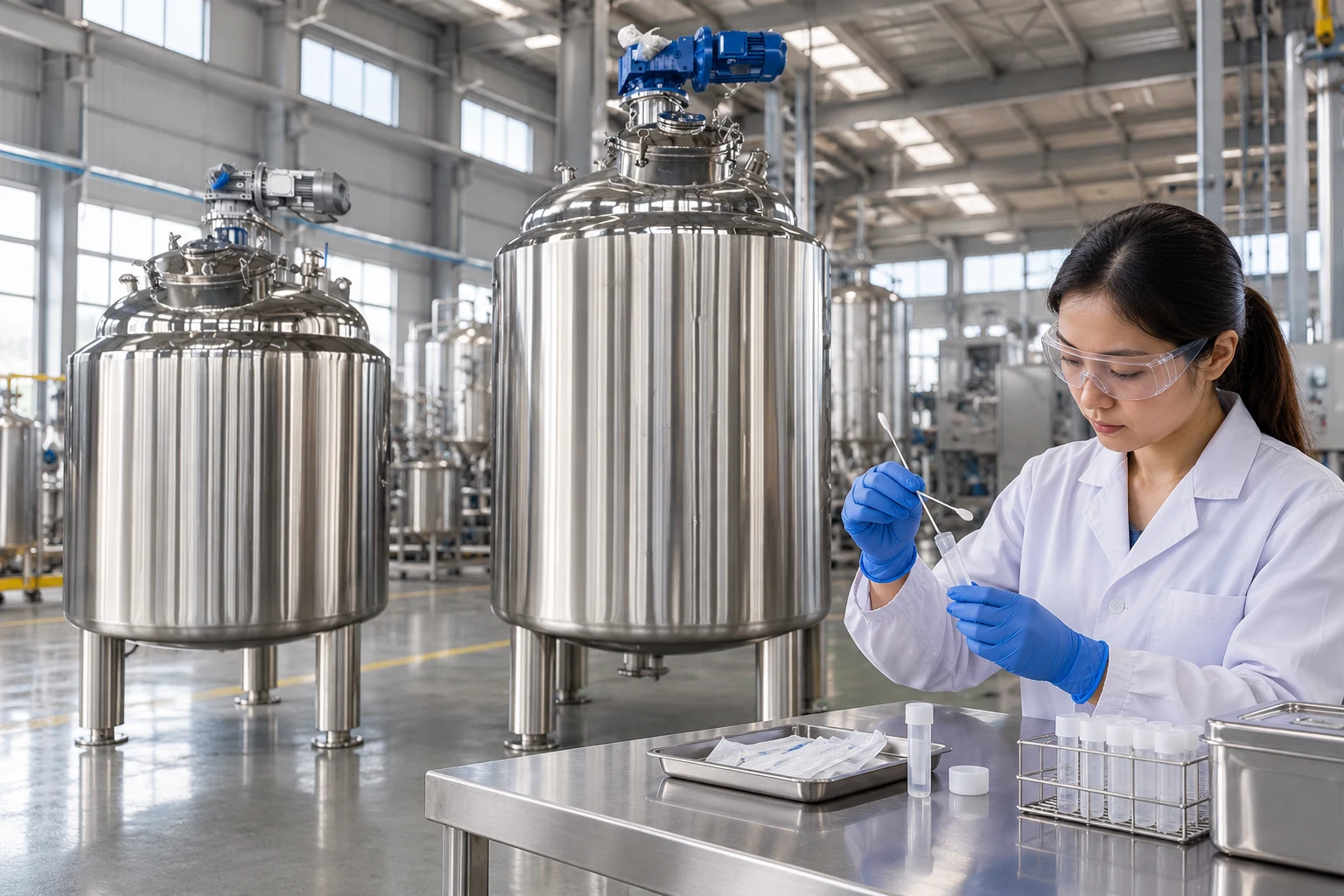
Allergen-specific tests, general protein tests, visual inspection and hygiene indicators provide different information. Their suitability depends on what is being detected, the product matrix, the sampling arrangement and the method’s limitations. Confirm whether a test is intended for surfaces, rinse water, product or another sample type. A kit’s ability to detect a residue under one condition does not establish performance in every cleaning chemical or formulation.
Itu FDA appendix on cleaning and sanitation for allergen control discusses written cleaning procedures and the selection of verification methods in its fish and fishery-products guidance context. It cautions against relying on ATP alone for allergen cleaning verification. Apply that source with its stated scope: it does not define a universal test kit, tank design or release threshold for every food plant.
Do not confuse ATP with allergen identity
ATP can be useful within a justified hygiene-monitoring program, but it is not a specific measurement of an individual allergenic protein. A favorable ATP result therefore should not be presented as direct proof that the relevant allergen is absent. Similarly, a general protein test and an allergen-specific test do not necessarily have interchangeable interpretations.
Describe what each indicator means in the plant’s program. If an indirect indicator is used for routine checks, document the basis for its role and how allergen-specific evidence is incorporated where appropriate. Avoid a blanket statement that any rapid hygiene test validates allergen removal. The responsible quality team needs a method suitable for the actual residue and decision, with known limitations communicated to the people collecting and reviewing results.
| Bukti | Useful role | Limitation to retain in the decision |
|---|---|---|
| Pemeriksaan visual | Identify visible residue and incomplete cleaning | A visually clean surface is not a specific allergen analysis |
| Cleaning-cycle records | Show whether approved steps and conditions occurred | Recorded completion alone does not prove residue removal |
| Allergen-specific surface test | Investigate a targeted residue at a defined location | Sampling recovery and method suitability affect interpretation |
| Rinse-water test | Assess material recovered in a defined rinse sample | Dilution and inaccessible residues can limit what the sample represents |
| General protein indicator | Support an appropriate residue-checking program | It does not automatically identify a particular allergen |
| ATP indicator | Support a justified hygiene-monitoring activity | It should not alone be described as proof of specific allergen removal |
The table describes evidence types. It does not assign legal limits, kit detection thresholds or automatic release criteria.
Write a sampling map that can be followed
Give each approved point a unique identifier and describe its physical location clearly. Specify the sampling method, sample type and relevant timing. Distinguish a product-contact surface from an external shell or nearby worktable. A swab of an accessible outer surface cannot silently stand in for the inner surface that contacts food.
Confirm that each point can be reached safely under the approved procedure. Personnel must not bypass guards, enter a vessel or disturb an unsafe system to obtain a sample. Where direct access is unavailable, the qualified team must determine a suitable alternative and its limitations. Preserve those limitations in the report. Do not mark an inaccessible point as passed merely because the surrounding equipment looked clean.
Control the sample and the test procedure
Follow the selected method’s instructions for collection, extraction, storage, timing and interpretation. Confirm that the kit is appropriate for the sample and within its usable conditions. Record its identification and any relevant control checks. Cleaning chemicals, food matrix effects and poor recovery can complicate results, so investigate method suitability rather than treating every reading as self-explanatory.
Keep samples identified throughout the process. Link the result to the vessel, location, previous product, next product and cleaning event. A result without that context may be impossible to use in a changeover decision. Train personnel on the actual method and its limitations. Clear instructions reduce the chance that different operators obtain superficially comparable results using materially different collection or preparation practices.
Define what happens when evidence is unsatisfactory
Set the response before collecting results. An unacceptable or inconclusive finding should trigger the facility’s approved hold, recleaning, investigation and release process as applicable. Identify who has authority to make those decisions. A repeated test should have a documented reason; do not keep sampling until one favorable result appears and discard the earlier findings.
Preserve the original observation, the corrective action and the basis for the final decision. Consider whether material, equipment outside the initial cleaning boundary or a later handling step may be affected. The investigation should distinguish an ineffective cleaning process from an incorrectly performed process or an unsuitable test. Those explanations require different corrective actions, and a single replacement swab result may not resolve the underlying problem.
Verify records as well as surfaces
Review whether the cleaning procedure used the correct version and whether required steps, inspections and results are complete. Check exceptions, unplanned delays and any component that was removed or replaced. A strong record allows another qualified person to understand what happened without reconstructing it from memory.
Itu FDA draft chapter on a food allergen program includes illustrative examples of monitoring, analytical checks and record review. It is expressly draft guidance rather than a universal operating instruction. Its examples can help structure questions, but their frequencies and arrangements should not be copied as automatic requirements for another plant. Establish the actual verification program from the facility’s products, risks and applicable obligations.
Reassess after meaningful changes
A new allergenic ingredient, a different product texture, an extended hold or a changed cleaning chemistry can challenge the original cleaning basis. Equipment changes can also introduce new retention points or make a formerly accessible surface difficult to inspect. Include temporary hoses and repairs in the change review rather than focusing only on major tank modifications.
Define which changes require investigation or renewed evidence. Retain the rationale when a previous study remains applicable. Routine verification data can reveal an emerging pattern, but a favorable trend should not eliminate review of a meaningful process change. The aim is a program that remains connected to actual production, rather than a static certificate filed when the vessel was first installed.
Include cleanability questions in the vessel enquiry
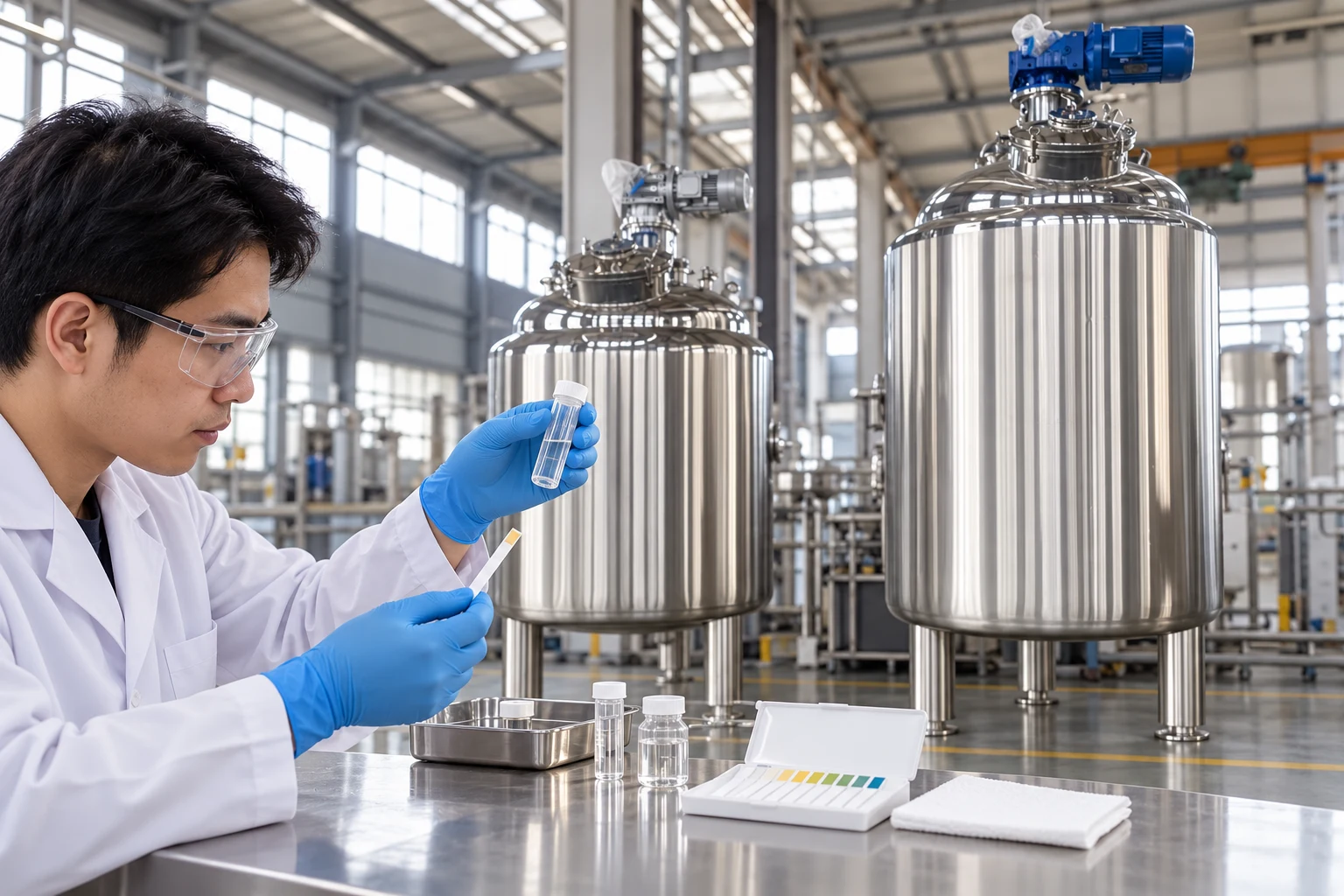
Untuk sebuah YIYI mixing tank, provide the product families, cleaning boundary, relevant residues and required access or sampling interfaces. Ask the supplier to identify the actual surfaces, drainage arrangement, seals and components included in the quotation. The website product image is a reference to the equipment family; it is not proof of validated allergen removal, supplied testing equipment or a certified hygienic outcome.
Gunakan food-mixing tank cleaning guide for the broader sanitation workflow, the food-tank cleaning-validation guide for study planning and the tank drainability guide for an equipment-design question that can affect residue removal. This page adds the allergen-specific verification distinction; it does not replace those wider activities.
Educational reference: allergen-control checks
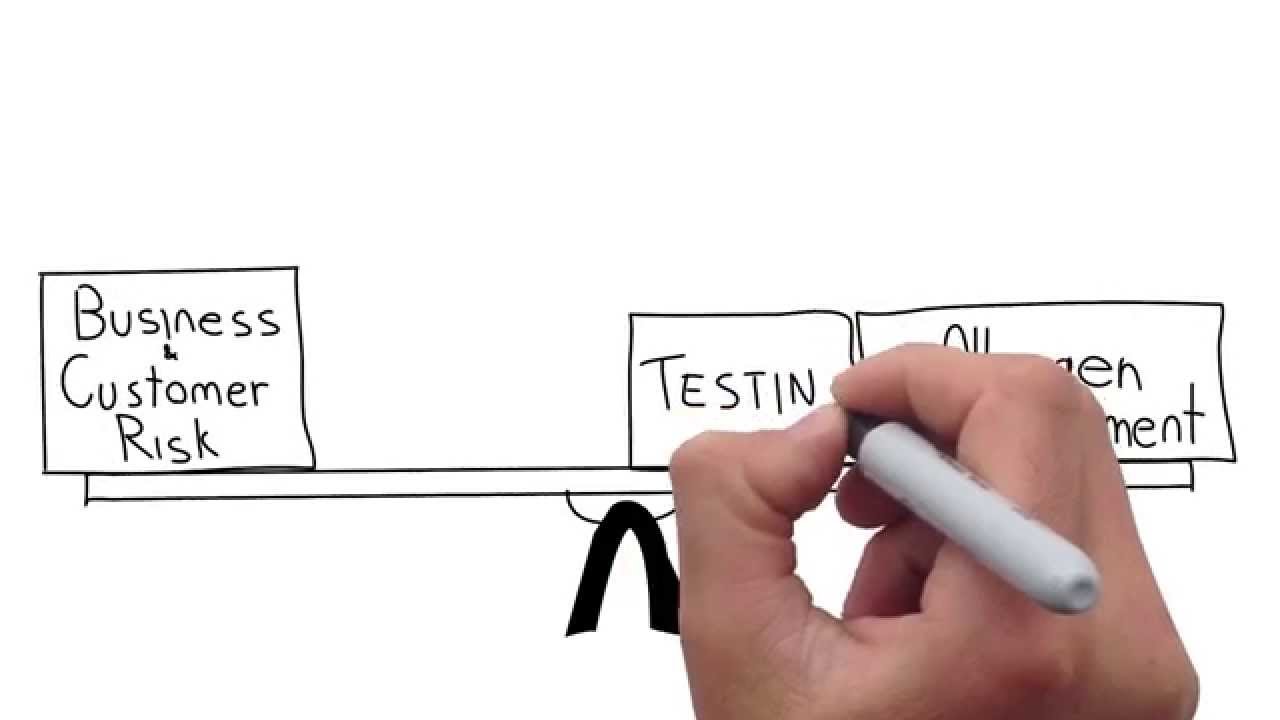
Watch Allergen Testing for Food Processing Plants by Alberta Agriculture and Irrigation
The educational reference supports understanding of allergen control. It is not a test-method approval, a legal interpretation or a statement that the illustrated equipment has passed a plant-specific cleaning study.
Pertanyaan yang sering diajukan
Does a clean visual inspection prove allergen removal?
No. It identifies visible condition but does not directly measure a specific allergenic residue. Use visual inspection within a program that includes evidence suited to the actual risk and decision.
Can a rinse-water result represent every tank surface?
Not automatically. The sampling method, dilution and recovery from relevant surfaces affect interpretation. Define what the rinse represents and assess locations or residues that it may miss.
Should a favorable retest erase an earlier failed result?
No. Keep the earlier result, the investigation and any corrective action. The final release decision needs a documented basis under the facility’s approved process, not only the most favorable reading.