Fermenter pressure control manages the pressure produced by gas supply, fermentation, and operating changes while keeping the vessel within its verified limits. A spunding valve may regulate normal brewery pressure, but it is not a substitute for independently designed overpressure protection. Buyers should specify the process pressure range, maximum gas input, exhaust conditions, vessel rating, and shutdown behavior together. The operating setpoint must follow the actual process and approved equipment design; a pressure value copied from a homebrewing recipe is not an industrial design basis.
Separate operating pressure from vessel design limits
Operating pressure describes a process condition. Design pressure and maximum allowable pressure are equipment limits established through the applicable design and certification process. Their definitions and documentation depend on the governing code and jurisdiction. A gauge’s upper scale, a pump’s capability, or the appearance of a thick steel shell does not establish the vessel rating. Ask for the manufacturer’s declared limits, temperature conditions, and permitted pressure or vacuum combinations.
Review the weakest connected item as well as the main shell. Sight glasses, manway assemblies, hoses, filter housings, sample connections, and attached instruments have their own limitations. A vessel supplied for atmospheric service must not be converted to pressure fermentation by simply sealing its vent. Any modification to pressure-bearing equipment requires competent engineering review and the approvals applicable to the site.
Explain what a spunding valve actually does
In brewery use, a spunding valve provides an adjustable outlet restriction that releases fermentation gas to regulate headspace pressure. Its operation depends on the valve’s flow capacity, the gas generation rate, and downstream conditions. Setting a spring or turning an adjustment knob does not prove that the selected valve can discharge the maximum expected gas flow. Specify the required operating range and ask the vendor for relevant capacity data.
Distinguish spunding from gas-supply regulation. An inlet regulator controls the supply side; an outlet valve influences the vessel’s gas discharge. They interact through the process, but they do not perform identical functions. If both are installed, describe their intended roles and avoid competing settings that cause hunting, excessive gas use, or unstable pressure. A coordinated control narrative is more useful than buying several components with similar catalogue ranges.
Identify all credible pressure sources
For an aerated fermenter, pressure can be affected by compressed gas supply and resistance in the exhaust train. For a brewery fermentation, biological carbon dioxide generation may be the dominant source. Cleaning, steam sterilization, transfer operations, and external gas connections create additional cases. The design team should examine each relevant operating phase rather than treating the production pressure as the only case.
Record what happens when an exhaust valve is shut, a filter becomes wet, a control valve fails, or a supply regulator malfunctions. Do not perform unsafe failure demonstrations on a loaded or live vessel. The purpose of this review is to define protection and safe response procedures before operation. Coordinate the inlet-side review with the existing Panduan kontrol aliran fermenter.
Compare control and protection responsibilities
The table below helps buyers ask distinct questions about normal operation and abnormal conditions. It does not prescribe relief settings, device sizes, or legal inspection intervals. Those values must come from the approved equipment design and competent assessment.
| Fungsi | Normal purpose | Procurement question |
|---|---|---|
| Pressure transmitter | Measure headspace pressure | Is the range suitable and the connection maintainable? |
| Outlet control or spunding valve | Regulate routine pressure | Is capacity demonstrated across the required flow range? |
| Inlet gas regulation | Manage supplied gas conditions | What is the maximum downstream pressure and failure behavior? |
| High-pressure alarm | Warn of a developing abnormal condition | Who responds, and what action is required? |
| Independent protective device | Prevent exceeding approved limits | What engineering basis supports sizing and discharge routing? |
| Vacuum-management arrangement | Manage approved cooling or emptying conditions | Is vessel vacuum capability confirmed separately? |
HSE’s pressure equipment guidance distinguishes operating accessories from protective safety accessories. Use this distinction as a review aid, while applying the actual rules of the destination market.
Review the complete discharge route
A relief or regulating device is only part of a discharge system. Downstream pipework, liquid traps, shared headers, silencers, and destination pressure can influence performance. Identify where released gas goes, whether it can reach occupied areas, and whether discharged liquid or biological material presents an additional hazard. Do not assume that venting carbon dioxide into a room is acceptable because the fermentation medium is food-grade.
Where multiple vessels connect to one header, assess simultaneous operation and possible cross-flow. Establish the ownership boundary between the equipment supplier and site installer. A quotation should say whether discharge routing is included, what downstream conditions were assumed, and which site checks remain necessary. Avoid accepting a relief-device certificate as proof that the entire installed discharge arrangement is suitable.
Understand pressure measurement in a wet process
The pressure sensor should be selected and located for the actual process, cleaning method, and maintenance needs. Wet connections can accumulate condensate or product, while long connecting lines can delay the measurement. Document the measurement location and the means of checking it. Operators should understand whether the display shows gauge or absolute pressure and which engineering units are used.
For troubleshooting, compare the reading with independently verified instrumentation using an approved procedure. Calibration records should identify the instrument, range, date, method, and results. A recently calibrated transmitter cannot compensate for a blocked sensing connection. Ask the supplier how access, isolation, cleaning, and replacement are performed without introducing contamination or exposing staff to stored energy.
Account for cooling and transfer operations
Pressure control changes during cooling as gas contracts and vapor condenses. Emptying the vessel can also change the headspace condition. Positive-pressure suitability does not prove vacuum suitability. The manufacturer’s limits must cover the intended operating envelope, and the design should identify how allowable pressure is maintained during these transitions. Never open a vessel merely because production has ended or a temperature display has fallen.
Transfers deserve a separate operating sequence. Identify the receiving vessel’s limits, connection conditions, pressure differences, and approved termination steps. A pressure used during transfer may not be appropriate during fermentation. State who verifies line alignment and receiving capacity. The brewery fermenter capacity guide complements this review by addressing the vessel’s broader process role.
Choose setpoints through a documented process review
Do not select a pressure solely for perceived flavor, carbonation, or production-speed benefits. Establish the organism or yeast strain, process stage, temperature, gas regime, and product-quality objectives. Confirm the operating strategy through controlled trials within approved equipment limits. Document the change before extending a trial into routine production. Results from one fermentation should not be assumed to apply to another strain or batch size.
Keep control setpoints, alarm thresholds, protective settings, and equipment limits distinct in the operating documents. Their relationship should be established by the responsible engineers, including the effects of uncertainty and transient behavior. A clear record helps operators avoid confusing the desired process condition with the maximum safe condition. It also makes future equipment and process changes easier to assess.
Test the system before releasing it for production
Commissioning should confirm instrument identity, units, calibration, valve orientation, connected lines, and consistency with approved drawings. Functional checks should verify the control response, alarms, and specified safe-state behavior using an approved method. Record actual results and deviations; a ticked checklist without evidence does not establish that the function worked. Protective-device checks must follow the approved procedure and relevant rules.
HSE’s Pressure Systems Safety Regulations overview explains the importance of safe operation and examination for qualifying systems in Great Britain. Other markets have different obligations. Agree the destination-market responsibilities before shipping. Include operator training, inspection ownership, spare-parts requirements, and actions following a suspected protective-device activation or unexplained pressure excursion.
Request a complete pressure-control proposal
When enquiring about a tangki fermentasi, provide working volume, process description, operating temperatures, maximum gas supply, expected gas generation, desired pressure range, cleaning phases, transfer method, and destination country. Ask for a component schedule, vessel-limit documentation, control narrative, discharge assumptions, and commissioning plan. Have uncertain process inputs clearly identified instead of concealed within a vendor’s standard package.
For a broader understanding of the operating stages, read cara kerja fermenter. Review pengendalian busa as well, because liquid carryover can affect a gas path that appeared adequate during dry commissioning. The purchase decision should connect pressure behavior to the whole process rather than focus on a single valve.
Video edukasi
saVRee’s educational explanation of non-fired compressed-air pressure vessels introduces pressure containment, inspection features, and protective components. It supplies general engineering context; it is not a fermentation procedure or a replacement for the fermenter manufacturer’s operating limits.
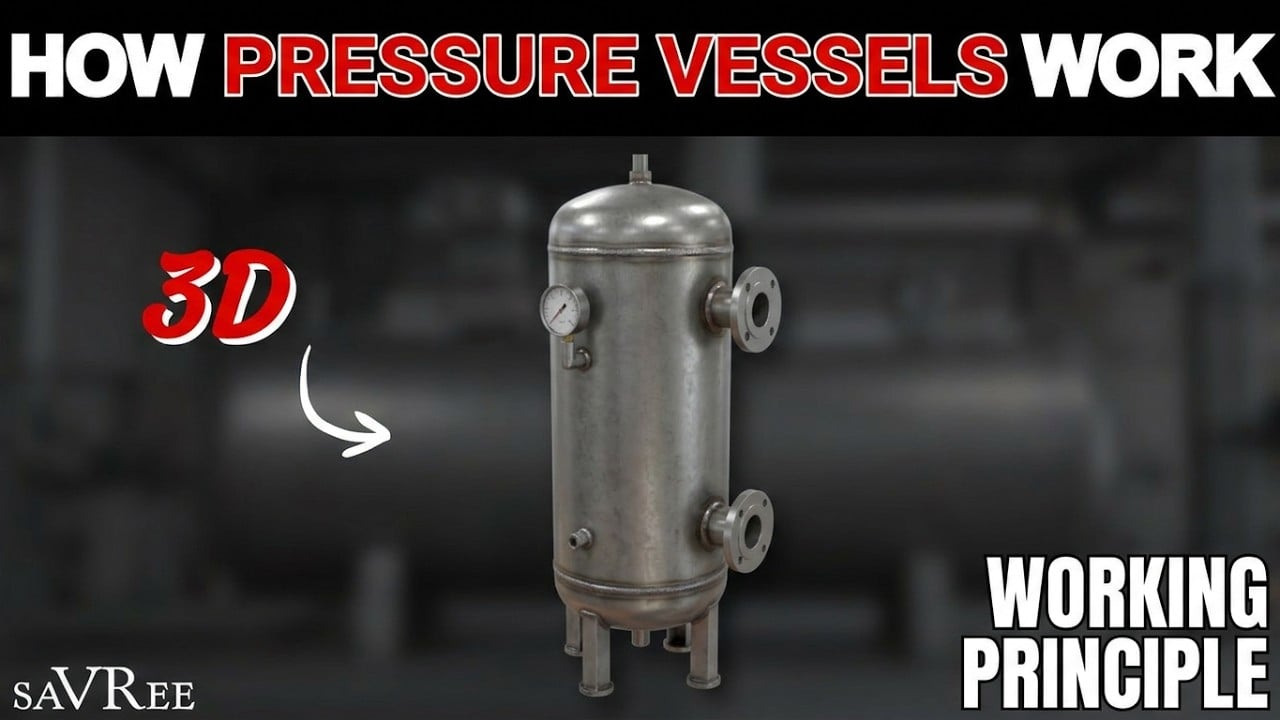
Watch Pressure Vessels Explained (Non-Fired Compressed Air) | 3D Animation by saVRee
Pertanyaan yang sering diajukan
Can a spunding valve be the only protective device?
Do not assume so. Normal regulating duties and independent protection must be assessed separately by qualified designers, based on the vessel, gas sources, foreseeable failures, and applicable requirements.
What pressure should a brewery fermenter use?
There is no universal setting. The approved equipment envelope and validated process strategy determine the operating range. Confirm both before changing pressure or adopting another brewer’s recipe.
Why does pressure rise when gas flow seems unchanged?
Possible explanations include changed exhaust resistance, liquid carryover, condensate accumulation, incorrect valve alignment, or measurement problems. Follow the site’s abnormal-operation procedure and investigate rather than increasing the pressure limit.
Does a positive-pressure rating allow vacuum operation?
Not automatically. Positive pressure and external-pressure or vacuum conditions require separate confirmation in the manufacturer’s design documentation. Cooling and emptying conditions should be included in the review.