Powder addition order in a mixing tank controls which ingredients meet water or another carrier first, how quickly particles wet, and whether local concentrations create lumps, foam, excessive viscosity, or an unwanted reaction. A useful addition sequence is specific to the formulation and equipment. It defines the initial liquid charge, agitation condition, addition rate, hold points, and evidence required before the next ingredient. There is no universal powder-first or liquid-first rule that safely covers food, coatings, chemicals, and pharmaceuticals. Start with ingredient supplier instructions, compatibility information, and a controlled trial of the actual recipe.
Distinguish the recipe from the feeding equipment
Powder induction equipment can help introduce material below the surface or into a moving liquid stream. It cannot make an incompatible addition sequence acceptable. A tank with an ordinary agitator can sometimes wet a powder successfully with a controlled feed, while a poorly timed addition can overwhelm more elaborate equipment. Discuss formulation and equipment as separate but connected decisions.
El existente powder induction mixing-tank guide addresses the feeding arrangement and operating inputs. This guide concentrates on the order of ingredients and the checks between additions. Avoid borrowing agricultural spray-tank mnemonics for an industrial food or chemical recipe without verification; their materials, concentrations, and regulatory instructions can be different.
Identify the mechanism behind each ingredient
Classify powders by what they do after contacting the liquid. Some dissolve readily, some need time to hydrate, some remain dispersed, and others react. A rapidly hydrating surface can form a gel layer around a dry core. A dense mineral powder can settle before circulation incorporates it. A low-density powder can float and form a raft. Each behavior suggests a different trial question.
Review temperature, pH, salts, and solvent composition. An ingredient that dissolves in the initial carrier may behave differently after another ingredient changes ionic strength or viscosity. Heating can help one step while damaging another component or increasing reaction rate. Record the supplier’s limits and the formulation owner’s requirements before choosing a more aggressive mixing condition.
Set the initial liquid charge deliberately
The initial charge should provide a verified mixing volume and enough capacity for subsequent ingredients and any required rinse liquid. It must also meet the minimum operating requirements of the agitator and heating system. Starting with the full final volume can leave no room to correct concentration; starting with too little can create an unmanageable local viscosity or unsafe temperature rise.
Account for the residual heel from the preceding batch. Its composition can affect both final concentration and the first powder’s behavior. For food production, the relevant current good manufacturing practice requirements provide a framework for hygienic operations and control, but they do not prescribe a universal recipe order. Cleaning and allergen controls require their own verified procedures.
Turn ingredient order into measurable steps
Write the sequence so an operator knows when to proceed. Replace instructions such as mix well with an observable endpoint: disappearance of free powder under an approved viewing method, a defined sample test, a stable temperature, or a validated holding time. Choose an endpoint that represents the actual quality requirement, not merely an attractive surface appearance.
| Ingredient behavior | Main sequence risk | Trial evidence to collect |
|---|---|---|
| Rapidly hydrating thickener | Surface gel traps dry material | Sieve or dispersion check, viscosity development over time |
| Readily soluble salt | Local concentration affects later ingredients | Conductivity or concentration check after dissolution |
| Dense insoluble solid | Settling during or after addition | Representative solids samples and bottom-condition evidence |
| Foaming ingredient | Air incorporation obscures level and quality | Foam behavior, density or entrained-air measurement |
| Reactive powder | Heat or gas generation exceeds control capacity | Approved hazard review, temperature and addition-rate record |
| Shear-sensitive ingredient | Excessive exposure changes product properties | Relevant product test at defined mixing exposure |
These are qualitative planning categories. A material can fit more than one category. Numerical limits must come from verified formulation data, testing, and the applicable safety assessment. Use the Referencia NIST SI to keep addition mass, concentration, temperature, and time records consistent.
Control addition rate and location
Even a correct ingredient order can fail when a powder is dumped faster than the liquid can incorporate it. The local wetting rate, circulation pattern, and available surface area matter. Record the feed rate and interruptions rather than describing the addition only by total duration. A bridge in a hopper can release a sudden slug that differs from a steady feed of the same average rate.
Choose an addition point that exposes the powder to useful liquid motion without creating an uncontrolled dust release or drawing excessive air. Do not remove guards, reach into a running tank, or position a bag where it can contact moving parts. Where dust can be combustible, review the hazard using appropriate material information and the US Chemical Safety Board combustible-dust resources. An ordinary stainless tank photograph does not establish dust-explosion protection.
Use a structured small-batch trial
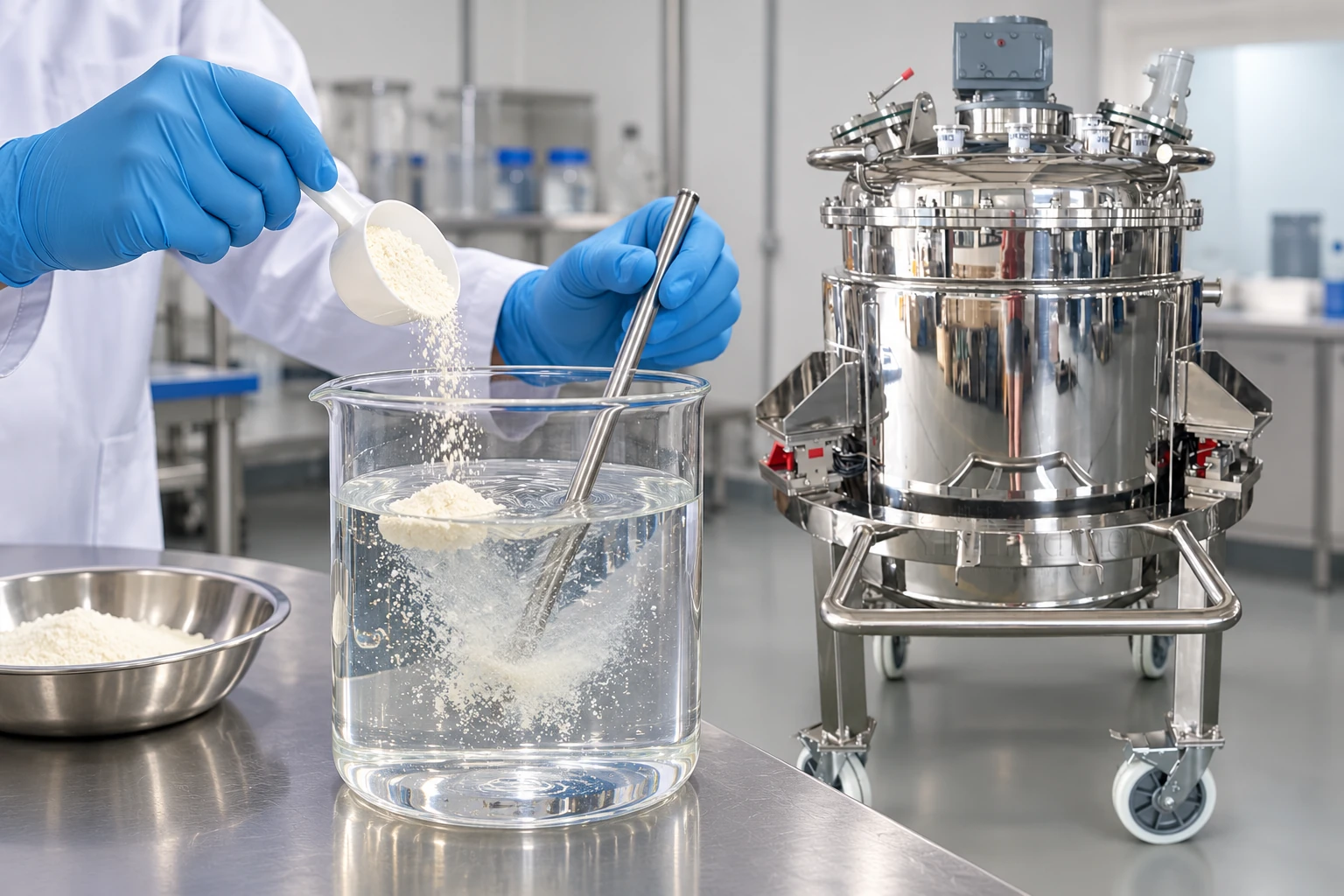
Begin with the intended ingredients and a documented scale. Retain the same order, concentration basis, temperature conditions, and meaningful addition-rate information. Equipment similarity must be assessed; copying revolutions per minute from a small mixer to a production tank does not reproduce circulation or shear. Record the actual impeller and vessel configuration.
Compare a limited number of purposeful alternatives. For example, the trial might examine whether adding a soluble component before a thickener improves uniformity without violating compatibility requirements. State the hypothesis before the run. Avoid changing order, temperature, speed, and feed rate together because a successful result then provides little evidence about which change mattered.
After each stage, document the relevant observation and a retained sample where appropriate. Check the final product after the intended hold time, not only immediately after mixing. Some defects emerge during hydration, cooling, or storage. A recipe that looks smooth at discharge may develop sediment or an unstable viscosity later.
Diagnose lumps before increasing shear
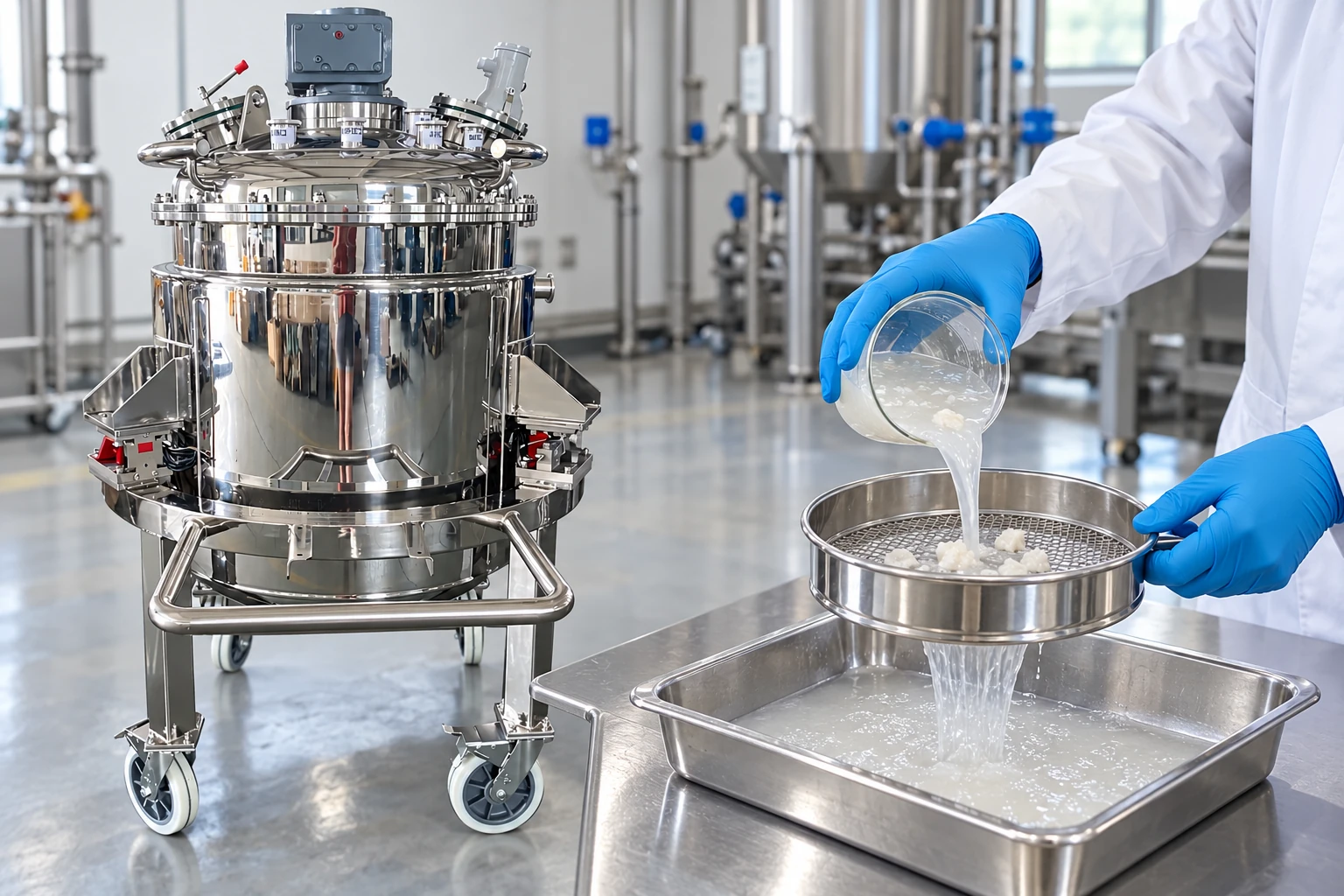
A lump can contain dry powder, swollen gel, insoluble contamination, or material formed by reaction. Examine it using an approved laboratory method before selecting a remedy. More shear may break agglomerates, but it can also damage polymers, increase temperature, or incorporate air. The correct response depends on the defect mechanism and the product specification.
Check the sequence record first. Was the initial liquid quantity correct? Did the previous ingredient fully dissolve? Did the feed bridge? Was the liquid temperature inside the approved range? Was the agitator running at the verified speed? The food mixing agitator guide y foam control guide provide complementary equipment considerations.
If an interruption has allowed solids to settle, apply a separate settled-slurry restart assessment before treating additional speed or shear as an acceptable recovery action.
Preserve the formulation mass balance
Rinse liquid, sampling losses, and rework additions belong in the batch calculation. For a hypothetical 1,000-kilogram batch requiring 2 percent of a powder by mass, the target powder mass is 20 kilograms if that percentage refers to the final batch. Adding 20 kilograms to an already complete 1,000-kilogram liquid charge creates a different final percentage. State the denominator and include all ingredients.
Do not use volume measurements for a powder mass without a verified density basis. Bulk density changes with handling and compaction, and it is different from true particle density. Weighed additions usually give a clearer mass balance, but the weighing equipment, container tare, and transfer losses must still be checked. A correct recipe calculation does not prove that the full weighed amount reached the tank.
Make the sequence transferable to production
A useful batch instruction lists ingredient identity, lot reference, quantity, concentration basis, order, feed method, mixing condition, hold point, and operator sign-off. Include permitted deviations and the action required when an endpoint is not reached. Operators should not have to invent a recovery method while a partially added batch continues to thicken.
Para un tanque de mezcla de lodo, provide representative formulation behavior, the most demanding addition step, and the required final quality tests. Ask which properties the proposed trial will establish and which need later production verification. Equipment selection should follow the most demanding verified stage, which may occur during addition rather than at the final batch composition.
Document any scale-up limitation in the production instruction. A successful pilot does not justify increasing powder feed beyond the verified rate without checking wetting, dust control, and final quality.
Further learning: unit operations for mixing
This university lecture explains mixing as a unit operation. It provides background to ingredient incorporation; actual powder addition order, wetting behavior and compatibility must still be verified for the formulation.
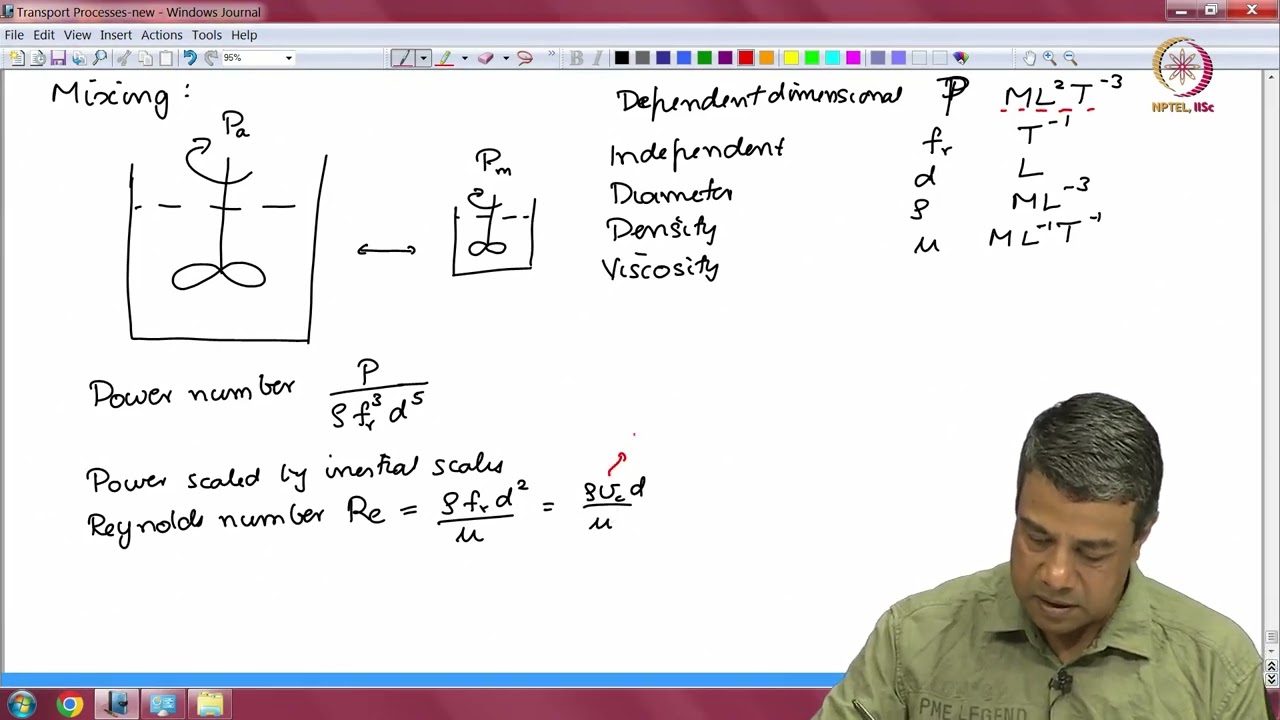
Watch Lec 15 Unit operations for mixing by NPTEL – Indian Institute of Science, Bengaluru
Preguntas frecuentes
Should powders always be added to water before other liquids?
No. The correct order depends on compatibility, solubility, hydration, reaction behavior, and the formulation requirements. Follow verified instructions and test the actual sequence.
Can a powder induction system eliminate lumps automatically?
No. It can improve feeding and wetting under suitable conditions, but feed rate, liquid properties, ingredient order, and equipment capacity still determine the outcome.
What proves that an addition step is complete?
Use a defined, relevant endpoint such as a validated dispersion test, concentration measurement, viscosity development, or approved holding criterion. Surface appearance alone may miss dry cores or settled solids.