

A heat exchanger hydrotest report instrument record reconciliation checks whether the issued test report, instrument register, calibration documents and original readings describe the same test. Start with the exchanger identity and the tested circuit, then match every measuring device to its recorded role and period of use. A signed cover sheet alone cannot resolve conflicting serial numbers or missing test charts. This review supports a purchasing or quality decision; it does not select test pressure, authorize a repeat test or certify the exchanger. The applicable design documents, approved test procedure and responsible inspector remain the controlling references.
For the wider equipment history, connect this review with the shell and tube exchanger maintenance guide. That broader record helps the owner place a particular test within the asset history; it does not change the acceptance basis of the test package.
Establish exactly which test package you received
Create a package index before reviewing individual certificates. Record the exchanger equipment tag, manufacturer identification, project purchase order, report number, revision and issue date. Compare these identifiers with the approved drawing and inspection plan. A report referring only to a general equipment description can be difficult to distinguish from another unit in the same order.
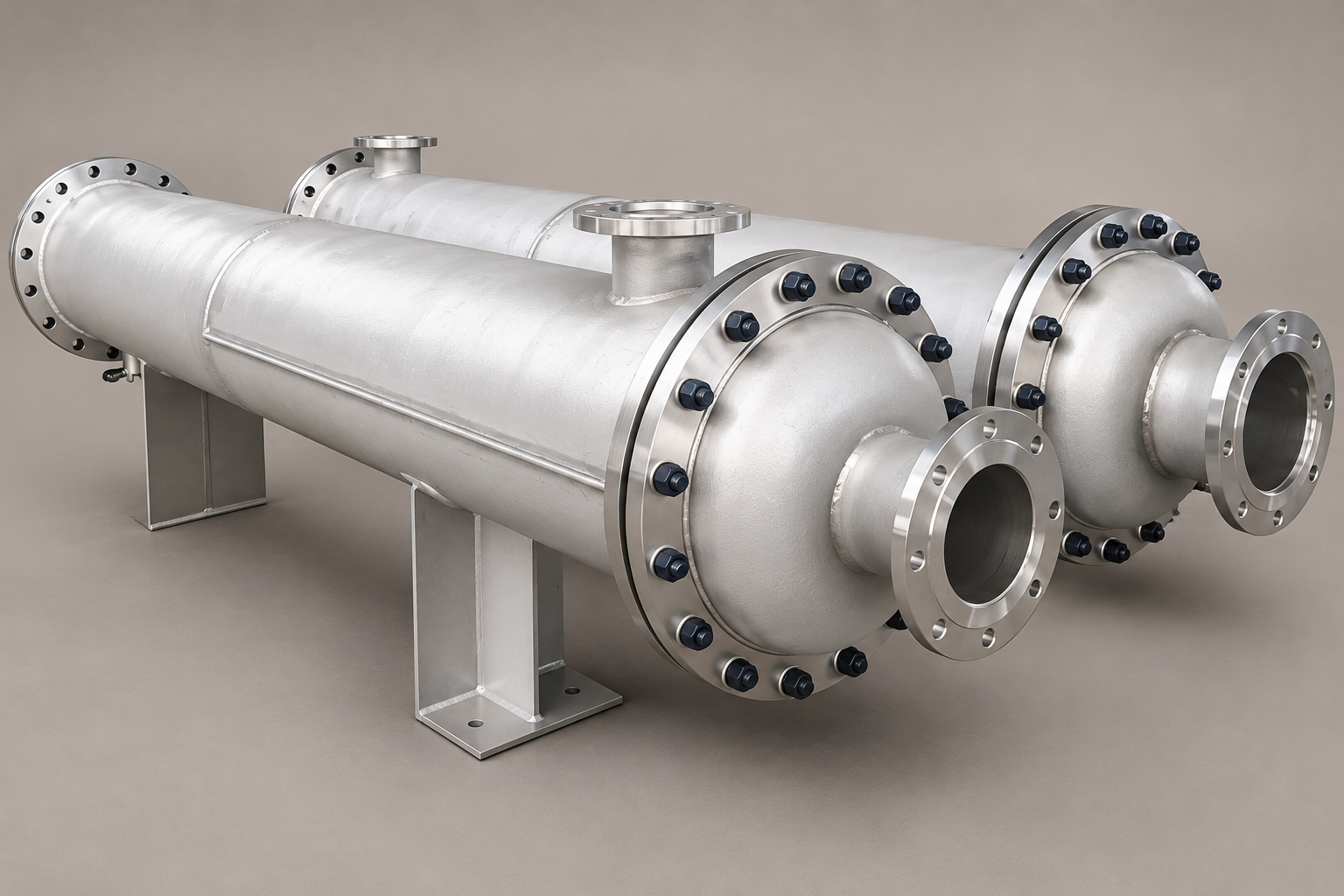
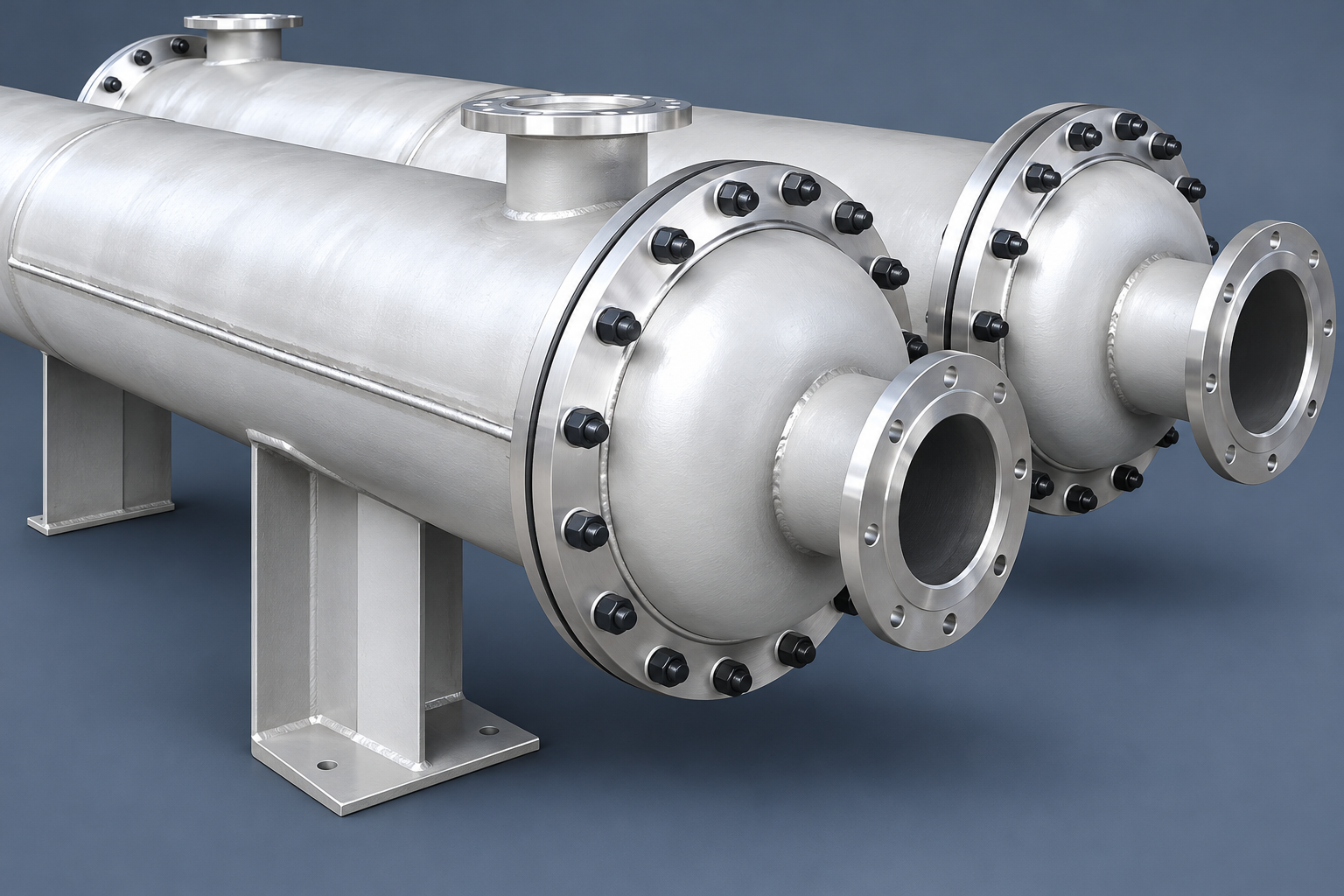
Para un Cubierta de placa fija y intercambiador de calor de tubos, the shell and tube circuits need unambiguous identification in the records where separate tests are specified. Do not infer the tested boundary from a product photograph. Obtain the relevant drawing or marked test boundary and identify the procedure revision that governed the recorded work.
Keep acceptance of the package separate from acceptance of the physical equipment. An incomplete attachment may be a documentation issue, while an unexplained change in the test setup may require an engineering assessment. Recording that distinction prevents a clerical correction from silently becoming a technical approval.
Build an instrument-to-record cross-reference
List each pressure gauge, recorder, transducer and other measurement device identified by the test documents. Include only devices actually required or used for that test. Give each one a role: local indication, recording channel, comparison reference or another stated function. An instrument list copied from a general workshop register is not evidence that every listed device was connected.
Match the manufacturer, model and unique identifier between the report, certificate and original chart or log. If a recorder contains a separate sensing element, identify the relationship between the recorder channel and that element. A recorder serial number does not necessarily identify the complete measurement chain.
Where a certificate uses an internal asset number and the report uses a manufacturer serial number, ask for a controlled cross-reference. Similar appearance, matching ranges and adjacent certificate numbers are insufficient. The pressure gauge calibration traceability guide addresses the earlier certificate review; reconciliation checks whether those documents support this completed test.
Compare the timing, not just the certificate dates
Place the actual test date beside each calibration record and any required intermediate check. Read the project’s rules for validity rather than applying an invented universal interval. A certificate issued after the test needs explanation: it might document a later calibration, a reissued report or an administrative correction. These situations have different implications.
If equipment was changed during testing, preserve the sequence. Record when the first device stopped being used, when the replacement entered service and which readings belong to each. Ask the responsible test organization to explain missing transition records. Do not fill the gap using a convenient certificate from the instrument cabinet.
Time information can also matter when multiple files are combined. Compare chart timestamps, handwritten entries and report references. A time difference may have an ordinary explanation, but that explanation should be visible in the reconciliation record rather than assumed by the person reviewing the package months later.
Check the measurement context without redesigning the test
Review the recorded units, indicated ranges and measurement roles against the approved procedure. If a chart uses a different unit from the report, retain the original values and document any conversion used in the issued summary. Avoid silently replacing readings with converted values that cannot be traced back to the original record.
Check whether the calibration evidence covers the quantity and relevant part of the measuring range. Refer questions about uncertainty or suitability to the person responsible for the measurement decision. NIST’s traceability policy distinguishes traceability from fitness for a particular measurement purpose. A traceability statement alone should therefore not be treated as proof that every aspect of this test was suitable.
This is a consistency review, not a calculation of a new test pressure. Do not substitute operating pressure, a catalog rating or a pressure mentioned in an unrelated guide for the project requirement. If the procedure itself is unclear, open a separate technical question and keep the package acceptance pending.
Use a reconciliation table with explicit dispositions
The following table is a suggested review aid. It contains no test limits; the acceptance basis must come from the applicable project documents.
| Record relationship | Qué comparar | Useful disposition when unresolved |
|---|---|---|
| Exchanger and report | Equipment identity, circuit and drawing revision | Request a corrected controlled report or identity explanation |
| Gauge and certificate | Unique ID, measurement quantity and certificate reference | Hold the affected evidence pending a confirmed cross-reference |
| Recorder and sensing element | Channel mapping and connected device identity | Request setup records from the test organization |
| Test date and supporting checks | Actual use date and project validity requirements | Refer the timing gap to the authorized reviewer |
| Original log and report summary | Units, readings, interruptions and stated result | Request a documented explanation preserving the original log |
| Report and approval record | Revision, attachments and reviewer authority | Obtain approval of the complete current package |
Assign an owner and a due date to every open item. A row marked “clarify” without a responsible person can remain unresolved through delivery. Use distinct outcomes such as accepted, corrected document required, technical review required and not applicable with a reason.
Investigate mismatches without rewriting original evidence
Consider a hypothetical package in which the report lists gauge A while the chart identifies gauge B. That discrepancy does not by itself prove that the test failed or that the wrong gauge was connected. It does show that the evidence cannot yet be followed reliably. Ask for the setup record, device-change entry or a signed explanation from the organization that performed the work.
If the report contains a transcription error, the issuer should correct it through its document-control process. Keep the original issue, the replacement issue and the explanation linked. If the setup actually changed, the technical reviewer must decide what evidence is needed and whether the existing result remains usable.
A reviewer should never make the package appear consistent by deleting the conflicting attachment. Missing or contradictory evidence must remain visible until formally resolved. If a repeat test is proposed, it needs its own approved planning and safety arrangements; it is not an automatic administrative remedy.
Preserve interruptions and unusual events
Read remarks and intermediate pages as carefully as the final result. Identify recorded stoppages, instrument substitutions, unexpected readings and repeat sequences. Ask whether the report’s acceptance statement refers to the complete sequence or only to a later test. Keep separate tests distinguishable even when they concern the same equipment.
Photographs can help identify a setup, but only within what they actually show. An undated photograph of a gauge face cannot establish the entire test duration. Likewise, a clear instrument label in a photograph does not replace a calibration certificate or prove the device’s connected role throughout the test.
El HSE pressure-testing guidance page provides access to cross-industry safety guidance. Use it as a safety reference alongside the governing project requirements, not as evidence that a particular exchanger has passed inspection. Keep documentation review away from any live pressurized test area unless authorized under the site’s arrangements.
Define the purchaser’s acceptance decision
State what the review covers and what it leaves to other disciplines. A buyer may confirm that the required package has been received; a quality reviewer may check document consistency; an authorized technical reviewer may assess a deviation. These responsibilities should not collapse into one unexplained signature.
Commercial pressure to dispatch equipment should not erase open technical questions. Where delivery proceeds under an approved concession, keep its scope, conditions and owner linked to the purchase order. Do not describe a conditional release as unrestricted acceptance. The receiving team needs to know whether any restrictions remain.
Coordinate the test records with later handling and maintenance documents. For example, hydrotest water disposal planning concerns a different boundary from instrument evidence. A complete instrument package does not establish that draining, drying, preservation or waste handling was performed as required.
Make the final package usable after delivery
Store the approved report with a searchable index and stable attachment names. Record which revision supersedes earlier issues. Retain original charts in a format that can still be opened, and avoid relying on a single email attachment held by one employee. The package should remain understandable to a future maintenance or inspection team.
When requesting an exchanger quotation, specify the documentation you need before the order is placed. Identify required report content, instrument evidence, witness points, electronic formats and the approval route. Ask the supplier to confirm scope rather than assuming every possible record is included in a standard quotation.
For later service planning, connect the accepted package to the asset record and the cleaning service quotation scope. Keep the original test acceptance separate from later maintenance decisions. Equipment history becomes useful when each event retains its own purpose and supporting evidence.
Formación adicional: control de energías peligrosas
The educational video below introduces hazardous-energy control during maintenance. It supports awareness when reviewing equipment work; it does not provide a hydrotest procedure or authorize work on a pressure system. Discuss the actual task with the competent people responsible for the site.
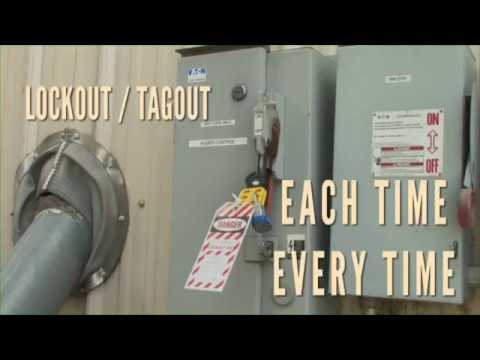
Centros de Seguridad y Salud Agrícola de EE. UU.: Control de energías peligrosas para el bloqueo y etiquetado.
Preguntas frecuentes
Does a matching calibration certificate prove the hydrotest passed?
No. It supports one part of the measurement evidence. The test boundary, procedure, actual readings, required observations and authorized acceptance must also be consistent and complete.
What should happen when the report and chart identify different gauges?
Keep both records and request a controlled explanation from the test organization. The authorized reviewer should decide whether the issue is a transcription error, an actual setup change or a gap requiring further technical action.
Can the purchaser correct an incorrect serial number directly?
The purchaser should record the discrepancy and request correction by the document issuer. Preserve the original issue and the approval trail so the accepted package remains traceable.


