A riboflavin coverage test checks whether a vessel’s spray system reaches and rinses the surfaces defined in a written protocol. Apply the fluorescent tracer, confirm the starting coverage, perform the specified rinse, and inspect mapped locations under suitable light. Remaining fluorescence requires investigation; its absence does not prove removal of production soil, allergens, microorganisms or detergent. For a mixing tank purchase, the useful deliverable is a repeatable test record tied to the actual tank configuration, rather than a photograph described simply as “CIP passed.”
This guide helps equipment buyers and validation teams prepare that record. It covers test boundaries, access, observations, corrective actions and supplier handover. It does not establish a universal tracer recipe, rinse duration or acceptance limit. Those decisions belong in the owner’s approved protocol, using applicable guidance and the installed spray device documentation.
Separate spray coverage from cleaning performance
Coverage asks a physical question: can the selected rinse arrangement contact the defined surfaces under the recorded conditions? Cleaning validation asks a broader question about consistently removing relevant residues to justified limits. A clean-looking result from an easily rinsed tracer cannot establish removal of a sticky formulation, dried protein or heat-damaged deposit.
3-A Sanitary Standards’ explanation of riboflavin testing explicitly distinguishes spray coverage from vessel cleanability. Use that distinction when writing purchase specifications: request a coverage assessment as one item within the qualification package, with the product-specific cleaning assessment identified separately.
Existing food-grade tank cleaning validation guidance addresses the broader residue question. Linking the two records makes the final decision clearer than assigning both jobs to a single rinse demonstration.
Freeze the equipment arrangement before testing
List the vessel identifier, drawing revision, installed internals, spray device identification, flow path and drain arrangement. Include the agitator configuration, instrumentation that projects into the tank, removable fittings and the operating position of relevant components. An unobstructed factory vessel and a production vessel fitted with extra sensors may present different coverage challenges.
Make a location map before introducing tracer. Divide the vessel into identifiable zones and give difficult locations specific codes. The map can include the underside of an agitator blade, the back of a baffle, a nozzle recess and the upper closure region, where those features actually exist. Avoid borrowing a generic tank drawing that contains components absent from the equipment being purchased.
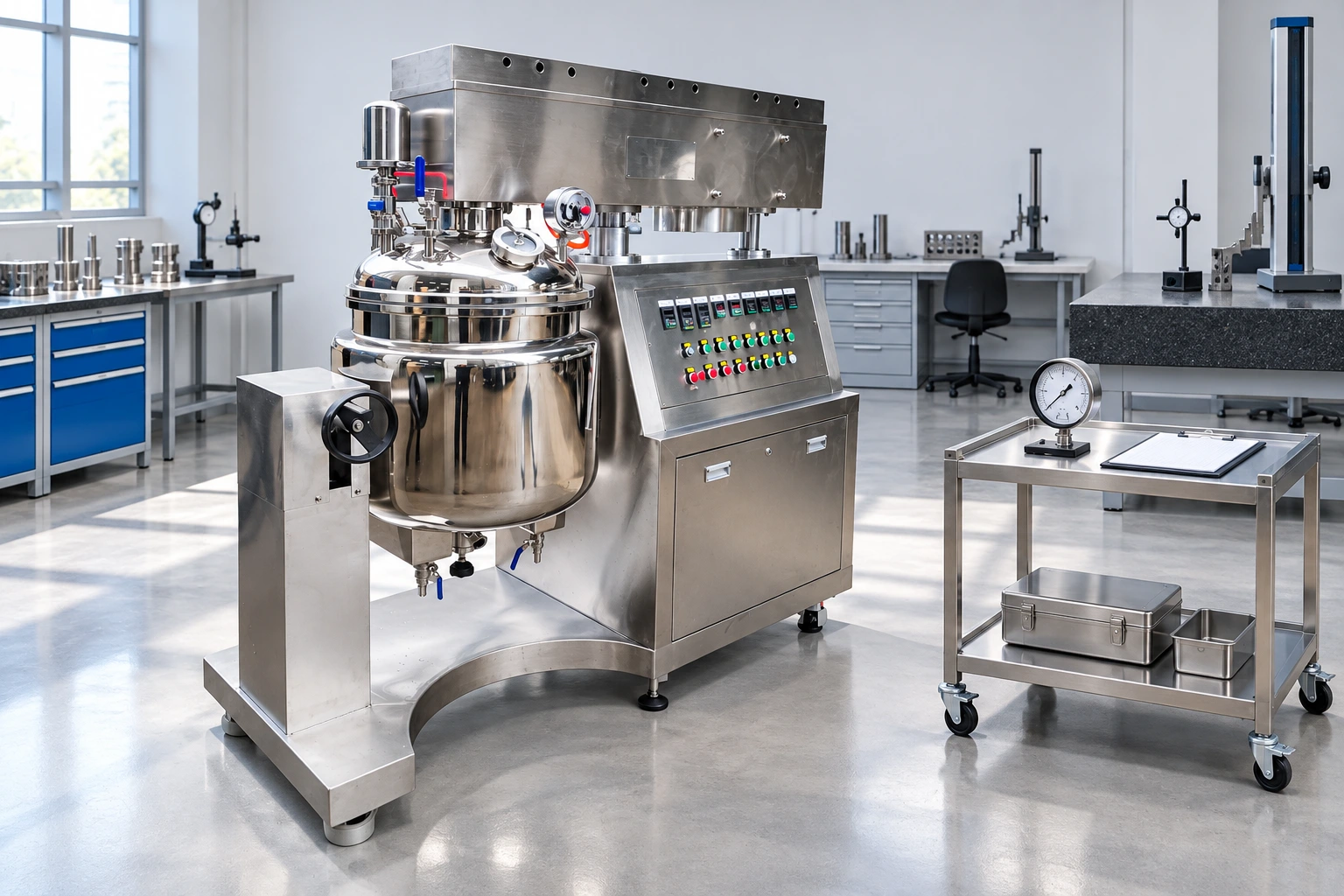
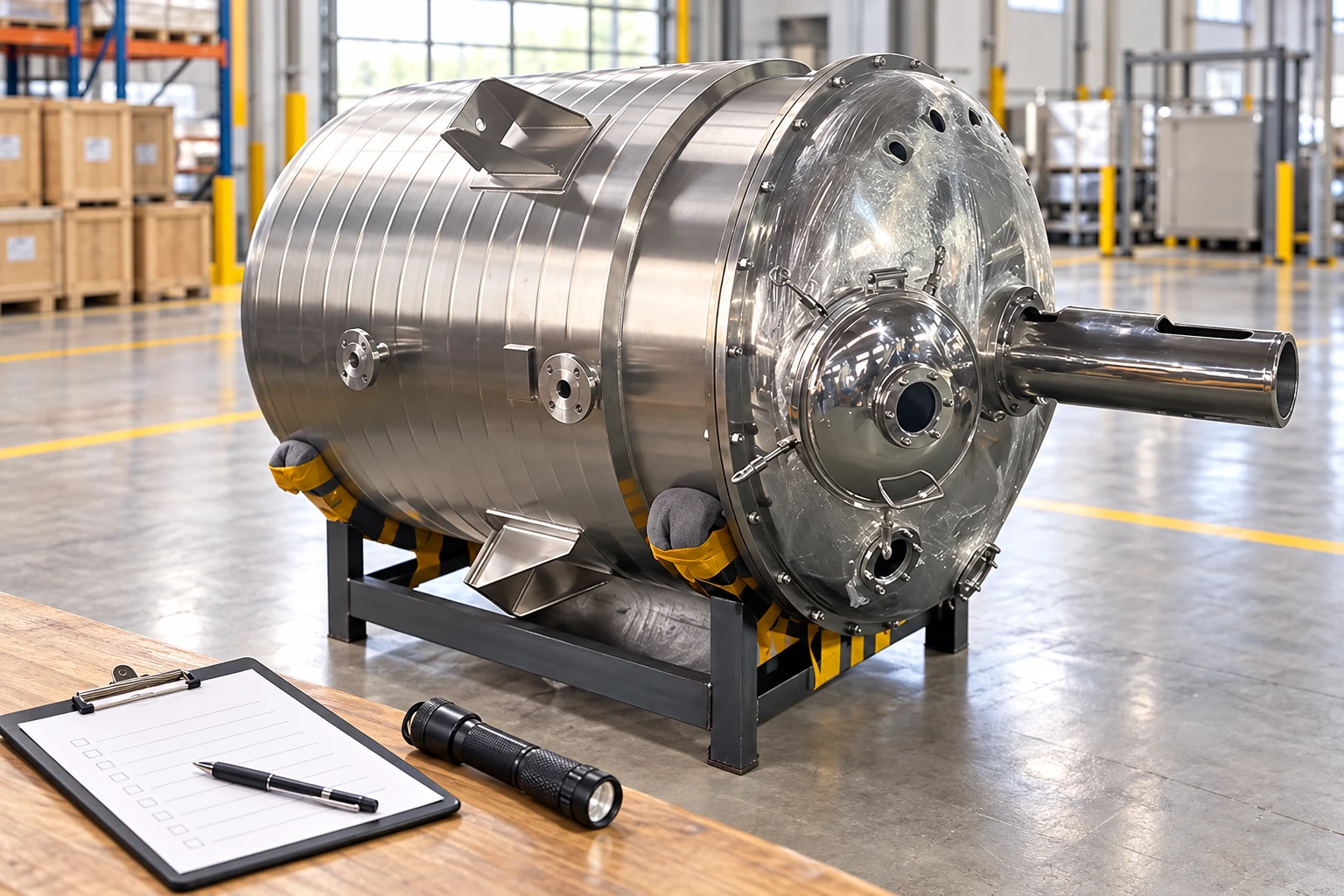
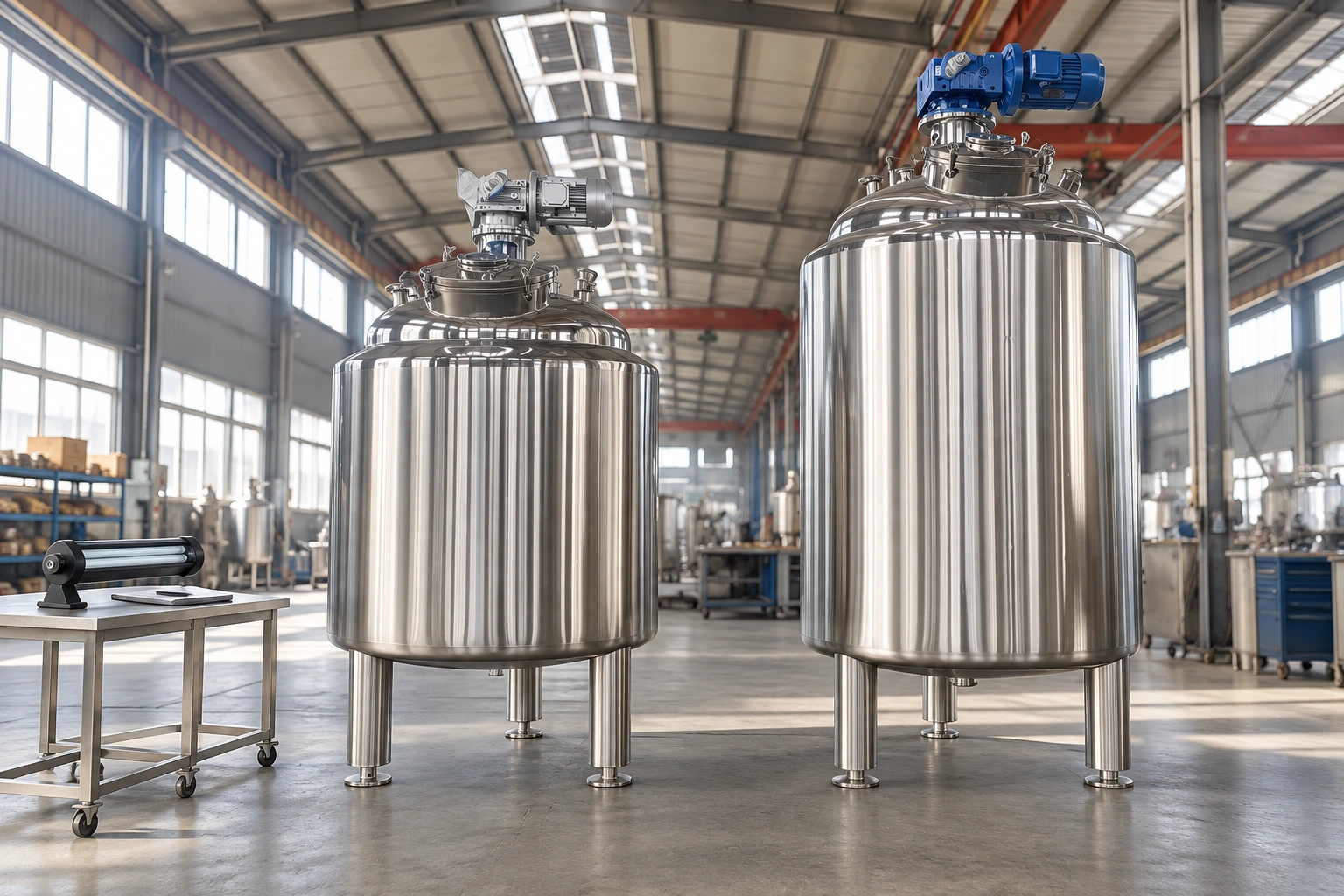
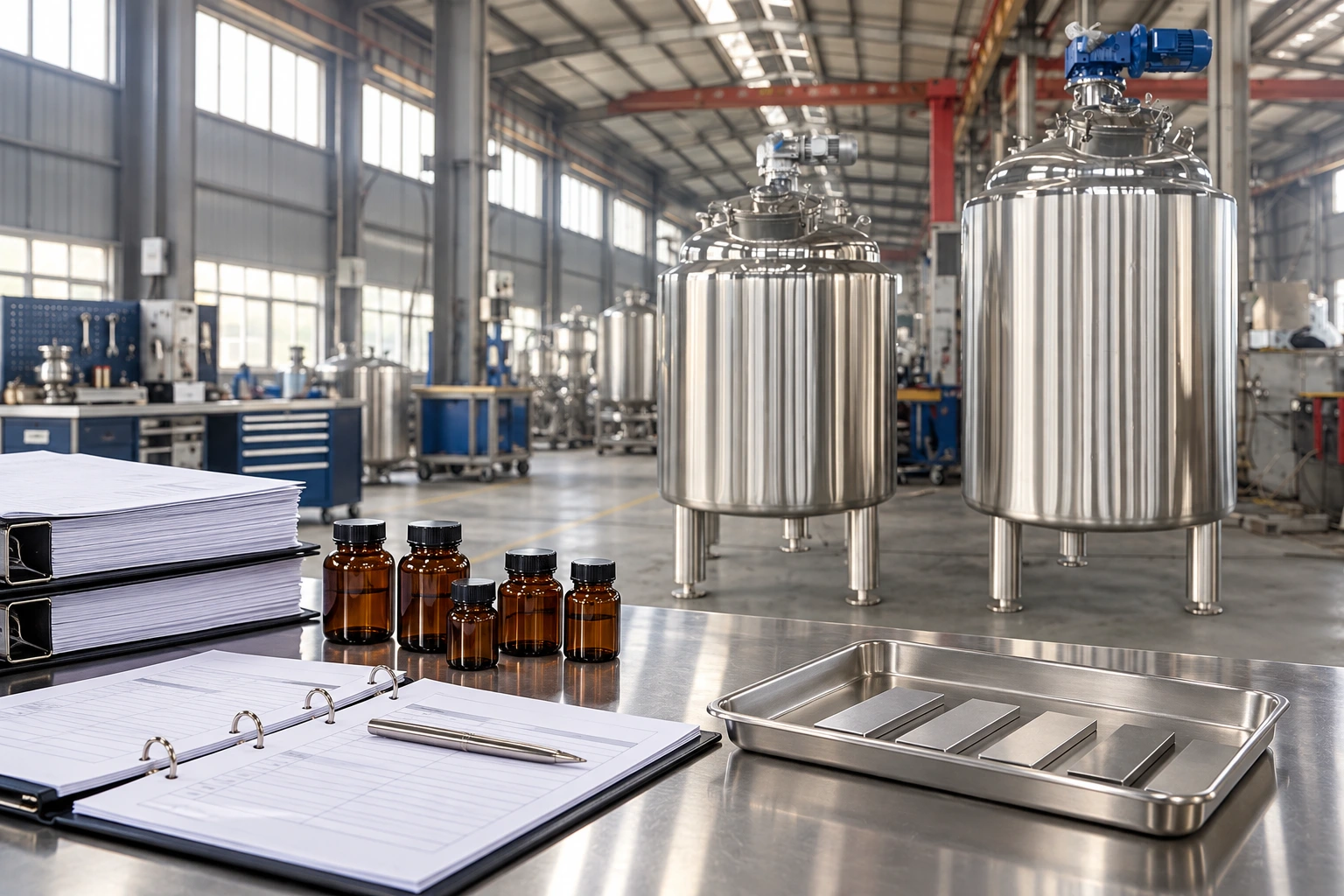
For the pictured mixing tank product, the photograph establishes exterior form only. The internal arrangement, spray device model and qualification scope must be confirmed from the supplier’s current drawings. An exterior image is not evidence that a particular internal feature is supplied.
Agree the test decision before preparing tracer
The protocol should identify the surfaces included, the observation method, the result categories and who can approve deviations. Define how an inaccessible location will be handled; leaving it unobserved cannot silently become a pass. Also decide whether photographs alone are sufficient or whether a second observer must confirm critical locations.
Set the tracer preparation, water quality, application approach and rinse settings using the approved method. Record the actual values rather than replacing missing measurements with nominal pump settings. The pressure at a remote supply header may differ from conditions near the spray device, so instrument location belongs in the record.
Use acceptance wording that allows an honest inconclusive result. If visibility is inadequate, the appropriate conclusion may be “not evaluated” with a planned recovery action. This protects the study from a common commercial problem: a supplier promises a completed test although part of the tank could never be inspected.
Build a practical observation and evidence sheet
The following is a planning checklist, not a standardized acceptance specification. Adapt it to the actual geometry and approved protocol.
| Record item | What the team should capture | Decision it supports |
|---|---|---|
| Configuración | Drawing revision, installed components and spray orientation | Whether the result applies to the delivered arrangement |
| Starting condition | Clean surface condition and tracer coverage confirmation | Whether a dark region after rinsing can be interpreted |
| Rinse execution | Actual flow, pressure location, duration and drainage sequence | Whether the approved conditions were achieved |
| Inspection location | Map code, access route and observation limitations | Whether every required zone was assessed |
| Fluorescence finding | Location, appearance and supporting photograph | Whether a repeatable coverage concern exists |
| Corrective action | Specific adjustment, revised configuration and repeat run | Whether the proposed change resolved the concern |
| Release decision | Reviewer, exceptions and linked cleaning study | Whether the documented scope is ready for acceptance |
Keep the original observation sheet, including unsuccessful runs. A final photograph without the configuration and execution data is difficult to compare with later maintenance or installation changes.
Confirm the starting condition and inspectability
A useful study begins before the rinse. Confirm that the tracer can be detected with the chosen lighting and observation arrangement. Identify whether ambient illumination, reflections, viewing angle or an obstructed camera position makes certain areas difficult to evaluate. Record these limitations before interpreting the test outcome.
Keep the application inspection and final inspection comparable. A close initial view and a distant final view can give a misleading impression of tracer removal. Establish a consistent route through the mapped locations and preserve enough context in photographs to identify where each image was taken.
Plan safe observation access without treating vessel entry as a routine shortcut. If entry is required, use the site’s confined-space and isolation arrangements. A remote inspection method may help, but its suitability must be demonstrated for the locations and detection conditions in the protocol. Do not assume that any camera can replace a validated observation method.
Run the rinse without losing the event history
Record the time of application, initial inspection, rinse and final observation. Note delays and any interruption. If the study method controls drying or requires a particular sequence, a delay should be assessed against that method rather than omitted from the worksheet. The relationship between the method and the actual execution matters more than an attractive final photograph.
Assign clear roles: one person operates the approved sequence, another records conditions, and the designated observer evaluates the mapped surfaces. This arrangement reduces the chance that a setting is adjusted during a run without appearing in the report. It also makes deviations easier to reconstruct.
If the rinse does not meet the approved conditions, retain the observations but mark the execution deviation. Do not increase rinse time repeatedly until no tracer remains and then describe the last attempt as the original test. A changed cycle is a different condition that needs its own record and review.
Investigate residual fluorescence before changing hardware
Residual fluorescence is a location-specific finding. Review the starting coverage, local geometry, drain path and possibility of tracer being transferred during inspection. A droplet falling from an opened fitting can create a different investigation from a consistently shadowed surface behind an internal component.
Repeatability helps determine the next action. If a mapped region shows the same finding in controlled repeats, compare the installed spray arrangement with its documented operating conditions. If a finding appears only after a cover is opened, examine whether the inspection sequence itself introduced tracer. Keep these alternatives visible instead of declaring every bright spot a failed spray device.
Select changes that address the evidence. These may involve confirming installation, correcting the approved operating conditions or reviewing a spray arrangement with the responsible designer. A larger pump or longer rinse is not automatically the correct remedy. After an approved change, repeat the affected qualification scope and assess whether other locations could have been affected.
Understand the demonstration video within its limits
The educational video below shows the basic idea of riboflavin testing. It is useful for recognizing why fluorescence is observed before and after rinsing. It does not set your tracer concentration, ultraviolet exposure controls, rinse program or acceptance criteria. The site’s approved method remains the operational reference.

Watch Riboflavin Testing by Mahmoud Amer Channel
Connect coverage findings to the cleaning study
A successful coverage record can support the equipment qualification file, but production release still needs the appropriate evidence for the process. Identify which document evaluates product residues, cleaning agents and any relevant microbiological requirements. State the limits of the coverage study prominently so that later reviewers do not mistake it for that separate evidence.
The University of California, Irvine’s fluorescence laboratory material provides scientific background on riboflavin fluorescence. It is a laboratory teaching document, not a vessel qualification procedure. That distinction matters: understanding why a tracer fluoresces supports observation, while the production cleaning study must establish its own suitable methods and acceptance basis.
For food changeovers, the complementary allergen cleaning verification checklist keeps allergen decisions separate. For rinse monitoring, CIP rinse conductivity explains another measurement with a different purpose. Neither measurement replaces the mapped coverage observation.
Ask for a usable supplier handover package
Before ordering, send the supplier the proposed tank configuration, difficult surfaces, available cleaning utilities and requested test scope. Ask who prepares the protocol, who provides instruments, where the test occurs and which records accompany delivery. Clarify whether the installed site piping changes the factory test conditions.
Request the approved protocol, actual execution sheets, location map, photographs, deviations and signed conclusions. If transport, installation or later modification affects the tested arrangement, assign responsibility for assessing requalification. Include access for future inspection in the design review; a difficult location does not become easier to maintain after delivery.
A useful inquiry therefore describes the liquid or formulation family, planned internals, cleaning approach and documentation need. The next step is a joint review of the drawing and test boundary, followed by an agreed evidence package. This gives buyers a clearer basis for acceptance than a general claim that the equipment is easy to clean.
Preguntas frecuentes
Does a riboflavin coverage test prove that a tank is sterile?
No. It evaluates the defined spray coverage under recorded conditions. Sterility, microbiological control and removal of production residues require their own suitable process evidence and acceptance decisions.
Can a factory result automatically cover the installed tank?
Only after reviewing whether the delivered and installed configuration matches the tested scope. Added internals, changed utilities, spray orientation or piping may require further assessment and testing.
What should happen when a location cannot be observed?
Record the limitation explicitly and resolve it through an approved inspection approach or a justified scope decision. Do not mark an unseen required location as passed merely because other surfaces appear satisfactory.