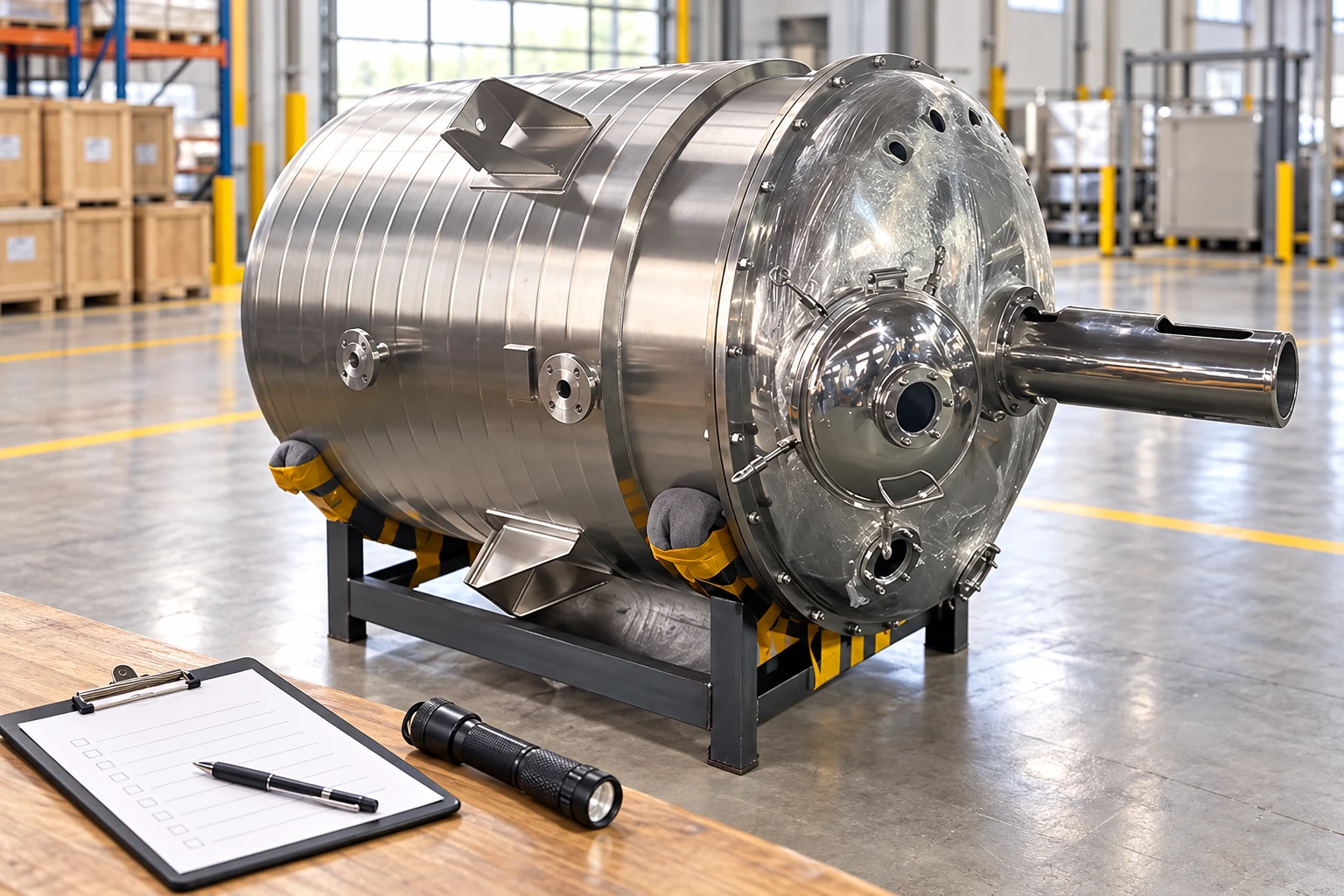
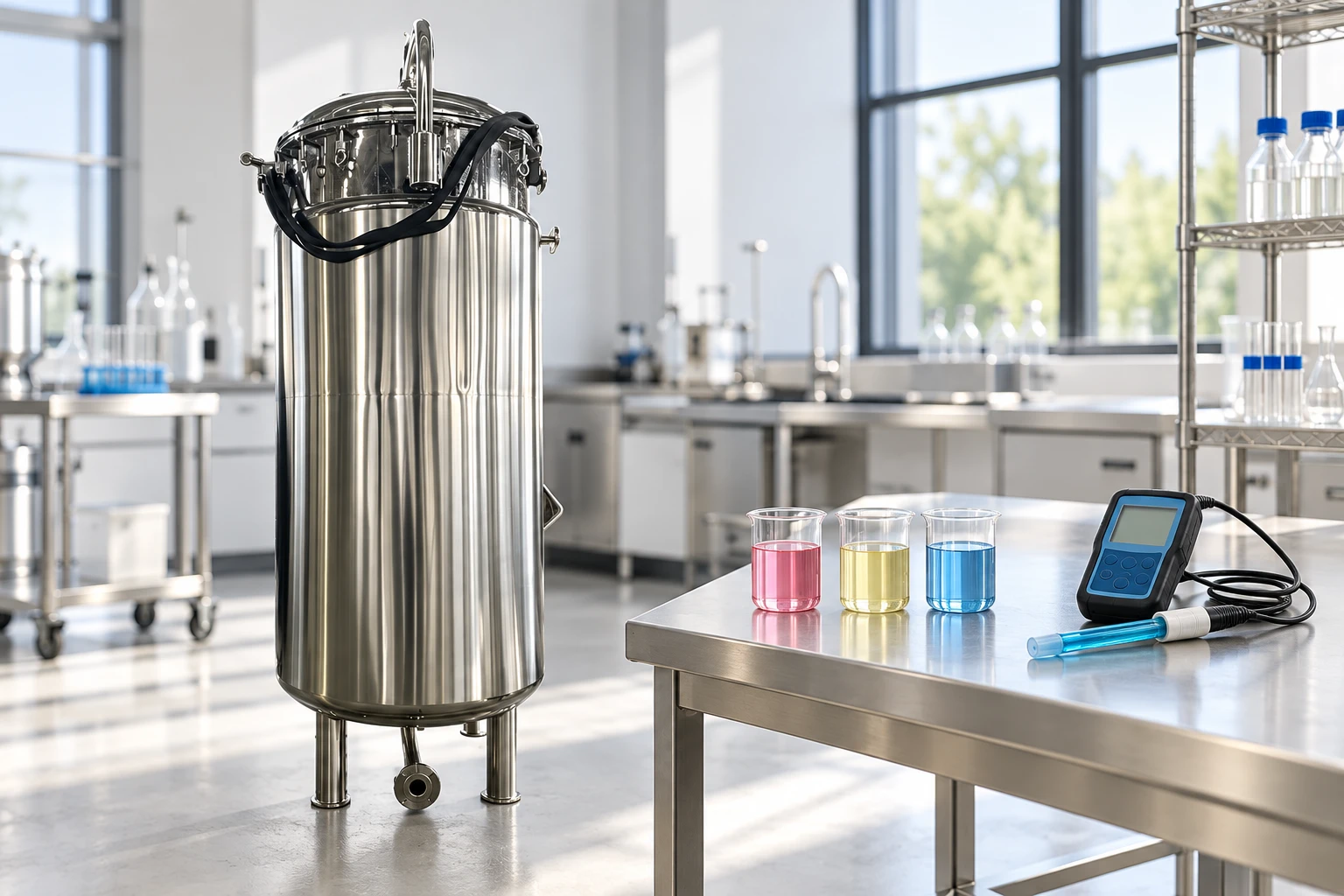
Sugar syrup crystallization in a storage tank should be investigated as a product-and-process problem before the vessel is blamed or a heating change is made. Confirm what material formed, reconstruct the syrup composition and temperature history, and determine whether the observation is local or representative of the batch. Concentration changes, cooling, retained crystals and uneven conditions can matter, but they do not produce one universal remedy for every sugar mixture. This guide explains the evidence needed for an industrial storage investigation. It does not specify a guaranteed crystallization-free temperature, a sugar concentration limit or an unapproved batch-recovery procedure.
Confirm that the visible material is a sugar crystal
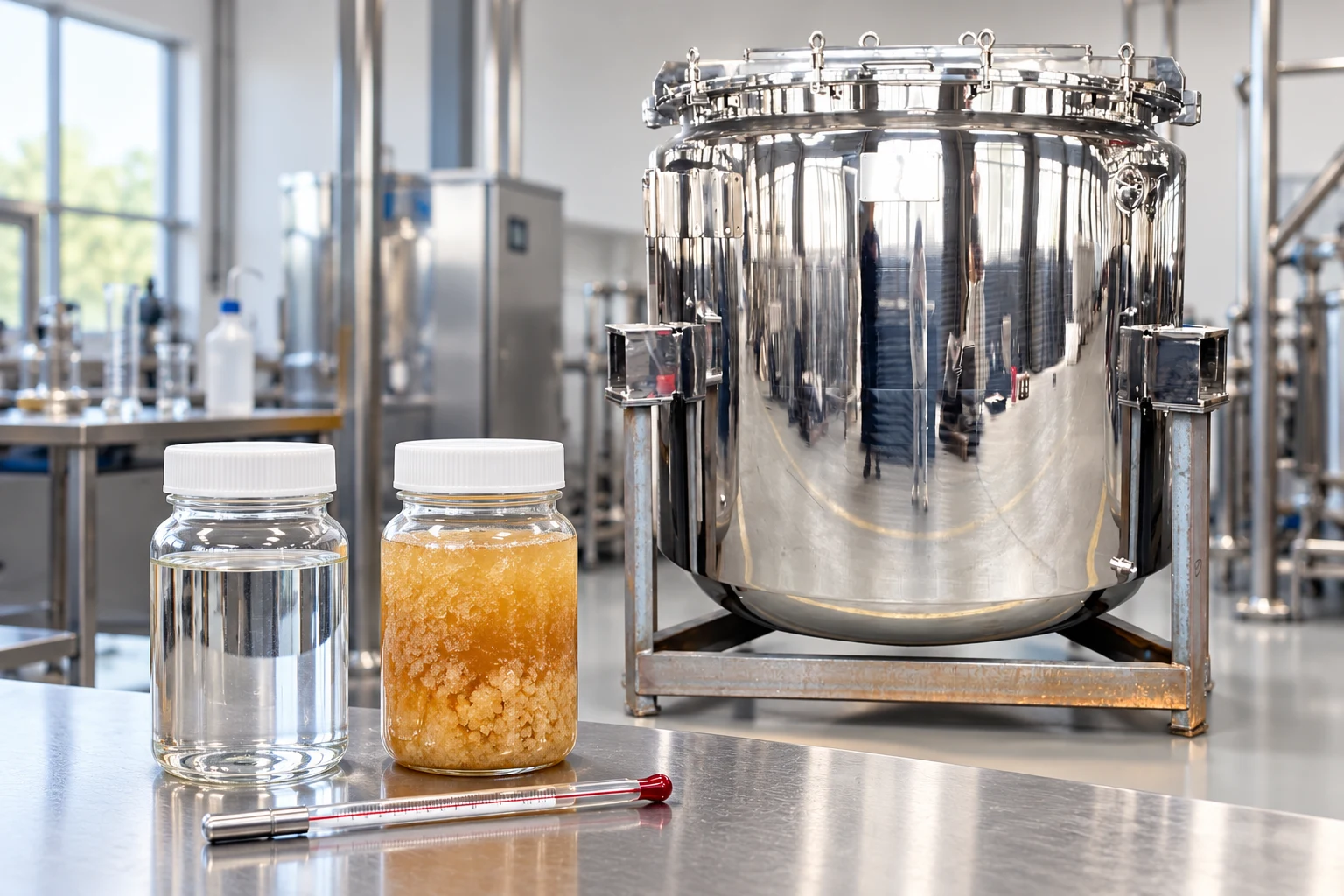
A deposit, haze or separated layer is not automatically crystallized sugar. Preserve representative samples and document where and when the material was observed. The appropriate laboratory or product specialist should identify the material using a suitable method when the distinction affects a commercial or quality decision. Do not rely only on the appearance of a photograph.
Record whether the material appeared in the vessel, at an outlet, during transfer or after the sample had cooled in its container. Those are different observations. A sample that crystallizes later may reveal useful behavior, but it does not prove that the same condition existed inside the tank at collection. Maintain the link between sample history and the production state that the investigation is intended to explain.
Reconstruct the syrup on a consistent composition basis
Identify the sugar ingredients, relevant water additions, supplied concentrations and actual batch quantities. A syrup containing several sugars and other ingredients cannot be treated automatically as a pure sucrose solution. Changes in ingredient lot, dilution, concentration or an undocumented contribution from a transfer or cleaning step can change the formulation.
Check the basis of reported concentration values and the measurement method. An instrument reading used as a routine process indicator may require a product-specific interpretation. Do not equate every soluble-solids indication directly with one sugar’s concentration. Preserve the as-made record even if it differs from the intended formula. Correcting a spreadsheet after the event without retaining the original data makes it harder to identify the cause and assess the affected material.
Understand the role of dissolution and supersaturation
The amount of a solid that can remain dissolved depends on the substance, solvent and conditions. A solution prepared under one set of conditions may behave differently after a change. Crystal formation also involves the availability of nuclei and the path the material follows. These principles explain why final appearance alone is an incomplete process record.
El OpenStax explanation of solubility provides educational context for comparing dissolution behavior at different temperatures. Its educational examples are not a storage specification for an industrial syrup. Use the principle to ask which changes matter for the actual formulation, then obtain the appropriate product-specific evidence instead of importing a classroom concentration or temperature into a production tank.
Map the temperature history rather than one final reading
Record the syrup’s preparation, transfer, cooling and storage stages. Include relevant holds and interruptions. A single displayed tank temperature does not establish that every region or connection experienced the same history. An outlet, a stagnant section or a location near a heat-transfer surface may merit separate review, depending on the actual equipment and process.
Do not infer a cold spot solely from where a deposit was found. It is a possible explanation to investigate alongside composition, residue and sampling effects. Use suitable measurements and document their locations and response limitations. Avoid changing a heating setpoint until the vessel’s approved operating conditions, product requirements and the proposed investigation have been reviewed. Raising temperature can introduce a different product or equipment problem rather than resolving the original cause.
Investigate retained crystals and material carryover
An earlier deposit, retained heel or residue in a connection can influence later observations. Review the actual changeover and cleaning history, including equipment connected to the storage vessel. A clear incoming syrup does not establish that the whole system was free of retained material when the batch entered it.
Inspect only through a safe, approved arrangement. This article does not authorize vessel entry or opening an unsafe system. Where access is limited, record what could not be observed and obtain a suitable assessment. Do not scrape a deposit into the batch or improvise a cleaning method before its effect and compatibility have been reviewed. Preserve evidence of the original condition, particularly when the investigation may affect the disposition of stored material.
Use a qualitative evidence table
| Observation | Possible contribution to investigate | Evidencia útil |
|---|---|---|
| Crystals appear after a cooling stage | The formulation’s response to its temperature path | Composition and time-resolved temperature records |
| Deposit is concentrated near an outlet | Local conditions, retained material or a different flow history | Actual connection arrangement, sampling and safe inspection evidence |
| Only the retained sample crystallizes | Sample cooling, storage time or container history | Collection and analysis times with a defined sample-handling method |
| The problem follows a new ingredient lot | Composition or supplied-condition differences | Ingredient identification, relevant analysis and batch reconciliation |
| A later batch develops a similar deposit | Carryover, repeated process conditions or an unresolved cause | Cleaning, heel-management and previous discrepancy records |
| More heating changes appearance but not later stability | A temporary state change rather than a demonstrated remedy | Product-specific hold evaluation and an authorized trial |
The table identifies hypotheses. It does not prove a cause or provide universal operating limits.
Separate mixing questions from storage questions
Agitation can influence temperature and material distribution, but a mixing adjustment does not change every underlying crystallization tendency. The intended duty may be holding, maintaining distribution or supporting a controlled formulation step. Define what the agitator is expected to accomplish before altering its operation.
Do not assume that faster mixing prevents all crystals or that an unagitated vessel is always unsuitable. The material, solids state, equipment design and approved operating conditions matter. If a product-specific trial is needed, define its purpose and acceptance method with the relevant specialists. Record the actual configuration and history so that a successful trial can be interpreted within its tested scope rather than turned into an unlimited performance promise.
Learn from a specific sugar system without borrowing its recipe
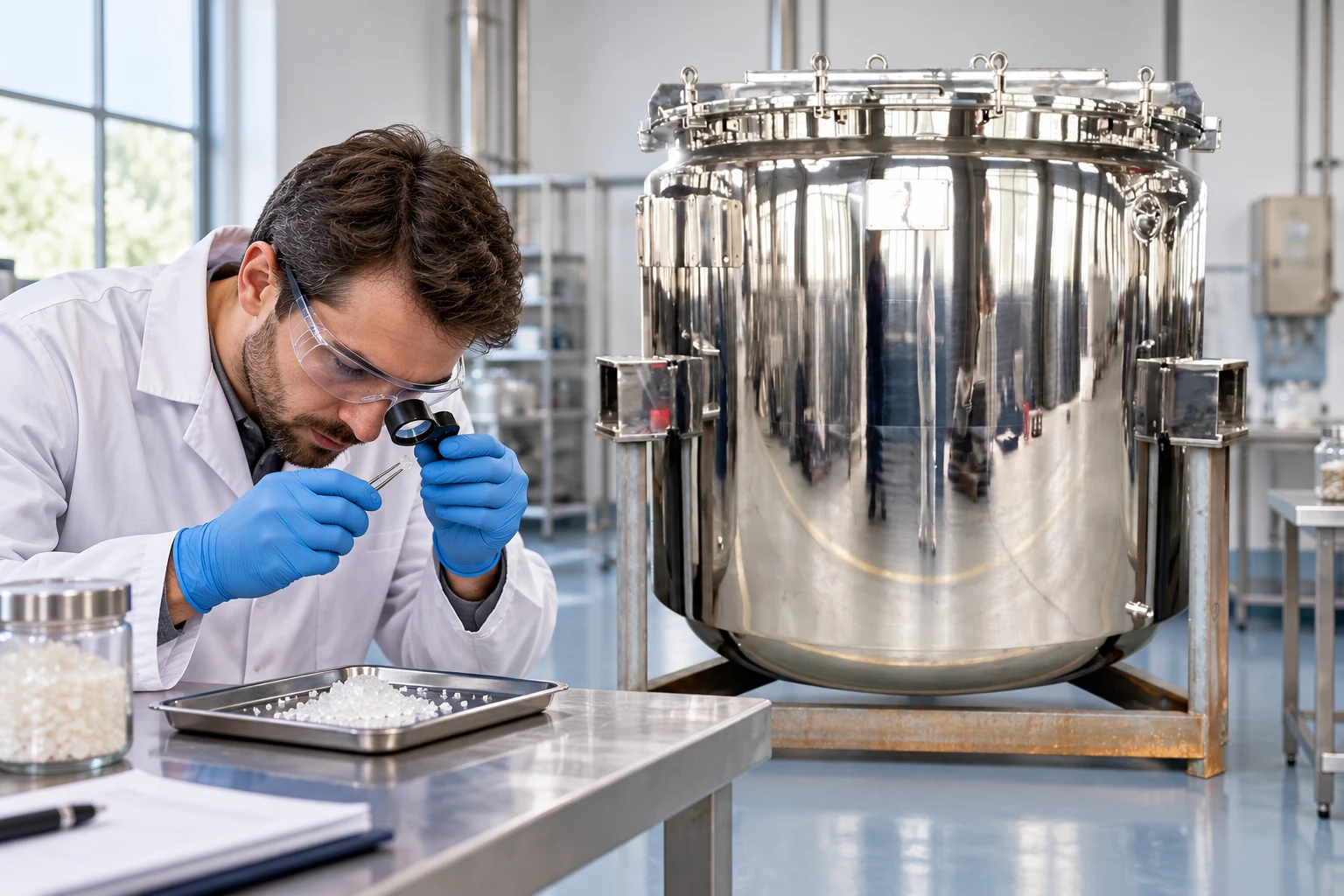
El Cornell-authored maple sugar troubleshooting bulletin discusses issues in a particular maple-sugar production context. It illustrates how several factors influence a crystal-forming sugar product. It does not establish a storage limit, corrective temperature or recipe for every industrial syrup.
Keep that distinction when reviewing supplier advice or published examples. A procedure intended to promote granulated sugar formation may be the opposite of the storage objective. A useful investigation asks which aspects of an example are relevant and which depend on its particular composition and processing path. Avoid transferring a numerical condition simply because both products contain sugar. The actual formulation and its intended use need their own justified operating and acceptance basis.
Design a controlled comparison with retained evidence
Choose a small set of justified comparisons based on the production record. These might examine a relevant composition difference, a documented thermal path or the effect of an approved preparation condition. The qualified product team should determine the safe method and suitable scale. Do not improvise production-scale heating or dilution to test an unconfirmed idea.
Keep an appropriate reference and define observation times before examining the results. A sample that looks clear immediately after a trial may still change during the relevant hold. Use the measurement methods and storage conditions that answer the actual product question. Preserve unfavorable and ambiguous results as well as favorable ones. That makes the trial useful for selecting the next step instead of merely demonstrating a temporary improvement in appearance.
Define the response to an affected batch
The responsible quality and process team should decide whether material is held, evaluated, reworked or otherwise managed. Record the affected quantity, relevant observations and the basis for the decision. This guide supplies no blanket instruction to dissolve crystals by adding water or heat. Such an intervention can change concentration, quality or the equipment duty.
If rework is authorized, retain its scope, method and acceptance evidence. Keep the original condition visible in the history rather than replacing it with the final favorable sample. Assess whether the cause could affect material elsewhere in the system or a subsequent batch. Closing the investigation requires a supported explanation and an effective response, not just an empty vessel or a cleaner-looking outlet.
Translate findings into storage-vessel requirements
Para un YIYI stainless storage tank, provide the actual syrup description, storage duration, temperature history and any required distribution or cleaning function. Ask for confirmation of the proposed materials, interfaces, drainage and heating or mixing scope where applicable. The product photograph does not establish a supplied heating package or guarantee that a formulation cannot crystallize.
Utiliza el syrup-tank viscosity and heating guide for the broader equipment enquiry, the tank temperature-monitoring guide for a separate measurement-planning question and the storage-tank turnover guide when evaluating inventory movement. Crystallization diagnosis adds a product-specific evidence requirement; it should not be reduced to one generic heating or agitation rule.
Educational reference: supersaturated sugar solutions

Watch Supersaturated Sugar Solution! by The Science Classroom
The educational demonstration explains a physical principle. It is not an industrial handling instruction, a food-release test or a validated recovery recipe for the syrup stored in the pictured vessel.
Preguntas frecuentes
Does a crystal deposit prove that the tank was too cold?
No. Temperature history is one possible contribution. Composition, retained material, local conditions and sample handling also require review before assigning a cause.
Can a tank supplier guarantee that every syrup stays crystal-free?
A general equipment description cannot establish that result for every formulation. Define the actual product, operating conditions and acceptance evidence with the relevant specialists.
Should water be added immediately to an affected batch?
Do not assume that is appropriate. Dilution changes the material. Follow an authorized product-specific decision and verification process, retaining the original observations and any rework record.