

A mixing tank replacement mechanical seal interchangeability review should compare the installed assembly, approved seal drawing, operating duty and supporting services before a buyer accepts an alternative. Matching shaft diameter or an old part number is only the beginning. The replacement must fit the relevant interfaces and be suitable for the documented process, installation and maintenance conditions. This guide explains how to build a practical purchase review without assuming that every tank uses the same seal arrangement or that a photograph identifies its internal components.
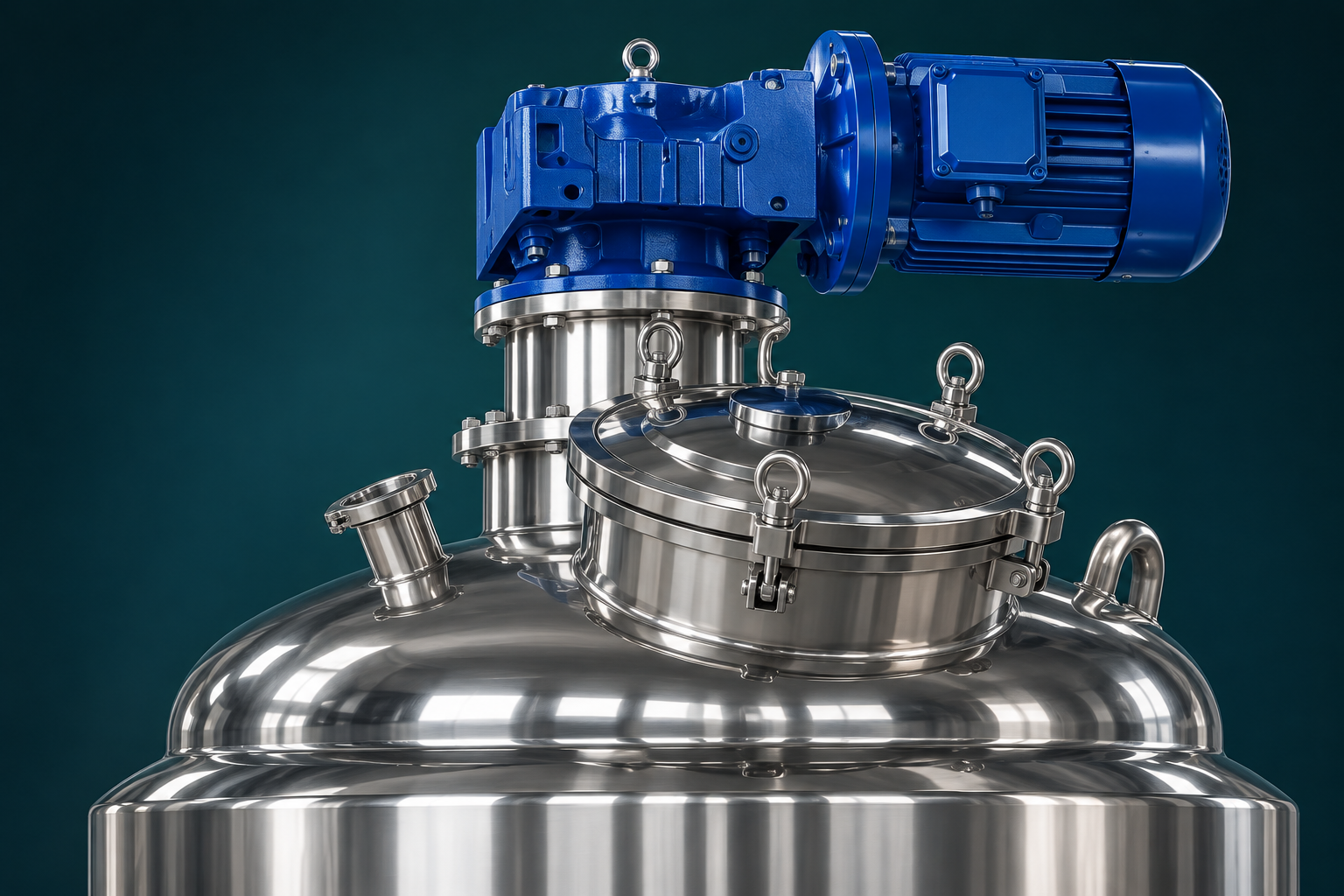
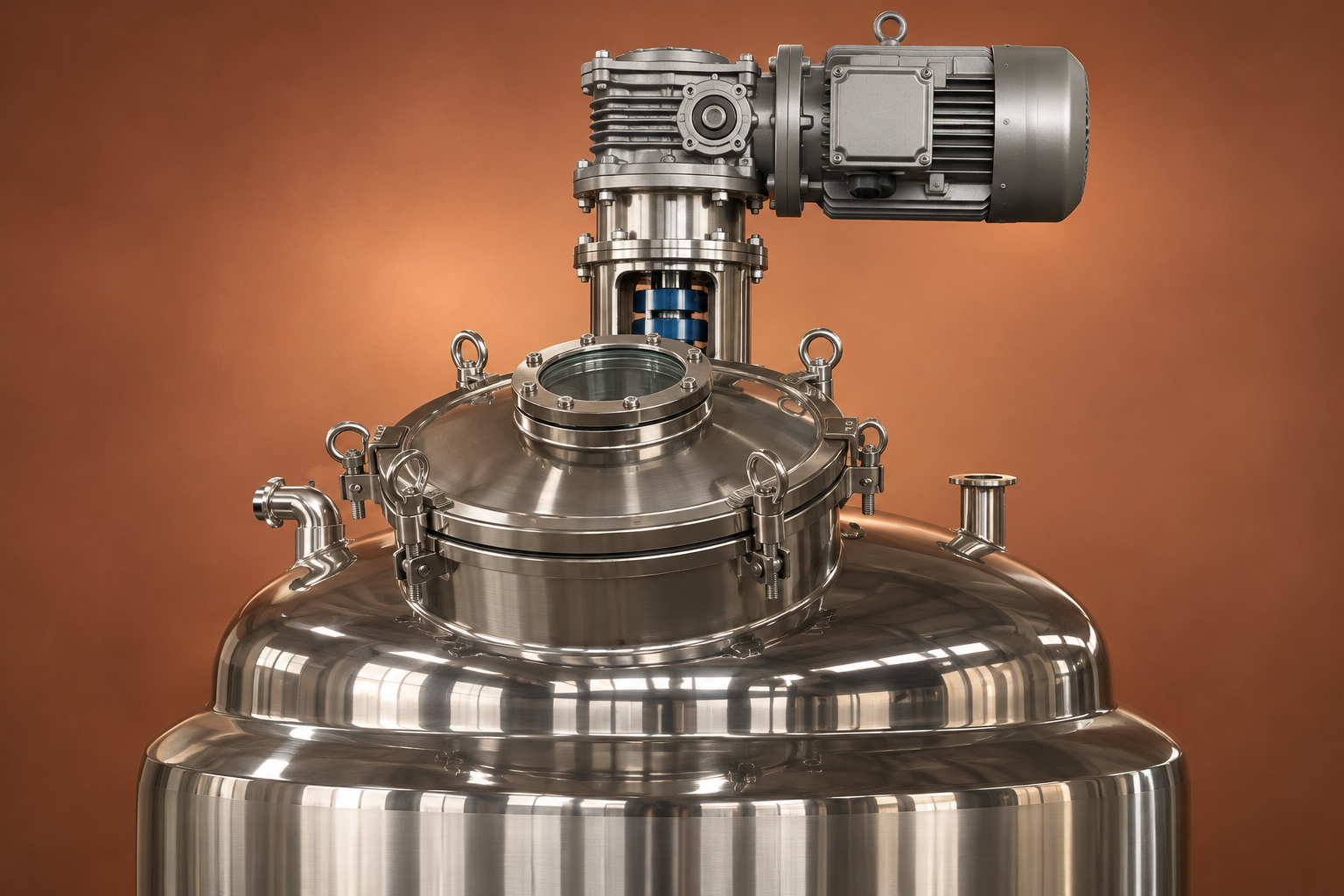
For equipment context, see the website’s variable speed mixing tank with agitator. Its photograph shows the vessel and drive arrangement; it does not establish the supplied seal construction, face materials, allowable runout or lubrication requirements. Obtain those details from the records applicable to the actual machine.
Establish which assembly is being replaced
Begin with the equipment tag, serial number, installed agitator identification and maintenance work order. A plant may have several visually similar vessels with different shafts or retrofits. Put the tank identity and drive identity on the same review sheet, then identify the seal assembly by the manufacturer’s description and drawing reference. If the installed label is unreadable, record that limitation rather than assigning a convenient catalogue identity.
Collect the last accepted purchase order, installation drawing, spare parts list and any change record. These documents can disagree after a modification. Ask the responsible engineer which document describes the installed configuration and preserve the answer. A loose spare found in a cabinet is useful evidence, but its presence does not prove that it belongs to this vessel.
Separate a replacement from a design change
A straightforward replacement follows an approved specification with confirmed applicability. An alternative can introduce changes to materials, interfaces, service connections or installation method. Treat the supplier’s statement of equivalence as a proposal to evaluate, rather than automatic permission to install. Ask what is identical, what differs and which differences need engineering acceptance.
إن HSE guidance on refurbished or modified machinery explains why the effect of a modification needs consideration. It does not certify any particular seal alternative. The practical purchasing consequence is to make the technical effect of a proposed substitution explicit before the order is released.
Build a dimensional comparison with defined references
Use the approved assembly drawing to identify the dimensions that govern the fit. Depending on the design, relevant items may include the shaft or sleeve interface, mounting register, bolt arrangement, axial installation position, available envelope and access for assembly tools. The equipment and seal manufacturers should identify the controlling dimensions and acceptance criteria. Do not derive tolerances from a photograph or a rough site sketch.
Compare each dimension against its reference document and revision. A measured dimension without a stated location can be misleading: a shaft may have several diameters, a sleeve may conceal another interface, and a mounting face may include a recess. If measurement is necessary, plan it under an authorized maintenance procedure with suitable access and isolation. Purchasing urgency is not a reason to dismantle operating equipment.
Review the process duty beyond the normal operating point
Provide the supplier with the actual fluid description, operating envelope and relevant cleaning or sterilization conditions. Distinguish routine operation, start-up, shutdown and any foreseeable abnormal condition that the specification requires the seal to tolerate. Avoid sending only the vessel’s maximum design rating when the seal duty is different, or only an average process temperature when cleaning is more demanding.
Materials need their own review. A generic description such as stainless steel, carbon or elastomer does not fully define a seal specification. Ask for the applicable material grades or compounds and documented compatibility basis. The supplier should know the process constituents and cleaning agents needed for that assessment. Where composition is confidential, use the site’s approved disclosure process instead of reducing the description to an unhelpful label.
Confirm the support system and installation assumptions
Some seal arrangements depend on specified support services; others use different arrangements. Establish what the installed assembly actually requires before comparing an alternative. Identify relevant connections, service media, monitoring provisions and any dependency on a separate package. The article on mixing tank seal flush monitoring addresses monitoring context; this review concerns whether the proposed replacement is compatible with the agreed arrangement.
Ask whether the replacement changes connection positions, access requirements, assembly sequence or maintenance tasks. A part that fits the mounting register may still require a different installation tool or interfere with nearby equipment. Written installation instructions should be available before ordering when they affect outage planning. Do not infer that the visible tank nozzle is a seal service connection.
Use a documented interchangeability review table
The following table is an original procurement aid, not a dimensional standard or a declaration of compatibility. Populate it with the applicable manufacturer records and the site’s approved engineering decision.
| بند المراجعة | الأدلة للمقارنة | Reason to hold the purchase |
|---|---|---|
| Equipment applicability | Tank and agitator identity against seal drawing | Drawing refers to a different assembly or unconfirmed retrofit |
| Mechanical interfaces | Approved dimensions, mounting details and installation references | Missing controlling dimension or unexplained fit difference |
| Material specification | Identified face, metal and secondary seal materials | Generic material label without compatibility basis |
| واجبات المعالجة | Agreed operating, cleaning and transient conditions | Alternative evaluated against normal duty only |
| Supporting services | Actual seal system requirements and connection schedule | Service requirement cannot be met by installed arrangement |
| Installation and verification | Instructions, tools and acceptance evidence | Supplier assumes an undocumented setting or test |
Give each unresolved row an owner and a required response. A blank field should remain visibly unresolved; a purchasing system’s mandatory field should not tempt someone to enter a guessed value. When the supplier revises the proposal, retain the earlier version and record which questions the revision closes.
Investigate why the original seal needs replacement
Replacing a failed component without understanding the surrounding condition can leave the cause untouched. Record the reported symptoms, service duration if known, maintenance observations and available condition evidence. Keep observations distinct from conclusions: leakage location, discoloration or damaged components may guide an investigation but do not independently prove a root cause.
ذو الصلة coupling alignment maintenance records guide helps organize another part of the equipment history. Alignment, bearings, shaft condition and process changes may be relevant, but their acceptance criteria must come from the applicable equipment documentation. Do not make an alternative seal responsible for correcting an unresolved machine defect without an engineering assessment.
Control quotations and purchase descriptions
A useful quotation identifies the exact proposed assembly, drawing revision, material specification, supplied accessories, exclusions and documentation deliverables. Ask the supplier to state exceptions against the inquiry rather than returning a broad statement that the item is suitable. If the replacement depends on another component being changed, include that dependency in the scope and approval record.
Translate the accepted proposal into a controlled purchase description. Attach the approved technical reference or identify it unambiguously; avoid a purchase order that contains only the old catalogue number plus the words or equivalent. Define which records are required at receipt and which must arrive before installation. This makes it easier for receiving staff to distinguish an approved alternative from an unexpected substitution.
Plan receiving and installation as separate decisions
At receiving, reconcile the supplied identity, documents, packaging condition and agreed markings with the purchase order. If inspection requires opening protected packaging, define who may do it and how the item will be preserved afterward. A document match does not authorize installation, and a visible resemblance does not close a material or dimensional discrepancy.
Installation and return to service need the site’s approved work controls and competent personnel. The إرشادات الصيانة والسلامة والصحة المهنية provides general safety context. It does not supply this tank’s isolation procedure, installation dimensions or test limits. Record the installed part identity, work performed and verification results in the equipment history before closing the job.
Use safety education without replacing the job procedure
The following educational video from the U.S. Agricultural Safety and Health Centers explains hazardous energy control. It supports the planning of inspection and replacement work around powered equipment. It is not a seal installation demonstration, and the video’s general examples do not establish the energy sources or isolation points on a particular mixing tank.

مراكز السلامة والصحة الزراعية في مصر: التحكم في الطاقة الخطرة لقفل/وسم.
A replacement review should therefore close two separate questions: whether the proposed component is technically acceptable, and whether the work can be carried out under the site’s authorized method. Keep the component approval with the purchase record and the work authorization with the maintenance package so neither is mistaken for the other.
Prepare a useful replacement inquiry
Send the tank and agitator identifiers, applicable drawing references, original part identity, documented duty, required materials, support system information and relevant maintenance history. Include photographs of accessible identification and overall arrangement, while stating what the photographs cannot establish. Ask the equipment supplier to confirm the information still needed before quoting an interchangeable alternative.
For a broader close-out record, use the قائمة فحص تسليم صيانة خزان الخلط. The practical next step is a written comparison with accepted differences and unresolved items, not an immediate order based on matching shaft size. Keep the review proportionate to the actual change and preserve the evidence that made the final decision possible.
الأسئلة الشائعة
هل يُثبت تطابق قطر العمود أن مانعين ميكانيكيين للتسرب قابلان للاستبدال؟
لا. يُعد قطر العمود أحد عناصر واجهة التوصيل فقط. كما تتطلب المراجعة المعتمدة الأبعاد ذات الصلة بالتركيب، وموضع التثبيت، والمواد، وظروف التشغيل، والخدمات المساندة. وتحدد سجلات الشركة المصنّعة وموافقة الجهة الهندسية المسؤولة مدى ملاءمة التجميعة المقترحة.
Can the installed seal type be identified from a mixing tank photograph?
A photograph may show the vessel, drive and accessible external arrangement, but it does not reliably identify hidden seal construction or materials. Use the equipment identifiers, applicable drawings and maintenance records to establish the actual configuration.
What should a supplier explain when offering an alternative seal?
The proposal should identify the exact alternative, its technical references, the differences from the requested assembly and any effect on installation, supporting services or verification. Resolve those differences before purchase approval and retain the accepted comparison with the equipment record.


